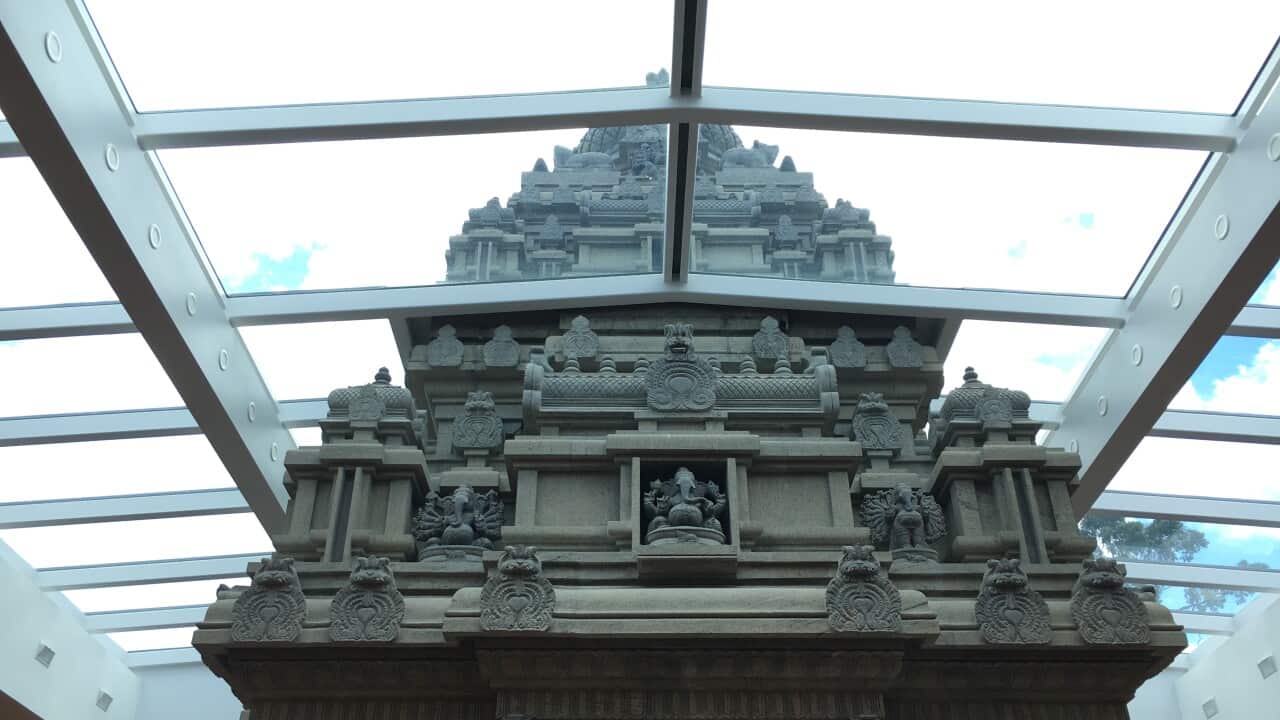

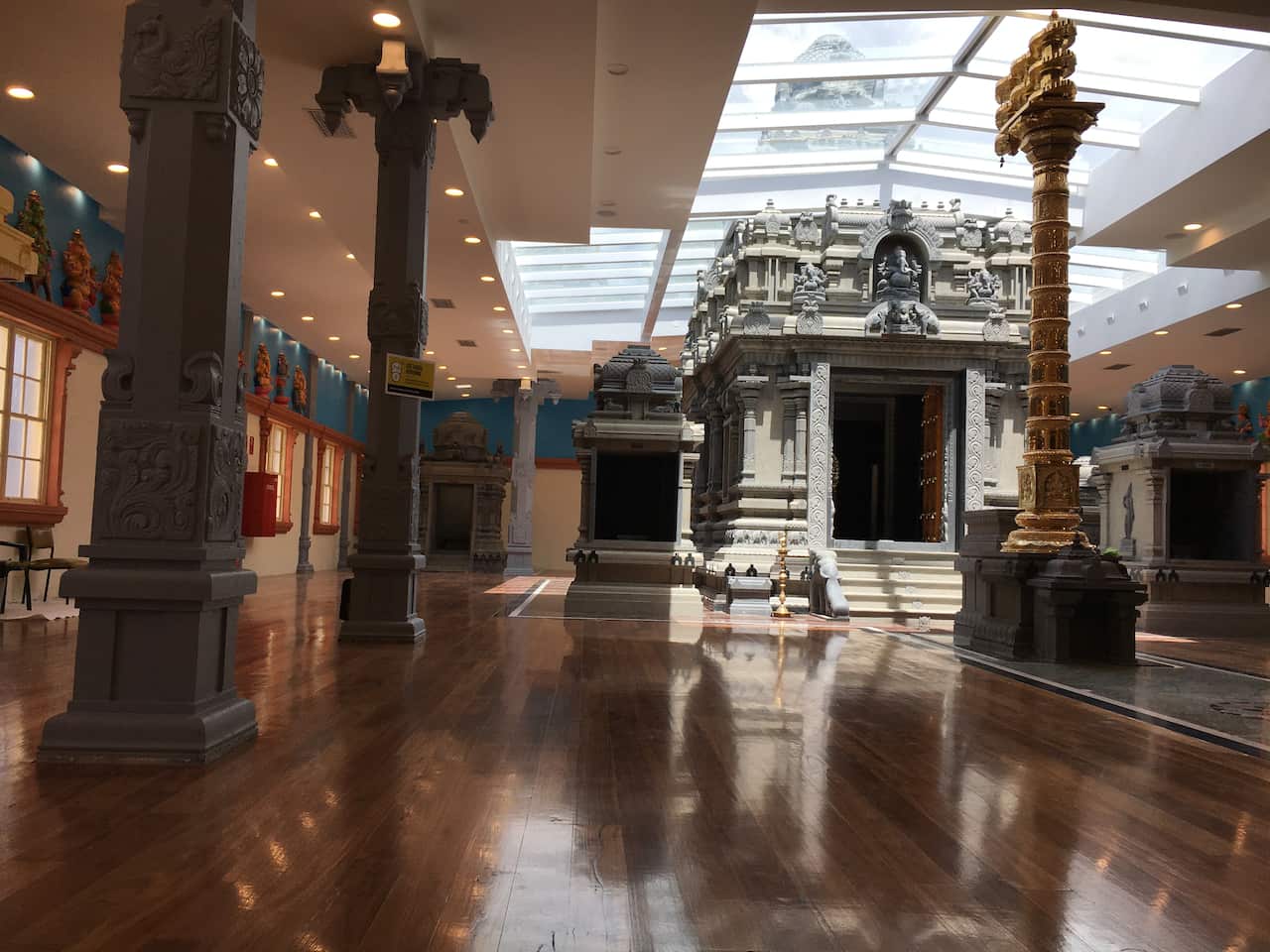
The first traditional Hindu temple in Victoria dedicated to Lord Ganesha now stands transformed into a granite temple as per traditional granite carved ancient Hindu temples, ahead of its consecration ceremony next week.
The Ganesha temple was built with bricks mortar and concrete in early 1990s. Now, it has been converted into a granite temple complex.
"It is an architectural splendour,” said project director Babu Akula.
Highlights:
- The temple’s Shikharam (Dome) is comprised of a single stone
- A four million dollar project in the time frame of three years
- It's the largest stone temple with the tallest shrine in the southern Hemisphere
“It is built acoustically in granite to the Vedic traditions." added Mr Akula.
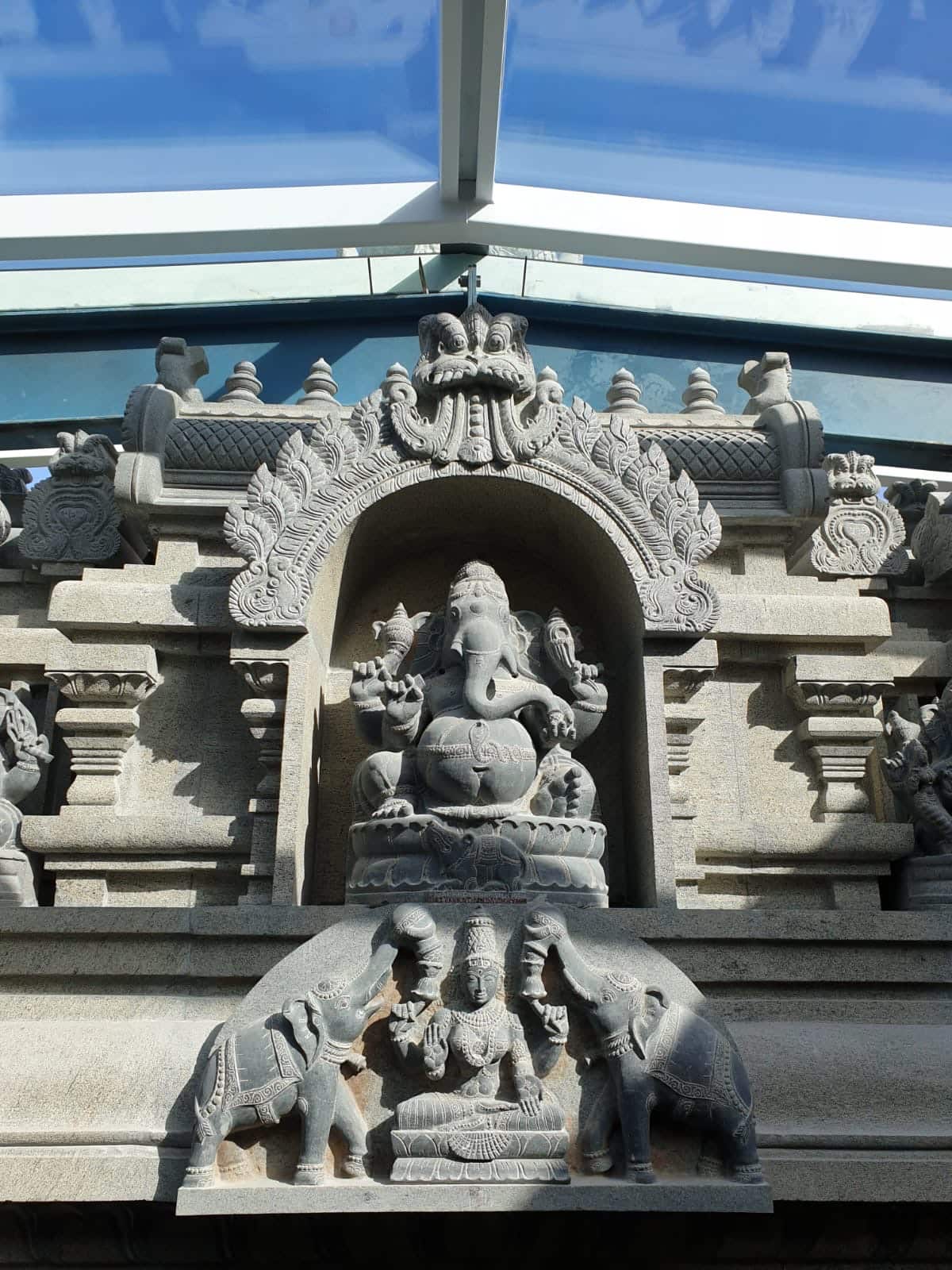
He explained the complexity of granite structures and the erection of temple.
"It's about assembling the entire shrine stone by stone by hand. There is a process to fit one stone over another.”
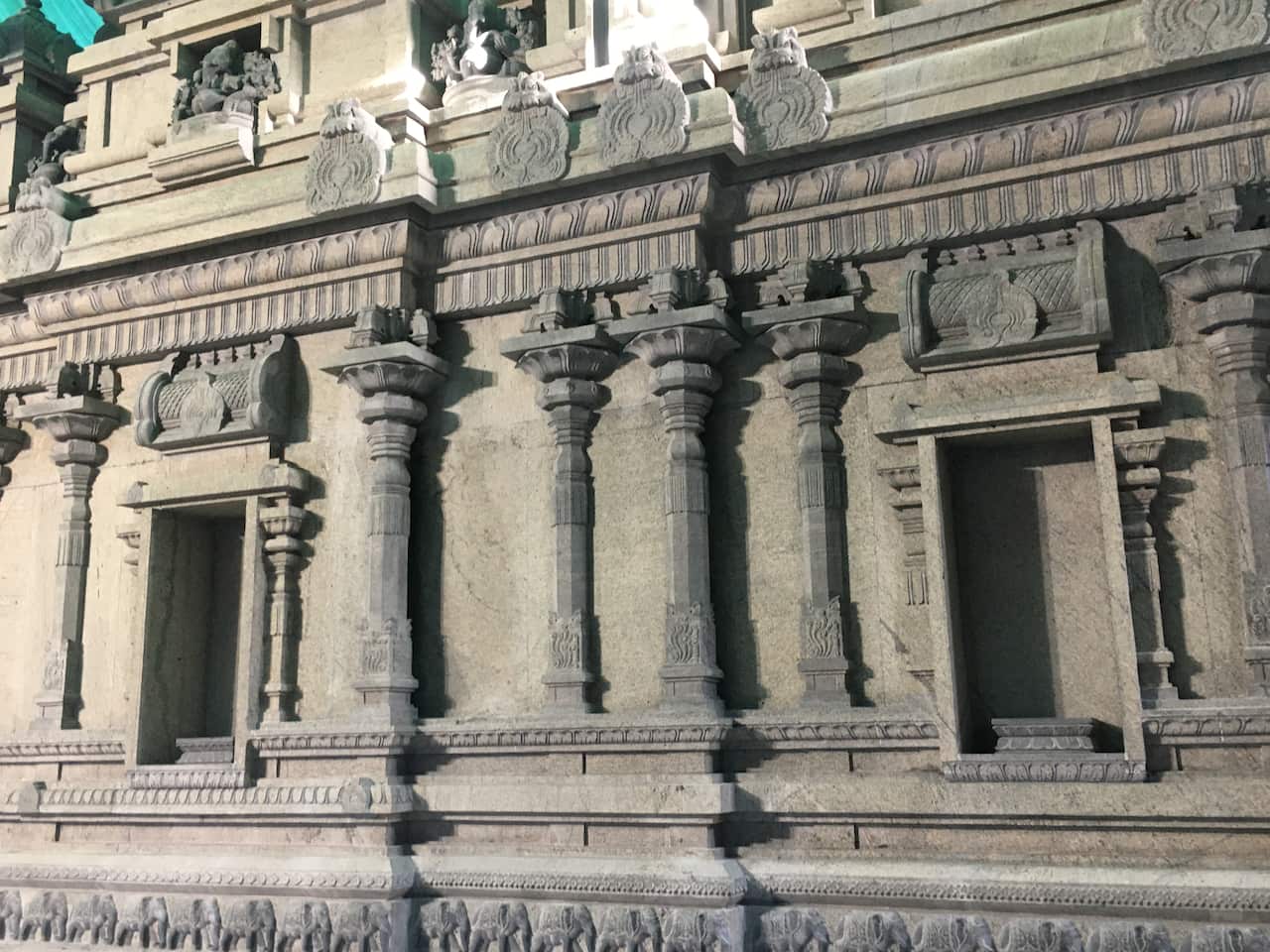
Granite had been traditionally used for ancient Hindu temples as it is believed to have all the five elements to evoke energy.
It is believed that using granite will cause the vibrations of the mantras to resonate at a higher level.
Scientifically, granite is a unique natural stone which can withstand heat up to 1200 degrees Fahrenheit. It is one of the hardest, and strongest oldest stone.
"Hence, there is always a part of granite in a temple even if the entire shrine is not entirely made up from it", said Akula.
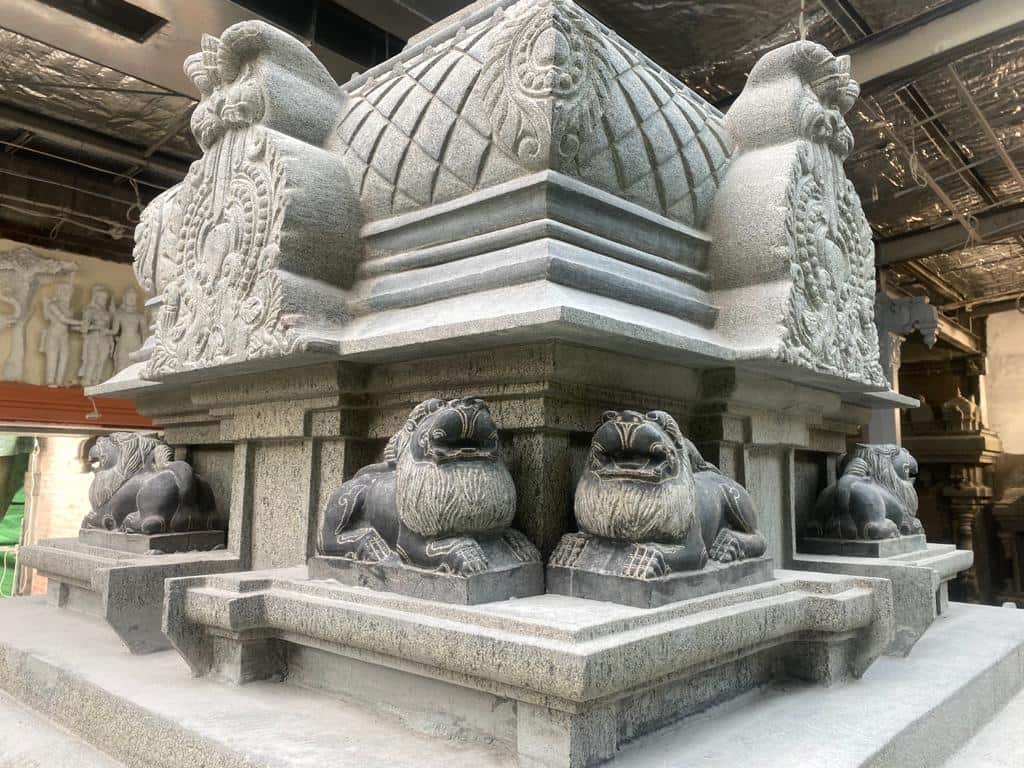
The Sri Vakrathunda Vinayagar Temple in The Basin, Melbourne is the only temple outside India with a Sikharam (Dome) built in a single stone which is almost a replica of the Sikharam of Brihadeswara Temple in Thanjavur, India, which is UNESCO listed.
“We wanted to have our temple in the style of Thanjavur temple, which is architecturally perfect, its height, dimension, the vastu of Devalaya like Thanjavur temple. However, the Shikhar (single stone dome) of our temple weighs 6.5 tons and is 2.5 meters high," said Mr Akula.
"The 11th-century Brihadeswara temple is an exemplary example of a Dravidian architect. The Shikaram is of 76 tons," added Mr Akula.
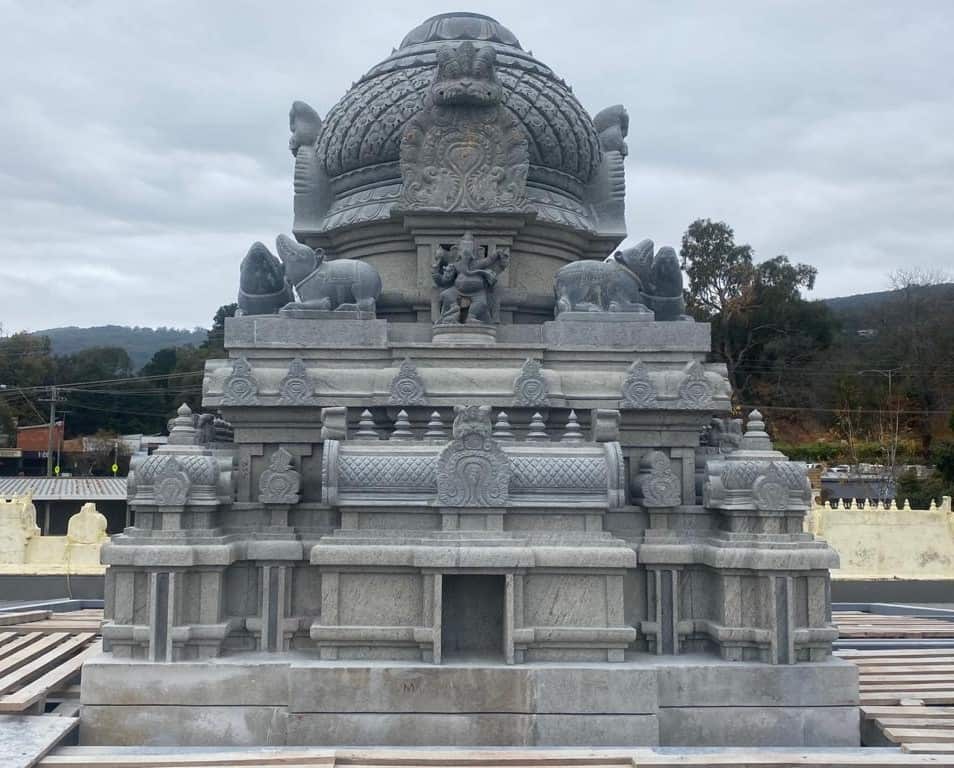
It took nine months to complete the majority of sculpting at a place near Mahabalipuram in India.
Listen to the podcast- Interview with Babu Akula, project director of the temple:
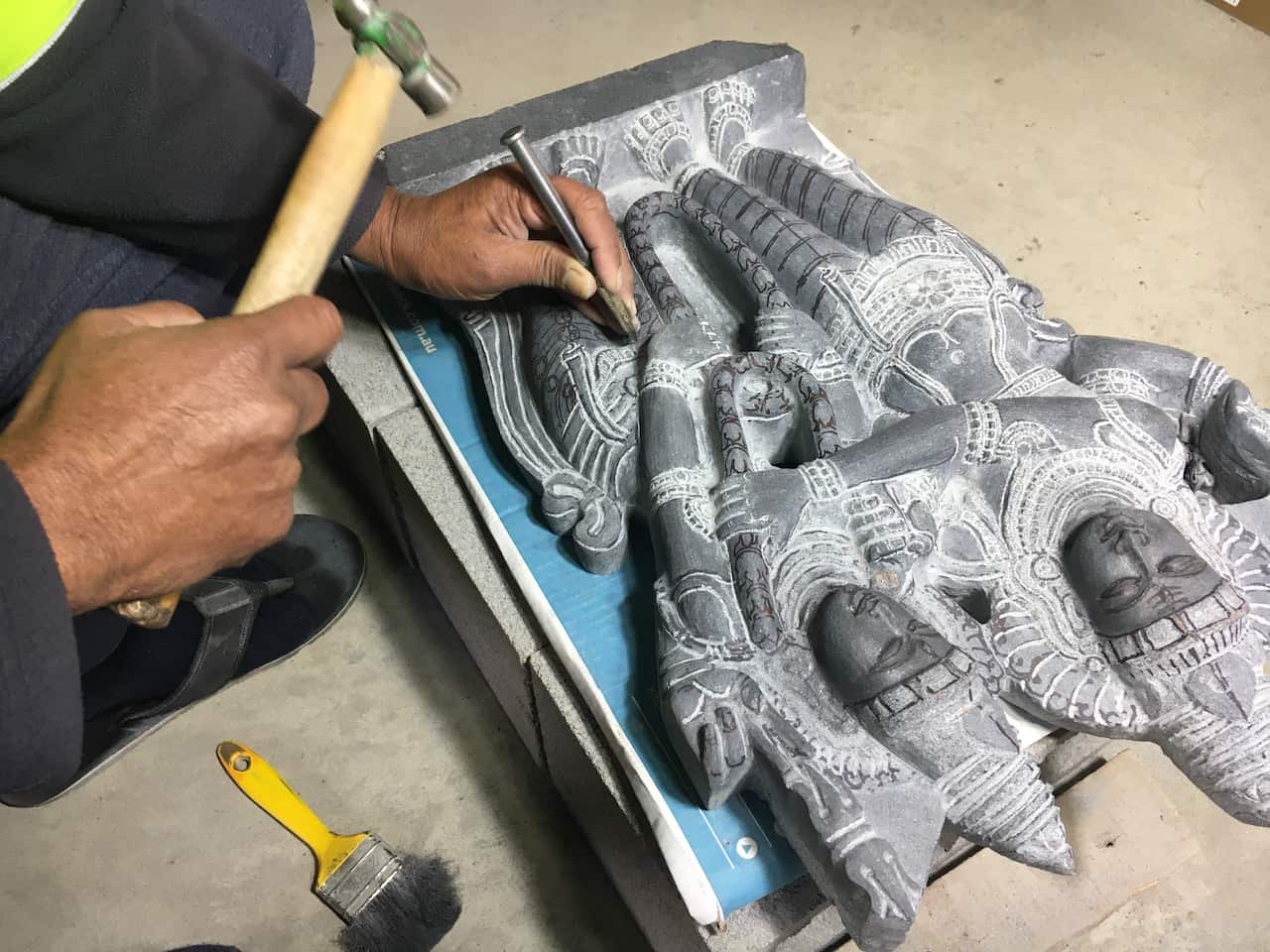
“Twenty-one artisans and stonemasons came to Melbourne from India who handcrafted the solid granite and assembled the shrine." told Mr Akula.
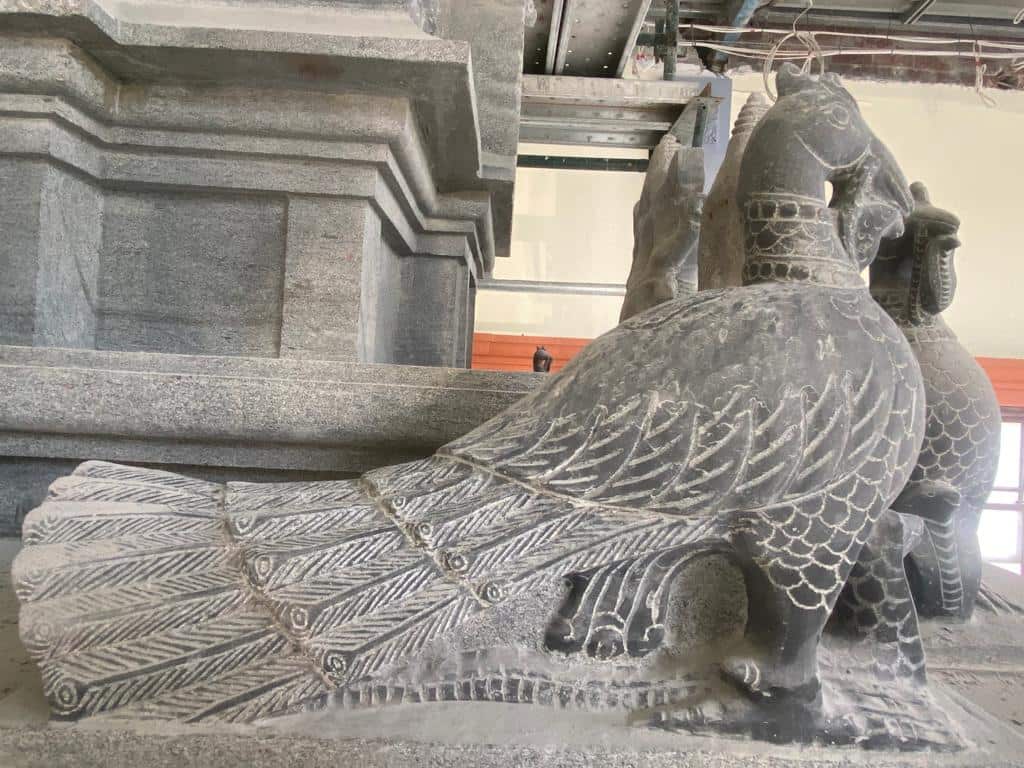
“This is the only temple where the main deity is given by the Acharya of Sri Kanchi Kama Koti Peetham of Kanchi (Adi Sankara tradition) in southern Hemisphere,” said Mr Akula
It is a largest Stone temple with tallest shrine in southern Hemisphere according to the temple authorities.
The concept, planning and designing for this temple complex was completed in a year.
To execute this structural marvel of the temple complex and to work to Australian standards, Professor Arun Menon of IIT Madras, India, and Ms Uma Narasimhan of Forever Technologies Chennai, India, provided computer modeling and engineering calculations.
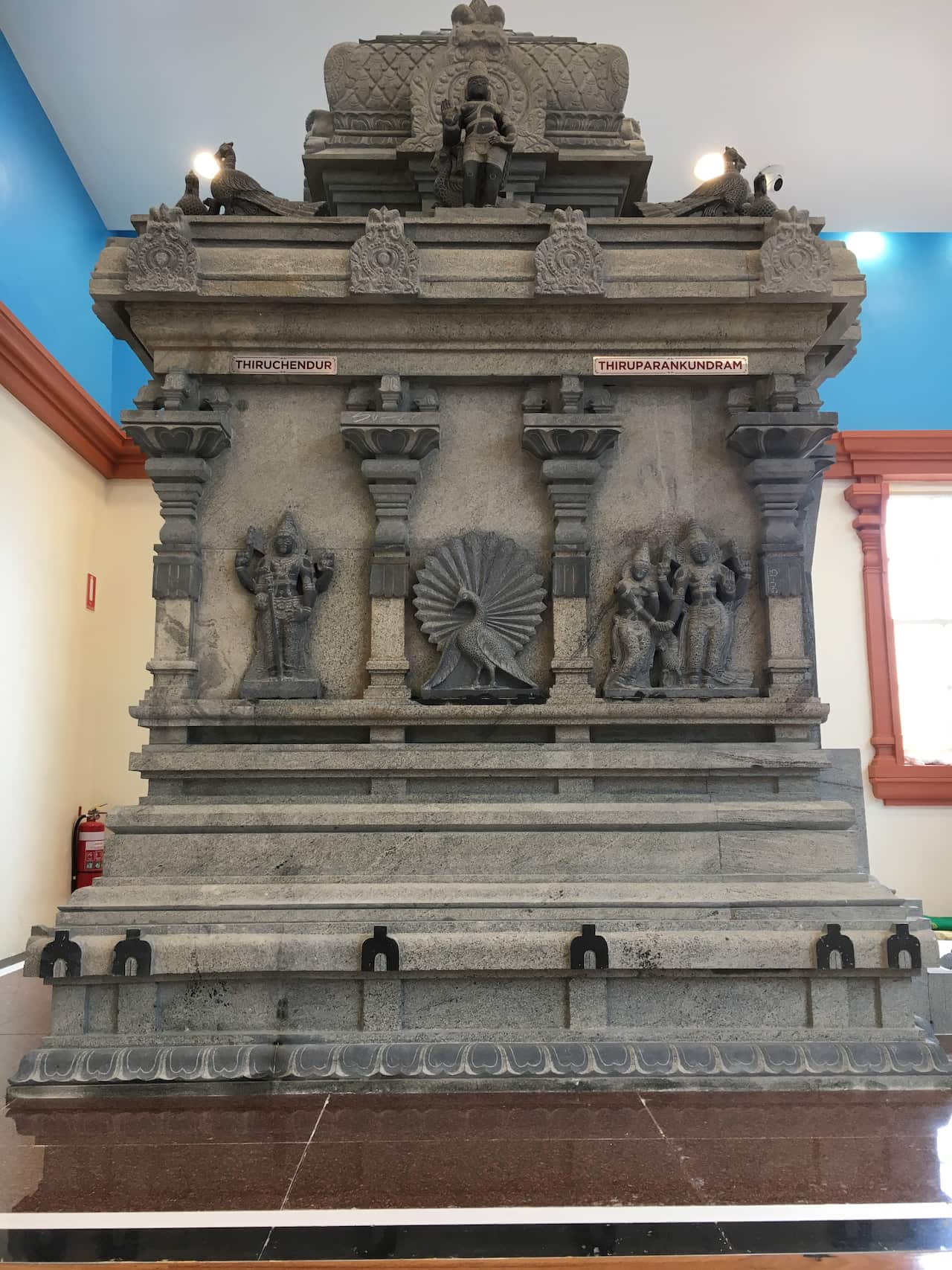
In total, it took three years from concept to finish.
Mr Babu Akula said it was a self funded project.
"The $4 million dollar project is made possible only by the community. The devotees came forward and donated generously," he added
The Sri Vakrathunda Vinayagar Temple in The Basin was first conceived in 1989, and the process of building the temple began in 1990. The kumbabhishegam of the temple was carried out in 1992.
The temples are the focal point of mankind in a community and represent identity and unity.
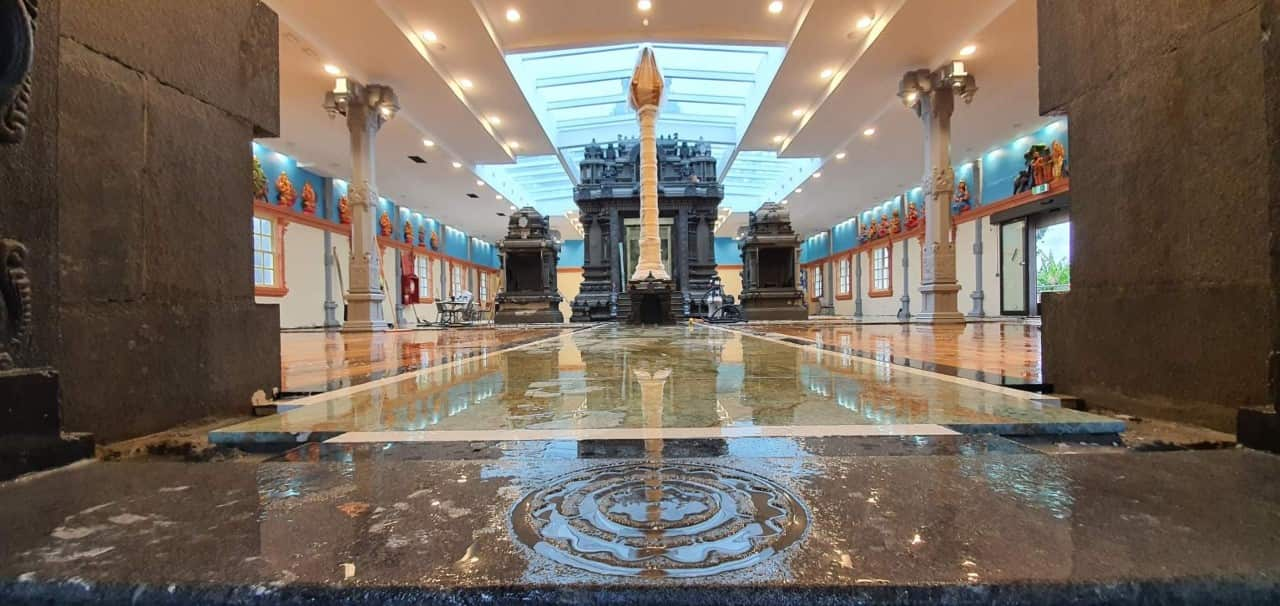
Mr Akula said, “According to ‘Aagama Shashtra’, every temple once in twelve years can carry out any renovation or refurbishment or any major repair works.”
Agama Shastra is the ancient Indian scripture which guides about the rules for a temple construction including the material of construction to details for idols of deities. It also lays down the rituals to be followed.
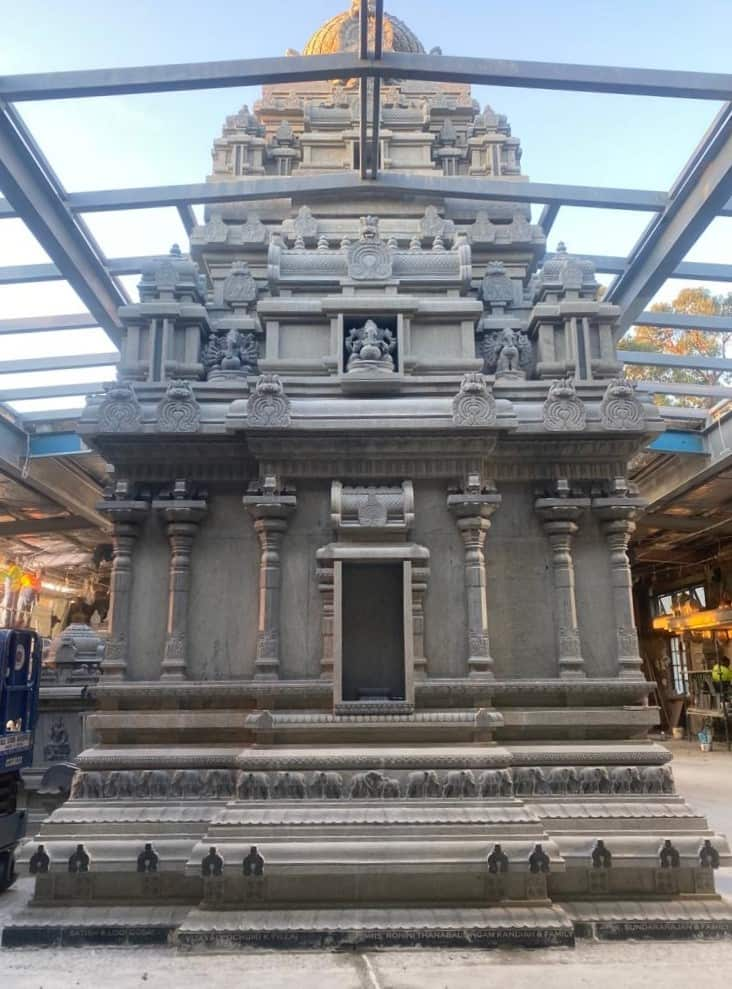
"Kumbhaabhishekam", the consecration ceremony of the temple is on Monday, 25th January 2021.
The festivities have started from Sunday, 17th January 2021 and the 45-day Mandalabhishekam program will start from Tuesday, 26th January 2021.
Listen to the podcast- Interview with Babu Akula, project director of the temple:
Subscribe to SBS Hindi daily news updates for free. Get news, articles and podcasts delivered straight to your Facebook messenger. Send the word “News” to our inbox now.
People in Australia must stay at least 1.5 metres away from others. Check your jurisdiction's restrictions on gathering limits.
If you are experiencing cold or flu symptoms, stay home and arrange a test by calling your doctor or contact the Coronavirus Health Information Hotline on 1800 020 080.
News and information is available in 63 languages at https://sbs.com.au/coronavirus
Please check the relevant guidelines for your state or territory: NSW, Victoria, Queensland, Western Australia, South Australia, Northern Territory, ACT, Tasmania.
Tune into SBS Hindi at 5 pm every day and follow us on Facebook and Twitter