Watch FIFA World Cup 2026™ LIVE, FREE and EXCLUSIVE

'A massive reality check': AI-generated disinformation about war in the Middle East is even tricking experts

Copy of 01 ALC AUDIO YT 16x9 THUMBNAIL.png

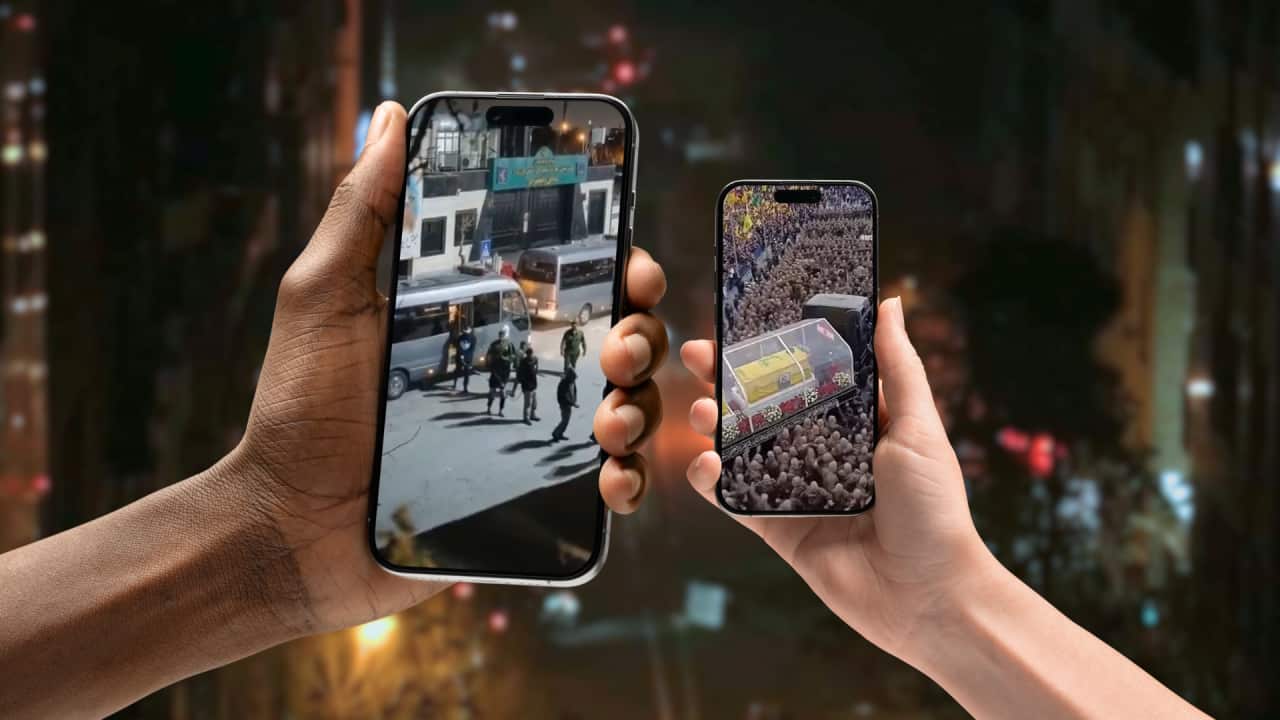
Fake videos and images of the war in the Middle East have been proliferating rapidly online. Source: SBS

As war in Iran and the broader Middle East continues, real and fake videos of the conflict are proliferating on social media — and it's getting harder to tell the difference.


SBS Persian journalist Niv Sadrolodabaee was almost misled by a fake video showing prisoners moving into Evin prison in Tehran.

The video was a perfect fit for the story Niv was working on, following concerns from sources that political prisoners were being mistreated in Iran.

With internet blackouts in the country, it's hard to get information from the ground — so the video was exactly the kind of source he needed.

It showed a line of prisoners exiting a truck surrounded by guards.

"It seemed like somebody had filmed it with their phone, which is a pretty common thing in Iran," he told SBS Examines.

"People usually film protests with their phone, and Western media covers those videos."

But before he hit publish, Niv noticed something didn't look quite right.

"When they zoom in, you see someone disappearing from the video, and then you see someone walking in a very unusual way."

An expert confirmed Niv's concerns around the realness of the video.

It was a massive reality check for me.
Niv Sadrolodabaee

The video was supposedly shot close to where Niv grew up.

"I knew those parts of my town, and being almost misled by a video of my own hometown was a very concerning moment for me," he said.

Fake images and videos are being shared online at a rapid pace, and it's becoming harder to distinguish between what's real and fake.

In this episode of SBS Examines, we speak to experts on the role artificial intelligence is playing in reporting on the war in the Middle East, and ask how to spot a fake piece of content.

This episode is a collaboration with SBS Persian.

spk_0

SBS acknowledges the traditional owners of country throughout Australia.

spk_1

From SBS Examines, I'm Olivia Di Iorio. We've been watching for weeks as war continues in the Middle East, but there's another war waging right on your phone - as disinformation campaigns from the region proliferate on social media. In this episode, we speak to experts on the role artificial intelligence plays and ask how to spot a fake piece of content. But first up, we speak to Niv Sadrolodabaee, an Iranian journalist from the SBS Persian program.

spk_1

Welcome. How are you doing?

spk_2

Hey Olivia, thanks for having me. Obviously we've been pretty busy with the coverage with the war in the Middle East and especially Iran right now. How has that been going? Covering the war in the Middle East is a bit different than our day to day coverage because with the internet blackout in Iran, it's very hard to get firsthand information of what's happening on the ground in Iran.

spk_2

Obviously, your only sources are state media and state TV, so it makes it harder to get that

spk_1

information. You have almost been misled by

spk_1

one of these AI produced deep fakes during your own reporting. What happened? It was

spk_2

actually a massive reality check for me. So we're working on this story about the situation of prisoners in Iran and the concerns that the regime might use them as human shields during the war and also the bad conditions in the prisons. But obviously we were hunting for footage for our world news package about what's happening.

spk_2

And what was going on on social media was a video of prisoners being moved to another location from a prison in Tehran, from the Evin Prison in Tehran.

spk_2

So the video at the first glance looked pretty OK for me, and it was a good moment because it's obviously very hard, as I mentioned to you, to get that type of footage from Iran, but I think hours later I was interviewing with one of our experts who used to be in prison in Iran for a long time and she knows those prisons in and out, and we were talking and she warned me that there is something wrong with that video. I've got the

spk_1

video here. We'll have a look at it.

spk_1

It was posted on X and it's a vertical video. It seems like it's taken on like a bad quality smartphone, and there's even a zoom in the video as well. When did you notice that something was a bit off after you rewatched it? It

spk_2

seems like somebody has filmed that video with their phone, which is a pretty common thing in Iran. If there's a protest happening in Iran, people usually film those protests with their phone and

spk_2

Western media covers those videos that were filmed by phone, but also, as you know, lots of these AI generated videos appear to be filmed by phone. So that was the first moment. Then secondly, I saw that zoom moment that you said, and something very interesting happens when you pay attention to that part. When they zoom, you see someone disappearing from the video and then

spk_2

you see someone walking in a very unusual way. So what was more concerning for me as an Iranian journalist was that video was apparently filmed in my hometown, and those videos were apparently from parts of my city that I used to walk probably several times, so I knew those parts of my town, and

spk_2

being almost misled by a video of my own hometown was a very concerning moment for me.

spk_1

What is the point of this type of content then? What is it trying to influence?

spk_2

Experts call this 'liars dividend', which it kind of makes an environment which it's much harder for you to understand and distinguish between what's true and what's not true.

spk_1

Niv, thank you so much for your time.

spk_2

Thanks so much for having me.

spk_3

Disinformation is a really powerful tool. We kind of think of disinformation as trying to spread a certain narrative, but actually one of the most powerful ways that disinformation can have an impact is by creating distrust. So it might not be that the Iranian regime is spreading a narrative that says this is exactly what's happening, it's spreading a whole pile of different narratives that are just enough to confuse people and either make them disengage or stop them from believing what they hear.

spk_1

Dara Conduit is a senior lecturer in political science at the University of Melbourne. She says that people aren't yet equipped with the media literacy to distinguish the difference between what's AI and what's not.

spk_1

Dr Shahriar Kaiser, a senior lecturer at RMIT who is part of the AI and data analytics hub, says that the creation of fake images and videos can now be done at rapid speed.

spk_4

In terms of armed conflicts. The battles are not only fought on the ground nowadays. The battles are being fought on social media and news media.

spk_1

We've heard how hard it can be to detect AI fakes. Even Niv was nearly convinced by a video claiming to be shot in his hometown, but Dr

spk_1

Kaiser does have some tips we can all use. It

spk_4

is very difficult nowadays to detect deepfakes or fake images or you know, news stories or even articles or videos. You can use those ABC rules. So look at the actor and their movement and their posture and all that. Look at the background, whether the scene is the lighting effect, whether the objects make sense or not, and then look at the context, whatever is happening, and then verify the source as well.

spk_1

This episode was produced by Niv Sadrolodabaee, Lera Shvets, and Olivia Di Iorio. To find out more, visit sbs.com.au/sbsexamines.

END OF TRANSCRIPT

Share