This audio is voiced by AI and may occasionally mispronounce words.
Share your feedback and help us improve this feature. Read more about how we use AI at SBS here.
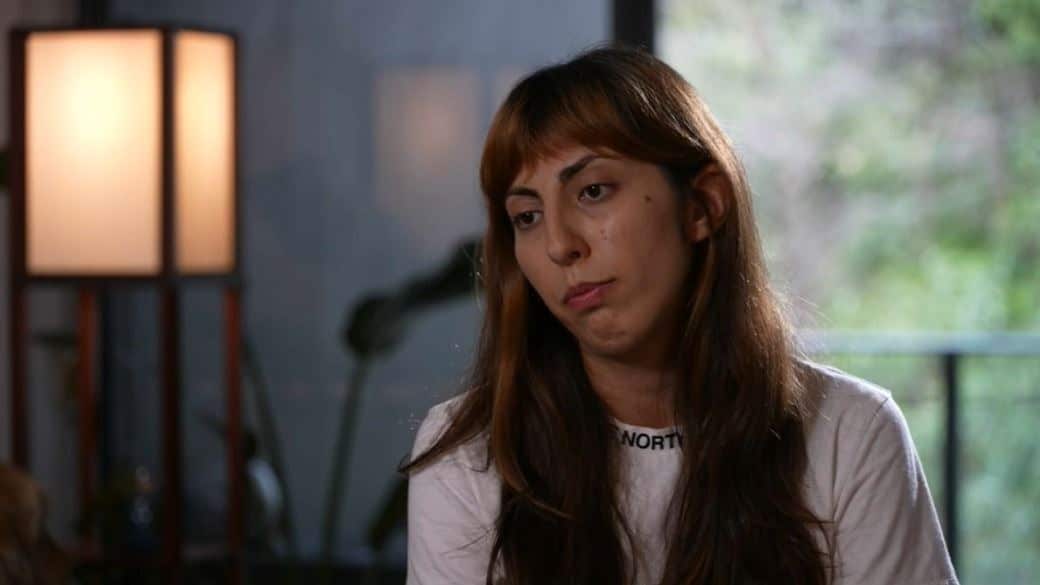
Thousands of kilometres away from home, in Brisbane, Deniz Toupchi fears for her friend in Iran — caught between the missiles raining from the sky and the suffocating walls of her prison cell.
"I am really worried about those people who are hearing bombs outside of the prisons," she tells SBS News.
"It is terrible. It is terrible.
"The normal situation [in prison] was just horrific. And now with this war happening … it's just unbelievable what could happen to a prisoner."
Toupchi's friend is one of the more than 50,000 Iranians arrested during protests that broke out across the country in January, according to the United States-based Human Rights Activists News Agency (HRANA).
News that makes sense
Your trusted source for staying up-to-date with the world around you. Get free daily news updates and analysis, straight to your inbox.
At least 7,000 people were killed during the protests, and HRANA is currently investigating another 11,700 suspected deaths. Iranian authorities have disputed these figures and say the number of casualties is just over 3,000, including security forces personnel.
The protests, originally sparked by economic issues, grew into one of the deadliest crackdowns in the Islamic Republic's history and have since transformed into an anti-regime movement.
"She's a mum," Toupchi says of her friend.
"Her daughter is only four years old."
As Iran has descended into war this week, Toupchi worries the situation faced by those trapped inside prison cells, including her friend, could worsen rapidly, as authorities tighten their grip.
They [security forces] basically, broke [down] their door and got inside their house, and arrested my friend.
On Saturday, Iran became the target of a joint US-Israel military operation after three rounds of negotiations aimed at stopping the country's nuclear program failed. Iran has responded by attacking Israel and US bases in other countries in the region.
Gholam Hossein Mohseni-Eje'i, head of the Islamic Republic's judiciary, said on Wednesday that those who support the US and Israel will be treated as the "enemy", now that Iran's leadership has formally condemned "anyone who cooperates with the enemy in any way".
"If anyone takes any action, any word, that aligns with the wishes of this criminal enemy ... [they] must be dealt with based on the same revolutionary and Islamic principles as wartime."
The last time Toupchi heard news of her friend was two days before the war started, when she received a message sent via her friend's brother, saying: "Please help me, I just want to get free."
'Human shields'
Human rights organisations have expressed grave concerns that, as the regime fights for its survival, it could also turn on its prisoners.
The Center for Human Rights in Iran (CHRI) has warned in a recent statement that the regime "has a history of using the shadow of war and crisis to carry out abuses in prisons and retaliate against political prisoners".
"We are particularly alarmed by the fate of tens of thousands of individuals recently detained during nationwide protests," it said.
According to reports from family members of political prisoners, a group of prisoners in Evin prison have been moved by authorities to an unknown location — raising questions about the motivation behind this relocation.
"Most of the time they use people as a human shield … This could be a case for them," Toupchi says.
"They could take them to some other organisations … [and] locations … that could be a potential target for the USA and Israel. This is one of the major concerns we have."
Families of prisoners have said on social media that the head of the prison has announced plans to forcibly transfer some inmates, while the decision has been met with resistance from the prisoners.
SBS News cannot independently confirm these reports.
Atena Daemi, an Iranian human rights activist and former political prisoner, says, "even those who are in Evin prison right now are human shields".
"They are using them either to intimidate the public, to make sure people don't become a threat to the survival of the Islamic Republic, or as leverage against countries like Israel and the US," she tells SBS News from Canada.
"Given the wartime conditions, people may not be out on the streets right now, but to create fear, even to intimidate people and stop them from coming to the streets, we could see [the authorities] take their revenge on prisoners."
While international humanitarian law states prisons are protected facilities during wartime, last June, during the 12-day conflict between Israel and Iran, Evin prison was struck, resulting in the death of reportedly around 80 people.
CHRI says during that time, Evin prison was "unlawfully targeted" by Israeli strikes, and authorities failed to evacuate detainees despite known risks.
"Instead, some prisoners were violently transferred, while some were injured and subjected to abusive treatment," by security forces.
The Israel Defense Forces said at the time the reason for the attack was that the facility was being "used for intelligence operations against Israel".
Michael Page, the deputy Middle East director at Human Rights Watch, also shares concerns for prisoner welfare.
"Iran's authorities have a long, heinous track record of torturing and executing prisoners, and those detained may also face risks from US and Israeli military strikes," he said in a statement to SBS News.
"With Iran's authorities shutting down internet access, these prisoners are even more isolated, and it is critical that international attention continue to highlight their precarious situation and demand they be released as part of domestic Iranian regulations that allow for detainees' release during armed conflict."
A 'darker prison'
Other human groups, such as the Iran Human Rights Society (IranHRS), have warned about the dire conditions that prisoners are experiencing in several prisons across the country.
According to IranHRS, amid war, those in Evin prison now face an "emergency situation" as their access to food and basic necessities becomes severely limited, with only bread being given in some parts of the prison.
Daemi, 37, spent almost seven years of her life in Iranian prisons and has been reporting on issues faced by prisoners for the past few years. She tells SBS News from Canada that she has heard similar stories from families of prisoners.
In war situations … protecting the lives of prisoners should be a priority.
"Not only did they not do this, but they are even cutting off water and food to the prisoners," Daemi says.
"In such a situation, the prisoners feel as though they are in a much deeper and darker prison. Especially since now they are having difficulty even meeting their needs."
Narges Foundation, an advocacy organisation linked to Narges Mohammadi — the 2023 Nobel Peace Prize laureate and Iranian human rights activist, who is currently imprisoned — also confirmed similar reports from other prisons.
Reports also mention a tightening of security around prisons. One family member of a prisoner posted on X that NOPO, a notorious Iranian riot police unit, is surrounding Evin prison. Daemi also confirms these reports.
"They have been given permission to open fire, and prisoners were told that any action they take will be met with direct gunfire," she says.
IranHRS reports that families of prisoners who went to the front of Evin prison gate to obtain information about the condition of their loved ones have not received clear information.
Daemi believes the vulnerability of prisoners will only continue to increase following the death of former supreme leader Ayatollah Ali Khamenei and other figures in the Iranian leadership, including Islamic Revolutionary Guard Corps (IRGC) commanders, since US-Israeli strikes started.
"Among the prisoners, there is both the hope and the desire … that the current situation will make them free, and the fear that they are now the most accessible options for the Islamic Republic to take revenge," she says.
"They [security forces] are angry and may want to vent their anger on the prisoners."
Fears of a 'second massacre'
Human rights advocates are also deeply concerned about a potential rise in prisoner executions, especially among those who were arrested during the January protests.
According to Amnesty International's report, issued a week before the conflict started, at least 30 people linked to the protests faced the death penalty in Iran, including two 17-year-olds.
Zaki Haidari, the strategy campaigner with Amnesty International Australia, tells SBS News: "They're facing execution as we speak."
"The current situation has put children at risk of death penalties, and the current regime has not provided them with the correct or the right access to a lawyer or a fair trial in court," he says.
Haidari warns the regime could also ramp up the use of executions to quash any further dissent, concerned this could happen away from the world's watch, as Iranians face internet and reception outages amid war.
"Our grave concern is that execution might be used again, to bring fear in the community, to disrupt the current movement or process that's happening against the current regime," he says.
"The Iranian authorities know that the world is not monitoring, or we don't have any means of access to know what's happening in Iran prisons."
Sydney man, Mohammad Hashemi, knows all too well the daily nightmare of having a loved one on death row — his cousin, Majid Kazemi, was executed by the regime in 2023, after being arrested during the country's 'Woman, Life, Freedom' protests and being charged with 'enmity against God'.
Human rights organisations argue this charge is commonly and broadly applied to protesters and political dissidents, as it is a capital offence in Iran.
Hashemi now campaigns to save others.
They are not numbers … Each of them had a life, they had a family.
"We are really worried about the second massacre [that] is going to happen, we all know the Islamic regime, how brutal they are, and how they can do horrible things. They are not afraid of anything," he tells SBS News.
Amnesty International has expressed concern that the actual number of those at risk of the death penalty is much higher, as authorities systematically warn families against speaking out.
Three years ago in Australia, Hashemi campaigned to save Kazemi, and others facing execution — efforts he says he is "always proud of".

"I did my best. I tried to fight them [the regime] … but in the end it's one of my biggest disappointments that we couldn't save him," he says.
Now he is reliving that chapter — this time with fears for those whom he doesn't know personally.
"I couldn't really sleep well on those days. I was always trying to check my phone, just refresh the news and see.
"That's the same thing I'm doing these days. Each day, I wake up, check my phone and see the news. Is anyone being executed?"
For the latest from SBS News, download our app and subscribe to our newsletter.







