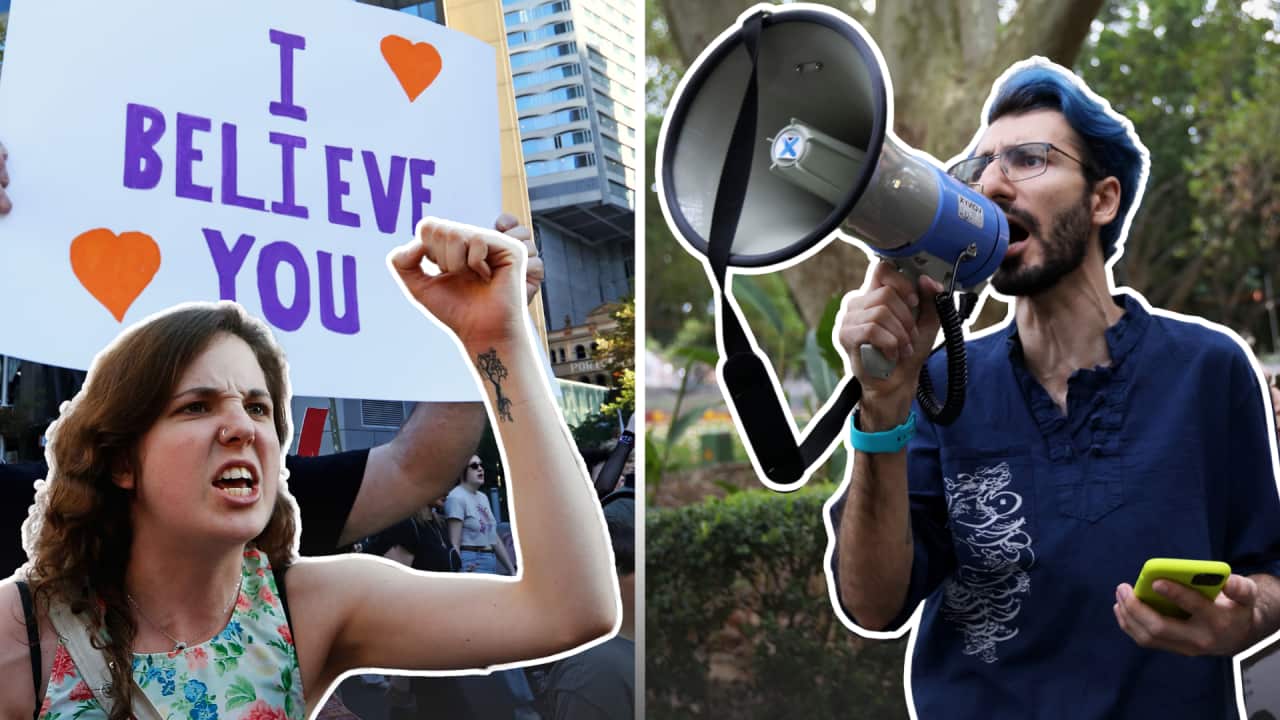

When we're exposed to events or ideologies that go against our own beliefs, we can feel what experts call 'political grief'. Some say it's playing a role in the growing polarisation of our society.
Have your political views impacted your friendships? Or maybe you struggle to identify with the political party you used to vote for?
Experts call this feeling 'political grief', and say it can lead to further polarisation.
Professor Larissa Hjorth from the School of Media and Communication at RMIT University told SBS Examines political grief is manifesting in the polarisation of media, and of society in general.
The thing about political grief is that you're getting those kind of echo chambers.Professor Larissa Hjorth, School of Media and Communication, RMIT University
"Somebody who's identified left, somebody who's identified right, they're not coming together in any way," she said.
The Grattan Institute recently found overall polarisation in Australia remains lower than in some other democracies.
Its new report "For the people: future-proofing Australia’s democracy" shows only about one in 10 Australians say they could not be friends with a person with opposing political views.
However, the country’s social compact is under pressure.
Kate Griffiths, Deputy Director of the Democracy Program at Grattan Institute, said Australians are feeling a declining sense of belonging and opportunity, and a growing sense of unfairness.
They're the sorts of things that could lead down the track to disengagement or discontent with the system itself.Kate Griffiths, deputy director of the Democracy Program at Grattan Institute
In this week's episode, SBS Examines explores political grief, and hears from some Australians about their experience.
This episode was produced in collaboration with SBS Mandarin.