
Watch FIFA World Cup 2026™

LIVE, FREE and EXCLUSIVE

Are you prepared for Australia’s flu season?

Australia Explained - Flu

Most people recover from influenza by themselves, but the flu virus is responsible for hundreds of lives lost and thousands hospitalised annually in Australia. Credit: Authentic Source/Getty Images

Influenza is a highly contagious viral infection. As flu season begins in Australia, here’s what you need to know to protect yourself, your family and the most vulnerable in our community.


Key Points
  • Influenza can cause mild to severe and even life-threatening illness.
  • Yearly flu immunisation is recommended for everyone aged 6 months or over.
  • Children in Australia have access to a no-needle, nasal spray flu vaccine.
  • The flu vaccine is safe and effective, so speak to your doctor if you have questions or concerns.

Influenza, or the flu, is a year-round circulating virus, which means you can catch it at any time of the year.

In Australia, flu activity increases during autumn and infections peak between June and September.

How serious is the flu?

Flu symptoms are more acute and long-lasting than a common cold.

They can include high fever, muscle aches and joint pains, headaches and sore throat.

Australia Explained - Flu
The flu is Australia’s most common illness preventable by vaccination. Source: Moment RF / Halfpoint Images/Getty Images

Most people infected with influenza recover within a few days. But some patients are at greater risk of severe illness and complications.

In Australia, 2025 was the deadliest influenza year on record with over 1,700 deaths.

“A lot of us think it's just like a cold, but it kills hundreds of Australians every year,” Dr Michael Wright, Sydney General Practitioner and President of the Royal Australian College of General Practitioners, says.

“Many thousands of Australians are admitted to hospital with influenza because it's a serious respiratory infection.”

Who is likely to get very sick from influenza?

Even healthy people can get very sick with the flu.

High-risk groups for severe illness and needing hospital care include children under five, over 65s, Aboriginal and/or Torres Islander individuals, people with chronic conditions and pregnant women.

“These people are more likely to get lung infections, pneumonia and need to go to hospital,” Dr Wright says.

How can I protect myself from the flu?

Influenza is spread through droplets from an infected person’s throat or nose.
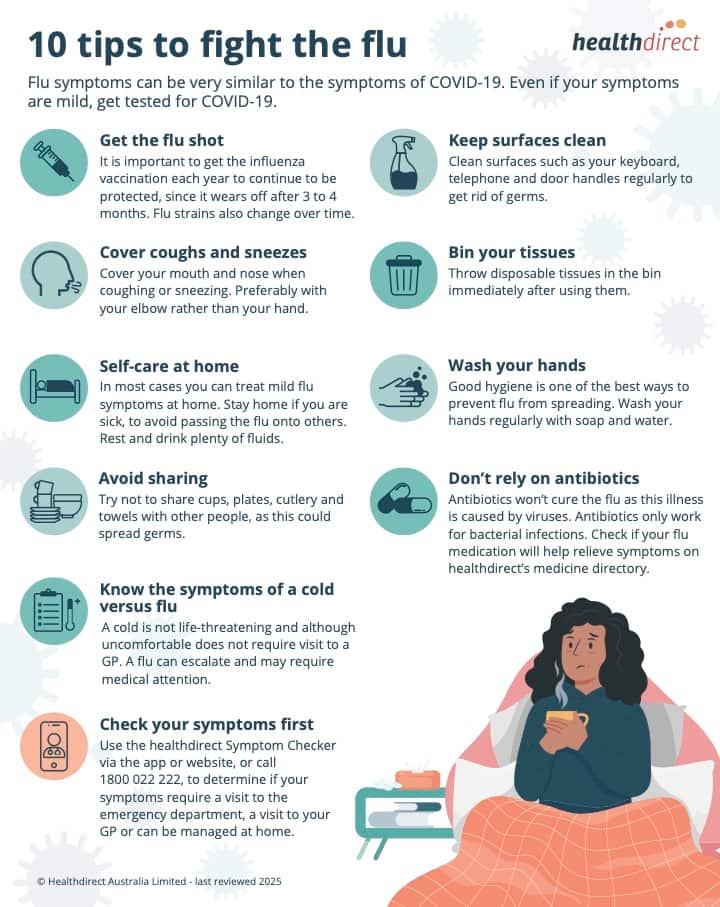
Flu tips
Credit: Healthdirect

Practising good hygiene, like regular handwashing and covering your mouth and nose when coughing or sneezing, can help lower your chance of catching the flu and spreading it.

But the most effective way to prevent influenza and severe complications from it, is having the annual flu vaccine.

“The advantage of getting vaccinated is that you reduce the risk of you getting sick, and you actually make sure that you are much less likely to get a serious infection,” Dr Wright explains.

Vaccinated individuals are also less likely to infect others.

Getting vaccinated is the best thing you can do to protect yourself, your family and also your community.
Dr Michael Wright

Should I get the flu shot and do I have to pay?

Flu immunisation is very important for everyone but especially for vulnerable people in the community.

“We recommend everybody over the age of six months gets a flu vaccine every year," Dr Stephanie Williams says.

Dr Williams is Assistant Director General in the Communicable Diseases Branch of the Australian Centre for Disease Control.

“There are some groups of people for whom that vaccine is provided free under Australia’s National Immunisation Program:

  • children aged six months to five years 
  • adults aged 65 years and older 
  • pregnant women 
  • Aboriginal and/or Torres Strait Islander people aged six months and over 
  • people with specific medical conditions.” 

Senior man receiving prescription
Your flu vaccine appointment is a good opportunity to ask about other recommended immunisations ahead of winter. Credit: Joos Mind/Getty Images

If you are not eligible for free flu vaccination, you can purchase the vaccine from your immunisation provider.

“You can get a flu shot in many healthcare settings, including your local doctor, local council immunisation clinic, community health centres, Aboriginal health services and some pharmacies across Australia,” Dr Williams says.

Your state or territory government or your employer may also run free flu vaccination programs.

Is there a needle-free flu vaccine in Australia?

A needle-free nasal flu vaccine in spray form was made available in Australia in 2026.

It is approved by the Therapeutic Goods Administration for safe and effective use in children aged two to 17.

Australia Explained - Flu
The nasal flu vaccine has been used for years outside of Australia. Source: Moment RF / Paul Biris/Getty Images

It is available across Australia with some states administering it for free for children aged between two and five.

“We know that kids at that age don't really like having injections and also their parents are less likely to bring them in,” RACGP President Dr Wright says.

Ask your family doctor if there is a state-funded nasal flu vaccine program where you live.

When is the best time to get the flu shot?

Getting vaccinated three to four months ahead of peak season maximises your protection, Dr Meru Sheel, Professor of Infectious Diseases and Global Health at the University of Sydney, explains.

“That's why we recommend autumn to start of winter months for people to get influenza vaccines.

“When they come into the market around April, May and when it's convenient or they're available through workplaces, that's the best time to get vaccinated.”
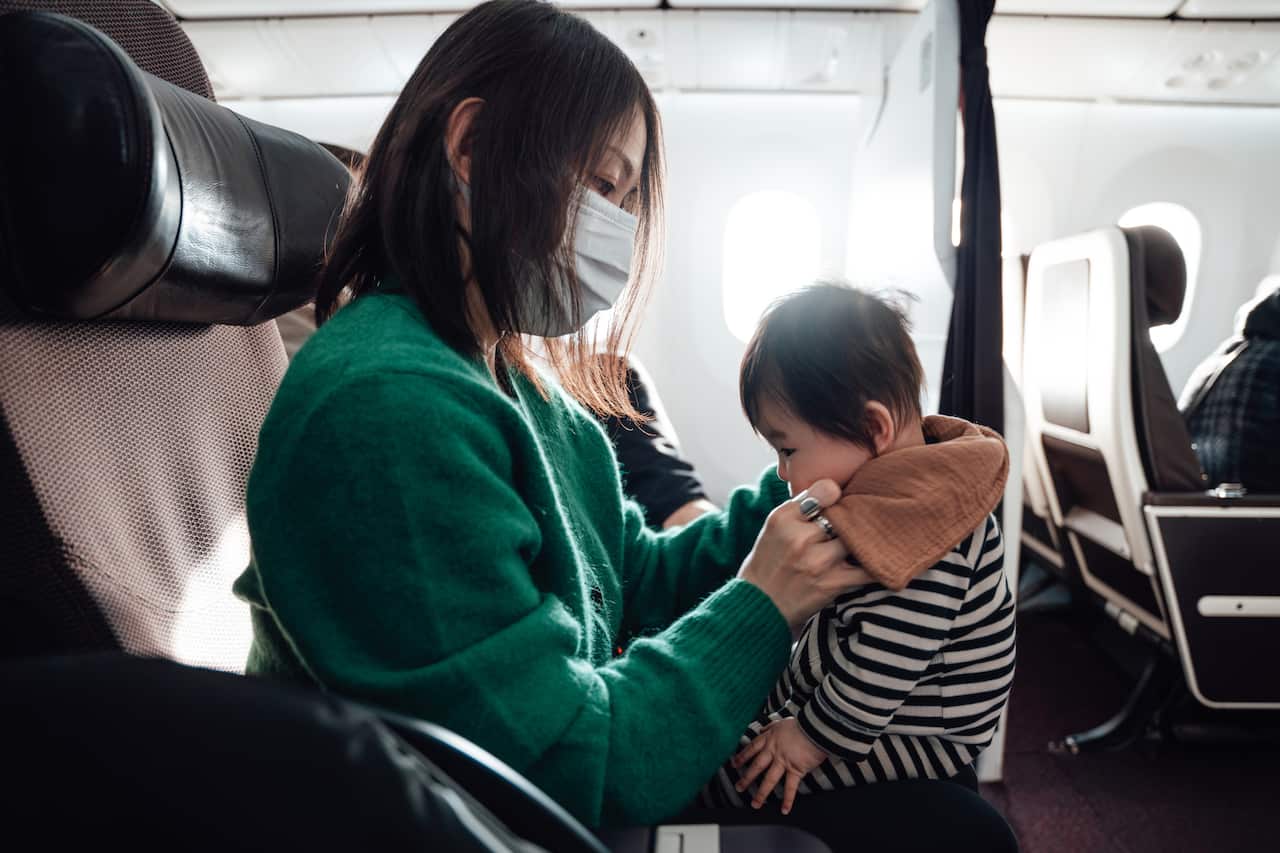
Australia Explained - Flu
Get your flu vaccine at least two to three weeks before your trip. Source: Moment RF / Oscar Wong/Getty Images

Should I be concerned about the side effects of the flu vaccine?

Following vaccination, some people go through mild symptoms lasting up to a couple of days.

“All vaccines tend to have some common side effects like pain and swelling, redness or mild fever,” Dr Sheel says.

“The flu vaccine is safe and effective and most of the adverse reactions are self-resolving.”

Allergic reaction risk is very low.

When you get the vaccine, the doctor or the pharmacist will ask you to wait for 15 to 20 minutes, because if there's going to be a reaction that's when it might happen.
Dr Meru Sheel

Your doctor will help you find a suitable flu vaccine for your age and health status and address any questions you have, Dr Wright concludes.

“If you do have any concerns or worries why you might not want to have the vaccine, your GP should be able to explain if the vaccine's right for you.”

Subscribe to or follow the Australia Explained podcast for more valuable information and tips about settling into your new life in Australia.

Do you have any questions or topic ideas? Email australiaexplained@sbs.com.au

spk_0

SBS acknowledges the Traditional Custodians of Country and their connections and continuous care for the skies, lands and waterways across Australia.

spk_1

You're listening to Australia Explained, an SBS audio podcast helping you navigate life in Australia.

spk_2

Influenza is a highly contagious virus that circulates year-round, but flu activity increases during autumn, with infections peaking in the winter months.

spk_3

The optimal timing of protection is about 3 to 4 months. That's why we recommend autumn to start the winter months for people to get influenza vaccines.

spk_2

Is your family prepared for this year's flu season? Welcome to Australia Explained. I'm your host, Melissa Compagnoni. Today we speak with three clinical experts to understand who's most at risk of severe illness, when to get the annual influenza vaccine, and what needle-free options are now available for children.

spk_2

Seasonal flu is common and highly contagious. In most cases, people infected with the influenza virus recover within a few days. However, some people are at a higher risk of severe illness and hospitalisation. In Australia, 2025 was the deadliest influenza year on record, with more than 1700 deaths. Dr Michael Wright is a Sydney GP and president of the Royal Australian College of GPs.

spk_2

He says many people underestimate how serious influenza can be, including complications such as pneumonia and breathing problems.

spk_4

So a lot of us think it's just like a cold, but it is a serious condition which kills hundreds of Australians every year. Many thousands of Australians are admitted to hospital with influenza because it's a

spk_4

serious respiratory infection. Sometimes you'll recover quickly, but older Australians and particularly young children and also people with other health conditions like diabetes and asthma are more likely to get lung infections, pneumonia, and need to go to hospital.

spk_2

Flu symptoms are more acute and last longer than a common cold. They can include high fever, muscle aches and joint pains, headaches, and a sore throat.

spk_2

Like other airborne diseases, influenza is spread through droplets from an infected person's throat or nose. practising good hygiene like regular hand washing and covering your mouth and nose when coughing or sneezing can help lower your chance of catching the flu and help prevent it from spreading.

spk_2

However, Dr Wright says the most effective protection for yourself and others is the annual flu vaccine.

spk_4

The advantage of getting vaccinated is that you reduce the risk of you getting sick, you actually make sure that you're much less likely to get a serious infection, but you're also less likely to spread the virus to other people. So getting vaccinated is the best thing you can do to protect yourself, your family, and also your community.

spk_2

People more likely to become seriously ill from influenza include babies, older people, pregnant women, and those with chronic health conditions. But even otherwise healthy people can develop severe illness. The Australian government recommends that everyone aged 6 months and over receives a flu vaccine each year. Vaccination is available for free to eligible individuals.

spk_2

Dr Stephanie Williams, Assistant Director General at the Australian Centre for Disease Control, gives the details.

spk_5

We recommend everybody over the age of 6 months gets a flu vaccine every year, and there are some groups of people for whom that vaccine is provided

spk_5

free under the national immunisation program, and they include children aged 6 months to 5 years, adults aged 65 and over, pregnant people, Aboriginal and Torres Strait Islander individuals aged 6 months and over, and a group of people with some specific medical conditions.

spk_2

Depending on where you live and work, your state or territory government or your employer may also offer free flu vaccinations. There's a range of healthcare providers to choose from to get your influenza shot.

spk_2

Dr Williams again.

spk_5

You can get a flu shot in many healthcare settings including your local doctor, local council immunisation clinic, community health centres, Aboriginal health services, and some pharmacies across Australia. And depending on state and territory arrangements that may include in some hospitals as well.

spk_2

Children aged 2 to 17 can also access a needle-free flu vaccine. The nasal flu vaccine was made available in Australia in 2026, but it's been safely used for several years in other countries, including Canada, the US and across Europe. It's available privately across Australia, with some states offering it free to toddlers and preschool children.

spk_2

Check whether a state funded program is available where you live. Dr Wright says a needle-free option is great news for families.

spk_4

This vaccine has been used for a number of years, particularly in the UK, Italy, Spain, Sweden, Finland, and so it's now in Australia.

spk_4

And so it's a nasal spray being made available in some states for free for children between the ages of 2 and 5, and we know that kids at that age don't really like having injections, and also their parents are less likely to bring them in because no one at that age really likes the needle.

spk_2

You can catch the flu at any time of the year, but virus activity increases in winter months. In most of Australia, influenza infections peak between June and September.

spk_2

Getting vaccinated 3 to 4 months ahead of peak season maximises your protection, but it's never too late to get the flu shot, especially if you're planning to travel. Dr Meru Sheel, Professor of infectious diseases and global health at the University of Sydney, explains.

spk_3

The optimal timing of protection is about 3 to 4 months. That's why we recommend autumn to start or winter months for people to get influenza vaccines. So when they're

spk_3

coming to the market around April, May, and when it's convenient or they're available through workplaces, that's the best time to get vaccinated. Particularly for people who are travelling, I think it's good to get vaccinated 2 to 3 weeks before you're travelling because we know it takes about 3 weeks for your immune system to be at the peak of your response.

spk_2

The flu vaccine has a different composition every year, depending on the strains of the virus circulating in the community at the time. That's why we need to get a flu vaccine annually.

spk_2

Less than 1 in 6 people experiences common side effects after vaccination like fever, tiredness, and muscle aches lasting from a few hours to a couple of days. But Dr Sheel says serious allergic reactions to the flu shot are rare.

spk_3

All vaccines tend to have some common side effects like pain and swelling, redness, all of those things

spk_3

you get after a needle, or it can lead to some mild fever which will often resolve by itself. Very, very rarely there are some side effects like getting a severe allergic reaction, and that's why often when you get the vaccine, the doctor or the pharmacist will ask you to wait for 15 to 20 minutes because if there's going to be a reaction that soon after in that window that it might happen.

spk_2

There are different types of influenza vaccines available in Australia.

spk_2

Your doctor can help you choose the most suitable option based on your age and health needs. And lastly, as Dr Wright says, speak to your doctor if you have any questions or concerns about getting the flu vaccine.

spk_4

Have a chat with your GP because there's a range of flu vaccines, some for people over 65, some for younger people. If you do have any concerns or worries why you might not want to have the vaccine, your GP should be able to explain if the vaccine's right for you.

spk_2

Thanks for listening to this episode of Australia Explained, written and produced by Zoe Thomaidou and mixed by me, Melissa Compagnoni. Australia Explained managing editor is Roza Germian.

spk_1

This was an SBS audio podcast. For more Australia explained stories, visit SBS.com.au/Australiaexplained.

spk_6

Subscribe or follow the Australia Explained podcast for more valuable information and tips about settling into your new life in Australia. Do you have any questions or topic ideas? Send us an email to australiaexplained@sbs.com.au.

END OF TRANSCRIPT

Share