Watch FIFA World Cup 2026™ LIVE, FREE and EXCLUSIVE

The overlooked story: Aboriginal and Torres Strait Islander service on ANZAC Day

First Nations Anzac

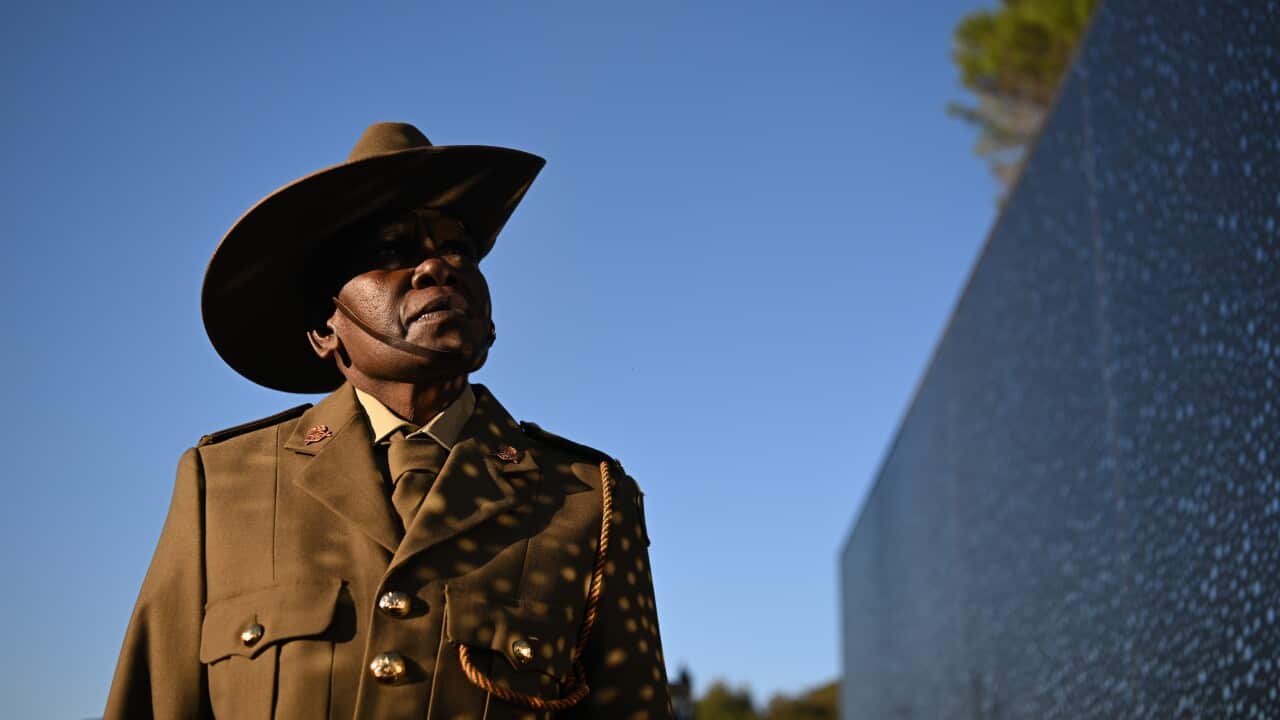
The Australian War Memorial For Our Country memorial recognises the military service of Aboriginal and Torres Strait Islander peoples. Credit: Tracey Nearmy/Getty Images

Each year Australians gather on ANZAC Day to remember those who served in wars, conflicts and peacekeeping missions. But whose stories are we remembering? Are there stories we don’t always hear? In this episode we explore an important part of Australia’s history that has often been overlooked—the service of Aboriginal and Torres Strait Islander peoples.


Key Points
  • The Australian War Memorial estimates 1200 Aboriginal men attempted to enlist in the First World War, and 6,500 in the Second World War.
  • Aboriginal people faced many restrictions to enlisting in the armed forces.
  • Many went to extraordinary lengths to enlist including hiding their heritage.
  • On their return, discrimination and restrictive laws were still part of everyday life for Aboriginal veterans. 

Many Aboriginal and Torres Strait Islander people served in Australia’s armed forces, including during the First and Second World Wars, often alongside non-Indigenous Australians—even when they were officially barred from enlisting. 

Today, there is a growing effort to ensure their stories are recognised and remembered. 

Ngunnawal/Gomeroi man Michael Bell is part of that work. As Indigenous Liaison Officer at the Australian War Memorial, he helps identify and recognise the service and sacrifice of Aboriginal and Torres Strait Islander peoples—both those who served in uniform and those who supported the war efforts on home soil. 

Through this work, a clearer picture is beginning to emerge. 

How many Aboriginal and Torres Strait Islander people served in First World War and Second World War?

“We currently have just over 1200 Aboriginal men enlisted or attempted to enlist in the First World War, and we're estimating it's going to be about 6,500 men in the Second World War,” Mr Bell says.
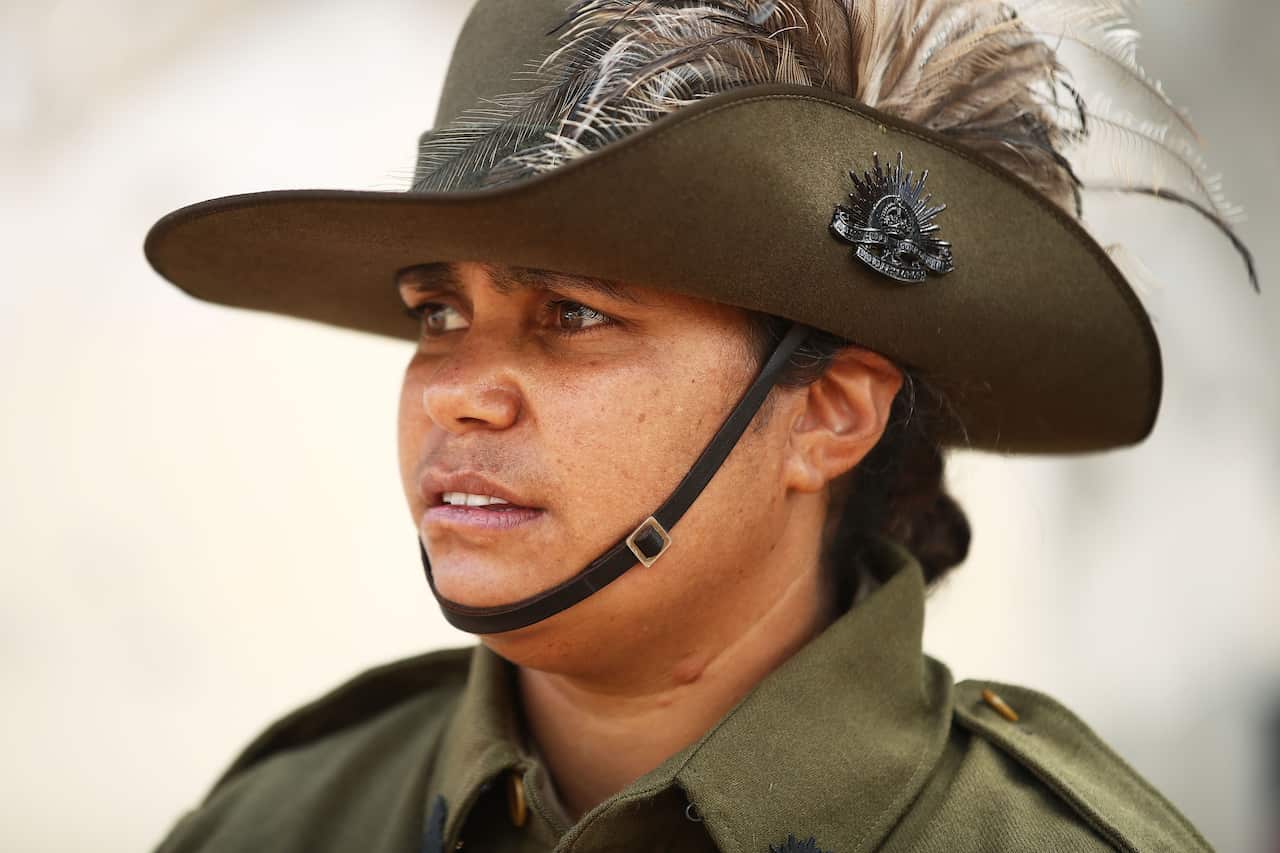
Indigenous Australians Honoured On Anzac Day At Coloured Diggers March
Understanding ANZAC Day means recognising the contributions and challenges faced by Aboriginal and Torres Strait Islander peoples.  Credit: Brendon Thorne/Getty Images

These numbers continue to grow as more records are uncovered. 

The War Memorial has statistically viewed the numbers of enlistments with known populations of Aboriginal people.

Despite facing significant barriers, the numbers are significant.

The rates of enlistments or attestations are the same as their non-Indigenous brothers and sisters.
Michael Bell

What barriers did First Nations Australians face when trying to enlist in the military?

Aboriginal people faced restrictions when attempting to enlisting in the armed forces. These restrictions existed at multiple levels.

Aboriginal people faced limits on their movement across the country. 

They were not recognised as full Australian citizens, and in some cases, not even recognised as people under the law. 

And military policies often excluded those without European heritage. 

Together, these created major obstacles for those wanting to serve. 

Even with these restrictions, many people went to extraordinary lengths to enlist. One such man walked from Queensland all the way to Albury, Mr Bell explains.

“On his way he's tried to enlist five times, ultimately to get in, and unfortunately didn't get to serve because he passed away of illness on the ship on the way over to the battlefield. So it's the dedication and reenlistment of our men where they've been rejected for being Aboriginal, but go back and try again.”

Stories like this illustrate determination, resilience and a strong desire to serve country, even when that country did not offer equal rights. 
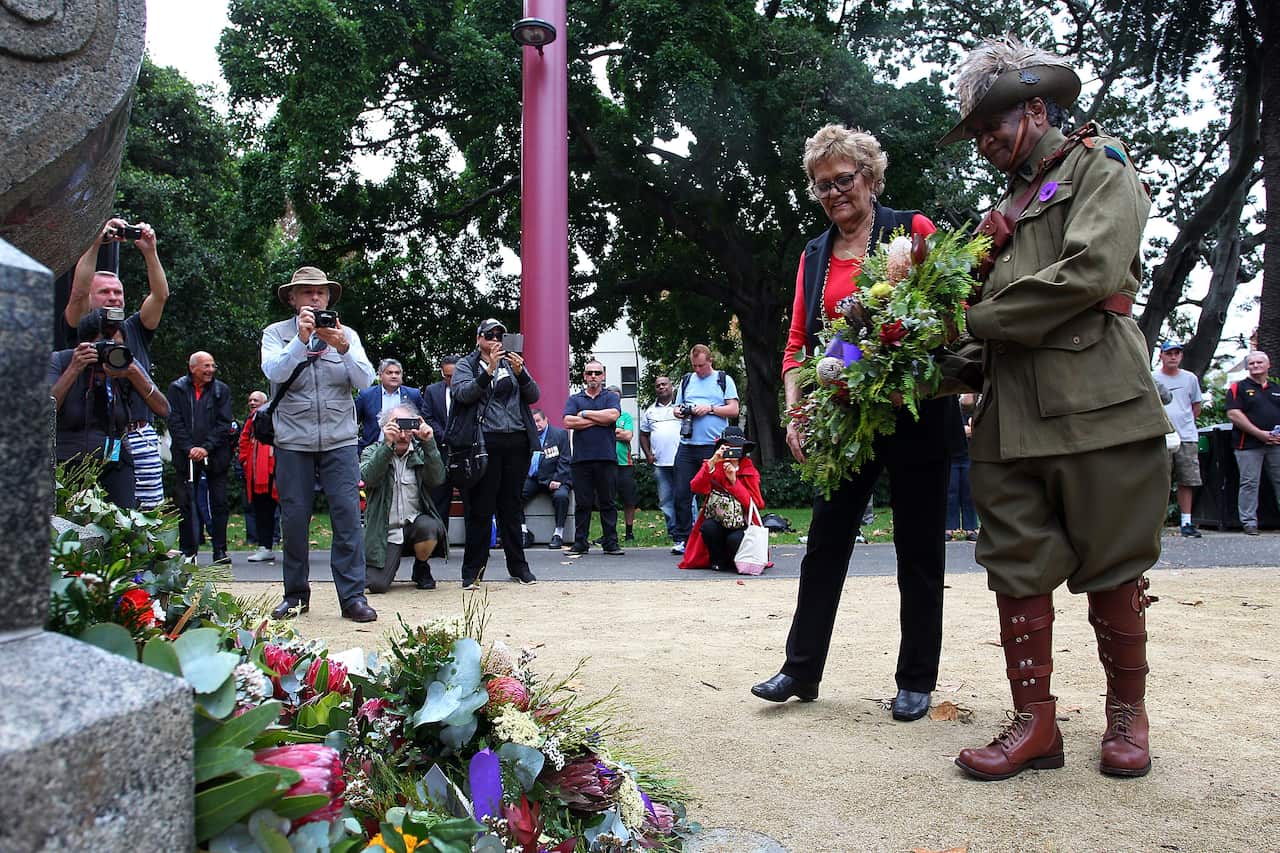
Aboriginal And Torres Straight Islander Veterans
A wreath is laid during the annual ANZAC coloured diggers service in Sydney. Credit: Lisa Maree Williams/Getty Images

What happened to First Nations servicemen when they returned home from war?

For many Aboriginal veterans, their sacrifices did not mean equality. 

They returned to a society where discrimination and restrictive laws were still part of everyday life. 

“Our men were fighting for rights in a foreign war that they weren't entitled to in their home countries,” Mr Bell says. “And to come home to a desperately unequal society, and they go back into segregation, the lack of legal acknowledgement, the restrictions on ownership of land, equal wages, the restriction of managing our children, the Stolen Generations, were in full swing.” 

Some Aboriginal veterans were able to access benefits, but many did not, with broader social and political restrictions limiting support. 

Even connecting with other veterans could be difficult. 

Returned soldiers were often encouraged to join community organisations such as RSL clubs that support veterans and organise events like ANZAC Day ceremonies. 

But many of these clubs were licensed venues, meaning alcohol was served, and Aboriginal people were often restricted from entering these spaces.

They were effectively excluded from both support and connection. 

How is Australia recognising Aboriginal and Torres Strait Islander military service today?

In recent decades the Australian War Memorial has taken a more active role in uncovering and sharing Aboriginal and Torres Strait Islander service. 

“Our stories are shared equally and proportionately throughout all of our galleries,” Mr Bell explains. “We have Indigenous content in all the services, all of the galleries, all of the stories, all of our representations.”

There is no Black corner at the Australian War Memorial. What we do is tell the story equally throughout, as the veterans have asked us to do.
Michael Bell

“In the uniform, they could only see themselves as the colour of their service such as the green, the blue or the grey for army, air force and navy.”

This approach reflects how many Aboriginal servicemen saw themselves—as soldiers first, serving alongside others.  

At the same time, long-hidden stories are now being rediscovered and shared with families and communities. 

“On the occasion where we have the only known photo of an Aboriginal man in our collection, and the family haven't seen it… we could provide that to them on behalf or in recognition of his service... and that's really touching and special for me—to be able to share that with the families that know this knowledge and information is held in an institution where we're positively trying to include the previously or lesser known story about Aboriginal and Torres Strait Islander service.”

For families, these moments can be powerful, helping to reconnect with history, identity and loved ones. 
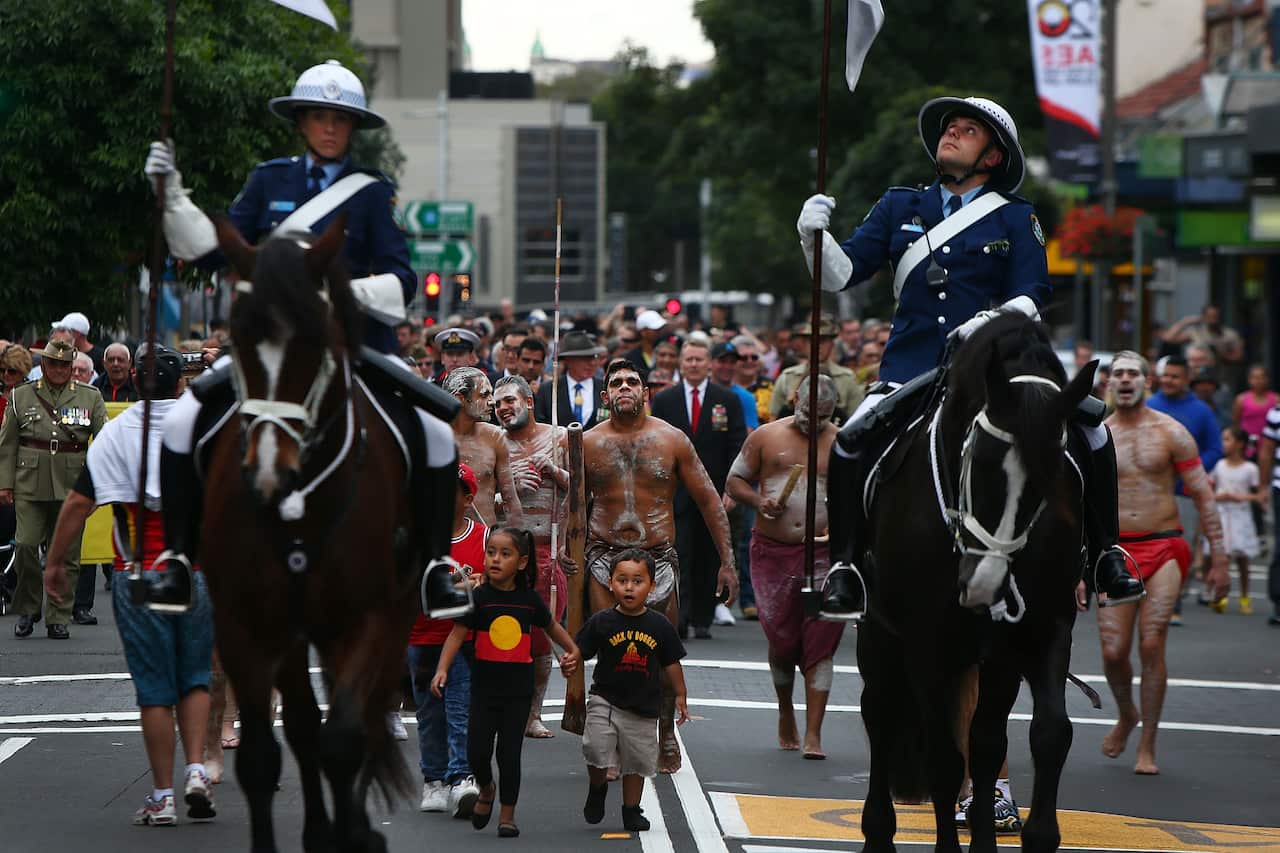
Aboriginal And Torres Straight Islander Veterans
The annual ANZAC coloured diggers event in Sydney celebrates the contributions of Aboriginal and Torres Strait Islander servicemen and servicewomen. Credit: Lisa Maree Williams/Getty Images

What should you know about Aboriginal and Torres Strait Islander history this ANZAC Day?

Understanding ANZAC Day means recognising both the contributions and the challenges faced by Aboriginal and Torres Strait Islander peoples. 

“It's about the full and total history of Australia and how it is today,” Mr Bell states, “not the unseen nation that we have been in previous years. And for the First World War guys, having to hide their heritage, we want to be able to encourage them, to see the full history of Australia as it is, not as it was written by previous systems that excluded our acknowledgement.”

ANZAC Day is a time to remember those who served in wars and conflicts and for many Australians, it's a moment to come together to honour history. 

As these stories become more widely shared, they help paint a fuller picture of Australia’s past—and its present. 

Subscribe to or follow the Australia Explained podcast for more valuable information and tips about settling into your new life in Australia.

Do you have any questions or topic ideas? Email australiaexplained@sbs.com.au

spk_0

SBS acknowledges the Traditional Custodians of Country and their connections and continuous care for the skies, lands and waterways across Australia.

spk_1

You're listening to Australia Explained, an SBS audio podcast helping you navigate life in Australia.

spk_2

Hello, I'm Lowanna Grant, executive producer of NITV Radio. I'll be your host for this special episode of the Australia Explained. ANZAC Day is one of Australia's most important national days. Each year people gather to remember those who served in wars, conflicts, and peacekeeping missions. But understanding ANZAC Day can take time, especially if you're new in Australia.

spk_2

Whose stories are we remembering and are there stories we don't always hear? In this episode, we explore an important part of Australia's history that has often been overlooked, the service of Aboriginal and Torres Strait Islander peoples.

spk_2

Many Aboriginal and Torres Strait Islander people served in Australia's armed forces, including during the 1st and 2nd World Wars, often alongside non-Indigenous Australians, even when they were officially barred from enlisting. Today there is a growing effort to ensure these stories are recognised and remembered. Ngunnawal/Gomeroi man Michael Bell is part of that work as Indigenous liaison officer at the Australian War Memorial.

spk_2

He helps identify and recognise the service and sacrifice of Aboriginal and Torres Strait Islander peoples, both those who served in uniform and those who supported the war effort on home soil. Through this work, a clearer picture is beginning to emerge.

spk_3

We currently have just over 1200 Aboriginal men enlisted or attempted to enlist in the First World War, and approximately we're estimating it's going to be about 6500 men in

spk_3

the Second World War. It's an ongoing project and the numbers change weekly as we identify and add and include men on our list.

spk_2

These numbers continue to grow as more records are uncovered, but one question often asked is how do these figures compare to non-Indigenous Australians?

spk_3

We've statistically viewed the numbers of Aboriginal attestations compared to known populations, and the rates of enlistments or attestations

spk_3

are the same to their non-Indigenous brothers and sisters.

spk_2

In other words, despite facing significant barriers, Aboriginal people enlisted at similar rates to non-Indigenous Australians. So what were those barriers? Michael Bell explains that restrictions existed at multiple levels. Aboriginal people faced limits on their movement across the country. They were not recognised as full Australian citizens and in some cases, not even recognised as people under the law.

spk_2

And military policies often excluded those without European heritage. Together these created major obstacles for those wanting to serve. But even with these restrictions, many people went to extraordinary lengths to enlist.

spk_3

Oh, we have an Aboriginal man that's walked from Queensland all the way down to Albury, and on his way, he's tried to enlist 5 times, ultimately to get in and unfortunately didn't get to serve because he passed away of illness on the ship

spk_3

on the way over to the battlefield, so it's the dedication and re-enlistment of our men where they've been rejected for being Aboriginal, but go back and try again.

spk_2

Stories like this show determination, resilience, and a strong desire to serve country even when that country did not offer equal rights. But what happened after these servicemen returned home? For many Aboriginal veterans, the end of the war did not mean equality.

spk_2

They returned to a society where discrimination and restrictive laws were still part of everyday life.

spk_3

Our men were fighting for rights in a foreign war that they weren't entitled to in their home countries.

spk_3

And to come home to a desperately unequal society and to go back into segregation, the lack of legal acknowledgement, the restrictions on ownership of land, equal wages, the restriction of managing our children, the Stolen Generations were in full swing.

spk_2

Some Aboriginal veterans were able to access benefits, but many did not, with broader social and political restrictions limiting support.

spk_2

Even connecting with other veterans could be difficult. Returned soldiers were often encouraged to join RSL clubs, community organisations that support veterans and organise events like ANZAC Day ceremonies. But many of these clubs were licenced venues, meaning alcohol was served.

spk_2

Because Aboriginal people were often restricted from entering these spaces, they were effectively excluded from both support and connection. Today, there is growing recognition of this history.

spk_2

In recent decades, the Australian War Memorial has taken a more active role in uncovering and sharing Aboriginal and Torres Strait Islander service. Mr Bell explains.

spk_3

Our stories are shared equally and proportionately throughout all of our galleries. We have Indigenous content in all the services, all of the galleries, all of the stories, all of our representations. There is no Black corner at the Australian War Memorial. What we do is tell the story equally throughout.

spk_3

The veterans have asked us to do in the uniform, they could only see themselves as the colour of their service, such as the green, the blue, or the grey for army, air force, and navy.

spk_2

This approach reflects how many Aboriginal servicemen saw themselves as soldiers first, serving alongside others. At the same time, long hidden stories are now being rediscovered and shared with families and communities.

spk_3

On the occasion where we have the only known

spk_3

of an Aboriginal man in our collection and the family haven't seen it or didn't know what their great grandfather or great uncle looked like, we can provide that to them on behalf of recognition of his service and recognition of his contribution, and that's really, really touching and special for me to be able to share that with the families and know that that knowledge and information is held in an institution where we're positively trying to include the previously or lesser known story about Aboriginal and Torres Strait Islander service.

spk_2

For families, these moments can be powerful, helping to reconnect with history, identity, and loved ones. So this ANZAC Day, what should you, especially if you're new to Australia, keep in mind?

spk_3

It's about the full and total history of Australia and how it is today, not the unseen nation that we have been in previous years and for the First World War guys, you know, having to hide their heritage, where we want to be able to encourage them

spk_3

to see the full history of Australia as it is, not as it was written by previous systems that excluded our acknowledgement.

spk_2

ANZAC Day is a time to remember those who served in wars and conflicts, and for many Australians, it's a moment to come together to honour history. Understanding ANZAC Day means understanding the full story of Australia.

spk_2

That includes recognising both the contributions and the challenges faced by Aboriginal and Torres Strait Islander peoples. As these stories become more widely shared, they help paint a fuller picture of Australia's past and its present.

spk_2

Thank you for listening to this episode of Australia Explained. The interview was conducted by Rachael Knowles, sound edit by Melissa Compagnoni, and the Australia Explained managing editor is Roza Germian, and I'm Lowanna Grant. Until next time.

spk_1

This was an SBS audio podcast. For more Australia Explained stories, visit SBS.com.au/Australiaexplained.

spk_4

Subscribe or follow the Australia Explained podcast for more valuable information and tips about settling into your new life in Australia. Do you have any questions or topic ideas? Send us an email to australiaexplained@sbs.com.au.

END OF TRANSCRIPT

Share