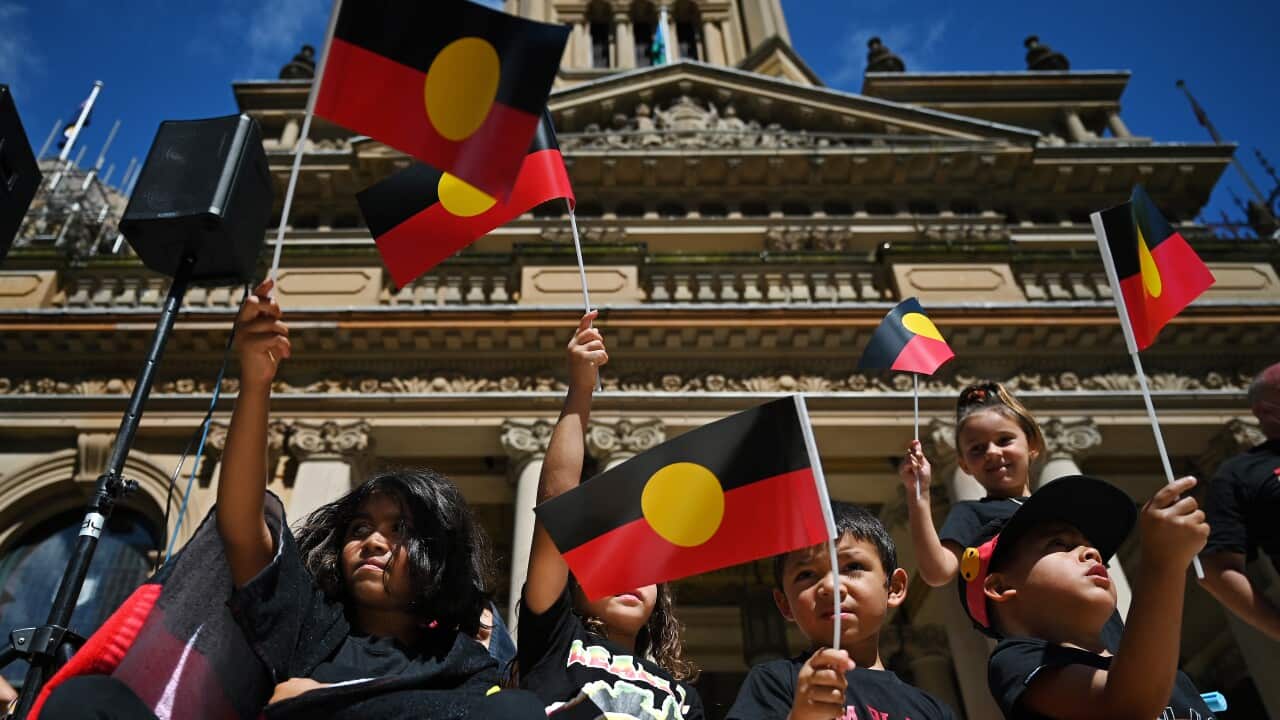

At school, work, council offices or sporting events, you might see a red, black and yellow flag flying beside the Australian national flag. This is the Aboriginal flag, representing the Aboriginal people of Australia and their connection to land, community and stories.
Key Points
- The Aboriginal flag is one of Australia’s three official national flags.
- The Aboriginal flag was designed in 1971 as a land rights protest flag, becoming an official ‘Flag of Australia’ in 1995.
- Its black, red and yellow design symbolises Aboriginal people, Country and the sun.
- The flag has grown from protest symbol to everyday marker of pride, welcome and belonging, and is now freely usable after the “Free the Flag” campaign.
- What is the origin of the Aboriginal flag?
- What is the meaning of the Aboriginal flag?
- When did the flag start appearing everywhere?
- Who owns the Aboriginal flag?
In Australia, there are three official national flags:
- The Australian national flag
- The Aboriginal flag
- The Torres Strait Islander flag
For many Aboriginal people, the Aboriginal flag is not just a symbol—it’s a daily reminder of strength, survival and identity.
What is the origin of the Aboriginal flag?
There wasn’t always an Aboriginal flag. It was designed in 1971 by Luritja and Wombai artist and activist Uncle Harold Thomas. He is known as one of the first Aboriginal people to graduate from an Australian art school, having attended the South Australian School of Art.
The Aboriginal flag was first flown at a land rights protest at Victoria Square in Adelaide, on what was then known as National Aborigines Day, 12 July 1971. Soon after, it was adopted by the Aboriginal Tent Embassy in Canberra in 1972, as a powerful symbol for land rights and self-determination.
In 1995, the Australian Government proclaimed the Aboriginal flag as an official ‘Flag of Australia’ under the Flags Act 1953, placing it alongside the Australian national flag.
What is the meaning of the Aboriginal flag?
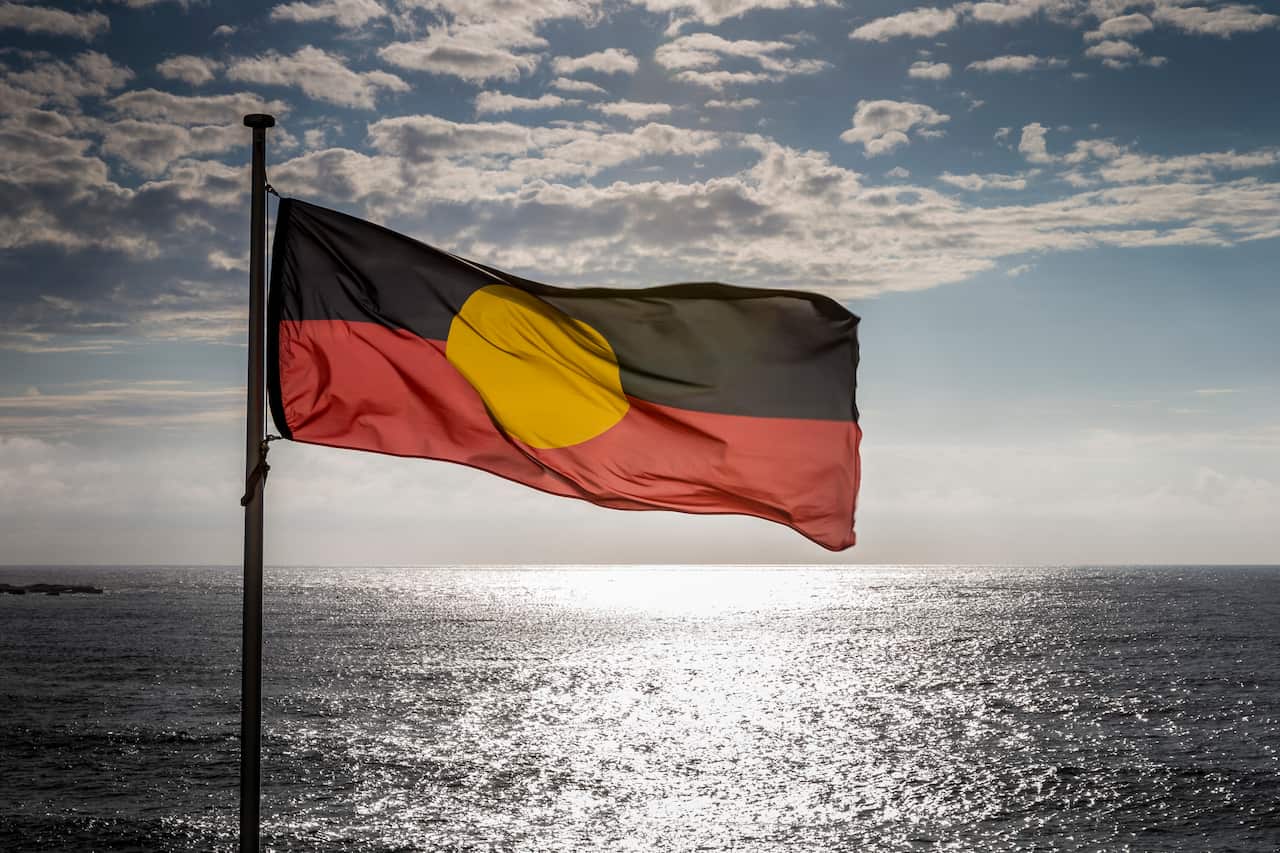
The Aboriginal flag is divided into two equal halves, with black on the top, red on the bottom and a yellow circle in the centre.
- The black represents Aboriginal people
- The yellow is the sun
- Red depicts the earth and Aboriginal people’s relationship to Country (the land)
Emerging artist Jade Brennan, a Gomeroi and Fijian artist says flags represent identity.
When I see the flag, I see my Country, I see my people and I see the sun, which is the creation. You know it's what the sun is, what brings people and our land together.Jade Brennan
"It’s something that we carry. Our land is so important to us… having the flag is basically displaying who we are.”
Wonnarua woman Aunty Susan Kendall, who grew up in the regional NSW town of Condobolin, remembers a time before the flag was widely seen.
Her first memory of the Aboriginal flag was not in a classroom, or government buildings, but on television during protests.
“I actually saw the flag on telly in a protest... all the media back in the day was negative. It was about these people protesting. And here’s this flag that to me looked like a German flag, but it wasn’t quite a German flag. That was my first experience seeing an Aboriginal flag.”
When she later became a teacher, Aboriginal education and the flag were hardly mentioned.
“In the beginning of my teaching experience, it wasn’t a subject,” she says. “It was…’by the way, here’s a colouring-in, it’s an Aboriginal flag. Does anyone know the colours and what they stand for?’ That was as far as Aboriginal education went in the early days.”
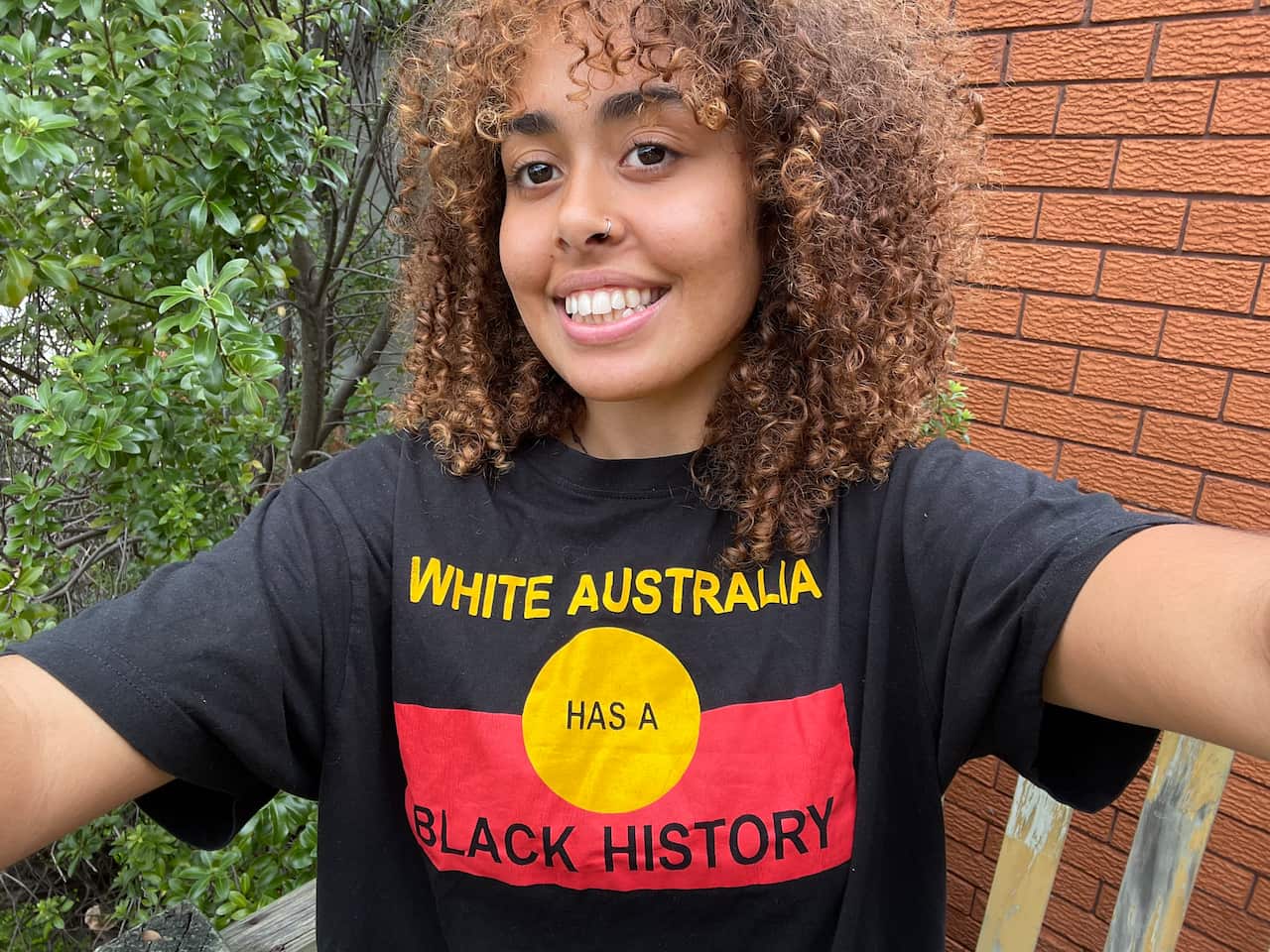
For Ms Brennan, she saw the Aboriginal flag everywhere.
“Seeing the flag on clothing or temporary tattoos at school, we would trade them in the bathrooms. It’s comforting to know who’s with you, especially when we all look different.”
While Aunty Susan remembers when the flag was created, younger Aboriginal people have grown up with it all around them. Ms Brennan says the Aboriginal flag was always present:
“I think I saw it most in the area I grew up in, in Matraville, going down to Kajaga, I used to go to this daycare there and I just remember there used to be this big Koori [Aboriginal] flag mural. And it was so big, it was overwhelming for my little body.”
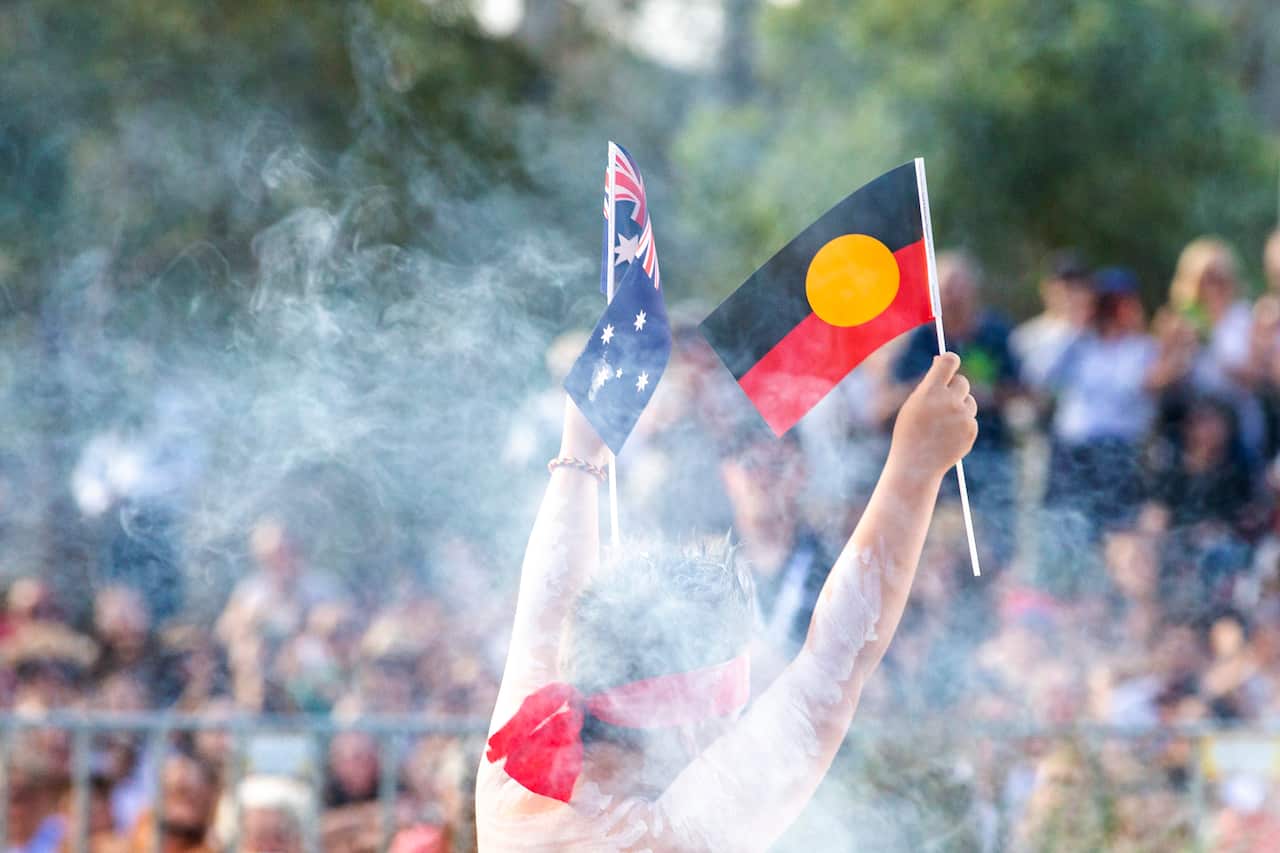
When did the flag start appearing everywhere?
When the Aboriginal flag became official in 1995, Aunty Susan noticed small changes.
“When the flag became official and the flags were flying you sort of noticed. The Council has the flag flying. You saw it once and you just thought, that’s great.”
Now, seeing the Aboriginal flag is an everyday occurrence, Aunty Susan says.
You see the little Aboriginal flag stickers on cars. I just love that.Aunty Susan Kendall
"I love seeing that and everybody knows, whether they accept it or are proud of it, it doesn’t matter, it’s there now, it’s legal. It’s the Aboriginal flag. It represents our people.”
Ms Brennan says it’s important for young First Nations to see flags welcoming them into public spaces.
“When I go into a space, I want to feel accepted, and knowing that the flag is out there…usually they’re out in front where you’re welcomed in.”
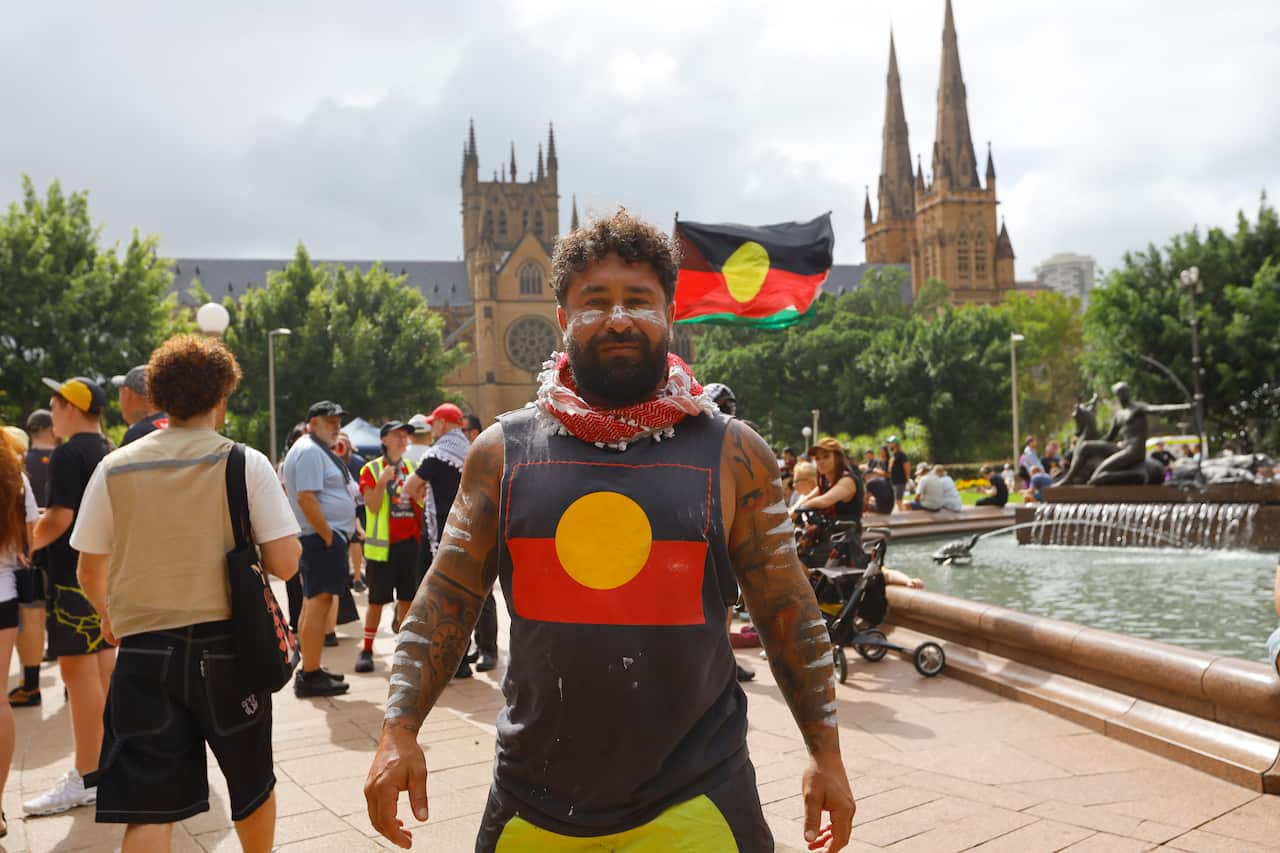
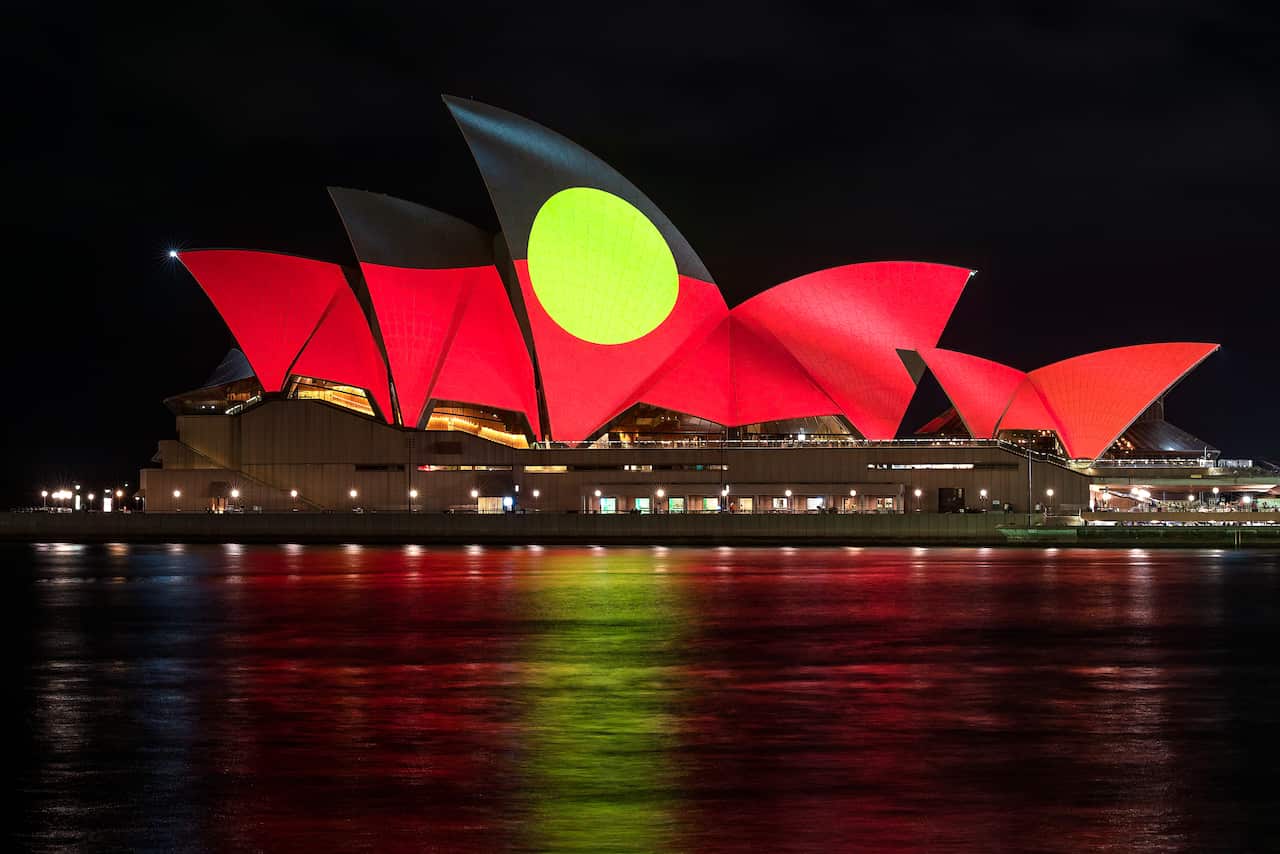
For both Aunty Susan and Jade, the flag in public spaces, outside schools, on bridges, at rallies, on clothes and tattoos, has become a source of pride and connection.
Who owns the Aboriginal flag?
For many years, the Aboriginal flag was also at the centre of a legal and cultural debate about who could use it.
Uncle Harold Thomas, as the designer, held the copyright to the flag. He later licensed its use, including to a private company that controlled the flag on clothing and merchandise. This meant that Aboriginal organisations and communities sometimes received legal letters or were blocked from using the flags without permission or paying fees.
In response to this, Aboriginal-led fashion brand Clothing The Gaps and allies launched the “Free the Flag” campaign. Their goal was to push for the Aboriginal flag to be freely available for Aboriginal people and communities to use, and to advocate for government action so the flag could be treated like other national flags, not just a private logo.
After years of public pressure and campaigning, the Commonwealth Government announced in 2022 that it had acquired the copyright to the Aboriginal flag from Uncle Harold Thomas. This meant:
- The Aboriginal flag is now free for public use (like the Australian national flag)
- People can put the flag on clothing, art and merchandise without needing to pay fees
- Aboriginal people can use their own flag without fear of legal action.
Looking back, Aunty Susan says the flag has helped shift understanding, but there is still work to do:
“The Aboriginal flag means something. Everybody now knows what it’s about, who it represents. Enjoy and learn culture, especially Aboriginal culture, because this is where you’re living. Understand it... you don’t have to live it, but understand it and be proud—proud to be here and proud of your own flag.”
For new migrants, the Aboriginal flag is an invitation to recognise that you are on Aboriginal land.
It invites you to learn the name of the local Nation or Nations where you live, and to see Aboriginal people as central to Australia’s story: past, present and future.
Subscribe to or follow the Australia Explained podcast for more valuable information and tips about settling into your new life in Australia.
Do you have any questions or topic ideas? Email australiaexplained@sbs.com.au