

In Australia, government-subsidised rental housing is available for eligible households. Assessment is based on need under criteria that vary depending on your state or territory. Here’s what to expect when applying for different types of housing assistance, some common myths around social housing and where to reach out for help.
Key Points
- Demand outweighs supply for social housing across Australia.
- Every state or territory has its own register for social housing applications.
- Anyone can find themselves under rental stress, experts say.
- Affordable housing refers to subsidised rent programs that sit between the social housing system and the private market.
- What is social housing, public housing and community housing?
- Who can access housing assistance?
- Are people who migrated to Australia eligible for social housing?
- How do I apply for housing assistance?
- How many social housing dwellings exist in Australia?
- How long is the wait for public housing in Australia?
- Why do people choose or end up in social housing?
- What is affordable housing?
- How can I apply for affordable housing?
The terminology used for lower rent housing programs can be confusing.
For example, public housing and community housing are different categories within the same system.
Dr Michael Fotheringham, managing director of the Australian Housing and Urban Research Institute, breaks down the terms.
What is social housing, public housing and community housing?
“Social housing is an umbrella term that covers both public housing and community housing,” Dr Fotheringham explains.
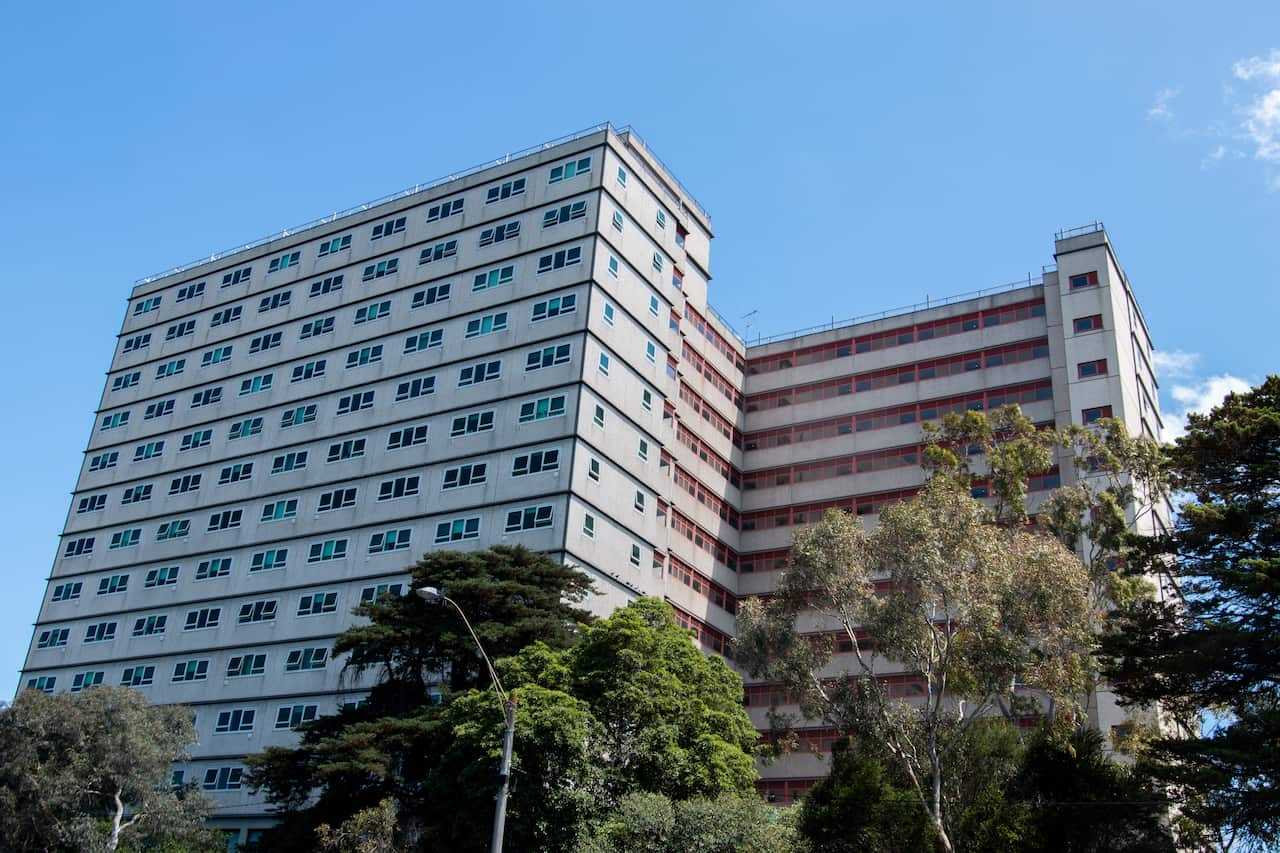
Public housing is owned and managed by state governments.
Community housing is managed and often owned by nonprofit community housing providers working in partnership with government.
Who can access housing assistance?
Rules for accessing long term social, public or community housing are set by state governments.
“Each state and territory has its own set of criteria. They're similar but not identical,” Dr Fotheringham says.
Most jurisdictions will offer housing assistance to low-income households.
“Those with particular vulnerabilities, people escaping domestic violence, people with disability are also eligible. There is a range of criteria on priority and eligibility.”
Are people who migrated to Australia eligible for social housing?
Migration is not one of the eligibility criteria for social housing.
People won't be eligible just on the basis of having migrated here.Dr Michael Fotheringham
“And just being a migrant doesn't necessarily prevent you from qualifying for other reasons,” Dr Fotheringham says.
How do I apply for housing assistance?
To get on the social housing register—what is colloquially known as the wait list—you need to apply to your local housing authority.
As part of the registration process, you will need to complete required forms and have your eligibility assessed.
You can find out more and apply through your state or territory’s housing authority:
How many social housing dwellings exist in Australia?
As of June 2024, there were around 452,000 social housing dwellings in Australia. This translates to approximately 4 per cent of total homes in the country.
“So it's not a big segment of the market,” Dr Fotheringham says.
“That means that we have more demand than we have supply for social housing. It also means it can take some time to work through eligibility and availability of suitable accommodation.”
How long is the wait for public housing in Australia?
Data collected by the Australian Institute of Health and Welfare show that in 2023-4 the average wait time for public housing was nearing 18 months.
Wait times vary depending on the applicant’s circumstances and location, even within the same jurisdiction.
But demand exceeds supply across both regional and urban areas, Dr Fotheringham says.
“Most states and territories these days are looking to increase housing supply across the whole jurisdiction. So we're not just talking about capital cities.
“There's certainly demand in regional areas, particularly in regional centres.”
Why do people choose or end up in social housing?
The most common myth around social housing is the stereotype of vulnerability and risk around its residents, according to Dr Stefanie Plage.
She's a Research Fellow at the University of Queensland School of Social Science, working on the relationship between housing and health.
You have a diversity of residents in social housing just as in other forms of housing.Dr Stefanie Plage
She points to rental stress as one of the main reasons why people choose or end up in social housing.
“Whether people have a background of long-term social disadvantage or if they're just now starting to struggle, the one thing they have in common is that they're priced out of the rental market.”
Housing affordability is also a key driver.
“You get more and more people who have really never had problems finding a place to stay or getting a rental or getting a unit, who are just now realising it can happen to anyone,” Dr Plage adds.
What is affordable housing?
In the context of rental housing assistance, the term ‘affordable housing’ is sometimes mistaken for social housing, but it’s different.
Affordable housing is a lower-level subsidy which varies state by state and program by program.
Simon Newport, Chief Executive Officer of Homes Victoria, describes it as ‘the missing middle’ in the housing continuum.
“At the very start of the housing system, you have supported housing homelessness services, then social housing, being public and community, and then you have affordable housing, which sits somewhere between social and private market.”
Serving people on low to moderate incomes, affordable housing programs offer reduced rent accommodation, compared to market standards.
“Affordable housing is generally delivered at no more than 75 per cent of market rent, or 25 per cent less than what people would pay in the market,” Mr Newport says.
How can I apply for affordable housing?
Affordable housing programs are run by community housing providers, and don’t draw from the social housing wait list.
“So you can apply directly through the community housing providers.”
You can find providers managing affordable housing in your area via the nationwide Community Housing Provider Register.
Subscribe to or follow the Australia Explained podcast for more valuable information and tips about settling into your new life in Australia.
Do you have any questions or topic ideas? Send us an email to australiaexplained@sbs.com.au