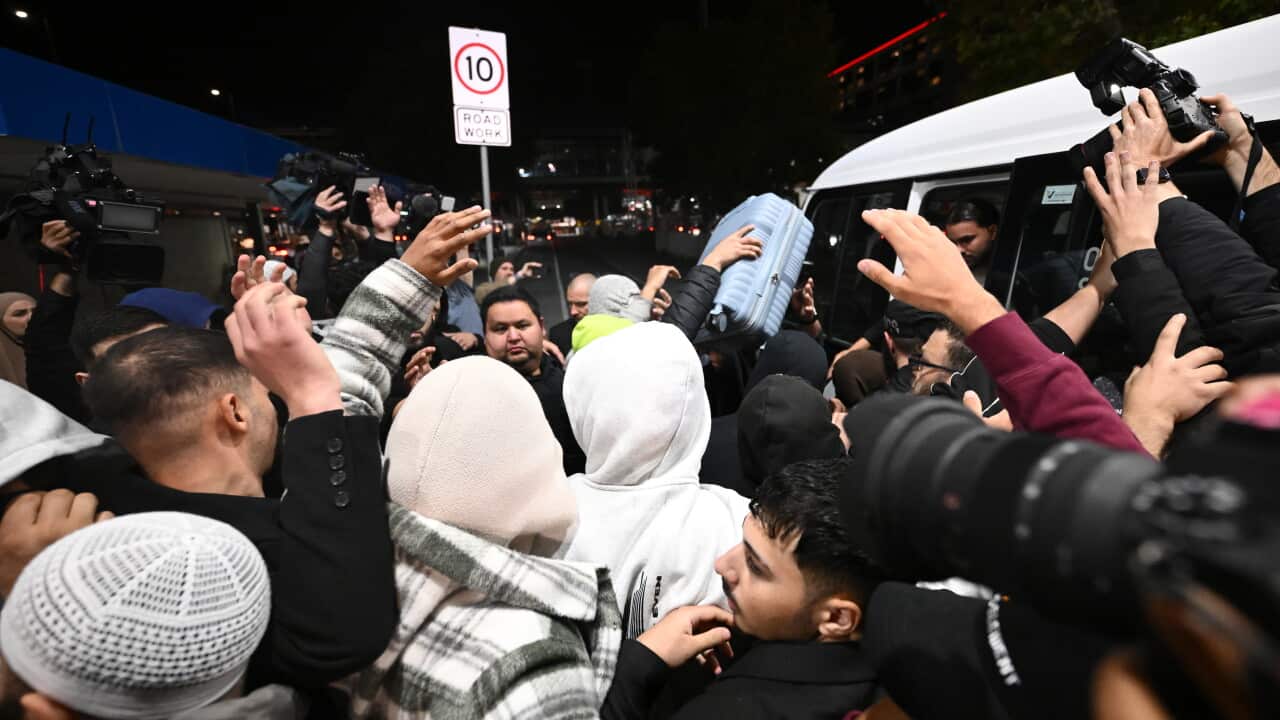

The return of 32 women and children from Syria, who are linked to the self-proclaimed Islamic State group, has prompted concerns around community safety and discussions around mandatory Countering Violent Extremism (CVE) activities for at-risk individuals.
Principal Consultant at Frenesis Consulting and Training, an organisation working to counter violent extremism and terrorism, Peta Lowe told SBS Examines it’s reasonable for the community to be concerned.
"But I think what’s also helpful is to add some perspective to that conversation as well, around: what are the things that are in place to manage that? What’s the reality they still pose a risk?
"It’s very political right now, but this is not the first group of returnees that we’ve had ... let’s also be understanding that actually, we’ve done this before," she said.
Assistant Secretary of Countering Violent Extremism in the Department of Home Affairs Alexander Goldie told SBS Examines about the measures in place for individuals at risk of extremism.
"We work out what an individual needs, whether that's counselling, mental health support, housing, education, employment, and work up an individual plan, and then get the individual the support they need to help them get back on track," he said.
"We're trying to change people's behaviour away from problematic behaviours and activities towards healthier ones."
In this SBS Examines episode we ask: what exactly is Countering Violent Extremism (CVE), and how is it implemented in Australia?