
East and South Asian languages have overtaken Arabic in Sydney and Greek in Melbourne as the most widely spoken language besides English in Australia’s largest cities. But new research mapping multilingualism within Sydney has also re-emphasised more needs to be done to foster multilingualism among school students.
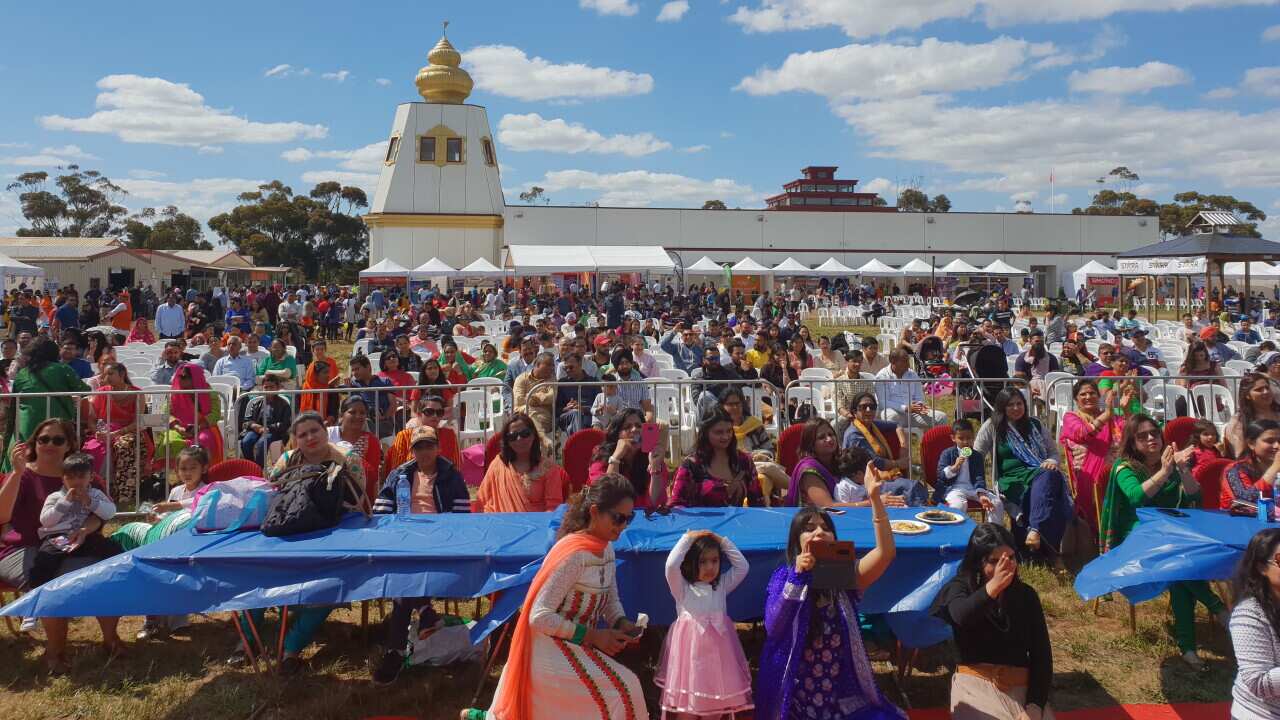
The fastest-growing language group in Sydney is the Indian languages.
The president of the Federation of Indian Associations New South Wales, Yadu Singh, says he is not surprised.
"The migrant intake here in Australia, India has been number one for quite many years. So a lot of these people come here and they have their mother tongue, could be Hindi, could be Punjabi, could be Tamil."
Mandarin has become the most predominant language besides English in Australia's two largest cities -- and by a particularly wide margin in Melbourne.
But new research mapping multilingualism within Sydney has also shown again a vital need for more effort to foster multilingualism among school students.
Multilingual Sydney: A city report, released as a book, has found the number of Mandarin speakers in Sydney increased by 71 per cent just in the five years from 2011 to 2016.
Co-editor Alice Chik, a senior lecturer in educational studies at Sydney's Macquarie University, says the increase stems from the sharp rise in the number of both Chinese international students and migrants.
"We are seeing a shift from European languages to non-European languages in the last 10 years, and also in the near future, because of the migration history. For example, in the post-war period, we had more migrants coming from Europe, but, now, we have changed to the skilled-migrant scheme, and we are seeing more migrants from non-European speaking backgrounds."
In Sydney, Mandarin speakers now make up 4.7 per cent of the city's residents, followed by Arabic at 4 per cent, then Cantonese, Vietnamese and Greek.
In Melbourne, just over 4 per cent speak Mandarin, but that is well ahead of Greek at 2.4 per cent and Italian and Vietnamese, both at 2.3 per cent.
Alice Chik says researchers have also found a variety of languages, rather than one dominate language, regularly exists within suburbs.
"I think that's the biggest urban myth. There are actually no ethnic ghettos in Australia, because I can't find a street, or even a small area, where English is not spoken."
Despite the rich mix of languages in the country, researchers say they found languages are not being promoted in Australia's classrooms.
Another senior lecturer in educational studies at Macquarie, Dr Robyn Moloney, says Australia is lagging behind every other major English-speaking country in the number of people learning a second language.
"We need to connect ourselves to the rest of the world, even more strongly than the European outlook of having people right on your border."
Dr Meenakshi Srinivasan is Founder and Principal of Sydney Sanskrit School.
She says, “Languages are the most important connector with cultures of migrants.”
But this is not the only thing Dr Srinivasan wants people to learn multiple languages.
She argues, “Multilingual population will be able to cope better in global village and have better economic output for the country.”