
The Liberal party has agreed to a new leadership policy which aims to put an end to what many see as Canberra's 'coup culture'. Under the new rule, Liberal Prime Ministers can't be subjected to a leadership spill in their first term unless two-thirds of the party room back the change.
It's the most dramatic change to Liberal party processes since the party was established by Robert Menzies 74 years ago.
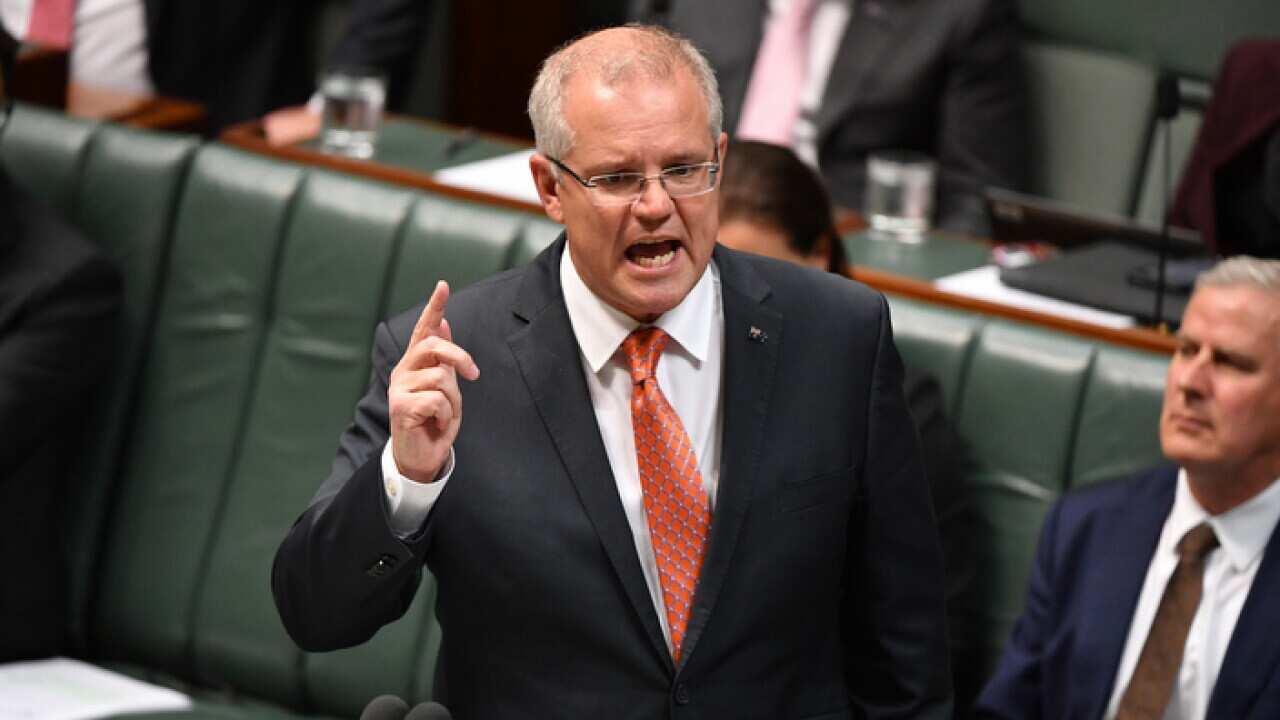
Scott Morrison has announced his team has made it tougher to oust an elected leader.
"We understand that frustration, we understand that disappointment, we acknowledge it and we take responsibility for it. Tonight the Liberal party in acknowledging this has made a decision. And that decision is, that an elected Liberal party leader, who goes to an election, wins that election and becomes prime minister, they will remain prime minister for that full parliamentary term. They will not be able to be removed from that office."
Under the change, two-thirds of the Liberal party room will now need to support a leadership spill before it can go ahead.
"The only safeguard that is put in place is the very high bar special majority. For that rule to be changed it would require a two-thirds majority of the parliamentary party. Now in my experience around this place, such a majority is rarely, if ever, achieved when it comes to these matters."
Prime Minister Morrison acknowledged frustrations expressed by Australian voters after a spate of leadership spills which have seen five Australian prime ministers in 10 years.
"Australians have the very reasonable expectation that when they elect a government, when they elect a prime minister, then they should be the ones to determine if that prime minister is to not continue in that office."
But Mr Morrison’s suggestion that Australian voters elect a prime minister isn’t the case.
Under the Westminster system, voters elect individual members of parliament.
The party or coalition with the majority of elected MPs takes on the position of government.
It is then up to the governing party to determine their leader, who will serve as Australia’s Prime Minister.
The Liberal party policy change was agreed to after extensive debate in a late-night party room conference, which is said to have caught a number of MPs by surprise.
Scott Morrison says he consulted with former Liberal Prime Minister John Howard ahead of the debate, but did not seek input from the most recent victim of a leadership coup, Malcolm Turnbull.
Liberal MP Mathias Cormann suspects, had the policy been introduced sooner, it's unlikely Tony Abbott or Malcolm Turnbull would have faced a leadership challenge.
"Now the rule that we adopted last night means Tony Abbott would not have been removed, but it also means, I suspect that Malcolm would not have initiated a surprise leadership spill in the circumstances."
Malcolm Turnbull told the ABC he welcomes the move, but questioned whether it will make an impact.
“The prospect of there being fewer, or less of, the sort of revolving-door prime minister-ship - so I think it’s a welcome reform. Of course how effective it will be, time will tell.”
Liberal MP Jason Wood says he hopes the new policy will give voters confidence going into the next federal election.
"The Australian public, we've listened to them, and we're hearing them over the last 10 years. They haven't been happy with the leadership changes and this is our way of saying to them, when you vote for Scott Morrison at the next election, and he becomes prime minister, he will be your prime minister for the term."
Independent MP Bob Katter has shown his support for the steps taken by the Liberal party leader.
"I think it's a brilliant move. Everyone says the place is falling apart, well now he's got very solid control."
Labor's Deputy Opposition leader Tanya Plibersek is critical of the move, suggesting the change shows Scott Morrison is more concerned about keeping his job than issues affecting ordinary Australians.
It's a similar criticism to that levelled at Kevin Rudd when he announced the Australian Labor Party's similar change to party rules in 2013, following the back-to-back oustings of himself then Julia Gillard.
The Labor party now requires a three-quarters (75%) majority to overthrow a prime minister, and a 60 per cent majority to remove an opposition leader.
Ms Plibersek also questioned the need to call an emergency meeting late at night to discuss party policy.
"If Scott Morrison was really interested in stability, he would explain why he knifed Malcolm Turnbull or he wouldn't have done it in the first place. Nothing says stability like a Liberal party meeting in the dead of night."