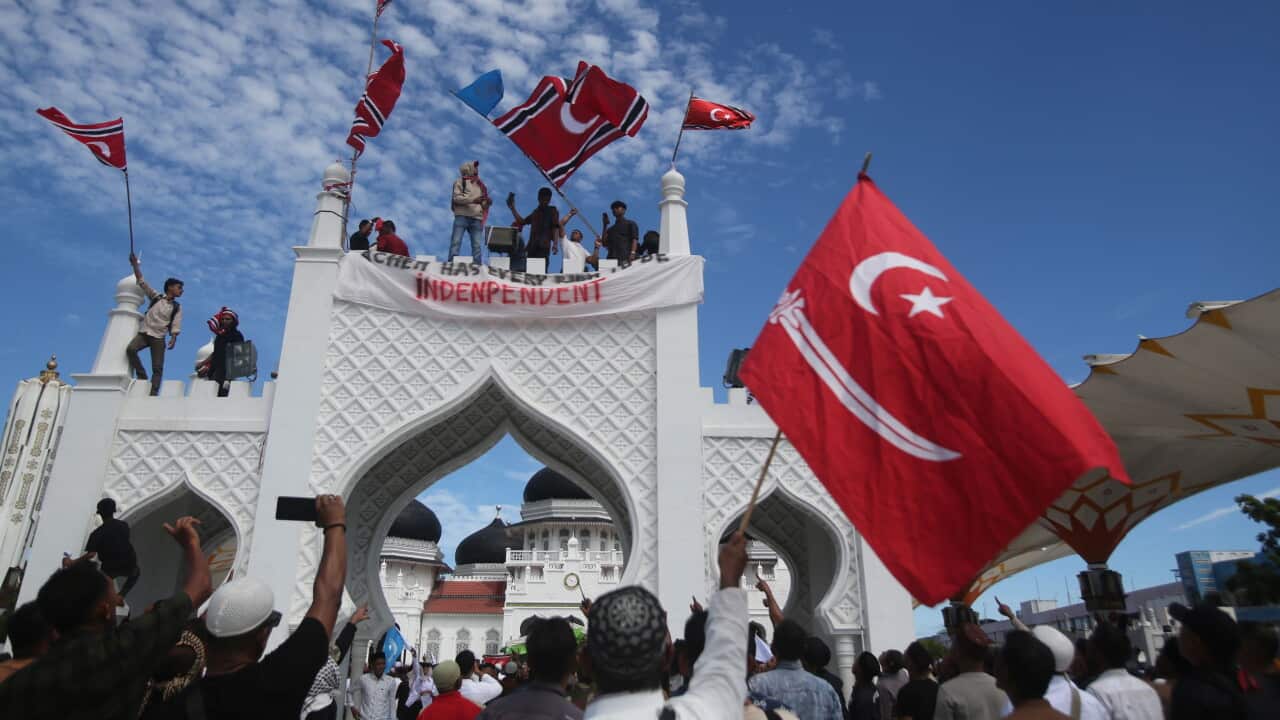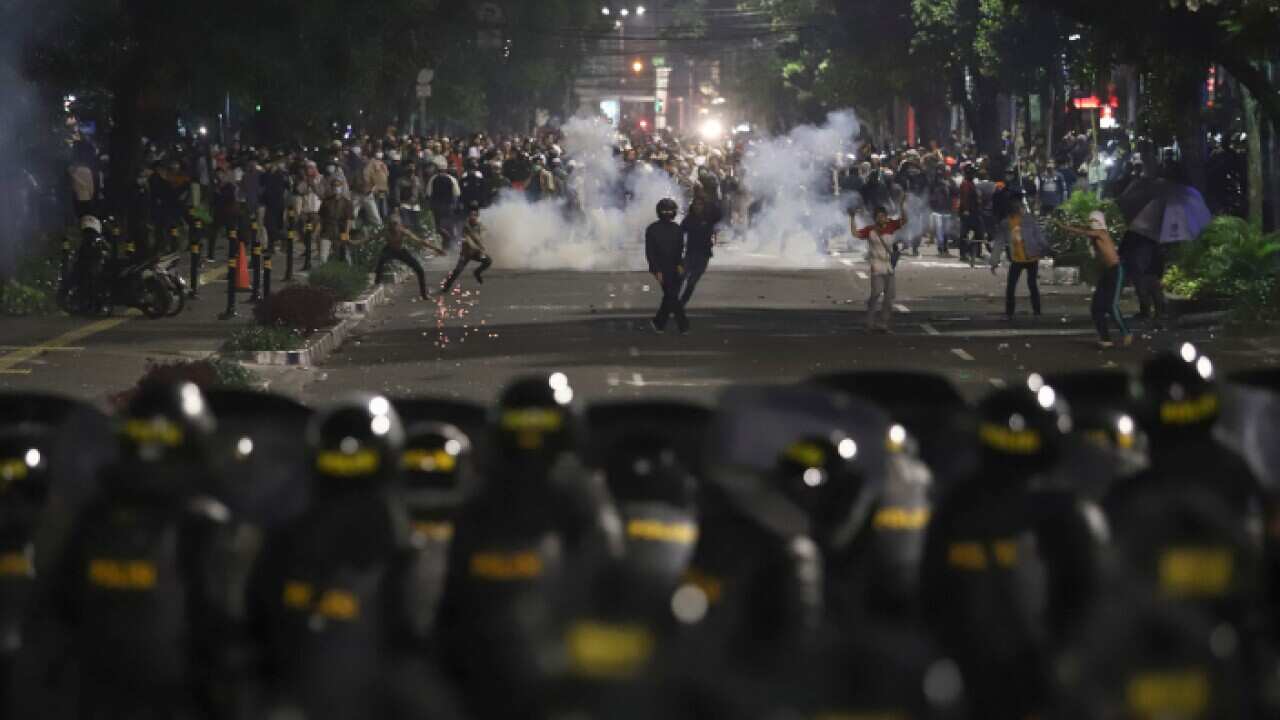

The student movement has once again gained momentum. However, there have been many changes within the movement, including doubts about whether its political power will still be as strong as that of its predecessors, particularly those of 1966 and 1998 in Indonesia.
The student movement in Indonesia is currently experiencing its ups and downs, much like similar movements in 1998 and 1966. The 1966 student movement gave rise to the New Order, while the 1998 student movement ushered in the Reform Era.
According to Dr. Hempri Suyatna, a social observer and lecturer in the Department of Social Development and Welfare, Faculty of Social and Political Sciences, Gadjah Mada University, Yogyakarta, the context and circumstances surrounding the student movement have indeed changed.
Commenting on the student protests that have erupted in various cities across Indonesia in recent days, he said that student social movements are perfectly legitimate. “They are part of the space for students to express their aspirations and criticisms,” said Hempri, who also teaches courses on social movements and development. These courses, among other things, examine student movements.
In this context, the space for students to express their aspirations and criticisms must not be obstructed by irresponsible individuals. Instead, the government, particularly the security forces, should provide protection for various forms of social movements carried out by students.
There must be no repression of the student movement. This is important to preserve the dignity of the student movement as an expression of the middle class with intellectual capacity. Students should indeed be at the forefront when various social and political situations arise that are considered unacceptable, particularly under the current circumstances.
Hempri acknowledges that not every student possesses a critical awareness of the nation’s situation. Some are hedonistic, while others are pragmatic—for example, those who believe that the most important thing is to graduate with a high Grade Point Average (GPA). However, there is also a third type of student: idealistic students who possess a critical outlook.

Yang kita cari sebenarnya adalah bentuk-bentuk sikap idealisme mahasiswa-mahasiswa yang tipologi ketiga ini. Dia tidak hanya sekedar memikiran IPK, indeks prestasi, tetapi dia juga memikirkan bagaimana isu-isu sosial yang mungkin akan menghambat proses-proses pembangunan.Dr. Hempri Suyatna
Today, amid rapid technological developments, social media has become a factor that distinguishes the current student movement from those of the past. The expression of criticism toward various social and political issues is no longer limited to street protests; it can also take place in the digital sphere. The struggle for democracy through digital spaces is increasingly inevitable.
Are students who care about the country’s current situation the dominant group? According to Hempri, although they do not constitute a large majority, such students still exist. The student movements of 1966 and 1998 were not dominant forces either. What also distinguishes the present situation is the growing role of social media, which is expected to become increasingly important in advancing democratic issues. Street protests will continue to exist, but their scale and frequency may decline.
Hempri points to several factors influencing this situation, including increasingly rigid academic regulations. In the past, students could remain enrolled for 14 semesters or even longer, whereas today they are generally required to graduate within 10 semesters. As a result, many students are reluctant to become actively involved in social movements because they are focused on completing their studies within the required timeframe. However, this situation should not be interpreted as evidence that students have become disconnected from society. Many university programs continue to bring students closer to communities and focus on empowerment and community service.
“They still uphold the spirit of people-centered economic values as part of the ideology underlying their struggle,” Hempri continued.
One of the challenges facing higher education institutions today is protecting students who participate in social activities, including demonstrations. Such actions should, after all, be viewed as spaces for students to express their aspirations and concerns. They reflect the anxieties students experience as members of society. Therefore, universities should not regard this kind of activism as something taboo. On the contrary, student movements can contribute to character development by encouraging students to be critical, inclusive, and collaborative.
As for who will emerge as leaders of the student movement, the current situation also appears to differ from that of 1966 and 1978. In the past, student movements had clearer and more unified issues and visions. Long-term repression under both the Old Order and the New Order produced prominent figures who became leaders of student movements. The current student movement is still searching for the momentum to reach the level of previous movements, while also confronting the challenge of maintaining continuity in its social activism.
Beyond the issue of momentum, this situation is also influenced by the political structure and system. Nevertheless, whatever happens, the student movement in Indonesia will remain visible. Street protests will continue to be part of its strategy, alongside the increasingly extensive use of information technology.
In other words, the student movement is no longer solely about social activism carried out on the streets. It also involves the development of digital forms of social mobilization that continue to evolve. According to Hempri, this may ultimately become what distinguishes today's student movement from the social movements of 1966 and 1998.