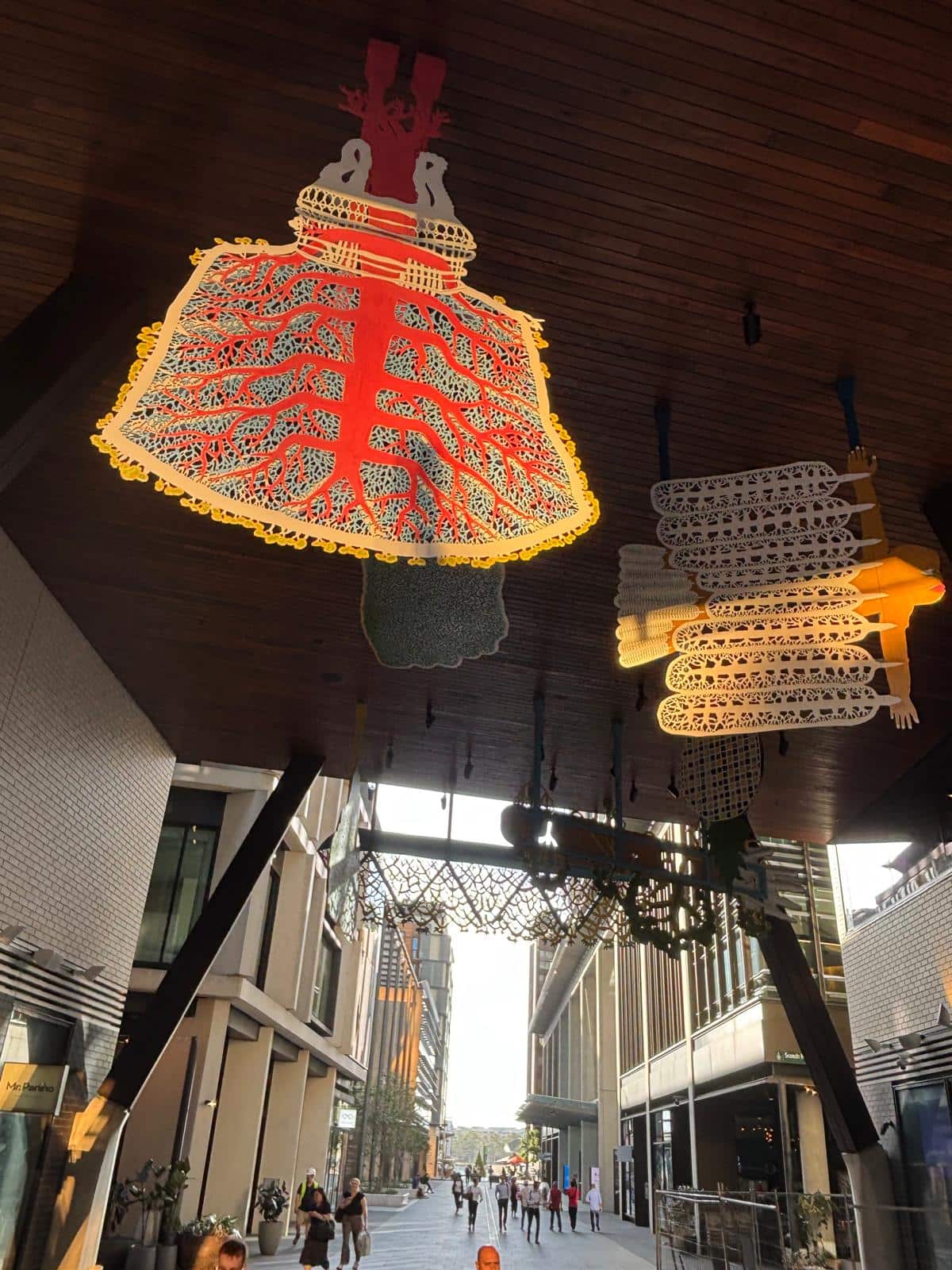
The Upside Down Garden is a permanent hanging sculpture installation located in the Barangaroo area of Sydney.
The process of realization of this work "The Upside Down Garden" took about six years, from the submission of proposals before the COVID-19 pandemic to finally being successfully installed.
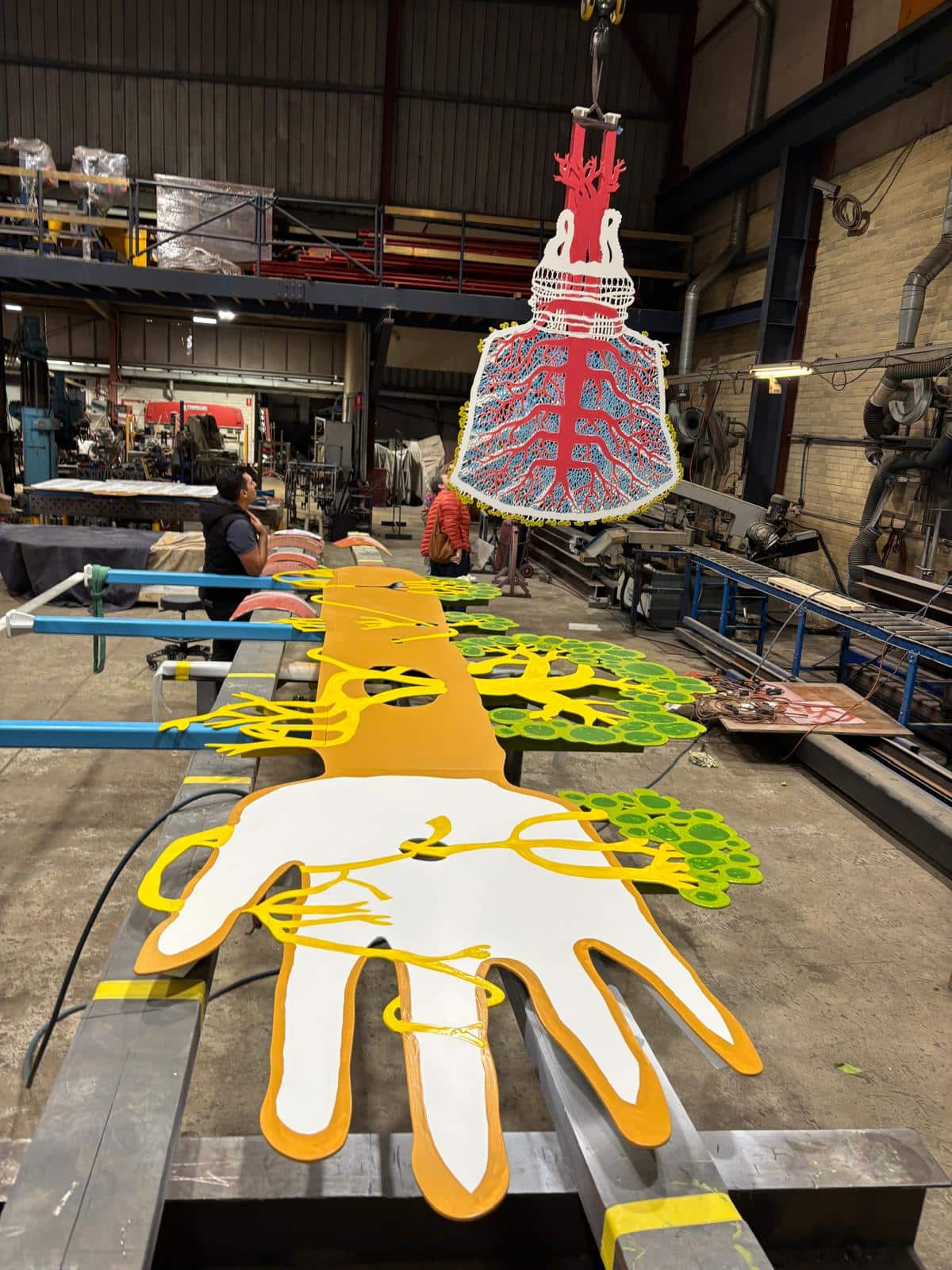
The work, made of steel material weighing several tons, features an upside-down visualization of a bonsai garden, as if the audience were looking at the ecosystem from below or the ocean floor.
The main inspiration for this work comes from the wealth of local history in the Sydney harbour area, from underwater natural history, indigenous (Aboriginal) narratives, to traces of colonial history such as the Hungry Miles phenomenon — a time when many workers queued for jobs at the port.
Jumaadi explained to SBS Indonesian that he wanted to create a contradiction amid Sydney's fast-paced economic hub. He presents this work as a “small temple” or space of reflection that provides a touch of humanity and tenderness among the rigors of concrete buildings and the hustle and bustle of business transactions.
The manufacturing process involves cross-disciplinary collaboration between artists, architects, and engineers to translate the expression of art into precise mathematical computation. In addition to the visuals, the installation also features audio elements resulting from a collaboration with composer Michael Toisuta.
The music sounds are scheduled to sound at specific times—such as dawn, noon, and dusk—inspired by Indonesian tradition of calling of worship.
Currently, the responsibility of maintaining the works has been handed over to the New South Wales Department of Infrastructure for a period of the next 25 years.