
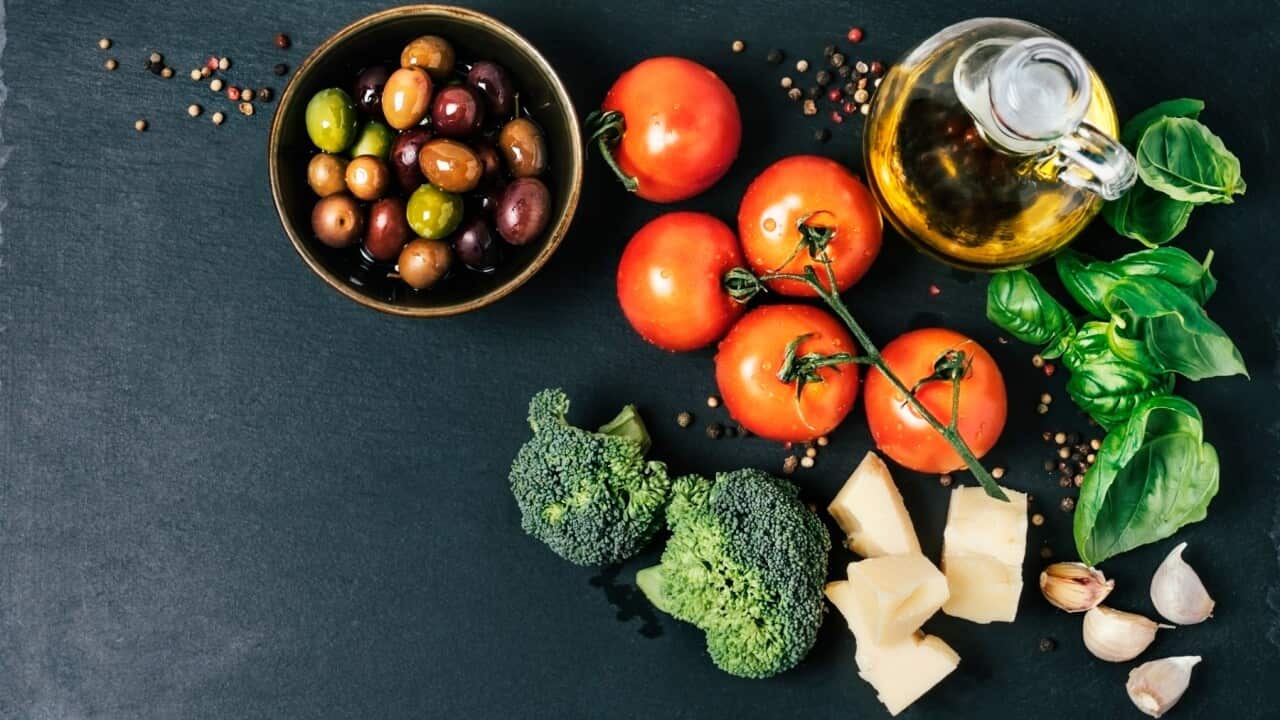

Fodmap, dieta iperproteica, senza glutine, basso contenuto di grassi, alimentazione sana: tante diete, tanti consigli contrastanti. Ma gli esperti australiani avvertono che seguire più diete contemporaneamente potrebbe avere conseguenze inaspettate.
SCARICA la trascrizione col testo a fronte in inglese.
Italiano
Dal mangiare sano ai muffin per carnivori - attenzione, non c'è pane - alla preparazione di pasti vegani, alle diete Fodmap e a centinaia di altri modi di alimentarsi, Internet è pieno di consigli alimentari.
Alcuni sono validi, forniti da esperti come medici, scienziati e dietologi accreditati, ma molti provengono da persone che non hanno alcuna formazione medica.
E questo, secondo gli esperti medici, è uno dei motivi per cui un numero crescente di persone sta ora mescolando vari programmi dietetici contemporaneamente in quello che è diventato noto come “diet stacking”.
"Diet stacking is essentially where we see someone accumulate diets or follow multiple diets at the same time. So for example, someone might be vegetarian, so they're following certain dietary restrictions related to being vegetarian. And then they also decide, for example, that they're having some gut symptoms and they try a diet to improve their gut symptoms. So they're basically layering two different diets at the same time."
Questa era la dottoressa Caroline Tuck, esperta di dietologia dell'Università di Swinburne.
È una delle autrici di un review paper pubblicato di recente che esamina l'incidenza crescente del “diet stacking”.
E questo si sta dimostrando una sfida per i gastroenterologi e i dietologi nella gestione dei disturbi cronici.
Un'altra coautrice è Sarah Melton della Monash University, anch'essa dietologa.
Melton ha affermato di vedere un numero crescente di persone che seguono più di una dieta.
Più comunemente, le persone iniziano una dieta priva di glutine e latticini, a volte senza alcuna prova di intolleranza a questi alimenti e senza considerare se tali diete siano effettivamente necessarie.
"Well gluten- and dairy-free can be demonised a little bit across multiple different health conditions or for health generally. So in my experience working with patients, I would see those two more commonly as the initial things that people may restrict just because someone else might've said to them they felt better not eating gluten or not consuming dairy."
Melton ha aggiunto che continuano a emergere nuove mode alimentari, aggiungendo un ulteriore livello a quello che è già diventato un mix complicato.
"I've seen the full spectrum. I suppose one of the dietary approaches that the approach itself, I guess, is eliminating so many diets that arguably it's in a way stacking multiple different dietary restrictions together is the carnivore diet. And this is certainly becoming popularised through social media and is very concerning to clinicians in terms of the things that we're excluding, the nutritional implications and your overall health. So if you're excluding all fibre from the diet, all fruits, vegetables, grains, that starts to become, obviously not nutritionally complete and has potential for increasing risk of other conditions."
Per la dottoressa Tuck seguire una dieta senza supervisione può portare a un'alimentazione scorretta.
Potrebbe anche causare malattie croniche come malattie cardiache, diabete di tipo 2, alcuni tipi di cancro e problemi di salute mentale.
"They might start to be inadequate in different types of nutrients, such as if they've gone dairy free and they're not having enough calcium sources, for example. So it can be that sort of real nutrient inadequacy, but sometimes it can also then lead to mental health challenges because then they're worried about eating out with friends or they're not going to social occasions or they're going to social occasions but not eating and that can really impact your mental health. We know that food is so much more than just nourishment: it's a really important part of our everyday life and socialisation and family gatherings. "
Un altro problema che sta emergendo è che i medici hanno difficoltà a diagnosticare le intolleranze perché le persone potrebbero aver già eliminato gli alimenti sospetti attraverso una dieta senza supervisione medica.
La dieta di eliminazione più comune per diagnosticare le intolleranze è la dieta FODMAP.
L'Università di Monash definisce i FODMAP come un gruppo di zuccheri che non vengono completamente digeriti o assorbiti nel nostro intestino.
Alcune persone, in particolare quelle affette dalla sindrome dell'intestino irritabile, hanno difficoltà a digerirli, causando sensazioni di dolore, disagio e altri sintomi.
Per Sarah Melton le persone che seguono più diete rendono difficile la diagnosi di alcune condizioni comuni.
"Yeah, that's definitely something that's of concern to us. So this may be someone particularly with gastrointestinal symptoms seeks out a dietary intervention for that, of which there are many with very good evidence, and they may see a benefit in the institution of that diet that relieves some of their symptoms. But if they haven't had baseline screening to exclude organic drivers of symptoms or red flags, I guess that would warrant further investigation, there's that missed opportunity where a diagnosis may be missed."
Ad esempio, una persona che ha una storia familiare di tumore al colon e ha notato cambiamenti nelle proprie abitudini intestinali potrebbe decidere di evitare la colonscopia, convinta che la propria dieta la protegga dal cancro e dalla necessità di sottoporsi a screening.
Oppure potrebbe verificarsi il contrario: a un giovane che soffre di stitichezza a causa di una dieta chetogenica potrebbe essere richiesta una colonscopia che potrebbe non essere necessaria.
La dottoressa Daisy Coyle è ricercatrice presso il George Institute e dietologa accreditata.
"You want to give yourself the best chance in life and following a healthy diet's one of the risk factors that we can control. But it doesn't mean that just because you have a healthy diet, you will never get, say, bowel cancer. Unfortunately, it doesn't work like that. It's going to give you the best chance of not getting bowel cancer, but there are other factors that of course come into play, but it doesn't replace getting that expert help, getting those diagnoses that you need like a colonoscopy or even for your skin. If we think about our skin, you can wear sunscreen, you can wear sunglasses, you can wear a hat, you can sit in the shade, you can do all the things that you're meant to do, but it doesn't mean that you don't need to ever get a skin check.
Coyle ha spottolineato che una dieta sana è l'opposto di una dieta restrittiva.
"We don't want to restrict anything. You want an abundance of food. That's the purpose of having a healthy diet. You want to be having a diet rich in lots of different sources of fruits, lots of different sources of vegetables, all different types of dairy, cheese, milk, yogurt, cottage cheese, different types of meat, eggs and chicken and fish and red meat and olive oil and nuts. You want to be providing your body and your gut microbiome with heaps of varieties so that you're giving yourself the best chance of getting great nutrient exposure, nutrient absorption, and really build up those probiotics and probiotics in your gut. And these diets really go against that and create this feeling of a healthy diet means it has to be restrictive in some way, and that's not the truth at all."
La scienza sta compiendo grandi passi avanti nella personalizzazione dell'alimentazione delle persone, ma per la dottoressa Tuck non siamo ancora arrivati al traguardo.
"I know from a research perspective, we're hoping in the future that we can be more personalised in terms of looking at measures like your microbiome and the bacteria that lives in our gut. We know it's linked to a lot of things, but the research is not quite there for us to use that on a real personal level yet. But I think that's definitely what the research is driving towards and what we're hopeful for. But even now with what we do have, in a clinic situation, we're always trying to personalise recommendations and ensuring that any dietary changes are done safely.'
Tuck ha dichiarato che il primo passo da compiere per chi è preoccupato per la propria alimentazione è rivolgersi a un medico specialista, come un gastroenterologo o un dietologo.
Ha anche aggiunto che in Australia è possibile accedere a sedute con dietologi sovvenzionate dal servizio sanitario nazionale Medicare previa prescrizione del medico di base.
Inglese
From clean eating to carnivore muffins - hint, there's no bread involved - to vegan meal prep, Fodmap diets and a hundred other ways of eating, the internet is awash with dietary advice.
Some of it's good - from experts, people like doctors, scientists and accredited dietitians - but a lot of it comes from people who don't have any medical training at all.
And that, say medical experts, is part of the reason an increasing number of people are now mixing up various diet plans at the same time in what has become known as 'diet stacking'.
"Diet stacking is essentially where we see someone accumulate diets or follow multiple diets at the same time. So for example, someone might be vegetarian, so they're following certain dietary restrictions related to being vegetarian. And then they also decide, for example, that they're having some gut symptoms and they try a diet to improve their gut symptoms. So they're basically layering two different diets at the same time."
That's Swinburne University dietetics expert Dr Caroline Tuck.
She is one of the authors of a review paper that's recently been published looking at the rising incidence of diet stacking.
And it's proving to be a challenge for gastroenterologists and dietitians in managing chronic disorders.
Another co-author is Monash University’s Sarah Melton, who is also a dietitian.
She says she is seeing a growing number of people in her work following multiple diet plans.
More commonly people will start a gluten and dairy free diet - sometimes without evidence of any intolerance to these foods and without considering whether these diets are even needed.
"Well gluten- and dairy-free can be demonised a little bit across multiple different health conditions or for health generally. So in my experience working with patients, I would see those two more commonly as the initial things that people may restrict just because someone else might've said to them they felt better not eating gluten or not consuming dairy."
Sarah Melton adds new eating fads are always emerging, adding another layer to what has already become a complicated mix.
"I've seen the full spectrum. I suppose one of the dietary approaches that the approach itself, I guess, is eliminating so many diets that arguably it's in a way stacking multiple different dietary restrictions together is the carnivore diet. And this is certainly becoming popularised through social media and is very concerning to clinicians in terms of the things that we're excluding, the nutritional implications and your overall health. So if you're excluding all fibre from the diet, all fruits, vegetables, grains, that starts to become, obviously not nutritionally complete and has potential for increasing risk of other conditions."
Dr Caroline Tuck says unsupervised diet-stacking can precipitate discorded eating.
It could also lead to chronic conditions like heart disease, type 2 diabetes, certain cancers and poor mental health.
"They might start to be inadequate in different types of nutrients, such as if they've gone dairy free and they're not having enough calcium sources, for example. So it can be that sort of real nutrient inadequacy, but sometimes it can also then lead to mental health challenges because then they're worried about eating out with friends or they're not going to social occasions or they're going to social occasions but not eating and that can really impact your mental health. We know that food is so much more than just nourishment: it's a really important part of our everyday life and socialisation and family gatherings. "
Another issue emerging is that medical professionals are finding it hard to diagnose intolerances because people may have already eliminated the suspect foods through diet stacking without medical supervision.
The most common elimination diet to diagnose intolerances is the FODMAP diet.
Monash University defines FODMAPs as a group of sugars that are not completely digested or absorbed in our intestines.
Some people, especially those with irritable bowel syndrome, have problems digesting these causing sensations of pain, discomfort and other symptoms.
Sarah Melton says people following multiple diets is making it difficult to diagnose some common conditions.
"Yeah, that's definitely something that's of concern to us. So this may be someone particularly with gastrointestinal symptoms seeks out a dietary intervention for that, of which there are many with very good evidence, and they may see a benefit in the institution of that diet that relieves some of their symptoms. But if they haven't had baseline screening to exclude organic drivers of symptoms or red flags, I guess that would warrant further investigation, there's that missed opportunity where a diagnosis may be missed."
For example a person who may have a family history of colon cancer and has noticed changes in their bowel habits may choose to avoid a colonoscopy, believing their diet is protecting them from the cancer and the need for screening.
Or the opposite may occur - a young person with constipation as a result of a keto diet might be asked to have a colonoscopy that may not be needed.
Dr Daisy Coyle is a Research Fellow at The George Institute, and an accredited dietitian.
"You want to give yourself the best chance in life and following a healthy diet's one of the risk factors that we can control. But it doesn't mean that just because you have a healthy diet, you will never get, say, bowel cancer. Unfortunately, it doesn't work like that. It's going to give you the best chance of not getting bowel cancer, but there are other factors that of course come into play, but it doesn't replace getting that expert help, getting those diagnoses that you need like a colonoscopy or even for your skin. If we think about our skin, you can wear sunscreen, you can wear sunglasses, you can wear a hat, you can sit in the shade, you can do all the things that you're meant to do, but it doesn't mean that you don't need to ever get a skin check.
Dr Coyle underscores that a healthy diet is the opposite of being restrictive.
"We don't want to restrict anything. You want an abundance of food. That's the purpose of having a healthy diet. You want to be having a diet rich in lots of different sources of fruits, lots of different sources of vegetables, all different types of dairy, cheese, milk, yogurt, cottage cheese, different types of meat, eggs and chicken and fish and red meat and olive oil and nuts. You want to be providing your body and your gut microbiome with heaps of varieties so that you're giving yourself the best chance of getting great nutrient exposure, nutrient absorption, and really build up those probiotics and probiotics in your gut. And these diets really go against that and create this feeling of a healthy diet means it has to be restrictive in some way, and that's not the truth at all."
Science is making great leaps in personalising nutrition for people, but Dr Caroline Tuck says we are not quite there yet.
"I know from a research perspective, we're hoping in the future that we can be more personalised in terms of looking at measures like your microbiome and the bacteria that lives in our gut. We know it's linked to a lot of things, but the research is not quite there for us to use that on a real personal level yet. But I think that's definitely what the research is driving towards and what we're hopeful for. But even now with what we do have, in a clinic situation, we're always trying to personalise recommendations and ensuring that any dietary changes are done safely.'
Dr Tuck says the first place to start for people concerned about eating is with a medical professional like a gastroenterologist or dietitian.
She says people in Australia can also access Medicare-subsidised sessions with dietitian with a referral from a GP.
Report by SBS News
Ascolta SBS Italian tutti i giorni, dalle 8am alle 10am.
Seguici su Facebook e Instagram o abbonati ai nostri podcast cliccando qui.