
In a recent bizarre incident in the northern Indian state of Punjab, a student narrowly escaped death while attempting to take a selfie on top of an electric train in Amritsar.
The 20-year-old who is pursuing studies in Australia and doesn’t wish to be named was on a visit to India when the incident occurred on December 9th.
According to Times of India, the student was clicking a selfie while standing on the roof of the train when he accidentally touched a high voltage wire overhead and was thrown off the train.
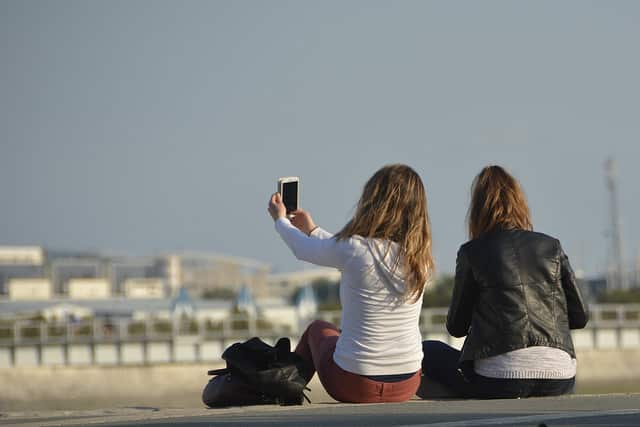
He sustained 60 per cent burns affecting his right arm and most of the lower half of his body. After two days, he was rushed to New Delhi because of the severity of his injuries.
“The patient was referred to our hospital on December 11 with deep burns on around 60% of the body surface, including the right upper limb, back, gluteal region and both the lower limbs,” said Dr Mahesh Mangal, Chairman of the plastic surgery department at Delhi-based Sir Ganga Ram Hospital told the Times of India.
For the first few days, he was kept under observation in the hospital’s intensive care unit post which he underwent multiple skin grafting procedures to cover the severely scorched parts.
While the 20-year-old student was fortunate to have come out alive, there have been many incidents where people have lost their lives while attempting to click ‘perfect selfies’.
READ FULL STORY HERE:
Just last week, a 26-year-old Indian student fell to his death after he lost his footing while clicking a selfie on the cliff’s edge in Ireland.
A keen photographer, Anand Goel plunged at least 600 feet into the shores below, sparking renewed calls of safety across India which accords for the highest number of selfie deaths in the world.
The collaborative study conducted by researchers from Carnegie Mellon University and Indraprastha Institute of Information Delhi revealed that 76 of the 127 reported selfie deaths that occurred between March 2014 and September 2016 were reported in India.
Listen to SBS Punjabi Monday to Friday at 9 pm. Follow us on Facebook and Twitter.



