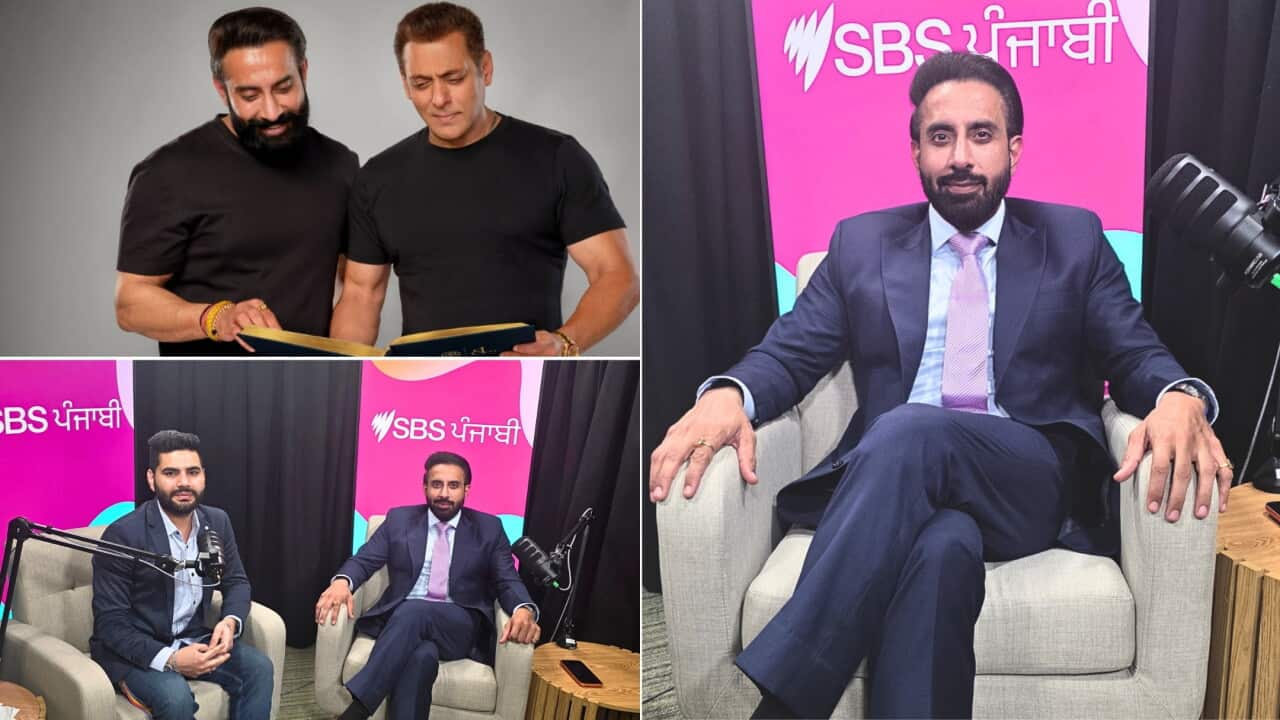


Ramesh Yadav and his group of peace activists have been promoting peace initiatives between India and Pakistan through various initiatives, including by securing the release of prisoners, particularly fishermen who stray across the border.
Ramesh Yadav is a pacifist, who puts various peace initiatives in place to improve the relationship between India and Pakistan.
Speaking to SBS Punjabi said, “The current tension between India and Pakistan after Pulwama doesn’t discourage us from planning more peace initiatives to bring the people of both countries closer. We’ve seen worse."
"In the aftermath of the Mumbai terror attacks, tanks had been deployed along the border. I live in Amritsar. We were faced with ammunition but we managed to sing the song of peace at a time when all you could hear were war cries.”
Mr Yadav is visiting Australia and New Zealand these days to strike a similar conversation amongst the people of India and Pakistan living here.
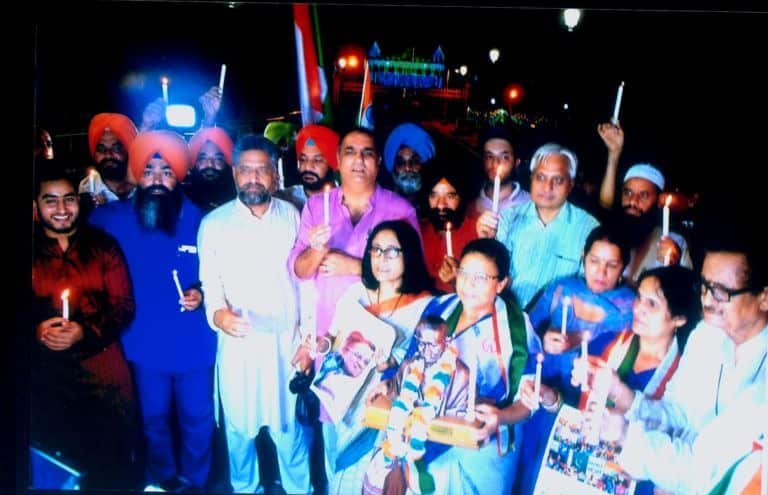
“I have come here to hold meetings with people from both countries, especially the youth because they are our hope. We know we are walking a difficult path, but my comrades from India and Pakistan have been lighting candles at Wagah-Attari border since 1995."
"We’ve come so far. How can we get discouraged by what both governments are doing today and leave what we have been trying to achieve, which is peace and prosperity via the Wagah-Attari border,” says Mr Yadav.
Mr Yadav’s group of peacemakers has achieved far beyond just good press with the candle-lighting ceremony every year.
They have managed to secure a piece of land right at the border to monument and document history.
“We are the force behind the Partition Monument built at Wagah border in the memory of those who lost their lives during the partition of India and Pakistan,” adds he, referring to the black granite pillar-like structure topped with two hands shaking each other, erected on the Indian side (Wagah) in 1995.
It all began with a casual discussion amongst friends in Amritsar in 1995. And today, it has become an annual ritual in the calendar of Amritsar and Lahore, wherein, according to estimates, more than 50,000 people from all over India and Pakistan congregate to light candles at 'No Man’s Land'.
“We simply gave a rough shape to our idea but some stalwarts of both countries like late journalist Kuldip Nayar, former Chief Justice of Delhi High Court Rajinder Sachar, socio-political activist Nirmala Deshpande from India and celebrated lawyer Asma Jahangir, theatre guru Madiha Gohar, writer-poet Munnoo Bhai and journalist Imtiaz Alam of Pakistan took it to another level."
"Then we started organising theatrical and musical performances along with the candle-lighting ceremony. Singers like Hans Raj Hans, Harbhajan Mann, Alam Lohar have performed at our function for free. And the rest, as they say is history,” adds Mr Yadav, who is also instrumental in the release of many prisoners and fishermen of India and Pakistan who stray across each other’s borders and get jailed.
The recent case of Mumbai software engineer Hamid Ansari was also handled by the group of peacemakers to which Mr Yadav belongs.
“Some prisoners are mentally unwell, so they don’t know they are crossing the border. Some are children, some shepherds, whose cattle lead them into unmarked territory. Only if there were clear markings on the borders and only if these people were literate! Life is very unfair on the poor, suffering, illiterate masses of India and Pakistan."
"We really hope both countries realise that their common enemies are poverty, hunger, disease and illiteracy. They are fools as they keep fighting each other,” Mr Yadav explains.
His zeal for promoting the Punjabi language is no less than his commitment towards furthering the cause of peace between India and Pakistan.
His Amritsar-based Folklore Research Academy works towards promoting the use of Punjabi in schools of Punjab, where ironically students are discouraged from speaking it.
“Children are scolded, even bashed up in schools of Punjab, we are told, if they speak Punjabi. This is ironic and shameful. Therefore, we go to primary schools and hold workshops there to promote our mother tongue."
"At Folklore Research Academy, we publish an annual magazine, Punj Paani, dedicated to the shared Punjabi literature of India and Pakistan. Writers from both countries contribute to it,” says he.
Click on the player at the top of the page to listen to this interview in Punjabi.
Listen to SBS Punjabi Monday to Friday at 9 pm. Follow us on Facebook and Twitter.