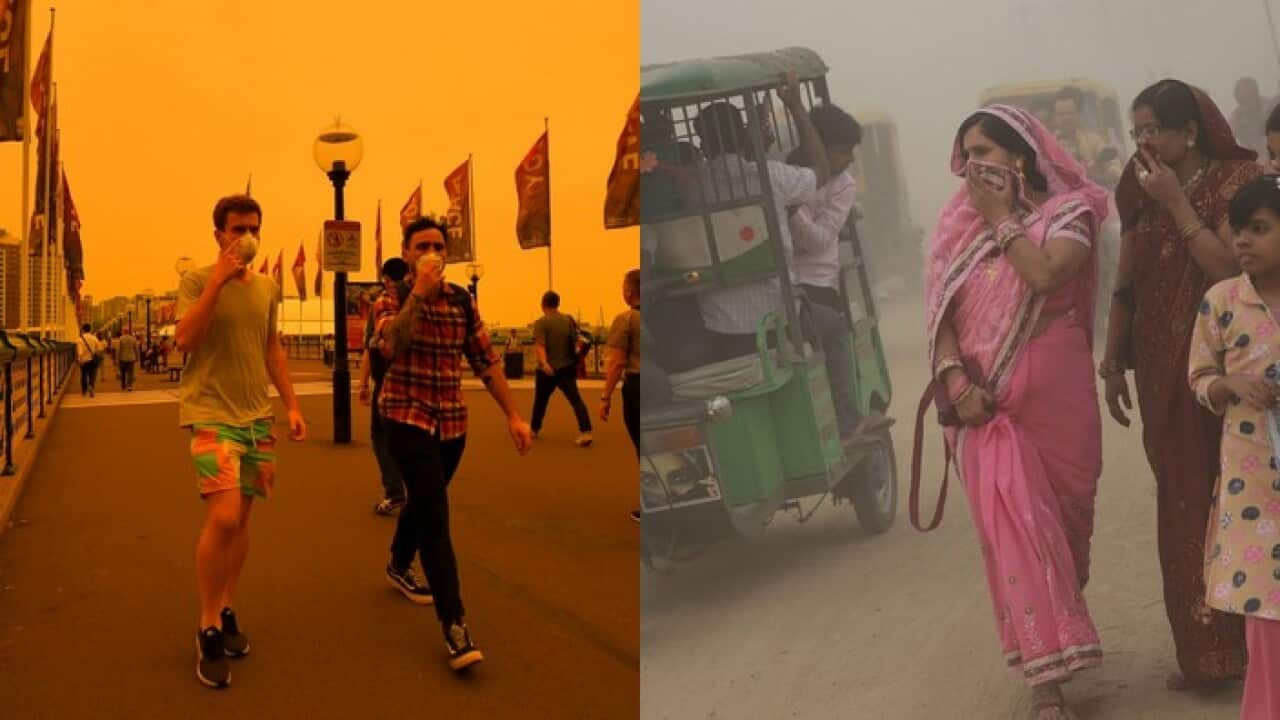

‘When I landed in Sydney after a few days in Delhi and Agra, it was the same horrendous air pollution, in fact it was probably worse in Sydney at that time,’ says a household air pollution expert based at University of Sydney’s School of Health.
Associate Professor Camille Raynes-Greenow recently visited north India as part of a University of Sydney delegation and says the air pollution in Delhi and Sydney are comparable, and potentially very harmful for health.
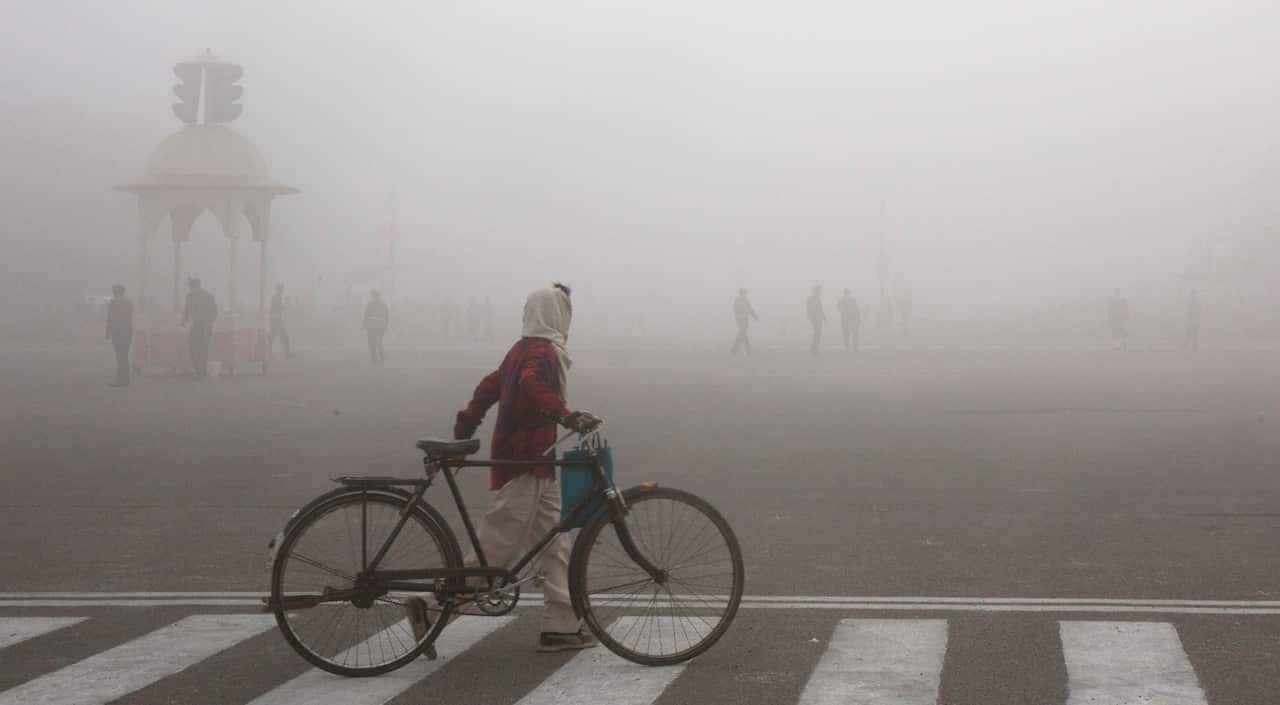
“I was anticipating poor air quality when I landed in Delhi,” Prof Raynes-Greenow told SBS Punjabi, “but when you land and the smell it in the air, you see it in the air and it’s shocking.”
“Although my visit to the Taj was fantastic, but the air quality actually deteriorated when we travelled to Agra and I felt the same physical effects – the throat felt itchy and sore, and the eyes started to sting.”

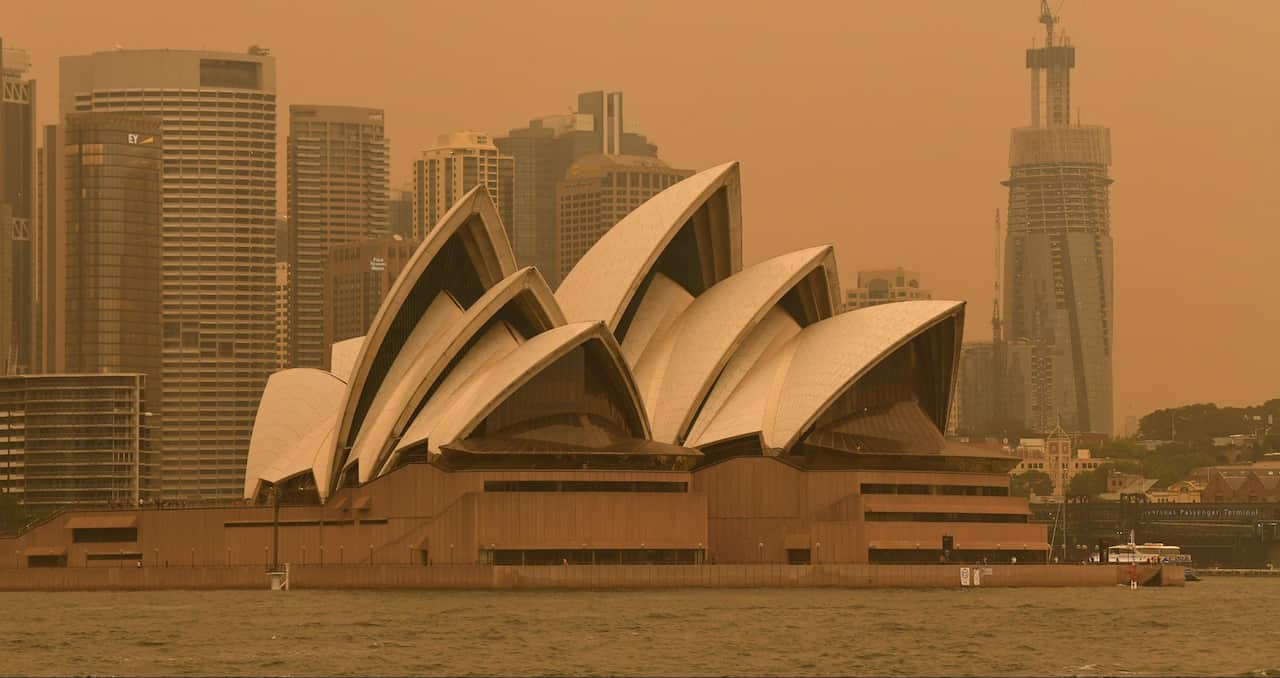
“Flying back to Sydney, I expected to come back to clean air and beautiful skies that we’re used to but it was the same horrendous pollution. In fact, it was probably worse in Sydney at that time,” she says.
Prof Raynes-Greenow says any air pollution has the same effect, no matter what the source, but in the case of Delhi and Sydney, even the source is rather similar.
“In Delhi, it's because of the burning of the crops and it’s actually not much different here in Sydney because it’s the fires causing the air pollution.”
She expressed grave concerns for the immediate, as well as long term effects of this pollution.
Asked whether the harmful effects - which are being likened by some as equivalent to smoking 30 cigarettes a day – she replied, “Yes and no. I would cautiously say it is much like smoking cigarettes.”
"One way is to compare the air pollution caused by both, and the other is to measure the health impact. So both (smoking and inhaling polluted air) cause severe health problems, they’re both about breathing in particles and we’re really unsure of the exact impact of that.”
“Everyone is at risk and air pollution is a major public health issue which we all need to take seriously.”
Being a maternal and child health expert, Prof Raynes-Greenow said pregnant women, new mothers and young children are particularly vulnerable.
“Pregnancy is a time of vulnerability and pregnant women are more at risk. The actual harm caused by air pollution on women is yet to be measured, and I’m currently working on it with a study in Bangladesh, but we suspect that exposure to pollution can cause low birth weight, is related to pre-term birth, as well as still-born birth.”
By way of precautions, Prof Raynes-Greenow suggests:
- Stay indoors
- Don’t exercise
- Use an approved face mask that is properly fitted (N99 and N95 masks)
- Older people, pregnant women, children and those with pre-existing conditions should take a very cautious approach to travelling to places affected by air pollution. They should avoid travel if possible.
To hear the full interview, click on the audio link above.
Listen to SBS Punjabi Monday to Friday at 9 pm. Follow us on Facebook and Twitter.