
Watch FIFA World Cup 2026™ LIVE, FREE and EXCLUSIVE

Atumotu o loo feagai ma fa'afitauli ogaoga o suiga i le tau

Climate Change Threatens Pacific Island Nation Of Vanuatu

Pacific island nations are surrounded by the world's biggest ocean, which drives the weather not just for the region but for the whole world. Credit: Mario Tama/Getty Images

Le falea'oga o se a'oga i Vanuatu ua tele tausaga talu ona fa'aleagaina e se afā e le'i toe fa'aleleia. O se va'aiga ta'atele i atumotu o le Pasefika o loo feagai ma fa'afitauli ogaoga o fesuia'iga o le tau.


I le 2020, na asia ai atunu'u o le atu Solomona, Fiti, Tonga ma Vanuatu e le afā o Cyclone Harold.

I le motu o Espiritu Santo, namatuā fa’aleagaina ai le falea’oga o le a’oga a Tasmalum.

Na fa'aalia e le pule fa'atonu o le PASIFIKAID, Peter Jamieson, o se fa'alapotopotoga o loo galulue e toe fausia le a'oga, o loo malepe pea le a'oga i le 4 tausaga talu ona tō le afā.

"E ta'a'alo lava tamaiti i le taimi o le malologa, fe'a'ei i 'apa ua 'elea ma laupapa e ta'atitia i le palapala ma le tumutumu o le fale," na ia ta'ua.

"E leai se mea ua faia iai e toe fa'aleleia ai le falea'oga. E le fa'apea o le le manana'o o le malo e faia le galuega e toe fausia ai. O le leai o se tupe a le malo ona o le tele o fa'alavelave fa'anatura e tutupu mai."
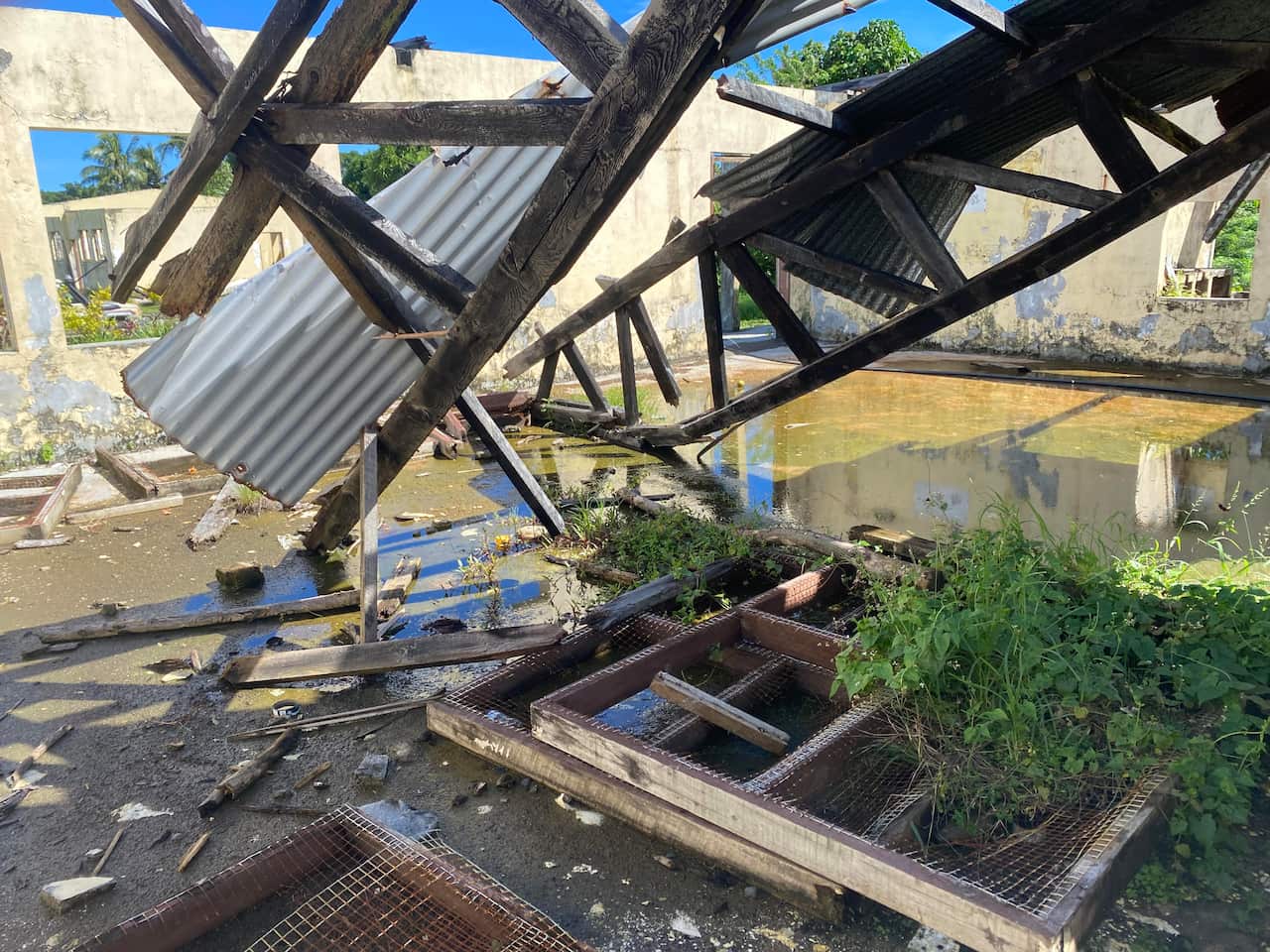
Roof caved in, leaving timber and wood hanging from above, while the ground is flooded
Cyclone Harold in 2020 destroyed the Tasmalum School in Vanuatu. Credit: Supplied: Peter Jamieson

Na saunoa le Fa'auluuluga o le atunu'u o Papua New Guinea i le Fono Fa’avāomalo a le Koluse Mūmū ma le Sosaiete le Red Crescent Societies, Maki Igarashi, o le maotua ma mamao o nisi o nu'u ma alaalafaga, e faigata ai ona faia galuega lavea'i.

"I nisi o taimi matou te fa’aaogāina se va'a 'apa la'ititi pe o se va'a fagota, e faitau itula o malaga," na ia ta'ua.

"O le isi aso, na ou talanoa ai i Rarotonga le at Kuki. Masalo e o'o i le vaiaso o malaga i se motu. E te silafia ai le tulaga o le lu'itau e feagai ma tagata i le mamao o motu o le Pasefika."

Na saunoa le pule fa'atonu o 'Au'aunaga Va'aitau, le International Development Bureau of Meteorology, Andrew Jones, o nei fa'afitauli ua atili faigata ona o suiga o le tau.

“O le sautualasi o a'afiaga mai ler si'isi'i o le tai ma uiga loulouā o le tau, o se tulaga o loo sili ona lamatia ai le Pasefika i le taimi nei ma le lumana'i," na ia ta'ua.

"O a'afiaga nei e le'i molimauina muamua i le Pasefika, ma e le o taitai ona lava le tali mai iai a isi atunu'u i le lalolagi."

Mulimuli pe Talosaga i le SBS Examines ae o tatou asia le Our Pacific.

spk_0

SBS acknowledges the traditional owners of country throughout Australia.

spk_1

Sea level rise and extreme weather events, the impact it's having on the Pacific is just unprecedented.

spk_2

The Pacific Islands are surrounded by the world's biggest ocean, an ocean that creates not only the region's weather for the coming days, but also for the whole world.

spk_2

And with the sea levels rising due to climate change, the countries are bearing the brunt of destruction from related disasters. In this episode of Our Pacific, we ask why the Pacific islands are impacted by extreme weather events more than other countries and how geography impacts recovery efforts.

spk_2

In 2020, Cyclone Harold ripped through the Solomon Islands, Fiji, Tonga, and Vanuatu. On the island of Espiritu Santo, the Tasmalum school was destroyed.

spk_3

When I visited in 2024, it still lay in ruins.

spk_2

Peter Jamieson is CEO of PASIFIKAID, an organisation working to rebuild the schools on Vanuatu's

spk_2

biggest island.

spk_3

Kids were playing at lunchtime and climbing over the rusty tin and great big timbers that lay on the ground and leaning up to the roof. Nothing had been done to restore the school. It's not that the government didn't want to. The government hasn't got the money because there are so many disasters. So this school had lay in ruins for 5

spk_2

years. It's not a rare story for the Pacific.

spk_2

Maki Igarashi is the head of country delegation for Papua New Guinea for the International Federation of the Red Cross and Red Crescent Societies. She says responding to the impacts of disasters, including extreme weather events, takes time.

spk_4

Because of the remoteness and also scale compared to the size of the country and the capacity of Red Cross national societies,

spk_4

sometimes go beyond for 5

spk_2

years. For Pacific Island nations, the difficulty of seamless transport paths is a big factor in responding to disasters. Sometimes we

spk_4

have to use a small a dinghy, like a fishery boat to take 7 hours. The other day I was talking to Cook Island. It took, it takes like 1 week to get to the island.

spk_4

So that's how you can see the scale of the distance of the access challenge in the Pacific.

spk_2

Maki says that climate change is worsening the devastation from extreme weather events.

spk_4

What we are seeing in the Pacific is that climate change isn't just an environmental issue, so it is fundamentally reshaping the development pathways.

spk_4

And countries like PNG or next door the Solomon Islands, Vanuatu, and also Kiribati trying to build or rebuild schools, health systems while defending their communities, coastlines, food system from accelerating climate impacts.

spk_2

So why are the Pacific islands on the front lines of climate change and extreme weather?

spk_2

Firstly, the islands are the only in the world, apart from the Maldives in South Asia, that are low lying atolls. This means that they're ring-shaped and generally only 1 to 3 metres above sea level surrounding a lagoon.

spk_2

To compare, Greater Sydney is 53 metres above sea level. Their location too exposes them to very frequent extreme weather events.

spk_1

Well, primarily because they sit in the biggest driver or engine of weather on the planet. So the Pacific Ocean, it's our largest ocean obviously, so it stores an enormous amount of heat from the sun. It moves that heat around through ocean currents, and that movement of heat and moisture actually

spk_1

it creates not just the weather for the coming days and extreme weather for that area or for the region, but in

spk_2

fact for the whole world. Andrew Jones is the general manager of international development at Australia's Bureau of Meteorology. He says that these nations feel the brunt of extreme weather events more than anyone else, and climate change isn't helping. The

spk_1

compounding effects of sea level rise and extreme weather events

spk_1

is one of the biggest risks that the Pacific faces now and in the coming years. The impact it's having on the Pacific is just, unprecedented and really not enough is made of it on the global stage, and we really need to get the message out there.

spk_2

This episode of Our Pacific was produced and presented by Olivia Di Iorio. To find out more, visit sbs.com.au/sbsexamines.

END OF TRANSCRIPT

Share

Follow SBS Samoan

Download our apps

Listen to our podcasts

Get the latest with our exclusive in-language podcasts on your favourite podcast apps.

Watch on SBS

SBS World News

Take a global view with Australia's most comprehensive world news service

Watch now