Key Points
- There is over a year until the changes to the CGT discount and negative gearing take effect.
- Some question whether a significant number of property owners will sell over the next year.
Australian property investors are facing a looming tax deadline next year — raising questions about a possible wave of property sales before then.
Aside from changes to negative gearing in the recent federal budget, from 1 July 2027, Australian investors who hold a property for over a year will no longer benefit from the rules that apply a discount to the capital gains tax (CGT).
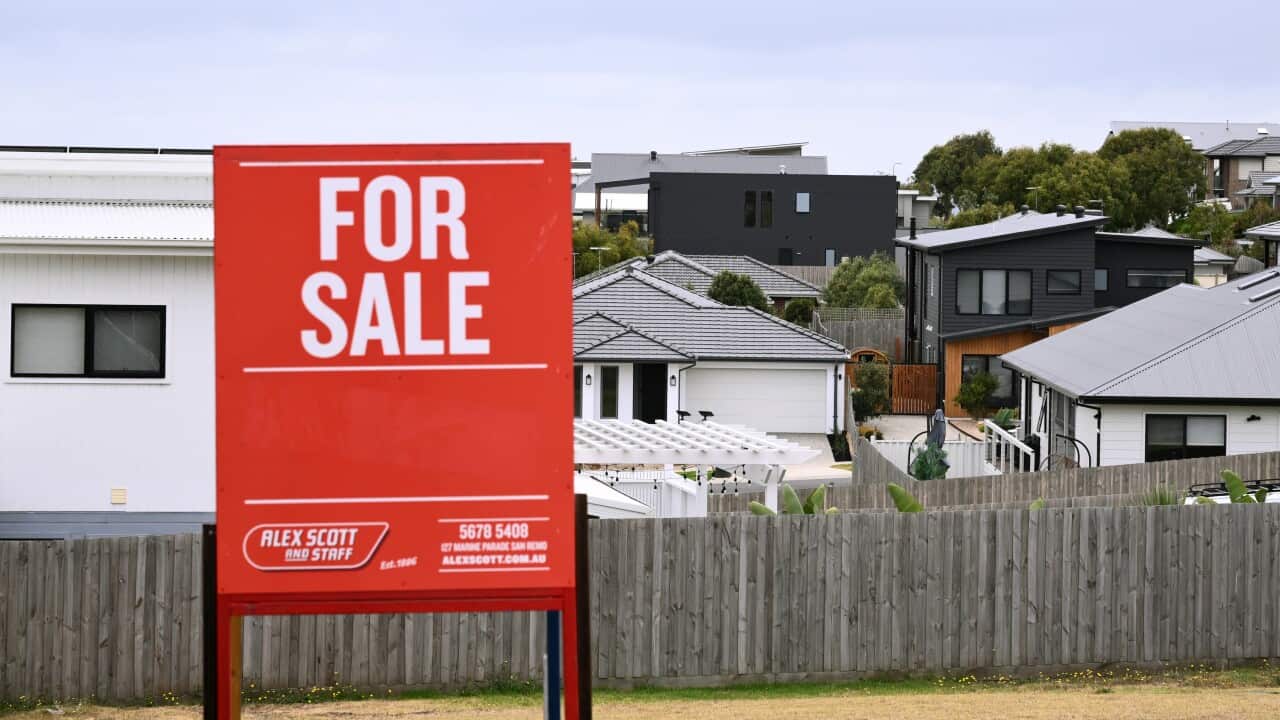
With over a year until the changes take effect, some are questioning whether this may prompt property owners to rush sales before the deadline.
Under the existing CGT discount, Australians selling an asset only pay tax on 50 per cent of their profits.
If an owner's capital gain on a sale of a property is $100,000, the existing policy allows that gain to be reduced to $50,000 on his or her tax return, explained Jim Hancock, an associate professor at the School of Economics at Adelaide University.
News that makes sense
Your trusted source for staying up-to-date with the world around you. Get free daily news updates and analysis, straight to your inbox.
But from the 2027-28 financial year, this will change.
The discount will be indexed with inflation so that owners will pay tax on all real capital gain, but not the inflationary part of that growth in property value. Investors will also be forced to pay a minimum of 30 per cent on any gains.
"Any capital gain after that date is no longer subject to the 50 per cent discount. Instead, it has a discount that's calculated with reference to the consumer price index, and that discount is likely to be smaller," Hancock told SBS News.
"[Sellers] still get the 50 per cent discount on the value increases up until 1 July 2027, but after that date, their capital gains are calculated on a less generous formula."
This means that for every property sold after the deadline, the tax will be calculated based on two periods of gains, before and after July 2027, he said.
Negative gearing, which allows investors to offset rental investment income against losses or costs, will also be limited to newly built residential properties. This change kicks in for properties bought after 7:30 pm AEST on 12 May 2026.
These changes are "grandfathered", meaning the old rules will continue to apply to investments bought under the old system.
Sell or hold off?
So, will there be a stampede of sellers given these changes?
Nicola Powell, chief residential economist at Domain, said: "This is the beauty, right? If you have a deadline ... what that means is people rush to make their decisions on whether to sell or hold off."
Powell believes investors may lean into the second option, which is to hold off.
The grandfathering of negative gearing will reinforce this mentality, she added.
In particular, investors in lucrative prime or inner-city locations — where mortgage repayments are high — would prefer to keep the grandfathered tax benefits of negative gearing, she added.
Even investors whose properties are not negatively geared may not sell.
"For those who aren't negatively geared, I do wonder how much pressure the 2027 [CGT] deadline will bring because the growth is only indexed from 2027," Powell said
"I don't think there's an element of extreme urgency."
"There will obviously be some [selling], but I don't think we're gonna see large-scale supply shocks."
Special circumstances
Martin Duck, a postdoctoral research associate in political economy at the University of Sydney, said the strong demand for housing in Australia would also deter property owners from selling.
"There's still going to be very strong demand for housing assets, and housing is still inelastically supplied. House prices are not going to fall that quickly ... and they [investors] will quite generously have their existing benefits grandfathered," he told SBS News.
"They can also expect reasonably strong house price growth in the future."
Furthermore, the new rules still offer investors "very generous discount provisions", Duck said.
"Any capital gains they get forward from that point will still actually be generously discounted by the inflation rate," he said.
"When we're expecting inflation to be reasonably high because of the war in the Middle East and other factors, that indexing for inflation is still going to be quite generous. Those investors would only sell if they were going to get a high yield in another asset class."
However, homeowners in certain circumstances might choose to sell, Powell said, citing as an example those who are close to retirement.
"If you're very close to retirement and you were going to offload that property in the next few years, this may be the impetus to go, 'Right, let's press go now,'" she said.
"I think it's all circumstantial as well, depending upon your own personal finances, but also depending on which stage you are in your life."
For the latest from SBS News, download our app and subscribe to our newsletter.







