
In brief
- New policies on capital gains tax and negative gearing are intended to reduce intergenerational inequality.
- But some young Australians could face unintended flow-on effects as they try to build wealth in this new environment, according to some analysts.
The government says changes to negative gearing and capital gains tax announced in the federal budget are designed to improve housing affordability and level the playing field for younger generations.
But some economists, property experts and prospective buyers warn the reforms could also create unintended consequences for Australians trying to build wealth and break into the property market.
A growing number of young Australians are already thinking outside the box to pursue home ownership — buying interstate properties they never plan to live in, renting while investing in other assets, or living with relatives to save a deposit.
While some are optimistic the reforms will help cool soaring prices and investor demand, others fear the new policies could complicate their pathways into the market.
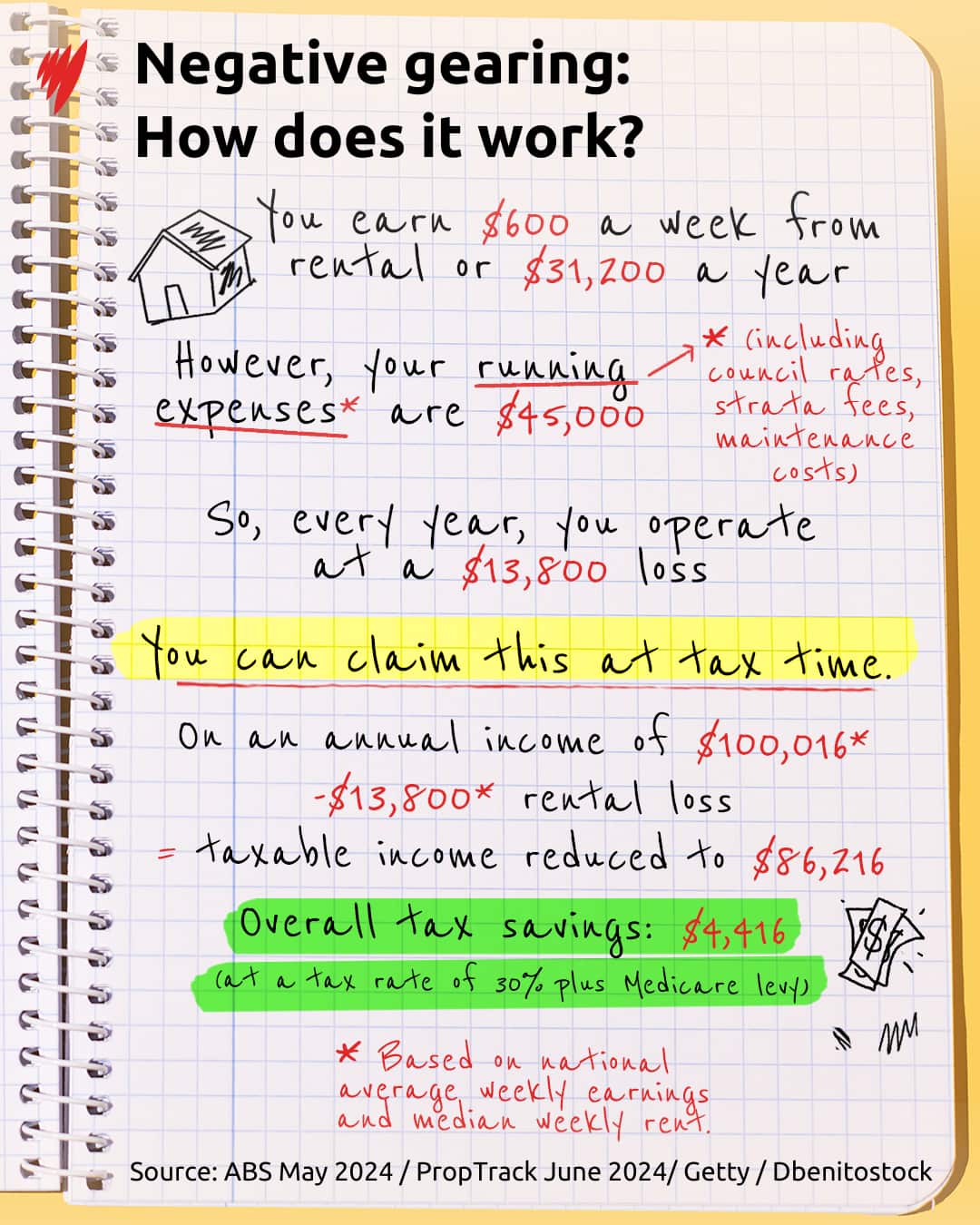
Previously, investors could offset losses from rental properties against their taxable income to reduce their tax bill. Under the reforms, that benefit will no longer apply to buyers of existing homes, but will remain available for newly built properties.
News that makes sense
Your trusted source for staying up-to-date with the world around you. Get free daily news updates and analysis, straight to your inbox.
The changes to negative gearing will be grandfathered, meaning those who bought before budget night will retain the tax benefit.
Capital gains tax will also change from July next year, with the current 50 per cent discount to be replaced by an inflation-indexed system.
It will be partially grandfathered, allowing existing investors to retain the current tax treatment for gains accrued before the new rules kick in.
The change applies to all assets — not just property.
These are some of the groups experts say could be caught in the middle.
Young investors
At 26, Alexander Clisdell has been working hard to set himself up for the future, living with family while putting aside money to save and invest.
He had already invested in shares and exchange-traded funds (ETFs), and last year began the process of buying an investment property.
After securing pre-approval through a mortgage broker, he planned to attend an auction for a Sydney property next weekend.

But he said the negative gearing reforms announced on Tuesday will dramatically reduce his borrowing power. After speaking with his broker, he realised the property was no longer within reach.
Negative gearing can improve an investor's cash flow position by using losses on an investment property to reduce their taxable income — something that brokers say can also affect borrowing calculations.
"I did all the right things to get myself in a position where I could purchase an investment like that, and then, out of no fault of my own, it feels like the system's almost just taking that away from you," he told SBS News.
"That dream of purchasing an investment property to ... set up my family in Sydney, in New South Wales, it's probably not going to happen anymore."
He's now taking a step back and considering more affordable options interstate.
As for his share portfolio, he says the game has "kind of completely changed" due to the elimination of the capital gains tax discount.
"That older generation, they had the benefits of capital gains benefits, negative gearing, and that's what they used in terms of their benefit to build their wealth," he said.
"What our wealth building looks like in the future? Who knows."
Rentvestors
Rentvesting is a name given to people who choose to rent while buying property in more affordable markets in order to get on the property ladder.
Nicola Powell, Domain's head of research and economics, said rentvesting was born out of the high cost in major capital cities for young people trying to build a path to home ownership.
"We've seen the younger generation take different paths in order to build wealth and to get into the housing market," Powell told SBS News.
For rentvestors and others who have sought to build wealth through assets like shares, the tax reforms have changed the outlook.
"Ultimately, it is going to be harder for them to do that now," Powell said.
She said the reforms could reduce cash flow for rentvestors, tighten borrowing capacity and make property and share investing a less tax-effective pathway for Australians trying to save for a home deposit.
Tim Lawless, the executive research director of Cotality's Asia-Pacific divison, said rentvesting remains a relatively niche strategy, with recent lending data showing only 5.6 per cent of first-time buyers were purchasing as investors.
The 'paradox' for renters
Powell said the reforms could reduce competition from investors for established homes and make it easier for some first home buyers to enter the market.
However, she warned this could also shrink rental supply over time, as investors pull back from existing properties, tightening rental vacancy rates and pushing up rents in already undersupplied areas.
"I actually think the paradox here is that renters trying to save a deposit are going to be challenged under the impact of higher rents," she said.
Budget modelling suggests the tax changes will slow house price growth by about 2 per cent annually, while lifting median rents by just $2 a week.
But Powell suspects it's going to have a bigger impact.
She pointed to New Zealand as a case study.
New Zealand introduced reforms in 2021 that significantly reduced tax deductions for residential property investors. The policy was reversed after a change of government, which argued the move had significantly pushed up rental prices. Data from realestate.co.nz shows national rent prices increased over $NZ100 ($81) between 2021 and 2024, then started to decline slightly.
"I think that there are lessons to be learned from not far away that can tell us that the impact on rents is going to be vast," Powell said.
However, Lawless, told SBS News he's "not convinced rents are going to suddenly accelerate".
Nate Pedrotti, 29, is renting with his fiancée in Melbourne while they save for a home.
While he believes rent rises are a possibility, he's encouraged by the steps the government has taken in the budget.
"It just evens the playing field a little bit between people like myself who are trying to break into the market, and people who are maybe buying their third, fourth, fifth house," he told SBS News.
He hopes state governments "step up and take some responsibility" when it comes to stabilising rents, capping how much landlords can hike prices.
Possible 'friction point' for first-home buyers
With negative gearing benefits remaining for new builds, Lawless says this could funnel investors into those markets.
"If you look at some of the areas where first home buyers tend to be quite active, and it's generally around outer fringes, particularly detached homes offering new house and land packages," he said.
"So while the budgetary changes were very much designed to try and reduce competition for first home buyers, that could be one friction point where we do see some competitive tensions between investors first home buyers."
Maninder Sidhu, a director at First Home Buyers Australia, said he's received a "mixed reaction" from clients about the new policies.
Some are worried about reduced rental supply and rising rents hampering their ability to save a deposit, while others are optimistic the move will free up supply.
Sidhu told SBS News he was concerned increased demand for newly built homes could drive up prices in those markets and place pressure on properties at the more affordable end of the market, potentially pushing some first home buyers beyond the thresholds for government grants and incentives.
But he believes the changes will reduce competition for established homes, helping to level the playing field for aspiring first home buyers.
— With additional reporting by Jasmine Kassis
For the latest from SBS News, download our app and subscribe to our newsletter.







