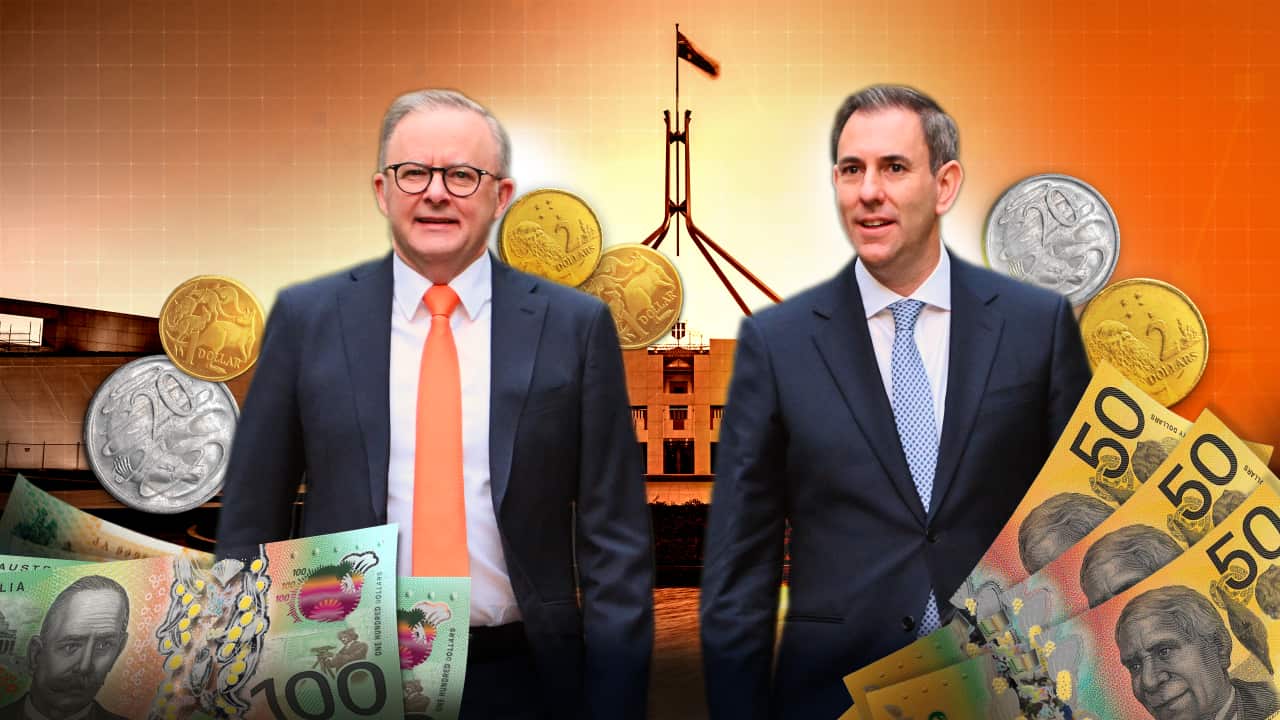
Over 13 million Australian workers will be handed an up to $250 annual tax cut as part of cost of living measures in the federal budget, which also targets trusts and new property investors using capital gains tax and negative gearing, in a move the government says will "level the playing field" on housing.
Treasurer Jim Chalmers handed down his fifth budget on Tuesday night, outlining major tax reforms he said were the most ambitious in 26 years. He said no other budget since 2000 had sought this level of budget "repair" and economic reform.
"These are difficult decisions to ensure a stronger bottom line every year, to give us greater insurance in uncertain times," he said.
"Tonight, we choose the hard road of reform, not the path of least resistance."
What do workers get in the budget?
News that makes sense
Your trusted source for staying up-to-date with the world around you. Get free daily news updates and analysis, straight to your inbox.
A new $250 annual tax offset for income earned from the 2027-28 income year will become a permanent feature, in a move set to benefit over 13 million Australian workers.
But Australians won't see that until 2028 — and social services groups say it won't help those most in need, including those unable to work or generate an income.
It comes on top of the pre-announced $1,000 no-receipt instant tax deduction for workers that can be claimed this year.
Small businesses with a turnover of less than $10 million will also get the $20,000 instant asset write-off extended permanently from 1 July 2026.
What's happening to capital gains tax and negative gearing?
From 1 July 2027, negative gearing for residential property will be limited to new builds. Properties held at 7.30pm (AEST) 12 May 2026 will be exempt, so existing investors won't be affected. Investments that support government housing and affordable housing programs will also be exempt.
The capital gains tax (CGT) rules will also change from 1 July 2027, with the 50 per cent discount for individuals, trusts and partnerships to be replaced with cost base indexation and a 30 per cent minimum tax rate.
The government says cost-based indexation will ensure only real capital gains are subject to tax, while the new flat 30 per cent rate will align the tax rate on real capital gains with the marginal tax rate faced by the average worker.
The 50 per cent CGT discount will continue to apply to gains arising before 1 July 2027. Capital gains on pre-1985 assets arising before 1 July 2027 will remain exempt.
The impact on existing investments will be limited, the government says, with the changes to apply to gains arising after 1 July 2027. Investors who acquire new homes will be able to choose either the 50 per cent CGT discount or the new arrangements when they sell the property.
The changes won't impact the exemptions for main residences or super tax arrangements.
The government says the changes will help 75,000 more first home buyers into the market over the next decade.
What's happening to trusts?
If you're among those benefiting from the estimated one million family and small business trusts in Australia, in two years' time, those trusts will be paying taxes in line with ordinary wage earners.
From 1 July 2028, discretionary trusts will be taxed at 30 per cent, paid by the trustee. The move won't affect fixed trusts, special disability trusts and charitable trusts. The 30 per cent tax rate was first proposed by Labor in 2019 on some trust payments.
Will Australia undergo a recession?
The good news is that the budget isn't forecasting a recession.
But there is a pretty grim scenario if a new chokehold on global oil supplies arises — for example, the closure of the Red Sea trade route — and if a protracted war leads to further damage to Middle Eastern energy infrastructure.
This would see global oil prices up to $200 a barrel and inflation peaking at 7 per cent. More Australians would lose their jobs — with unemployment spiking to pre-pandemic levels. However, Treasury predicts this scenario still wouldn't lead Australia into a recession.
What will happen to the economy?
Treasury is now forecasting inflation will peak at around 5 per cent — from the current 4.6 per cent, which has been driven by higher fuel prices.
Treasury says that once the impact of higher fuel costs spreads to the rest of the economy, inflation will spike to 5 per cent.
The war's impact will also mean Australia's economic growth will slow from last year's 2.25 per cent to 1.75 per cent this year. It's expected to bounce back to 2025 levels next year — assuming global oil prices decline from July this year.
The war, however, has led to a windfall in tax receipts for the commonwealth — a $10.9 billion boost over five years, to be exact. Higher energy export prices — mostly gas — will lift company tax revenue by $19 billion.
For the latest from SBS News, download our app and subscribe to our newsletter.







