
A new tax cut is part of this year's federal budget — but it won't arrive right away.
Treasurer Jim Chalmers has centred his fifth budget around "a hard road of reform", which includes reducing several tax discounts for property investors and trust beneficiaries.
The budget documents detail $833.2 billion in spending for the 2026-27 financial year, an increase of $47.5 billion, delivering a projected deficit of $28.3 billion.
Here are the key winners and losers.
WINNERS
News that makes sense
Your trusted source for staying up-to-date with the world around you. Get free daily news updates and analysis, straight to your inbox.
Taxpayers
Working Australians will get a new $250 Working Australians Tax Offset (WATO), effective from 1 July 2027.
This means that the tax cut will not be felt until the July 2028 tax return.
Social services groups say it won't help those most in need, including those unable to work or generate an income.
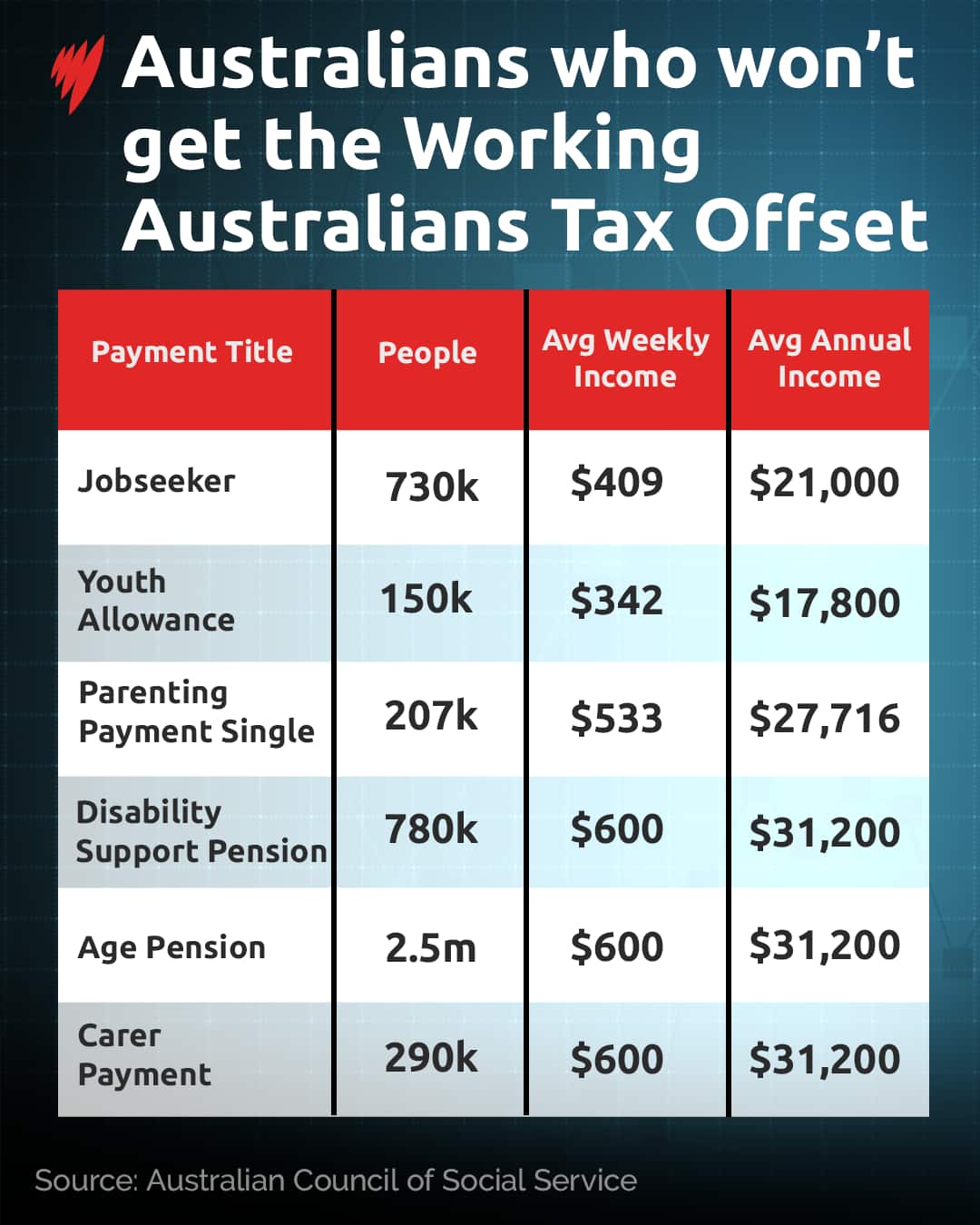
WATO will be a permanent tax cut, costing the budget $6.4 billion from 2027 to 2029.
It will be on top of the $1,000 instant tax deductions that Australians can claim, without producing receipts, coming into effect in this year's tax return.
The budget reveals the government has also increased the Medicare levy threshold, boosting the number of Australians exempt from the payment at tax time.
The threshold has increased as follows: singles from $27,222 to $28,011, pensioners from $43,020 to $44,268 and families from $45,907 to $47,238.
Small businesses
The budget will reintroduce a loss carry-back scheme, allowing small businesses to invest in their operations and claim a tax refund if they consequently run at a loss during the prior two income years.
For example, a restaurant with $1 million in turnover may have paid $12,500 in tax in 2025-26.
The following year, when it invests $65,000 in new equipment, it can deduct these items at a tax loss of $15,000.
As well as paying no tax for that financial year, it can carry the loss back on the previous year's tax paid, generating a $3,750 tax refund and inject this cash flow into the business.
Older Australians
There will be an additional 5,000 aged care beds created as part of a $3.7 billion aged care package.
New subsidies will see aged care providers build additional accommodation as well as extra specialist dementia care units.
There is also a focus on improving the quality of residential aged care, including the regulatory oversight, with $565 million directed towards such measures.
However, much of this funding comes from savings achieved over four years by removing the age-based uplift of the private health insurance rebate from 1 April 2027.
Migrant tradies
An additional 4,000 trade workers will be able to enter the workforce each year as the government accelerates skill assessments and occupational licences for migrant tradies.
It's expected to reduce the time taken to enter the workforce by at least six months.
LOSERS
The economy
The government's updated gross domestic product forecasts are down for the next three years, expecting slower growth.
Chalmers has partially attributed the slower growth rate — 0.5 percentage points lower next financial year — to price pressures resulting from the war in the Middle East.
Treasury now estimates inflation will peak at around 5 per cent in the middle of the year.
Travellers
Anyone leaving Australia will face a higher tax on their flight or ship ticket, with the passenger movement charge increased by $10, from $70 to $80 per passenger.
It will come into effect for travellers from 2027 New Year's Day, boosting the budget by $755 million over the forward estimates.
Foreign investors
The government is extending its temporary ban on foreign investors buying Australian homes to support housing supply for residents.
The two-year measure came into effect on 1 April 2025 and will now be in place until 30 June 2029.
The government estimates this will cost the budget around $185 million in foregone revenue over the five years from 2025–26.
Property investors
The budget confirms highly-anticipated changes to the capital gains tax (CGT) and negative gearing tax breaks.
The previous CGT discount, which halved the tax paid on profits made from selling assets, will be replaced with a discount based on total profits minus inflation, otherwise known as the real gain.
Under the new system, investors will have to pay a minimum of 30 per cent on any additional gains from 1 July 2027.
Anyone building a new property will be able to choose between the old 50 per cent CGT or new arrangements.
Negative gearing, which allows investors to offset the losses from running a property against their income, will be limited to new builds.
The income against which property investors can offset losses will be restricted to income from the property itself and, from budget night onwards, will not include wages.
Trust recipients
Australians will pay a minimum 30 per cent on capital gains from trusts from 1 July 2028.
The changes attempt to address tax rate differences that arise when trusts are spread across multiple beneficiaries.
There are carve-outs for some taxpayers, including those who use trusts as their primary production income, like farmers.
Some migrant workers
There will also be changes to the permanent migration points test, which affects two-thirds of migrants, with the government prioritising younger and more educated workers.
For the latest from SBS News, download our app and subscribe to our newsletter.







