IN BRIEF
- The Tour de France will begin in Barcelona on 4 July and end in Paris on 26 July.
- More than 180 riders from 23 teams are set to compete in the world's biggest cycling race.
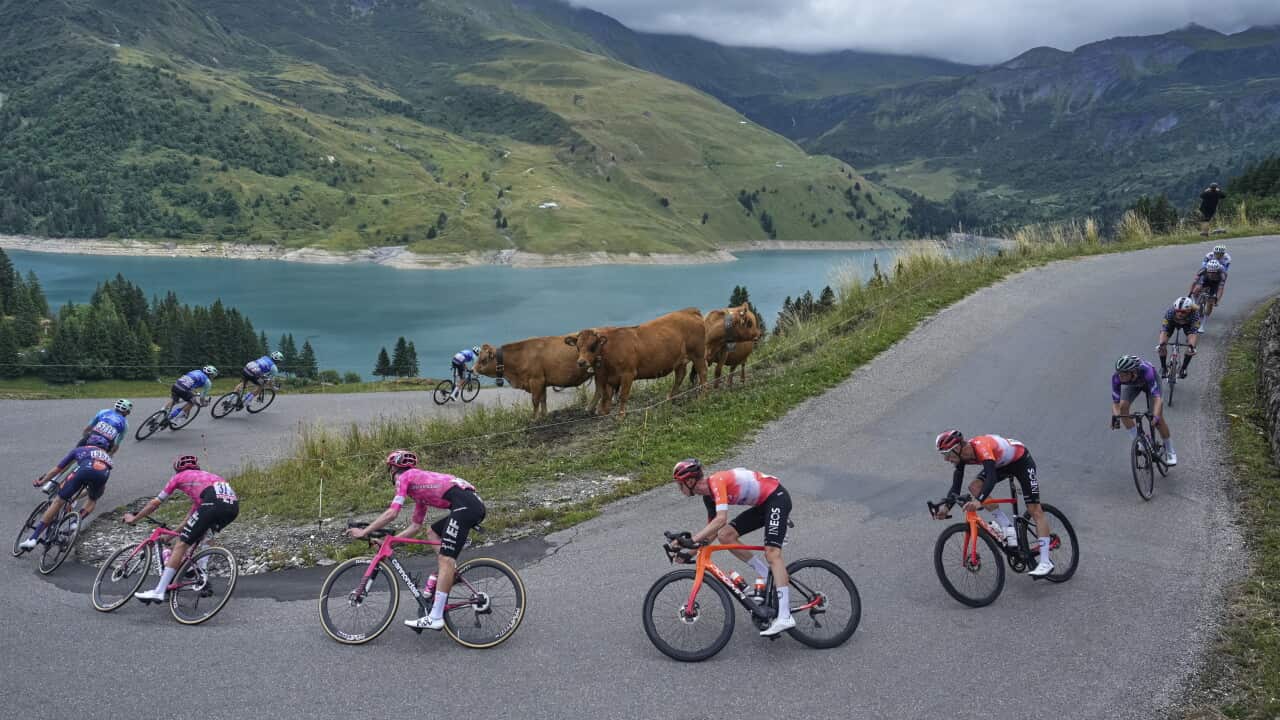
The 113th edition of the Tour de France — the world's most prestigious cycling event — is almost underway, with this year's race promising a fresh test for the peloton.
The men's race will begin in Barcelona on 4 July, with 184 riders from 23 teams vying for the famed Maillot Jaune (Yellow Jersey).
Australian viewers can tune in early on Sunday morning for all the race coverage live on SBS and catch up on demand.
This year's course spans more than 3,320km of flat, hilly and mountainous terrain, with the multi-stage competition ending in Paris on 26 July.
Unlike previous years, the women's Tour de France Femmes will not overlap with the men's competition. It will start on 1 August in Lausanne, Switzerland and end in Nice, France on 9 August.
News that makes sense
Your trusted source for staying up-to-date with the world around you. Get free daily news updates and analysis, straight to your inbox.
How the Tour de France works
Much has changed since the first Tour de France, which was established by French sports outlet L'Auto in 1903 in hopes of boosting newspaper sales. The race (albeit reckless and booze-filled) proved a hit with the public and today, it's one of the most-watched sporting events worldwide.
The competition takes place over three weeks and consists of 21 stages, or standalone day-long races.
Distances also range from short time trial courses including the 19.6km ride on the first race day, to more than 200km-long endurance tests. Some stages are flat, favouring sprinters, while others include gruelling high-altitude finishes in the French Alps.
Each day of the competition, a stage winner is declared.
Last year, Australian Ben O'Connor won stage 18 of the Tour de France, after a world-class climb over three Alpine mountains, while fellow Aussie Kaden Groves triumphed in the penultimate stage of the race.
At the end of each day's stage, the rider with the best time is awarded the coveted Yellow Jersey and wears it the next day. The rider with the lowest cumulative time across all 21 stages is named the overall winner and presented with the jersey. Cadel Evans remains the only Australian to win the Tour de France, achieving the historic feat in 2011.
There are also other jerseys awarded in a similar fashion — green for the most points (awarded for rider's placing at the end of a stage), polka dot for best climber and white for best young rider.
Some riders and teams choose to chase stage wins for points and prestige, while the more dominant teams form their strategy around having the lowest time overall, known as chasing the general classification.
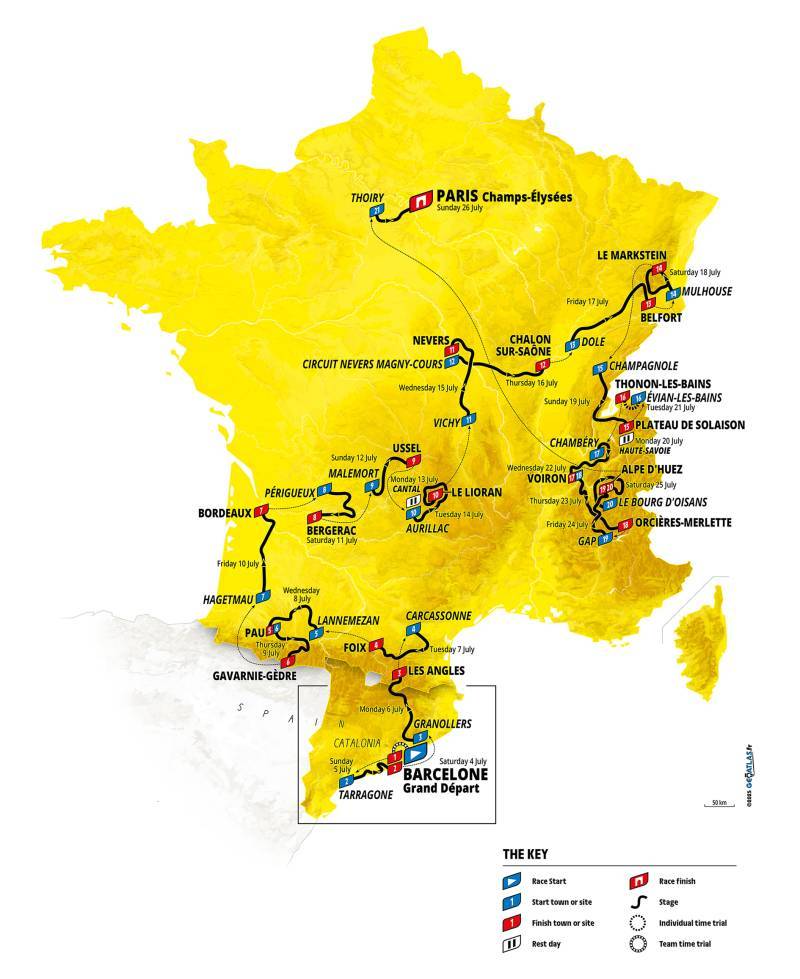
The exact length and route of the Tour de France also varies year by year, designed to test riders on diverse and unpredictable terrains.
This year's course features a clockwise route and will begin with three stages in Spain, before the race returns to France.
Of the 37 stage towns in the 2026 competition, 10 are new additions. They include the Spanish port city of Tarragona in stage two and the French village of Thoiry at the start of the final race.
For the first time since 1971, the Tour de France will also begin with a team time trial instead of a standard race. The change has sparked some criticism, including from Richard Plugge, the managing director of Dutch cycling team Visma-Lease, who told media last year, "This isn't really a team trial".
"It's more like a long lead-out for the leader. If they want to do something different, that’s fine, but then call it what it is. Maybe a team lead-out trial."
Dramatic crashes in La Vuelta a España and Italy's Tirreno-Adriatico race in recent years during team time trials have led to criticism of the format by some riders and safety concerns.
The format last featured in the Tour De France in 2019.
Yellow Jersey favourites
According to former Australian Olympian and 17-time Tour de France rider, Stuart O’Grady — Slovenia's Tadej Pogačar is currently poised to win this year's race.
"It's pretty hard to go past Tadej Pogačar winning his fifth title and equalling the GOAT [greatest of all time], Eddy Merckx," O'Grady told cycling festival Santos Tour Down Under on Tuesday.
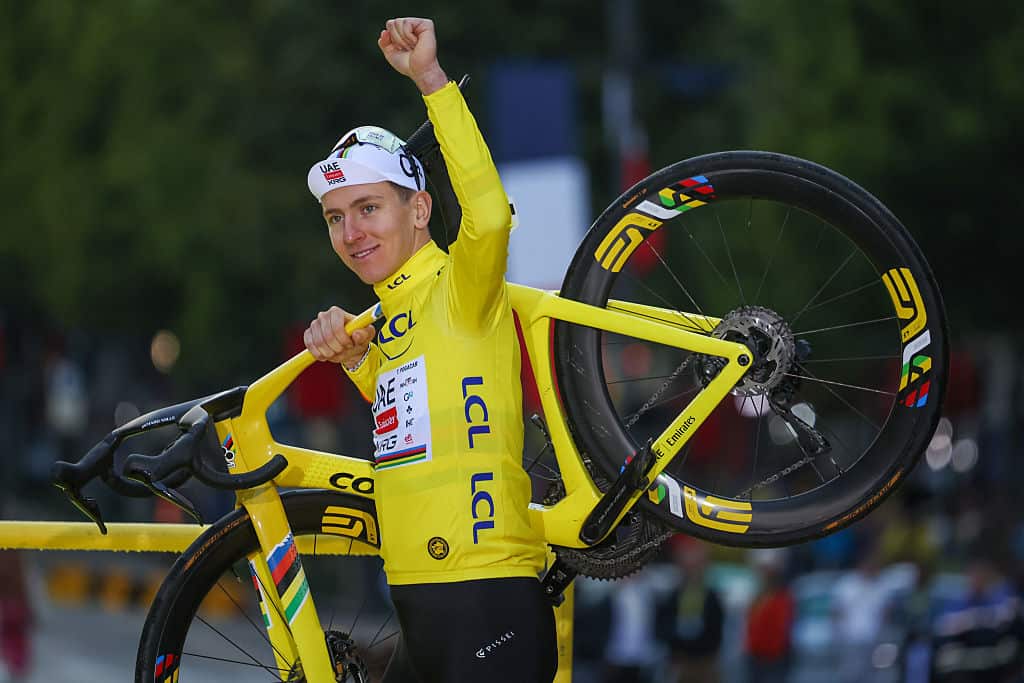
Pogačar, 27, has won the race four times: including consecutive victories in both 2024 and 2025, as well as 2021 and 2020.
Other key riders to watch include Danish rider Jonas Vingegaard, who finished second in 2025 and Florian Lipowitz from Germany, who ranked third.
Two-time winner Vingegaard from Denmark, considered to be one of Pogačar's closest rivals, will return to the race having won the Giro D'Italia earlier this year.
Australians at the Tour de France
Team Jayco–AlUla will head to the Tour de France with five Australian riders, including Ben O'Connor, Kelland O'Brien, Luke Durbridge, Luke Plapp and Michael Matthews. Two riders from Germany and a cyclist from Switzerland also make up the group.
The team has secured 11 stage victories since its inception, but has yet to take home the Yellow Jersey.
It will be Durbridge's 12th time competing in the race and Matthews' 9th appearance.
"If you’d told me three months ago that I would be lining up for the Tour de France, I don’t think I would have believed you," said Matthews, who missed last year's race due to illness and was hospitalised following a training crash earlier this year.
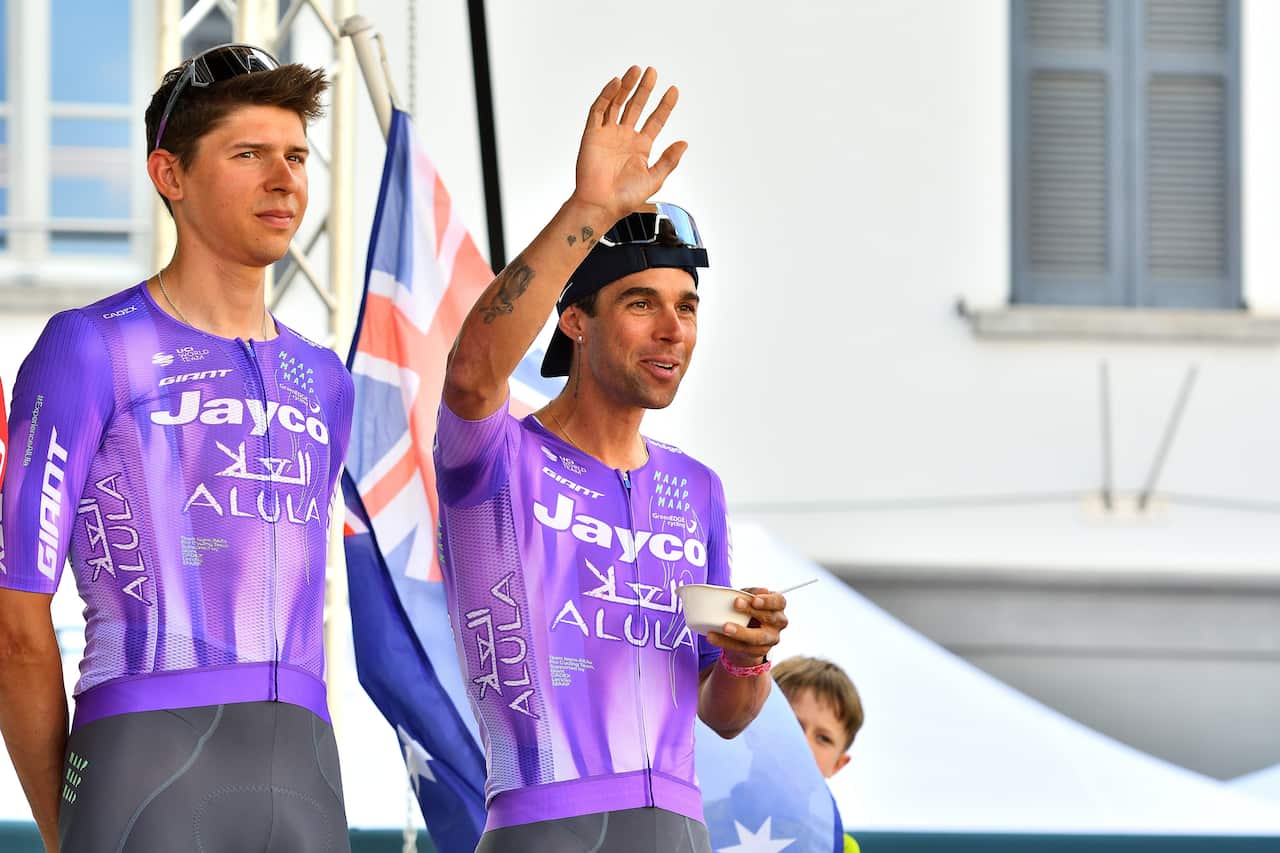
"I’ve worked really hard to get back together with the team in time for the Tour and I’m really looking forward being back ... I can't wait to line up with the boys in Barcelona."
Gene Bates, head of performance at GreenEDGE Cycling, which manages the squad, said:
"It's always a challenge to put together a team for the biggest race on the calendar ... [but] this line-up has riders capable of competing on every stage over the three weeks, from the flat sprint stages through to the high mountains."
Australian Michael Storer will make his third appearance in the race for the Tudor Pro cycling team, while Jai Hindley, who won a stage in 2023, will start for German team RedBull- BORA -hansgrohe.
Chris Harper and Damien Howson will ride for the Pinarello Q36.5 Pro Cycling Team and Sebastian Berwick and Robert Stannard will ride for Caja Rural - Seguros RGA and Bahrain Victorious respectively.
A tougher challenge?
While the Tour de France has been described as one of sport's toughest endurance feats, athletes will face an extra test this year — extreme heat.
It follows reports by the World Health Organization that more than 1,300 people in Europe died in part due to high temperatures late last month.
Christian Prudhomme, the managing director of Tour de France told Agence France-Presse, "We will obviously experience high temperatures during the Tour de France. Protecting the riders and the public is paramount for us. The watchword is adaptation."
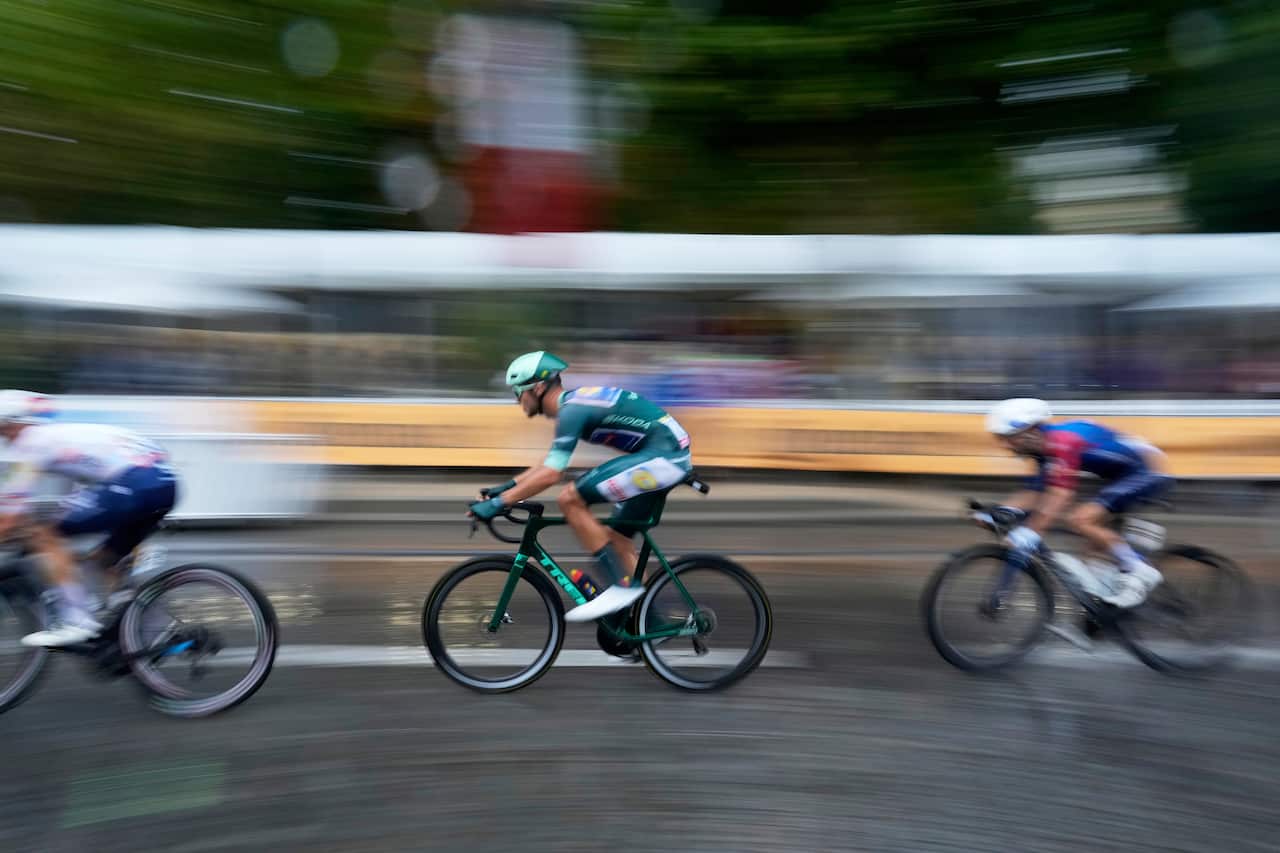
He noted that some riders from countries such as Australia are "used to intense heat" but added that extra refreshment zones may be established throughout the race.
Prudhomme also said the Tour de France distributes approximately 2.5 million hats and 400,000 litres of bottled water throughout the competition to spectators who line race routes.
This week, temperatures in Spain, where the race will begin, are forecast to surpass 40C according to the country's meteorological agency.
Correction: A previous version of this article incorrectly stated last year's second- and third-place winners. This has now been amended.
Watch all the best cycling events in the world on SBS On Demand, with the Tour de France, Tour de France Femmes and much more.
For the latest from SBS News, download our app and subscribe to our newsletter.







