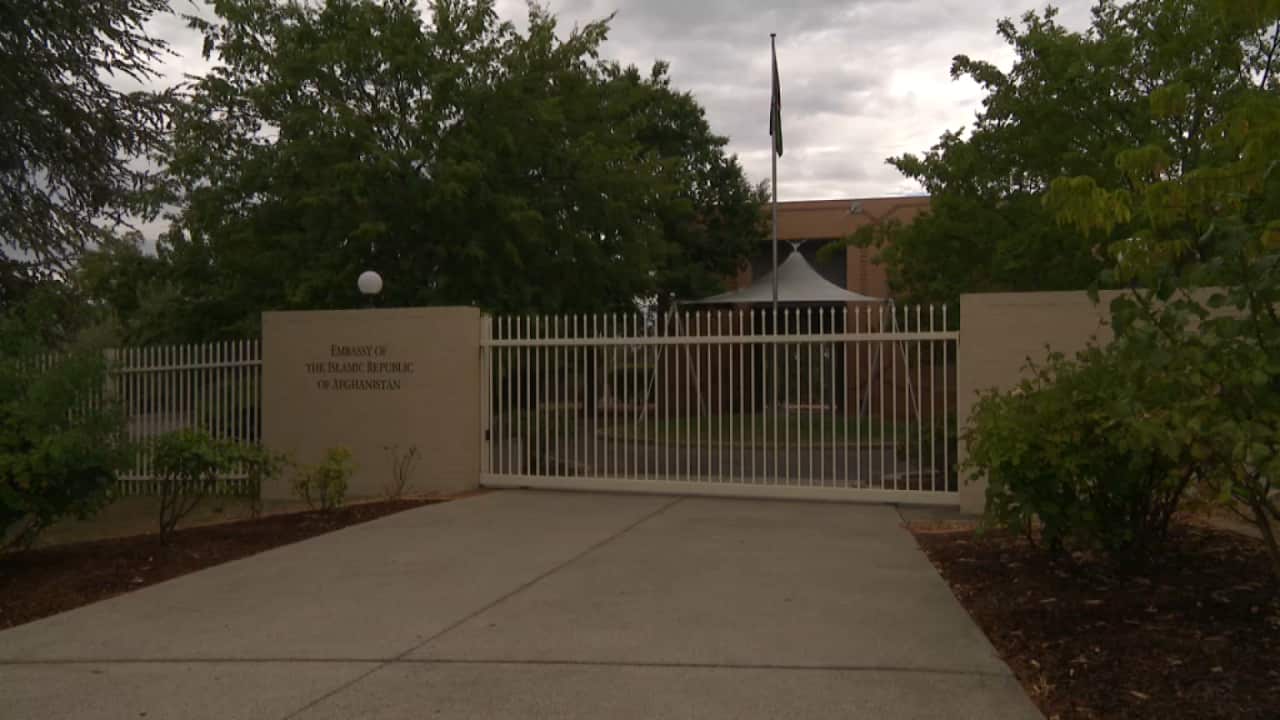
The decision by the Department of Foreign Affairs and Trade (DFAT) to close the Afghan Embassy in Australia has left many members of Australia's Afghan community on edge.
The decision comes amid reports late last year that the Australian government advised the embassy's ambassador, Wahidullah Waissi, that his diplomatic credentials would not be renewed.
"I think for the community, this announcement has created a lot of fear, confusion and disappointment," Maryam Zahid, the CEO of the Afghan Women on the Move organisation, told SBS News.
"For Afghan diaspora here in Australia, [The embassy] was more than a diplomatic platform, especially for women and elders. It was a place of connection [and] identity.
"Having that closed, it will affect a lot of our aspects of lives."
News that makes sense
Your trusted source for staying up-to-date with the world around you. Get free daily news updates and analysis, straight to your inbox.
'Loss of identity'
The diplomatic mission, which will close on 30 June 2026, was operating as an embassy-in-exile following the Taliban's takeover of Afghanistan in 2021. It continued to issue official documents such as passports and visas, and to verify IDs for thousands of Afghan citizens living in Australia.
However, its services haven't been operating normally since the Taliban announced in July 2024 that it would no longer recognise consular documents issued by 14 embassies related to the former republic, including the Canberra facility.
For diaspora members like Zahid, the loss of the embassy is "a loss of aspiration" and "a loss of identity".
"It is very much different from what has been happening in a wider diaspora when their embassies are closed ... especially from places that the community could or can function politically and culturally.
"We don't have that. And there hasn't been any conversation with our government since the fall of Afghanistan from those points of view."
Ambassador Wahidullah Waissi has not responded to SBS News requests for comment.
The Afghan embassy served as a diplomatic, cultural and community bridge between Afghan Australians, civil society organisations, schools and universities, plus local, state and federal government.
"Every time we had an event that we were speaking about women and gender and things that we could not speak from our mosques, we could not speak from the parks, we could not speak where men are leading those conversations ... we could ask [the] embassy," Zahid said.
"That's something that we will be losing. And as an Afghan woman and as a person that really values how we function here as Australian citizens, this is something that I will be very upset that we will not have [anymore]."
The Refugee Council of Australia said in a letter to the Australian government last year the embassy has been crucial in providing consular and diplomatic support as well as essential documents such as passports and birth records needed for refugee protection claims, and even routine activities like opening bank accounts.
"Closure of the embassy risks exposing people to danger. With Afghanistan under Taliban control, many Afghans fear that the loss of the Embassy may force them to seek documents directly from Taliban-run institutions," the council said.
'A demand from the Taliban'
William Maley, emeritus professor of diplomacy at the Australian National University, said DFAT's decision to close the embassy follows a demand from the Taliban that all embassies under the control of an anti-Taliban ambassador be closed.
"Even though Australia might deny a connection between the letter and the decision, this really dents, if not fatally, Australia's credibility when complaining about the human rights performance of the Taliban," he told SBS News
"It's a terrible blow not only to the Afghan community but also to Australian service personnel who served in Afghanistan.
"They really would feel like the government has spat in their faces by undertaking this kind of closure following a demand from the Taliban."
In a joint statement, DFAT and the Embassy of the Islamic Republic of Afghanistan stated that "the Australian government has no intention of accepting a Taliban-appointed diplomat, Honorary Consul or other representative".
"We do not recognise the Taliban as the legitimate representatives of the Afghan people. We strongly condemn the Taliban’s persistent systematic abuses of human rights, particularly against women and girls, and voices of dissent. We reaffirm our shared commitment to human rights and the dignity of the people of Afghanistan."
The government said it would continue to respect and protect the embassy's premises, as well as any remaining property and archives, after its closure, in accordance with international law.
Their statement said the embassy's closure was not the preferred outcome. However, there would be an orderly and dignified transition "without prejudice to the Embassy’s or the Australian Government’s principled position on the situation in Afghanistan".
A 'big no'
Maley said he is not convinced that having a Taliban representative in Australia is completely off the cards.
"It [the joint statement] didn't say that Australia will never accept a Taliban diplomat representative or honorary consulate. It said Australia has no intention of doing so," he said.
"Of course, that's the kind of wording that people use if they want later to be able to say, oh, well, we didn't intend it at the time, but we changed our minds."
Some community members like Zahid are completely against the idea of having a Taliban representative in Australia.
"I'd be more than upset, and women like me in communities ... are very much against having that kind of mindset and ideologies to represent us," she said.
"That would be a big no."
Though not everyone is opposed to the idea.
Fazal Katawazai, a former Afghan diplomat in Australia, said: "The closure will create significant practical hurdles for Afghan Australians planning to visit Afghanistan."
"I think Australia need to have some kind of counsellor relationship as an honorary counsellor in Australia with the existing Taliban government."
Neither the Australian government nor the embassy have outlined how Afghan citizens will receive essential consular services.
However, for diaspora members like Zahid, the decision is about more than travelling back to Afghanistan.
"How can we travel to Afghanistan when we are against the Taliban?" she said.
"Travelling shouldn't be a factor for us to close the embassy or just have it function just ... to be able to travel to Afghanistan."
For the latest from SBS News, download our app and subscribe to our newsletter.







