IN BRIEF
- Australia will face challenges meeting Pacific Island security agreements based on climate change, experts warn.
- Vanuatu has criticised Australia's approval of two coal and gas expansion projects during the Pacific Islands Forum.
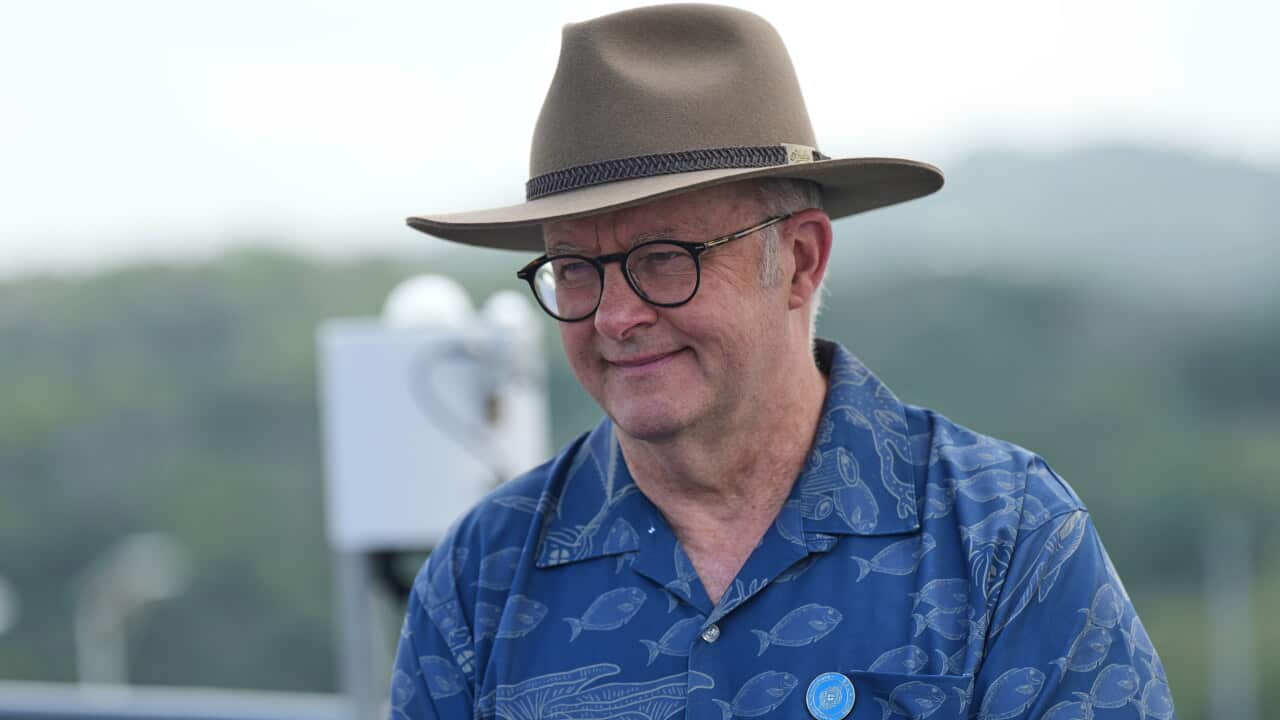
Prime Minister Anthony Albanese's efforts to strengthen Pacific ties and influence the world at the United Nations could be compromised by Australia's failure to meet climate change commitments, critics have warned.
Albanese attended the Pacific Islands Forum (PIF) in Palau this week, preparing for an Australian-organised climate meeting to be held in Fiji and Tuvalu next month.
The event will take place ahead of the United Nations' climate change conference, COP31, which will be held in Antalya, Türkiye in November.
The meeting, an outcome of Australia's failed bid to host COP31, will include representatives from Antigua and Barbuda, Cabo Verde, Thailand, Maldives, Timor-Leste, Germany, Mexico and South Korea — and focus on the realities of climate change for the Pacific Islands.
During a press conference in Palau this week, Albanese was questioned about the value of the pre-COP31 event, given the low attendance among non-Pacific Islander leaders.
News that makes sense
Your trusted source for staying up-to-date with the world around you. Get free daily news updates and analysis, straight to your inbox.
He accused the journalist of being "so disrespectful" to Pacific leaders present.
"It's about bringing Pacific frontline experience to the centre of global deliberations," he said.
"We need to actually have some respect for the process and respect for our Pacific leaders — and Australia has an absolute interest in engaging with the Pacific."
Albanese's attendance at this year's PIF is the start of a string of international events on his calendar, including the UN General Assembly in New York.
Albanese will address the UNGA on 24 September in a bid to secure a non-permanent place on the UN Security Council in 2029-30.
"A seat on the Security Council would give Australia a stronger voice in the decisions that affect our region," Foreign Minister Penny Wong said.
Climate change key to Pacific security
Wesley Morgan, Australian Climate Council fellow and senior research associate at the UNSW's Institute of Climate Risk and Response, said climate change is the "single greatest threat" to the Pacific Islands.
"When it was first raised at the UN Security Council 20 years ago, Pacific countries said climate change is what guns and bombs are to other nations," Morgan said.
He said the key to Australia becoming the region's "security partner of choice" is proper action on climate change.
In 2022, Solomon Islands signed a security deal with China — an act that got "alarm bells ringing in Canberra", Morgan said.
This was the catalyst for Australia signing bilateral agreements with Tuvalu, Naoero, Papua New Guinea, Vanuatu and Fiji.
These agreements outlined climate change targets for Australia, said Morgan.
He said what's stopping Australia from meeting the agreements is that it is one of the world's biggest exporters of coal and gas — and exports are Australia's biggest source of fossil fuel emissions.
However, the Australian government don't recognise or claim responsibility for export emissions — a decision that conflicts with the world's highest court.
Issuing an advisory opinion in 2025, the International Court of Justice (ICJ) "said explicitly that countries are responsible, not just for their emissions at home, but also for the harm and damage that is linked with their exports of coal, oil and gas," Morgan explained.
He said the ICJ confirmed countries have an "obligation to regulate those industries" and that countries that continue to approve new fossil fuel projects "may be committing internationally wrongful acts".
"The Australian government is yet to really absorb that legal clarification and take it on board. But increasingly, there will be an expectation that Australia does so."
'Our actions don't match our rhetoric'
While Albanese was attending the PIF, the government supported the opening of a new fracking project in the Northern Territory's Beetaloo Basin and approved the expansion of the Saraji mine in Queensland's Bowen Basin.
The events didn't go unnoticed, drawing public criticism from Vanuatu's climate change adaptation and energy minister, Ralph Regenvanu.
"Australia is a major producer of fossil fuels — we all know fossil fuels are the primary driver of the climate crisis," he told the PIF.
"The very least a country like Australia could be doing is stopping future expansion, and it's not doing that.
"You need to stop expansion, and you need to start transitioning away."
Morgan said it's not a good look for Australia.
"At the moment, our actions don't match our rhetoric with Pacific leaders," he said.
Simon Bradshaw, Greenpeace Australia Pacific COP31 lead and climate expert, said the PIF was an opportunity to show "real commitment to climate action" and "Pacific partnership".
"These are not the actions of a government aspiring to be a global climate leader and effective middle power in turbulent times," he said.
"They are the actions of a government still beholden to the fossil fuel industry."
However, Albanese remains firm that Pacific leaders "respect" the position Australia has taken on climate change.
"They also understand ... because they're dealing with it as well, that transition can't happen overnight," he said.
Morgan said Australia's failure to meet emissions targets and support for new coal and gas projects will be a challenge at COP31.
But he believes Energy Minister Chris Bowen's role as president of negotiations at COP31 is a sign of "commendable" leadership from Australia.
"At this time, when global cooperation on climate change is under threat and is being challenged, it is very much in Australia's interest to be ensuring countries double down on the goals they have agreed to," he said.
For the latest from SBS News, download our app and subscribe to our newsletter.







