
In brief
- While El Niño is expected to peak later this year, some countries are already struggling through extreme weather linked to the phenomenon.
- Parts of Central America are suffering severe drought, and in Indonesia, El Niño is exacerbating widespread wildfires.
The strengthening El Niño is already disrupting lives around the world, as the United Nations warns the "surging" climate pattern is raising the risk of months of heatwaves, floods, drought and extreme weather.
On Thursday, the World Meteorological Organization (WMO) said there was a likelihood of "nearly 100 per cent" that El Niño will persist through to February, noting that this was the first time that an El Niño update had been so unequivocal.
The WMO's secretary-general, Celeste Saulo, said the climate driver, which was officially declared underway in June, has already dealt a blow to communities worldwide.
"We are already seeing disruption and devastation from droughts and floods and we expect these impacts to increase as El Niño intensifies," she said.
The phenomenon is expected to peak at very high intensity towards the end of the year — potentially at a record-breaking level — with lasting effects on the climate well into 2027 and the prospect of unprecedented global heat.
News that makes sense
Your trusted source for staying up-to-date with the world around you. Get free daily news updates and analysis, straight to your inbox.
UN secretary-general António Guterres warned that El Niño is "being supersized before our eyes" by climate change.
"The science leaves no room for doubt: the planet is in uncharted waters, and those waters are heating up," Guterres said in response to the WMO update.
El Niño is associated with higher global temperatures and can bring drought and extreme heat to some regions while increasing rainfall and flood risks in others.
In Australia, El Niño typically increases the likelihood of hotter, drier conditions in the east and south-east, though its influence varies, and other climate factors also shape rainfall and temperatures.
Warmer-than-usual weather is expected across most of Australia through the spring.
Here's how El Niño is already affecting some parts of the world:
Southeast Asia
More than a million students are learning remotely this week as toxic wildfire haze blankets parts of Indonesia, with officials warning that efforts to extinguish the blazes are entering a critical phase.
"Our problems are not over. September is the peak of El Niño," Indonesia's forestry minister Raja Juli Antoni told reporters this week.
El Niño is driving hotter, drier conditions in the region, intensifying a dry season that has seen thousands of hectares burnt.
Almost 95,000 hectares were burnt in July alone.
Indonesian forest fire forensics expert Bambang Hero Saharjo told the BBC this year's El Niño-fuelled blazes could burn an area as large as 11 million hectares.
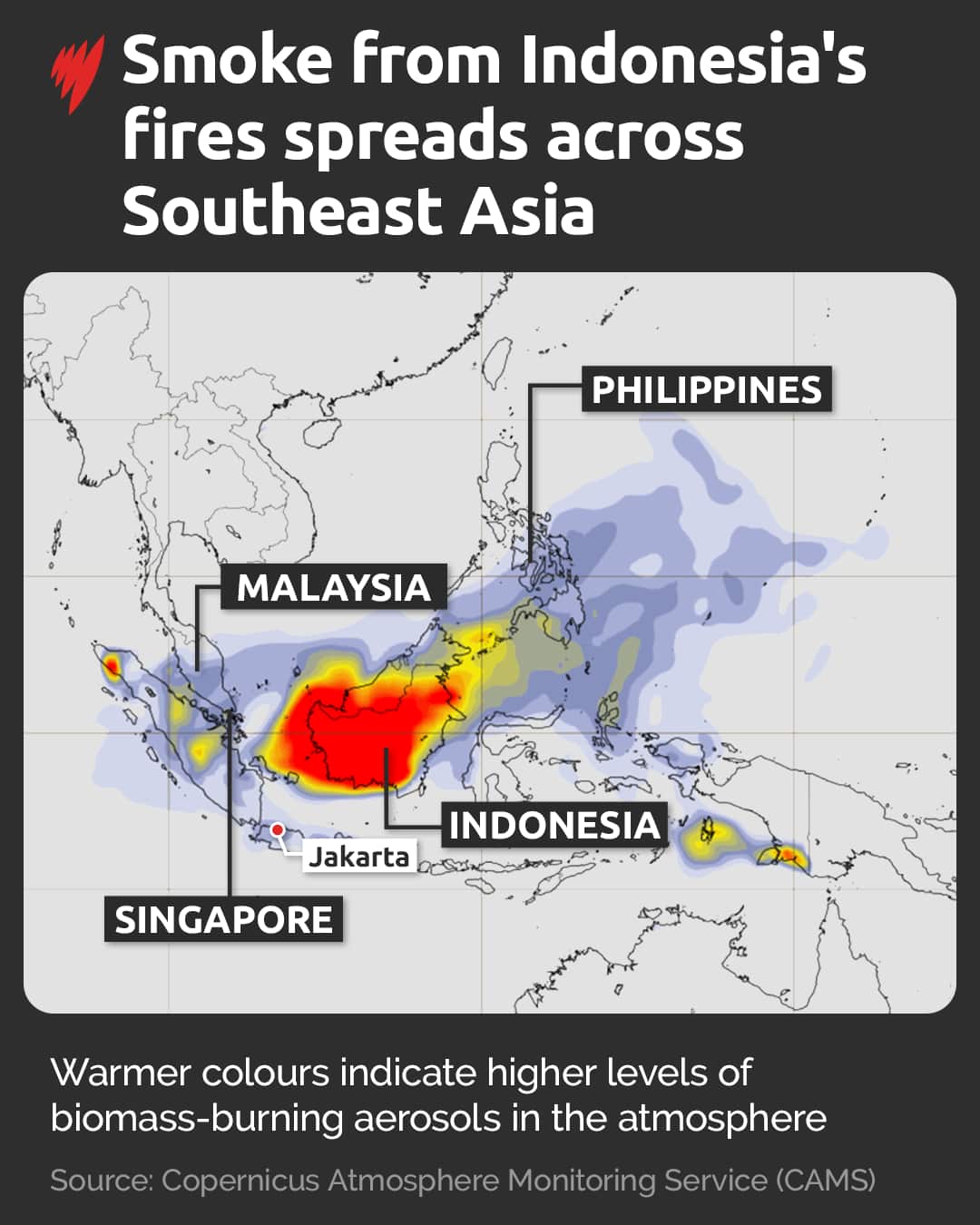
The haze has spread across parts of Southeast Asia, triggering health warnings and hospitalisations.
The health ministry in neighbouring Malaysia has reported rising cases of asthma and conjunctivitis nationwide as air quality worsens.
Six districts in the state of Sarawak recorded hazardous Air Pollutant Index (API) readings, including the state capital, Kuching, where the API hit 407.
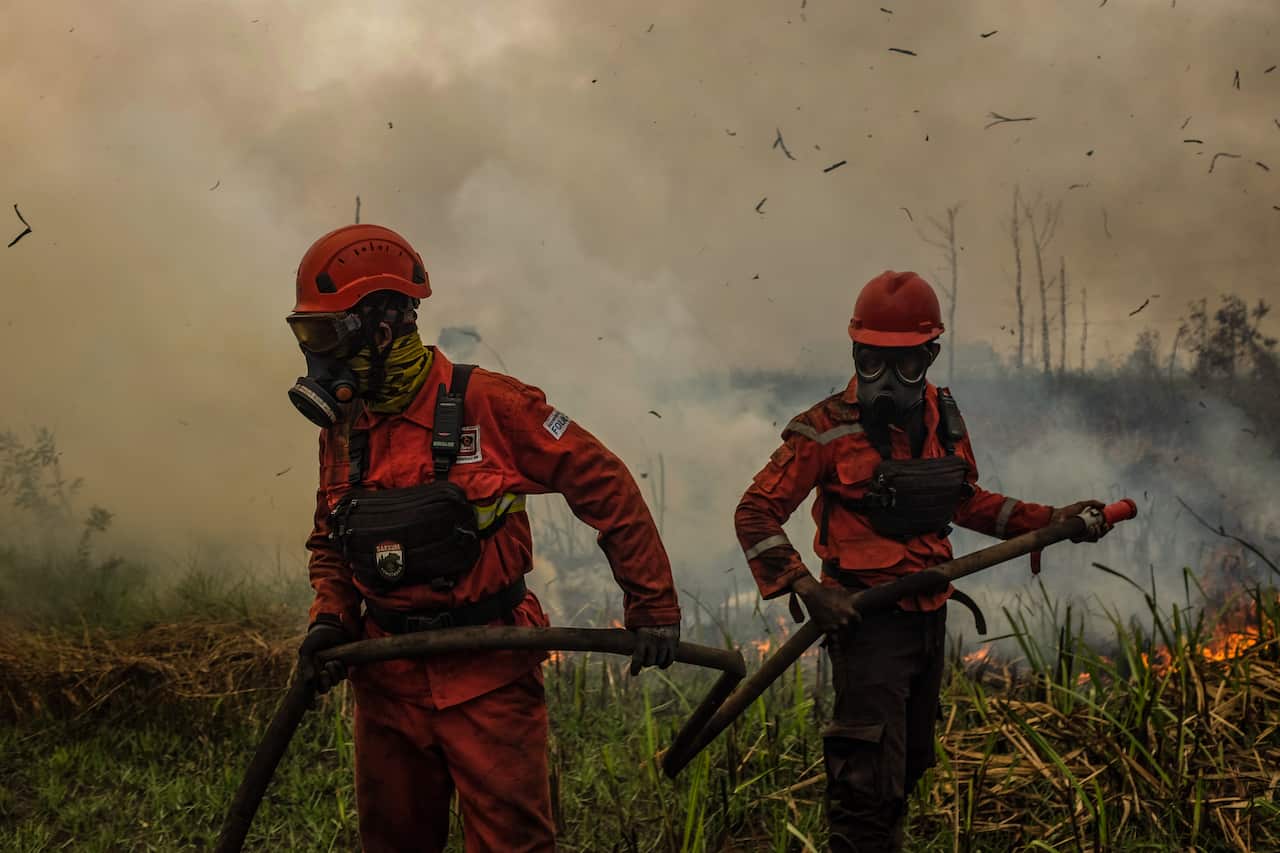
Under national guidelines, levels above 300 are classed as hazardous, while readings beyond 500 could prompt consideration of a local emergency.
Local resident Ivana Mason said the conditions are affecting her health and preventing her from going outside.
"If I do, I can literally taste the smoke in my mouth," she said.
Latin America
Multiple Central and South American countries, some of which are particularly susceptible to El Niño's influences, are on high alert as they brace for impact.
Panama, Ecuador, Honduras, Colombia and El Salvador have declared emergencies in response to the El Niño episode, activating agencies to prepare for imminent risks.
More than 70,000 corn-farming households in Central America's Dry Corridor — a drought-prone region spanning parts of Guatemala, Honduras and El Salvador — have reported devastating crop losses, according to a recent report by Oxfam.
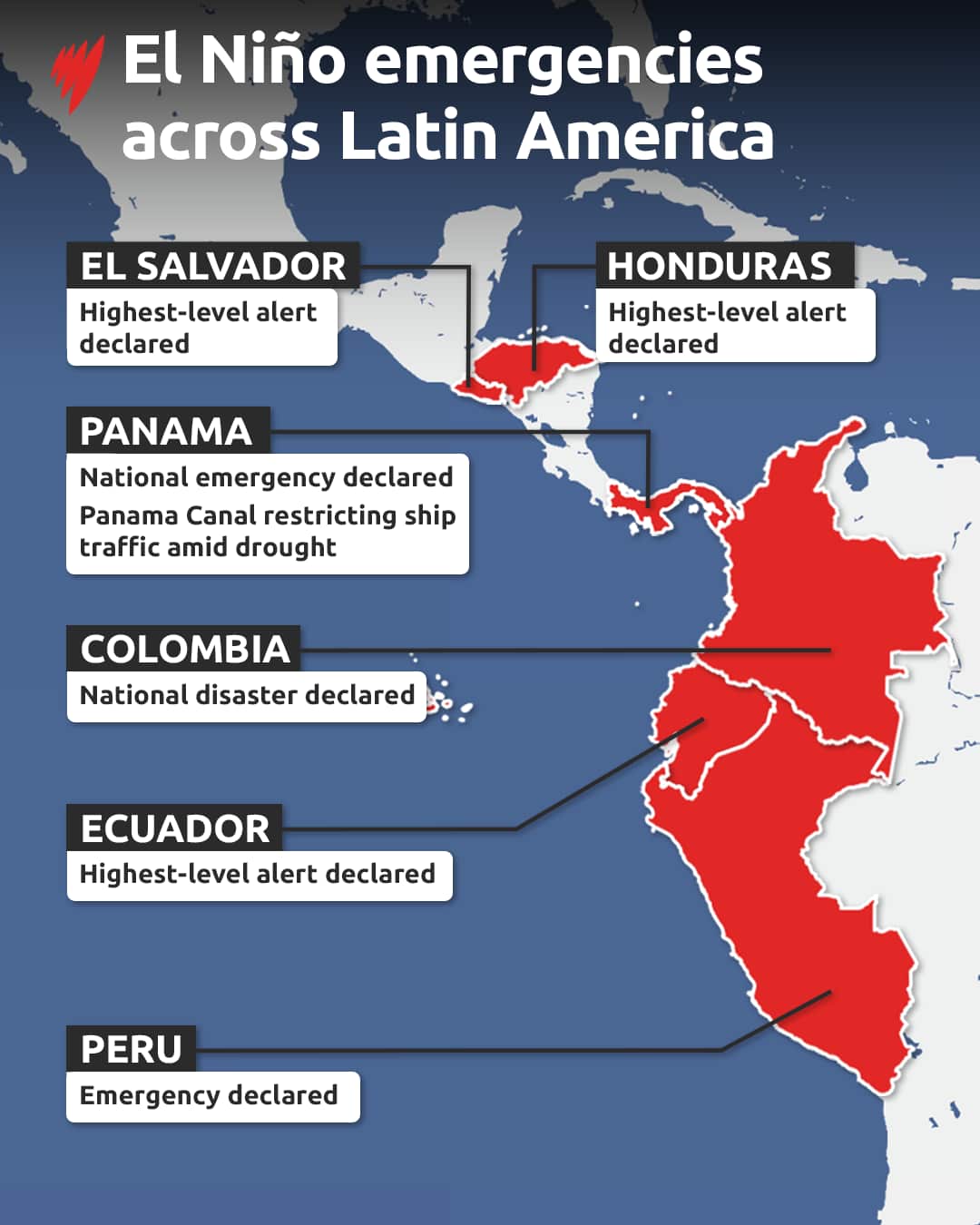
Further south, Peru has declared a state of emergency in a third of its cities due to El Niño, warning that intense heat and rain could leave people without enough to eat.
Indonesia, Sri Lanka, India, and parts of North, Central and South America are among the regions more consistently impacted by El Niño events, according to associate professor Andrea Taschetto, a climate researcher at the University of New South Wales.
"The last El Niño had a really big impact in the Amazon Basin, and that affects all the communities that are along the Amazon River," she told SBS News.
The river network is a vital transport route for the region, she noted, meaning low water levels can disrupt access to food, healthcare and other essential supplies.
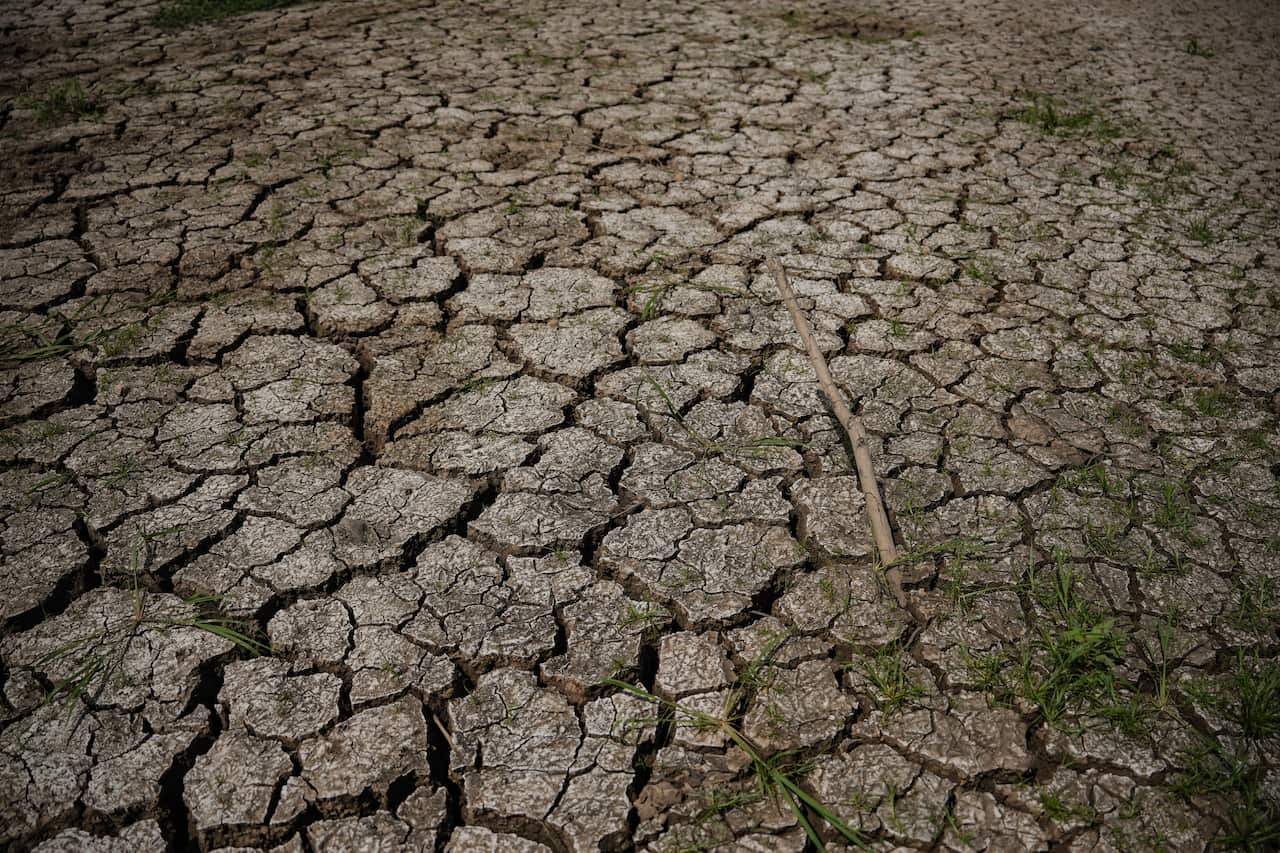
The World Food Programme has warned that El Niño is a massive threat to food security for millions of people, with the largest impacts expected in parts of Central America.
Its modelling showed more than 16 million people could be affected in Latin America and the Caribbean, with an 81 per cent increase in food insecurity projected.
El Niño could also disrupt global trade.
Starting Friday, the Panama Canal, an important shipping route connecting the Pacific and Atlantic Oceans, will restrict the number of vessels that can transit for only the second time in its history.
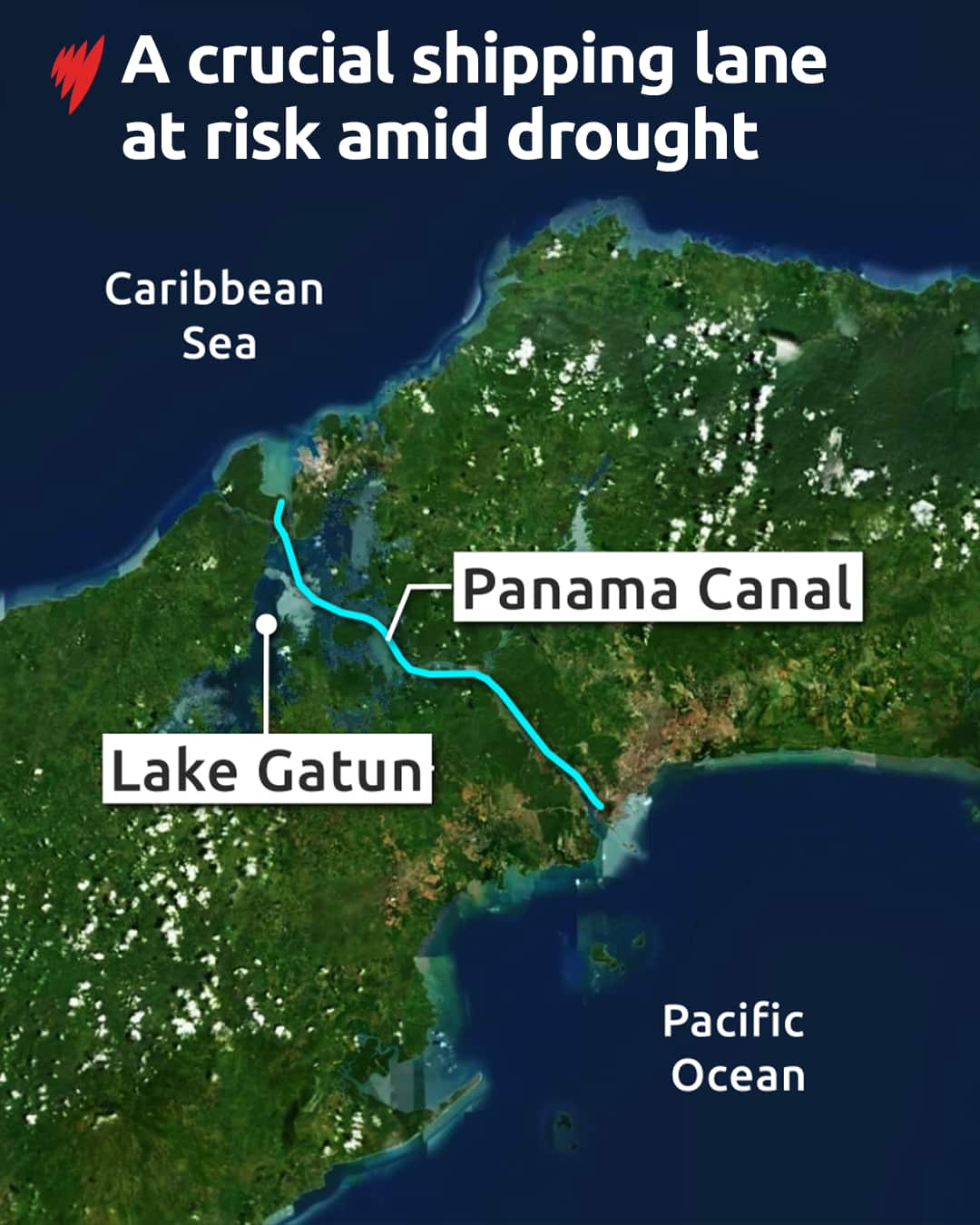
It's a bid to conserve water amid drought that may last until next year.
Five per cent of global trade passes through the man-made canal, which relies on water from reservoirs including Lake Gatun to operate locks that raise and lower ships in the waterway.
South Asia
Sri Lanka is among the South Asian countries badly affected by weather disruptions this year, with some key farming districts recording rainfall deficits of 85 per cent to 100 per cent below long-term averages.
Soaring temperatures have left large swathes of Sri Lanka's north, east and southern regions parched, with small tanks, rivers and lakes that usually feed crops and provide drinking water drying out.
The Sri Lankan government has said the impact this year could be the worst in decades and that water levels at hundreds of such tanks in the country have dropped to about 10 per cent.
Sri Lanka's current dry conditions are forecast to give way to heavy rains from late September until December, but those rains are expected to be followed by a prolonged drought early next year.
The government has set up a ministerial panel to deal with the fallout from what its environment minister has said would be the island's "worst" El Niño.
— With additional reporting by Agence France-Presse and Reuters.
For the latest from SBS News, download our app and subscribe to our newsletter.







