In brief
- Indonesia is expected to experience a difficult dry season this year, with a high risk of forest fires.
- A strong El Niño is one of the drivers, and concerns are growing about what it could mean for Australia's fire outlook.
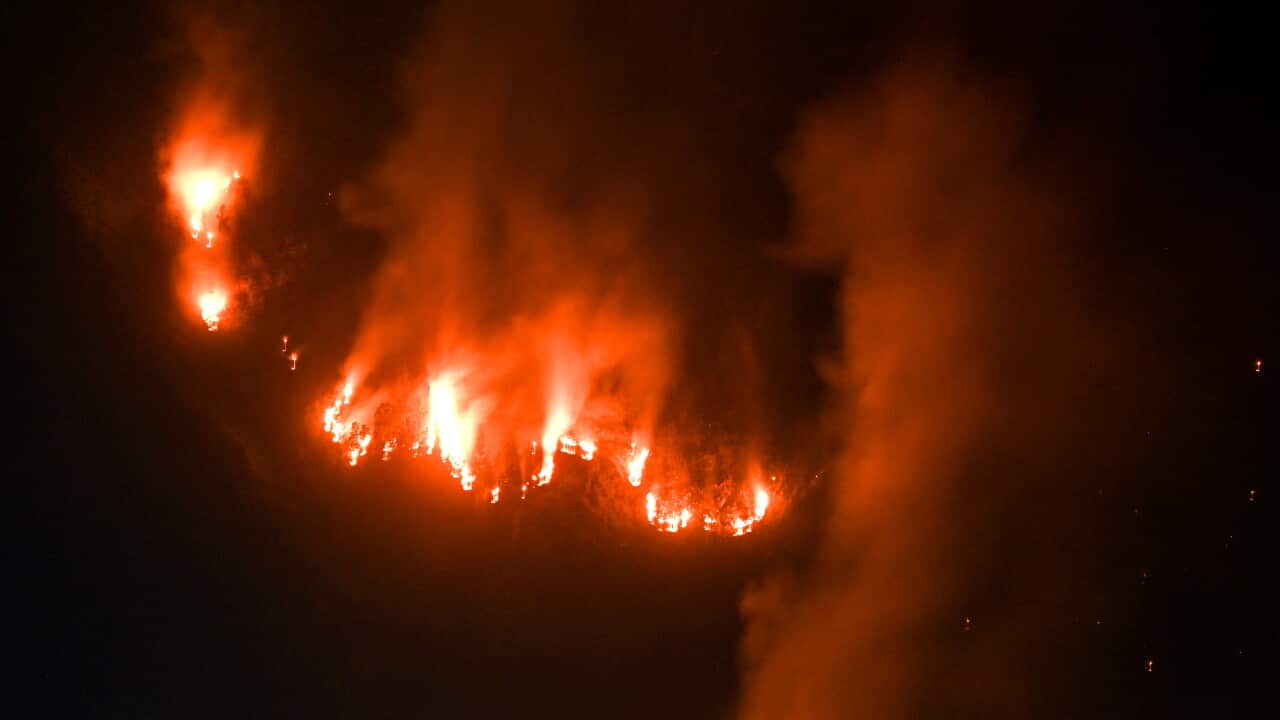
Dozens of Indonesian schools were shut for a second day on Tuesday as forest fires continued to burn during an intense dry season expected to be worsened by El Niño.
In West Kalimantan on the island of Borneo that Indonesia shares with Malaysia and Brunei, the mayor of the capital Pontianak ordered schools closed due to the smoke wafting over the city from fires elsewhere.
Public records show Pontianak, with a population of around 660,000 people, has tens of thousands of public school pupils.
Children will learn from home for as long as air quality remains poor, mayor Edi Rusdi Kamtono said in a statement, without stating how many schools were affected.
"We have started to feel it, especially at night and in the morning, as haze has already blanketed the city of Pontianak," he said.
News that makes sense
Your trusted source for staying up-to-date with the world around you. Get free daily news updates and analysis, straight to your inbox.
On the island of Java, firefighters battled flames for a ninth day at a national park that has lost 900 hectares to an inferno that broke out on Monday last week.
The blaze at the Bromo Tengger Semeru National Park, a major tourist attraction closed to visitors since Saturday, is one of several fires that have drawn in nearly 50,000 firefighters countrywide.
Indonesia is forecast to experience an unusually tough dry season this year with a high risk for drought and wildfires due in part to the El Niño weather phenomenon, the BMKG weather agency has said.
More than 107,000 hectares of land have burnt countrywide so far this year.
Authorities insist that food stocks remain adequate.
Burnt area in East Java the size of 1,200 football fields
The fire at the Bromo park in East Java has consumed nearly 900 hectares by Tuesday morning.
This is equivalent to over 1,200 football fields and nearly 2 per cent of the total park area.
"We’re making our best effort and mobilising everything ... to extinguish and wet-down the area," local disaster official Satriyo Nurseno said.
"We hope that today we can put out the fire in all areas, then carry out soaking so that the fire does not reignite."
Three water-bombing helicopters and fire trucks were providing support to about 200 firefighters, forest rangers, police and soldiers helping to put out the blaze.
According to the BNPB disaster agency, more than 48,000 personnel have been deployed to fight fires in six provinces.
Security minister Djamari Chaniago said on Monday Indonesia has deployed 43 helicopters and up to 15 fixed-wing planes for cloud seeding where needed.
The process involves spraying particles such as silver iodide and salt from aircraft to produce rainfall, but depends on clouds being present.
As Indonesia braces for the worst effects of El Niño, the BMKG said the average air temperature in July was 27C — higher than the 26.2C average.
It was the highest such jump for July since 1991.
El Niño is a naturally occurring climate phenomenon that brings worldwide changes in winds, air pressure and rainfall patterns.
In India and Southeast Asia, it typically causes drier conditions.
The last El Niño helped make 2023 and 2024 the two hottest years globally on record.
The land lost to wildfires in Indonesia so far this year is double the area burnt in 2023.
Concerns for Australia's bushfire season as El Niño intensifies
While an El Niño does not necessarily mean hotter and drier conditions for Australia, it does raise the likelihood.
And with the climate driver shaping up to be one of the strongest on record, experts are worried about what it could mean for Australia's bushfire outlook.
Greg Mullins, the former commissioner of Fire and Rescue NSW, recently told SBS News there was "deep concern in all the fire agencies nationally".
However, Bureau of Meteorology (BoM) forecasters say there are signs that rain could disrupt the summer bushfire threat in some areas.
"That drier than average pattern that we're seeing for September does break down for much of the country and we start seeing either above average rainfall being favoured or even a not-clear signal for a lot of the country," BoM climatologist Zhi-Weng Chua said.
For the latest from SBS News, download our app and subscribe to our newsletter.







