In brief
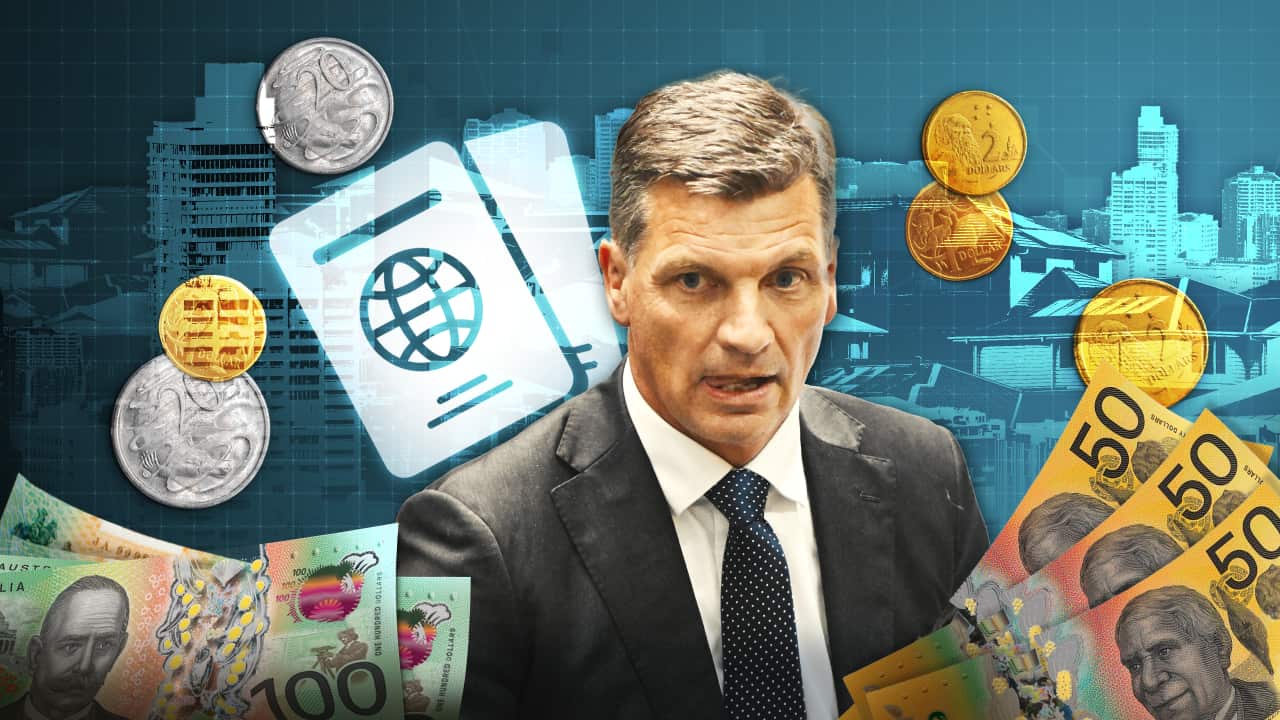
- Angus Taylor has delivered his first budget supply speech, laying his vision for a "fairer Australia".
- The opposition leader proposed tax reform and migration cuts to boost housing supply.
Angus Taylor's budget reply focused on plans to cap migration, boost housing construction and lower taxes.
At the beginning of his first budget reply speech, the opposition leader laid out his vision for "a fairer, freer and better Australia", while criticising the federal government's budget handed down by Treasurer Jim Chalmers on Tuesday.
"This isn’t the Australia we know today. But we have known it, and we can know it again. We can restore our standard of living and protect our way of life," Taylor said.
"That starts by fighting against the assault on aspiration at the heart of Labor’s budget. Labor is locking out young Australians from the opportunities afforded to older Australians to build wealth and prosperity to get ahead."
News that makes sense
Your trusted source for staying up-to-date with the world around you. Get free daily news updates and analysis, straight to your inbox.
The Coalition's plan proposes a cap on overseas migration, sweeping tax reforms, restrictions on welfare for migrants, a housing infrastructure fund and a boost in defence spending.
Here are six policies the Coalition is proposing:
1. Cap migrant intake to the number of new homes
The opposition leader announced a "far-reaching and unprecedented housing policy", which he said was "also an immigration policy that puts Australians first".
The plan caps net overseas migration to the number of new homes built in the country over the previous year.
Net overseas migration is the difference between the number of people arriving in Australia and the number of departures, and also includes temporary migrants like foreign students.
"Never again will a government be able to bring in more people than our housing can support," Taylor said.
"The Coalition will deliver one of the biggest cuts to immigration in Australian history. Our immigration cut will complement our plan to lift immigration standards."
But he said he couldn't provide any exact immigration targets two years out from the next federal election.
The federal budget forecasts 295,000 migrants this financial year, falling to 225,000 by the 2027/28 financial year.
That's well below the post-pandemic high of more than 550,000, when a flood of migrants re-entered the country as borders reopened — but still higher than pre-COVID levels.
The Coalition is also planning to tighten restrictions on temporary migration, including international students, though it hasn't specified which visa types will be affected.
The opposition leader added that the Coalition will deport "70,000" overstayers from Australia.
"Those who criticise the law being enforced must explain why their sympathies lie with illegal overstayers instead of with migrants and Australians who abide by the law," he said.
2. Index tax to inflation
Taylor unveiled a wide-reaching new tax proposal, which he described as "the biggest tax reform in a generation", saying it will end "the inflation tax".
Under the proposed two-stage plan, income tax will be indexed to inflation. This means a typical taxpayer could save about $250 annually in the first year, increasing to roughly $1,000 by year four, according to the Coalition's forecasts.
The lower two brackets — covering people earning between $18,201 and $135,000 — would be indexed from 2028-29, Taylor said.
The top two tax brackets would also be indexed from the 2031-32 financial year.
"This is generational tax reform. It's fair, simple and honest. It will back Australians to work hard, take risks, and invest in their future. It will force government to respect your money," Taylor told parliament on Thursday night.
Raising tax brackets in line with inflation each year would cost the budget billions of dollars.
But it would also end bracket creep, where pay rises push workers into higher tax brackets, even though inflation means they may not be any wealthier.
Subsequent governments have chosen not to index brackets, instead announcing a tax cut every few years.
During periods when the mining sector rakes in windfall profits, Taylor also announced the Coalition would bank 80 cents in every dollar of resource revenue into a "future generations fund" for "nation-building infrastructure".
3. Restrict welfare for non-citizens
Taylor said the Coalition would claw back billions of dollars in savings by cutting welfare for non-citizens.
The National Disability Insurance Scheme, Jobseeker, Youth Allowance and the Family Tax Benefit would be for Australian citizens only, he said.
According to the opposition leader, this policy will save billions of dollars.
“If you commit to Australia, Australia will commit to you. After all, the taxes paid by hard-working Australians should support Australians," he said.
In a later interview with the ABC, Taylor said the decision was about "putting Australian citizens first".
"Citizenship is a privilege. And it's something we want people to get something from," he said,
4. Introduce a new fund to boost housing
Taylor also proposed a $5 billion Housing Infrastructure Fund that will be directly available for local councils and developers.
"From my first day as opposition leader, I said I wanted to re-establish home ownership as the centrepiece of the Australian dream," he said.
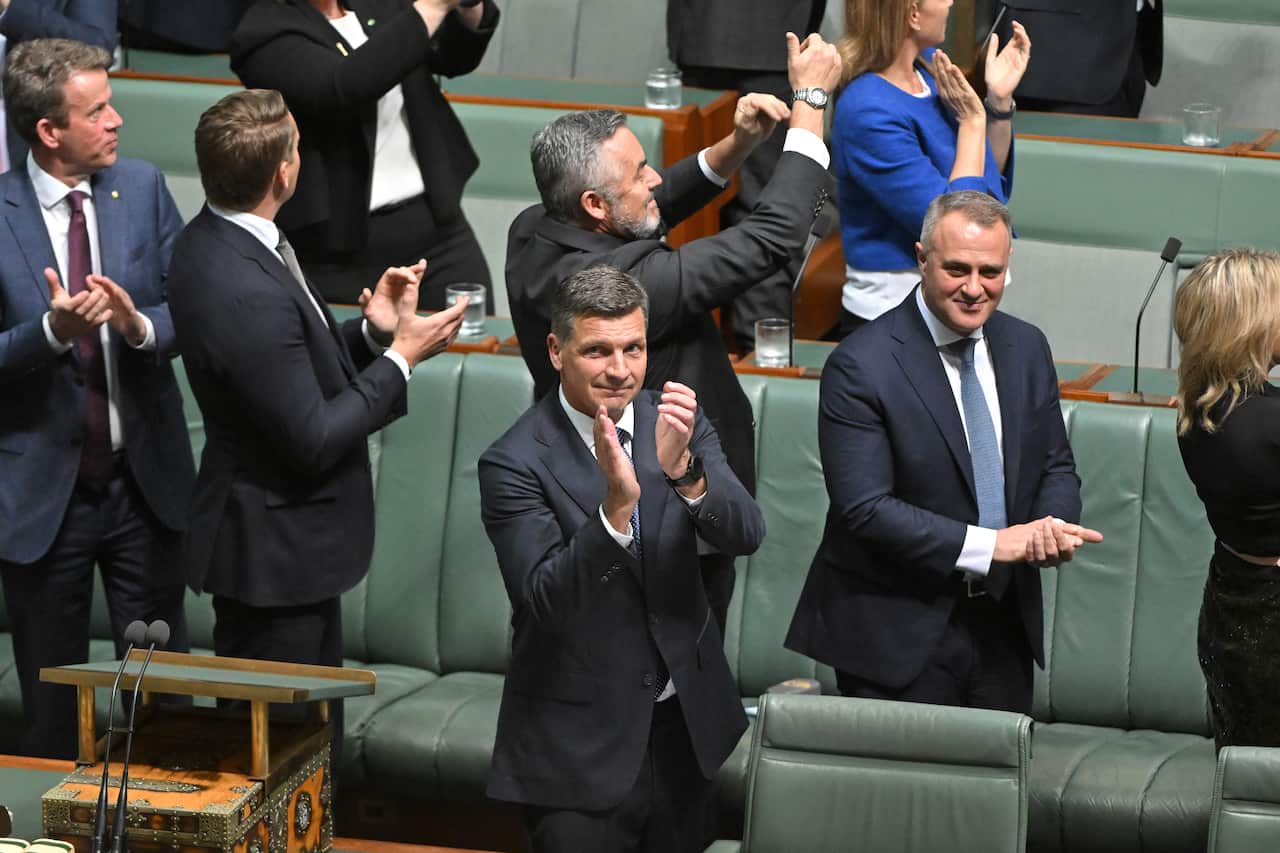
"My goal is more houses for Australians and a fairer go for young Australians."
The fund will go towards the development of essential infrastructure for home building, such as water and sewer systems, utilities and access roads.
"With this support, we will unlock 400,000 new homes," Taylor said.
On budget night, Labor committed a further $2 billion towards a $1.5 billion fund with a similar remit.
5. Lift the ban on nuclear
Taylor also took aim at Labor's net zero agenda, arguing it had created reliance on "expensive, sometimes-on, industrial-scale renewables" that had driven power prices higher.
"Australians have been fed the lie that our economy can function on solar, wind, and batteries alone," he said.
Taylor said the Coalition will back "any technologies that can deliver affordable and reliable energy in this country, that includes coal, gas, hydro, batteries and renewables in the right places, and it will include nuclear power too."
He said if elected, a Coalition government would also "lift the ban" on nuclear energy.
He added that "a Coalition government will work with coal-fired power plant owners to keep them running as long as hard as possible to get electricity prices down".
Taylor also pledged that the opposition will invest $800 million for new fuel storage to provide one billion litres of additional capacity.
6. Boost defence
On national security, Taylor announced a Coalition government would develop a National Security Strategy and appoint a dedicated National Security Adviser, with defence spending at its core.
"Unlike Labor with its accounting trickery, the Coalition will commit to spending at least three per cent of GDP on defence," he said.
Labor's current spending is around 2.8 per cent of GDP, with plans to reach 3 per cent by 2033.
With additional reporting by the Australian Associated Press.
For the latest from SBS News, download our app and subscribe to our newsletter.







