
European leaders breathed a sigh of relief this week after United States President Donald Trump backed down from threats to hit European countries with heavy tariffs, and from related talk of taking Greenland by force.
But analysts say the issue is far from being resolved, and unless Trump's relationship with Europe and the NATO alliance improves, a "major collision" could be triggered.
Ukrainian President Volodymyr Zelenskyy hit European leaders with extraordinary criticism in a speech at the World Economic Forum in Davos, where global leaders have gathered this week.
"Everyone turned their attention to Greenland, and it’s clear most leaders simply are not sure what to do about it," he said overnight.
"It seems like everyone is just waiting for America to cool down on this topic hoping it will pass away."
News that makes sense
Your trusted source for staying up-to-date with the world around you. Get free daily news updates and analysis, straight to your inbox.
"Instead of taking the lead in defending freedom worldwide, especially when America’s focus shifts elsewhere, Europe looks lost, trying to convince the US president to change. But he will not change," Zelenskyy said.
Juan Zahir Naranjo Cáceres is an international justice and human rights scholar and lecturer at the University of the Sunshine Coast.
Zelenskyy's speech "drew a sharp contrast between Trump’s decisiveness and European indecisiveness, noting that Trump could act while Europe endlessly deliberated", Cáceres told SBS News.
"European leaders’ efforts to talk Trump down on Greenland look more like urgent damage control than a clear-cut strategic victory."
Cáceres warned the US relationship with the European Union is sliding toward a more openly transactional, conflict-prone phase
"If the US acts on its current national security strategy’s apparent intention to reshape European politics and back nationalist parties, it could trigger a major collision and potentially the end of the alliance."
Trump's stance on Greenland
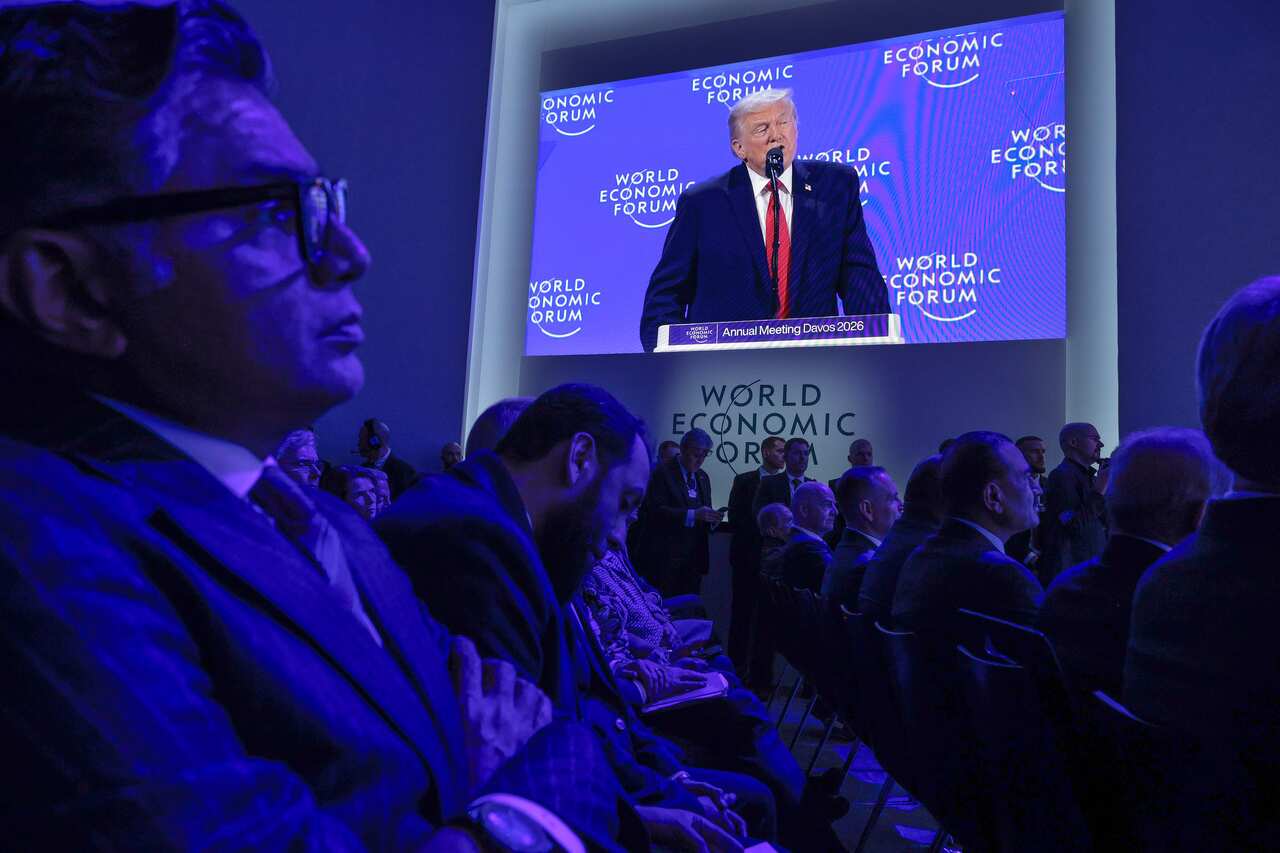
Also speaking at the Davos economic forum, Trump mixed up Greenland and Iceland many times in his speech, but reiterated his want for control of Greenland.
"We probably won’t get anything unless I decide to use excessive strength and force where we would be, frankly unstoppable," he said.
"But I won’t do that...that’s probably the biggest statement I've made because people thought I'd use force."
Trump then claimed on Fox News that NATO secretary general Mark Rutte and himself had decided to pursue a framework for "total access".
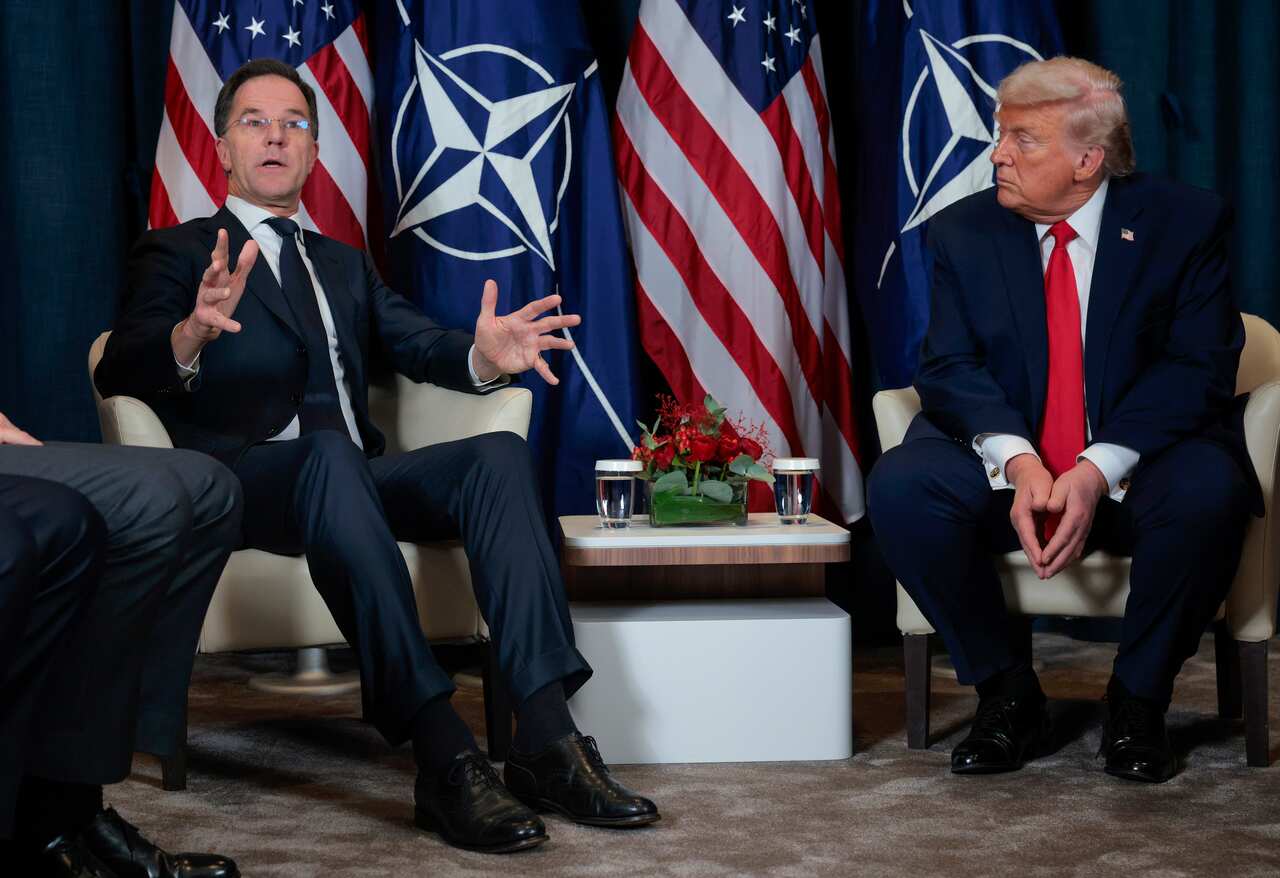
Rutte told CNN he didn’t propose any compromise to Danish sovereignty during his meeting with Trump, while telling Reuters he expects to see results from the new security framework later this year.
He asserted the focus on Arctic security would not divert resources away from Ukraine.
Rutte sang Trump's praises and said: "He has forced us in Europe to step up, to face the consequences that we have to take care more of our own defense."
It is unclear what Trump’s access to Greenland means, as he claimed "it’s really being negotiated now".
After meeting with Rutte, Trump said there could be a deal that satisfies his desire for a "Golden Dome" missile-defence system and access to critical minerals while blocking what he says are Russia and China's ambitions in the Arctic.
Rutte said minerals exploitation was not discussed in his meeting with Trump. Specific negotiations over the Arctic island would continue between the United States, Denmark and Greenland itself, he said.
Australian National University strategic policy expert Matthew Sussex told SBS News it's much too soon to say the Greenland issue is "resolved".
"Denmark and NATO have denied they have any details on the 'plan' Trump announced. It may be that he thought he had done a deal with Mark Rutte, but that isn’t the same as an agreement."
Jessica Genauer, an associate professor in international relations at Flinders University, said Trump may have damaged his connections with NATO irreparably with his Greenland threats.
"His suggested use of military force against a fellow NATO member has forever shattered the powerful norm of the non-use of force by the US against its own security allies."
"Like trust, behavioural norms take a long time to build and once broken are incredibly difficult to repair."
Sussex said that unless there is a major change in the Trump administration’s attitude to Europe and NATO, "the relationship will fester on a downward trajectory".
"There are no guarantees of this happening. That raises the question of whether European/NATO leaders can afford to treat the current White House as a short-term problem that they can provide soothing off-ramps to when tensions are inflamed, or eventually wait out."
What happens now?
Trump's ambition to wrest sovereignty over Greenland from fellow NATO member Denmark has threatened to blow apart the alliance that has underpinned Western security since the end of World War Two and reignite a trade war with Europe.
Danish Prime Minister Mette Frederiksen has been resolute on sovereignty being a "red line".
Alongside Denmark, seven other European nations — France, Germany, Italy, Poland, Spain and the UK — echoed the sovereignty clause, as well as territorial independence earlier in January.
In a joint statement they wrote: "Greenland belongs to its people."
"Security in the Arctic must therefore be achieved collectively, in conjunction with NATO allies including the United States," it also stated.
Emergency talks on transatlantic relations are currently being held in Brussels, but Cáceres said the power of those talks are limited as suggested by "the fact that it took Rutte’s personal intervention with Trump to de-escalate rather than collective European diplomacy."
Zelenskyy offered similar sentiments in his speech.
Cáceres said Zelenskyy wants Europe to behave more like an autonomous political actor, "with tighter defence cooperation and great willingness to absorb economic costs instead of allowing tariff threats or Washington's election cycle to set the pace".
Sussex said Zelenskyy’s criticism "reflects his exasperation at European leaders... for his part, [he] is seeking a security guarantee for Ukraine that doesn’t rely on the US. [He’s] understandably frustrated that the US seems more focused on doing business deals."
US allies need to prepare for a world in which US military backing cannot be guaranteed, Genauer said.
It's a message to which Prime Minister Anthony Albanese's government will be paying close attention.
"The US is Australia's most important security ally in our region," Genauer said.
"Australia will be beginning to consider whether strengthening relations with South Korea, Japan, and even strong middle powers such as Indonesia or India is a smarter strategy than continuing to rely primarily on our relationship with the US."
The president of the European Parliament said the European Union will likely resume work on a trade deal with the United States after Trump took back his tariff threats.
The parliament decided this week to suspend work on the deal because of Trump's threats.
However, diplomats told Reuters EU leaders will rethink US relations as the Greenland episode has badly shaken confidence in the transatlantic ties.
Governments remain wary of another change of mind by Trump, who is increasingly seen as a bully whom Europe will have to stand up to, they said.
Residents in the Greenland capital, Nuuk, are also wary.
"It's all very confusing," said pensioner Jesper Muller.
"One hour we are, well, almost at war. Next hour everything is fine and beautiful, and I think it's very hard to imagine that you can build anything on it."
— With additional reporting by Reuters
For the latest from SBS News, download our app and subscribe to our newsletter.







