In brief
- The Artemis II crew took centre stage at Ellington Field near NASA's Johnson Space Center and Mission Control on Saturday.
- They splashed down off the coast of California on Friday after a historic lunar flyby.
Still marvelling at their moon mission, the Artemis II astronauts received a thunderous welcome home from hundreds who took part in NASA's lunar comeback that set a record for deep space travel.
The crew of four arrived at Ellington Field near NASA's Johnson Space Center and Mission Control in Houston, Texas, on Saturday, local time, after they splashed down off the coast of southern California the evening before.
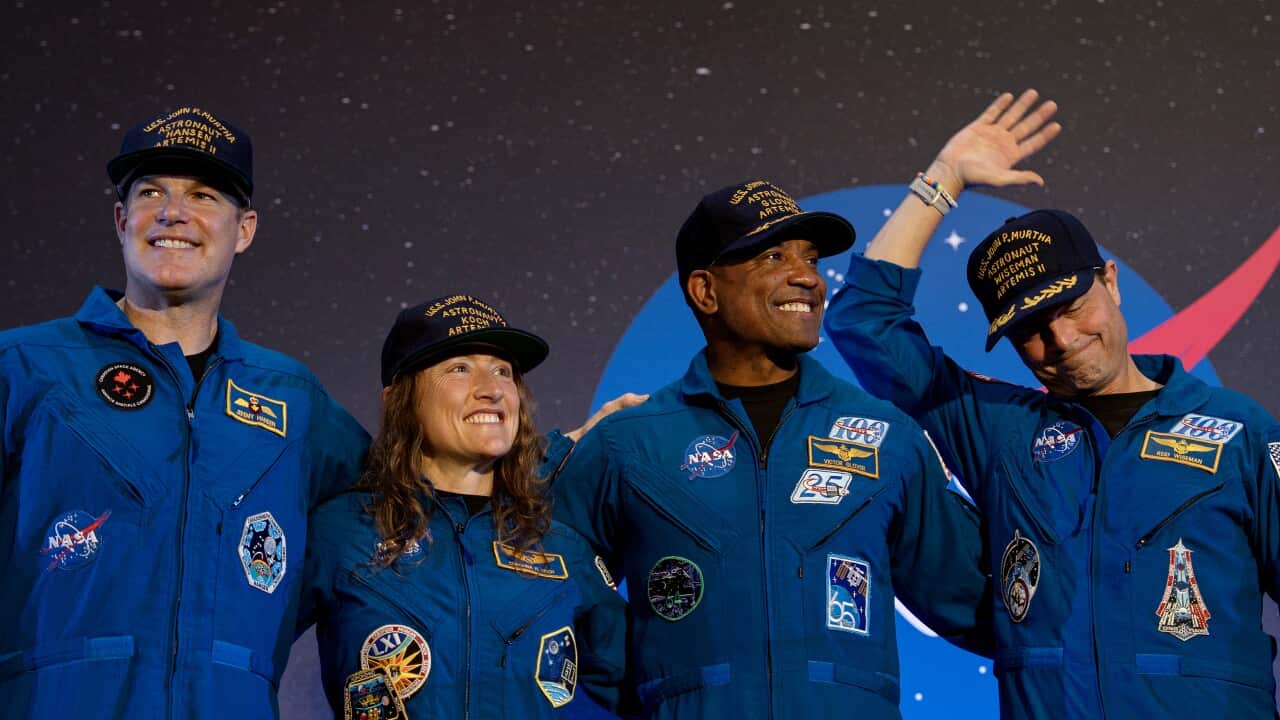
After a quick reunion with their spouses and children, commander Reid Wiseman, pilot Victor Glover, Christina Koch and Canada's Jeremy Hansen took the hangar stage, surrounded by space centre workers and other guests.
"This was not easy," an emotional Wiseman said.
"Before you launch, it feels like it's the greatest dream on Earth. And when you’re out there, you just want to get back to your families and your friends. It's a special thing to be a human, and it’s a special thing to be on planet Earth."
News that makes sense
Your trusted source for staying up-to-date with the world around you. Get free daily news updates and analysis, straight to your inbox.
"I have not processed what we just did and I’m afraid to start even trying," Glover said.
Hansen said the four of them embodied love, "and extracting joy out of that" as they joined together to stand in a row, embracing one another.
"When you look up here, you’re not looking at us. We are a mirror reflecting you. And if you like what you see, then just look a little deeper. This is you," he said.
The jubilant crowd included flight directors and the launch director, Orion capsule and exploration system managers, high-ranking military officers, members of Congress, the space agency’s entire blue-suited astronaut corps and even retired ones, and more.
Historic moon mission
During Artemis II's nearly 10-day mission, the astronauts voyaged deeper into space than the moon explorers of decades past and captured views of the lunar far side never witnessed before by human eyes. A total solar eclipse added to the cosmic wonder.
On their record-breaking flyby, the astronauts reached a maximum 406,771km from Earth before hanging a U-turn behind the moon, eclipsing Apollo's 13 distance record.
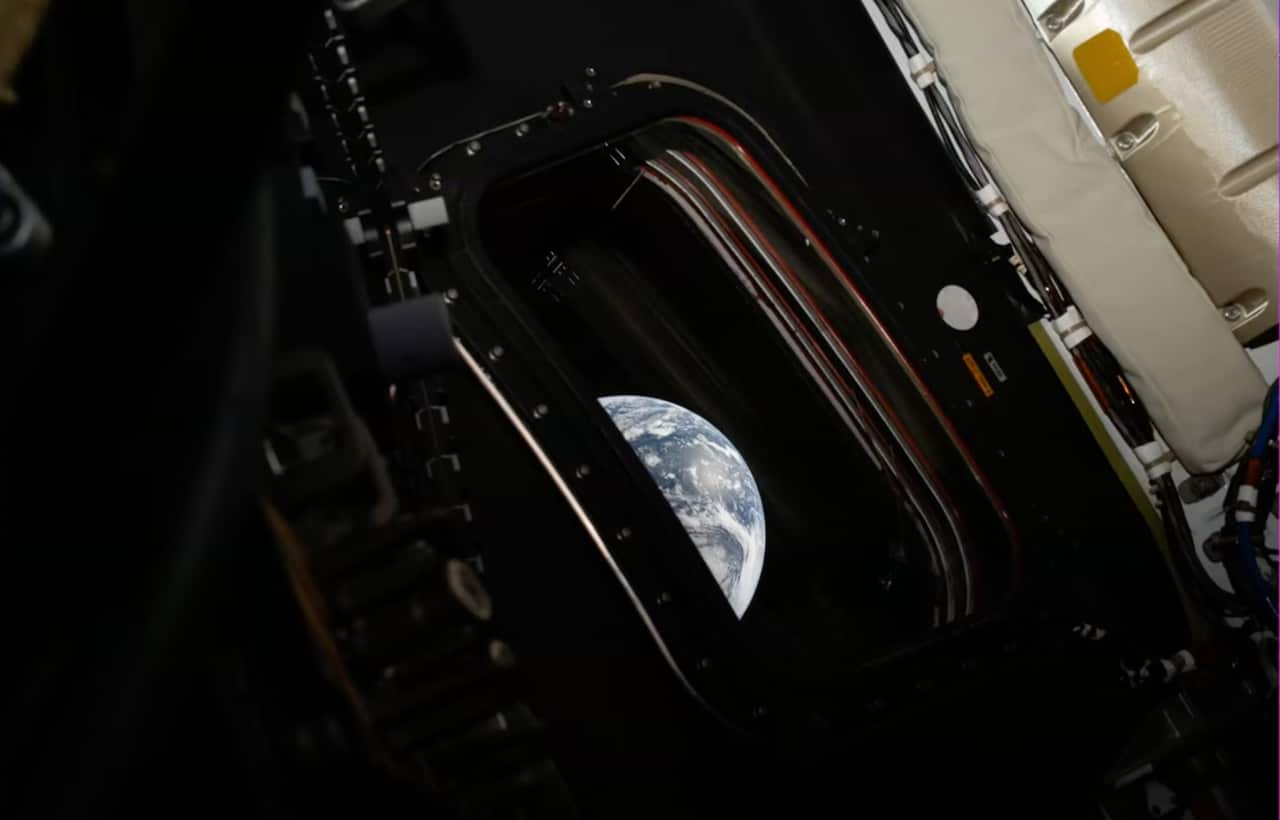
The mission also revealed a new side of our planet with an Earthset photo, showing Earth setting behind the grey, pockmarked moon. The image echoed the famous Earthrise shot from 1968 taken by the world’s first lunar visitors, Apollo 8.
"Honestly, what struck me wasn’t necessarily just Earth, it was all the blackness around it. Earth was just this lifeboat hanging undisturbedly in the universe," Koch said.
"Planet Earth you are a crew."
Despite the accomplishments, Artemis II astronauts had to contend with a more mundane problem — a malfunctioning space toilet. NASA promised a design fix before longer moon-landing missions.
Wiseman, Glover, Koch and Hansen were the first humans to fly to the moon since Apollo 17 closed out NASA's first exploration era in 1972. Twenty-four astronauts flew to the moon during Apollo, including 12 moonwalkers.
It was crucial for NASA that Artemis II go well.
The space agency is already preparing for next year's Artemis III, which will see a new crew practice docking its capsule with a lunar lander in orbit around Earth. T
That will set the stage for the all-important Artemis IV moon landing in 2028, when two astronauts attempt a touchdown near the lunar south pole.
"The long wait is over. After a brief 53-year intermission, the show goes on," Isaacman said.
For the latest from SBS News, download our app and subscribe to our newsletter.







