Watch FIFA World Cup 2026™ LIVE, FREE and EXCLUSIVE

Science

Artemis II's journey around the moon: as it happened in pictures

Here are some of the most amazing images to emerge from the first crewed lunar fly-by in more than 50 years.

NASA Artemis II Mission View

This image was captured just three minutes before the Orion spacecraft and its crew went behind the moon and lost contact with Earth for 40 minutes before emerging on the other side. In this image, the dark portion of Earth is experiencing nighttime. Source: NASA / ABACA

For the first time in more than half a century, astronauts have journeyed to the moon, setting a record for the farthest distance humans have ever travelled from Earth.

A rocket carrying the spacecraft with four astronauts — NASA's Reid Wiseman, Victor Glover and Christina Koch and Jeremy Hansen from the Canadian Space Agency — launched the Artemis II mission last Thursday morning Australian time.

From liftoff to the far side of the moon, here is their journey to — and around— the moon in pictures.
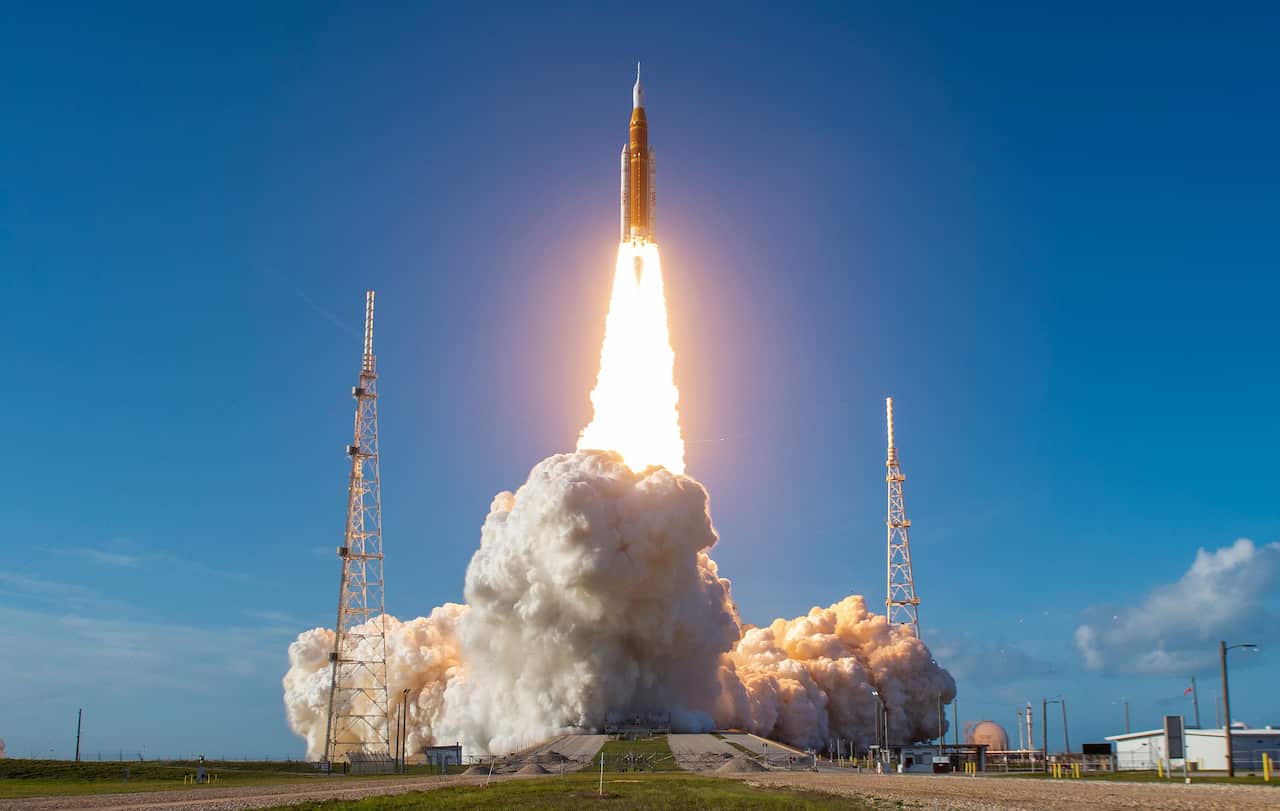
A spaceship lifts off from a launchpad leaving exhaust fumes behind
With an intense roar that reverberated far beyond the launchpad, the enormous orange-and-white rocket carried the four astronauts away from the Earth to the moon. Source: AFP / Jim Watson

The quartet started their 10-day journey at 8.35am AEDT from Launch Complex 39B at the Kennedy Space Center in Florida.

Just over a day after launch the crew was approaching the moon and taking pictures of it.
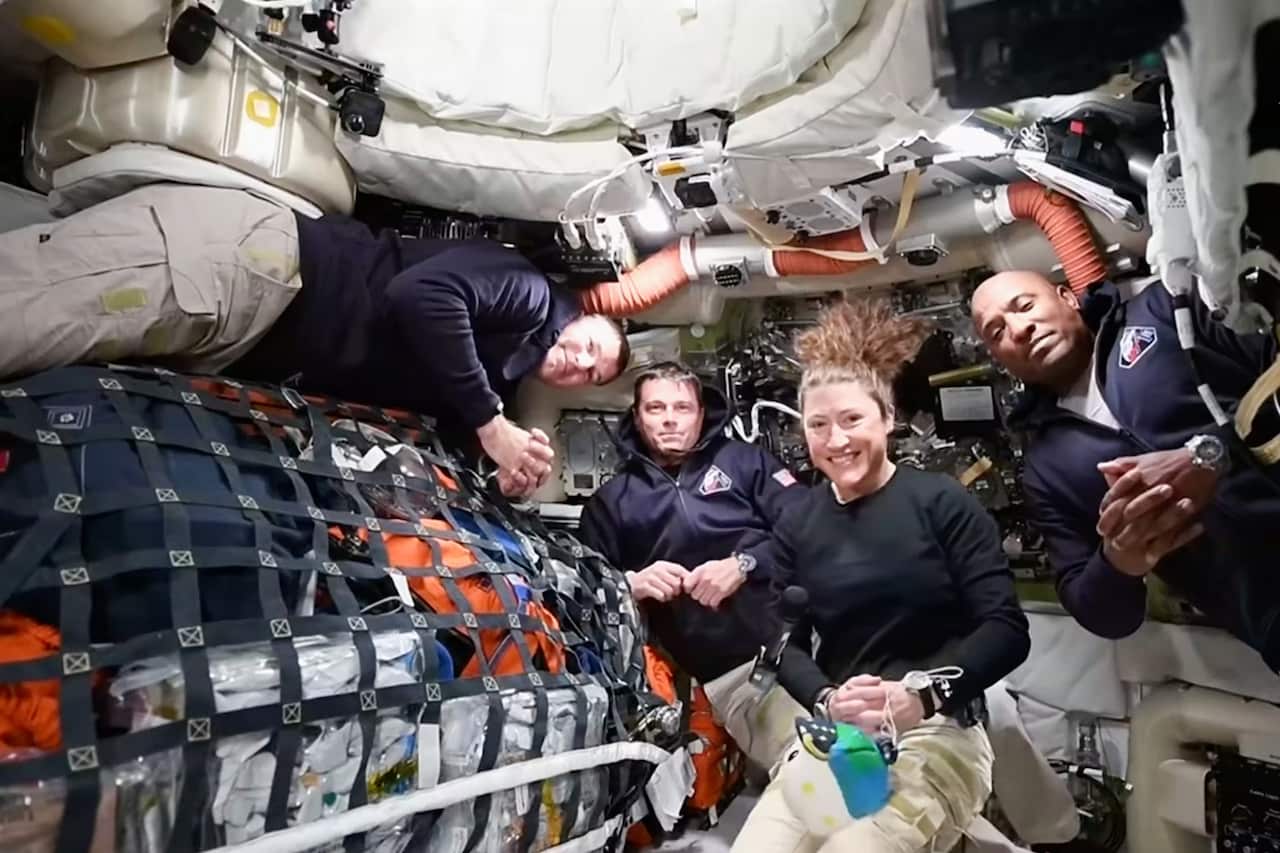
Four astronauts inside a spaceship
(Left to right) Mission specialist Jeremy Hansen, commander Reid Wiseman, mission specialist Christina Koch and pilot Victor Glover appear on a video conference while en route to the moon. Source: NASA / Supplied

The astronauts said they were "glued to the window" taking pictures, and later passed a floating microphone back and forth as they took questions from US television networks.
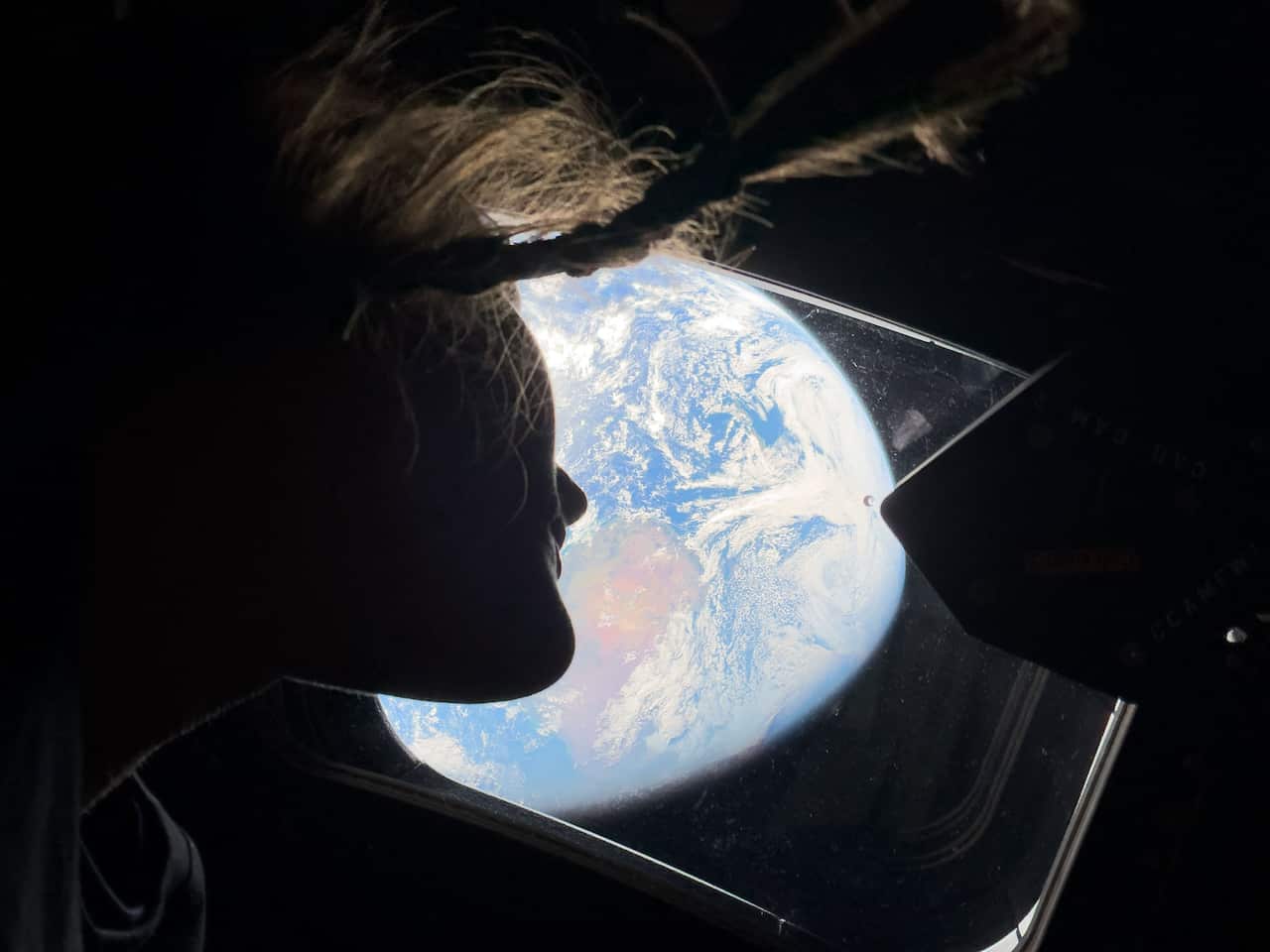
A view of Earth from space with an astronaut looking out the spaceship's window
Mission specialist Christina Koch peers out of one of the Orion spacecraft's main cabin windows, looking back at Earth. Source: NASA / Supplied

NASA later released images taken from inside the Orion spacecraft, including a full portrait of Earth's deep blue oceans and billowing clouds.
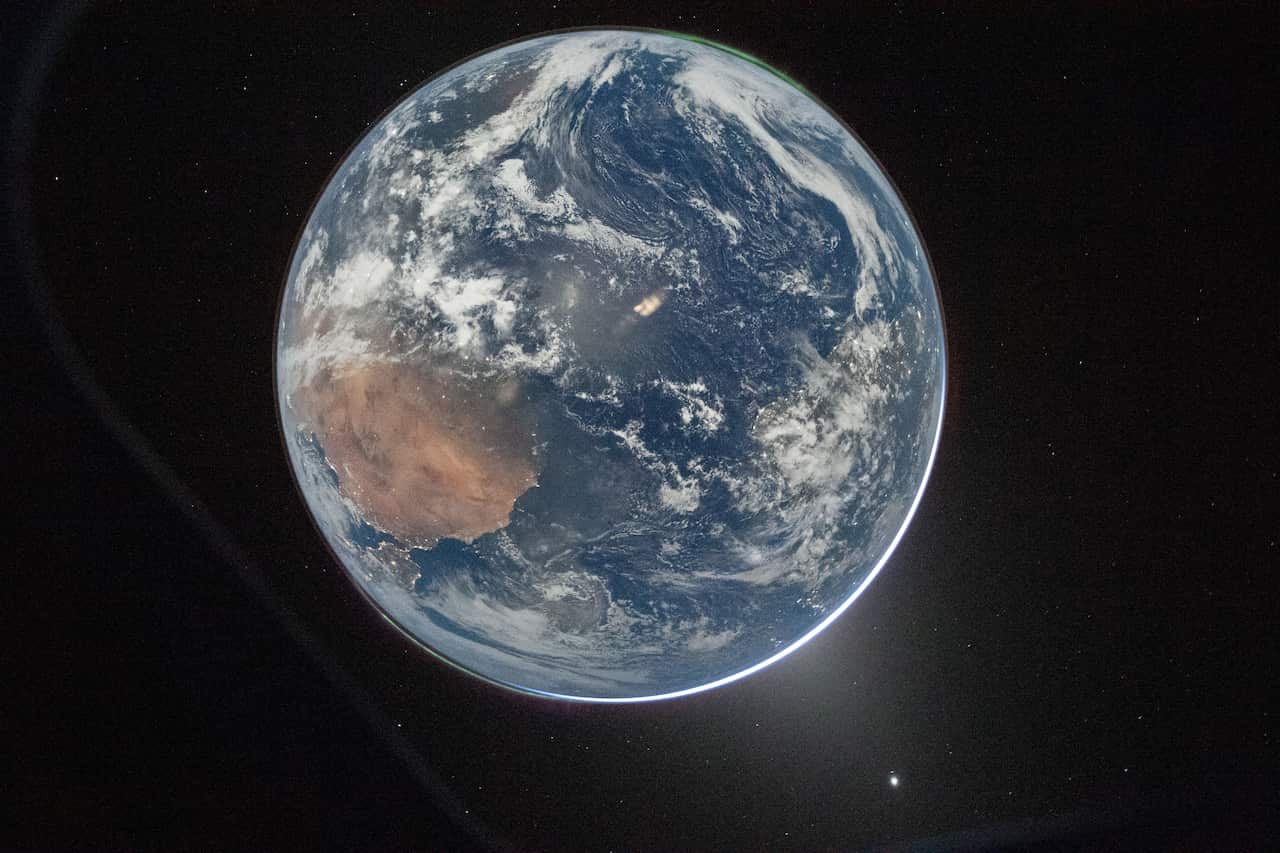
A view of Earth from space with blue ocean and white clouds
A photo of Earth taken by Artemis II commander Reid Wiseman from the Orion spacecraft's window. There are two auroras (top right and bottom left) and zodiacal light (bottom right) is visible as the Earth eclipses the sun. Source: NASA / Supplied

On Monday at 9.07am (AEST), Artemis II travelled to the far side of the moon, and reached the furthest point from Earth on its journey.

For 40 minutes, the craft lost contact with Earth as planned.

While out of contact, NASA said the crew saw a part of the moon that had never before been seen by human eyes.
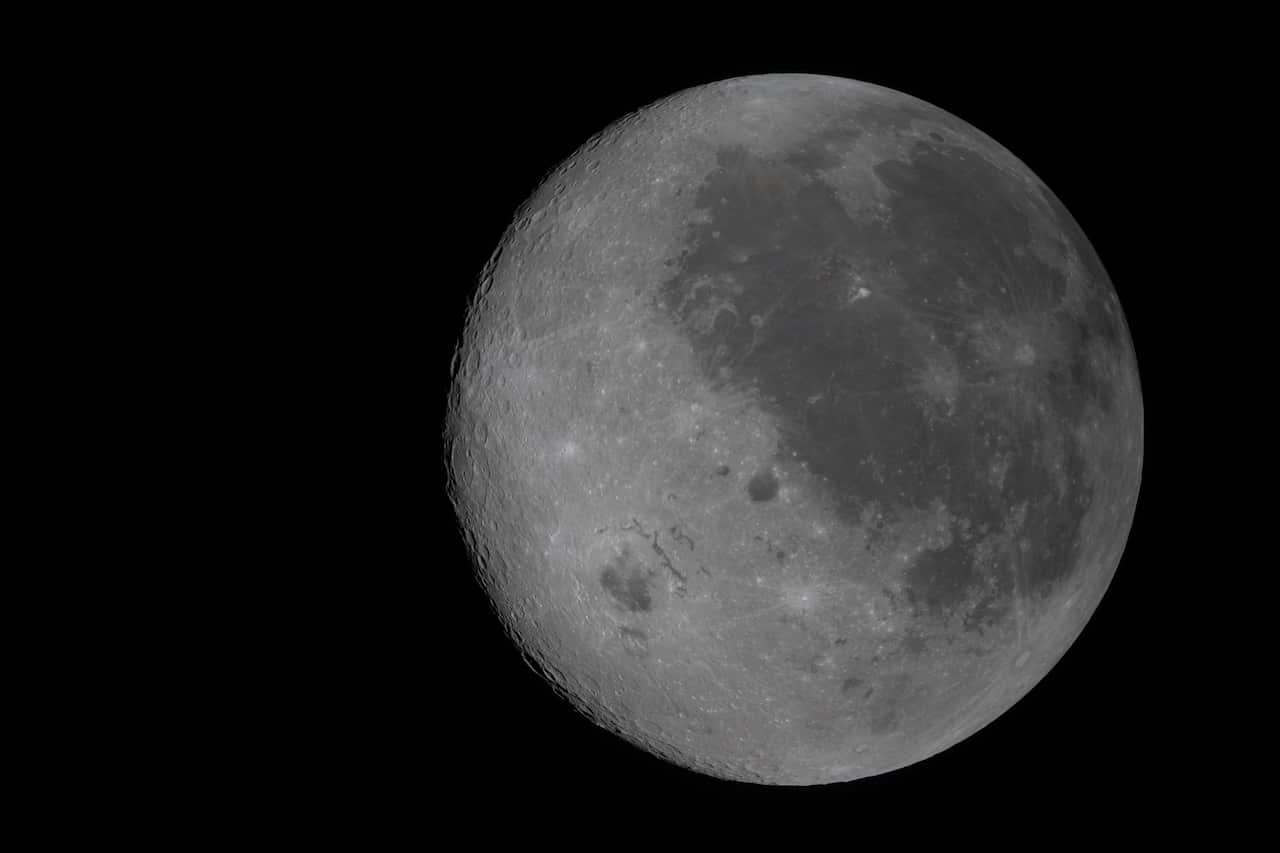
A view of the near side of the moon
The near side (the hemisphere we see from Earth) of the moon visible at the right side of the disk, identifiable by the dark splotches. At lower left is Orientale basin, a nearly 1,000 kilometre-wide crater that straddles the moon’s near and far sides. Everything to the left of the crater is the far side. Source: NASA / Supplied

The agency has since released an image showing part of the moon's Orientale Basin — a 965-kilometre-wide crater.

It had previously only been captured by robotic explorers.

The moon's near side, which faces the Earth is in the top half, and the far side, with its distinctive target-shaped Orientale Basin, is visible in the bottom half.
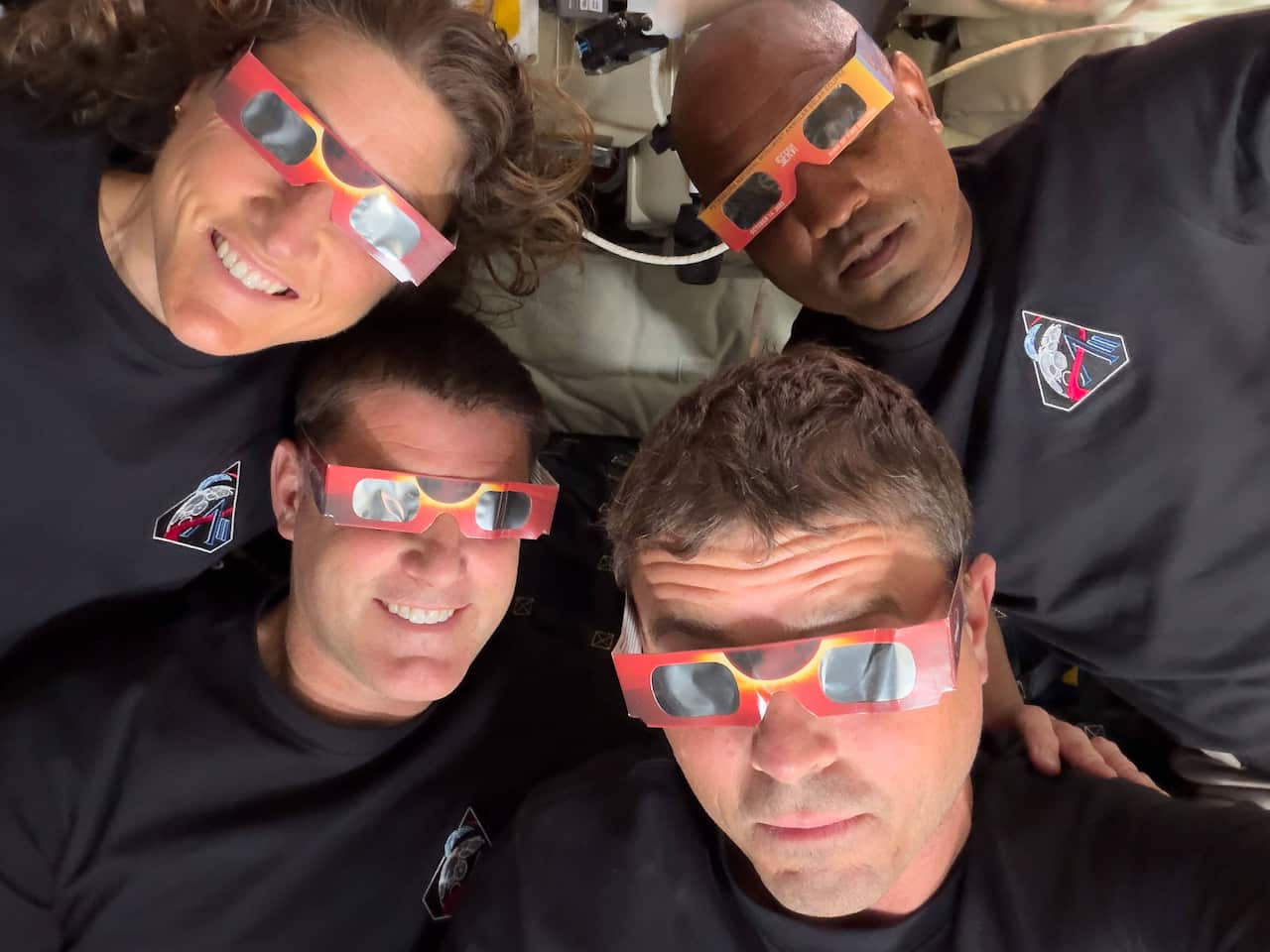
Artemis crew wearing goggles to protect them from a solar eclipse
(Left to right) Christina Koch, mission specialist Jeremy Hansen, commander Reid Wiseman, and pilot Victor Glover pose with eclipse viewers. Source: NASA / AAP

In the final hour of their six-hour lunar flyby, the sun, the moon and the Orion capsule lined up for a solar eclipse.

For 53 minutes, the moon covered the astronauts' view of the sun.
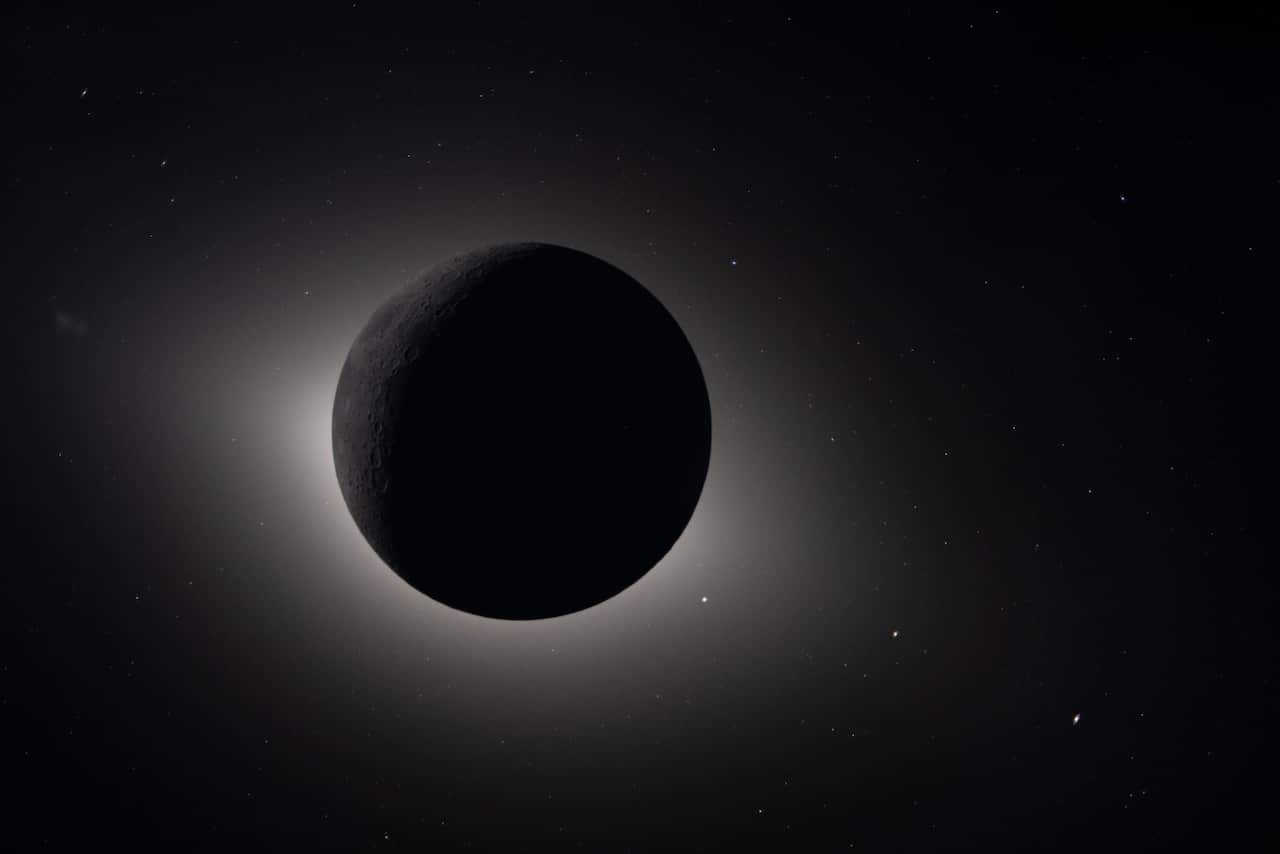
The Earth sets behind the moon during a lunar flyby
The 53-minute eclipse experienced by the crew on Artemis II was seven times longer than a typical eclipse on Earth. Source: NASA / AAP

Speaking to mission control back on earth, one of the astronauts said the spectacle was "unreal".

"After everything we saw earlier, this is just … we just went sci-fi."
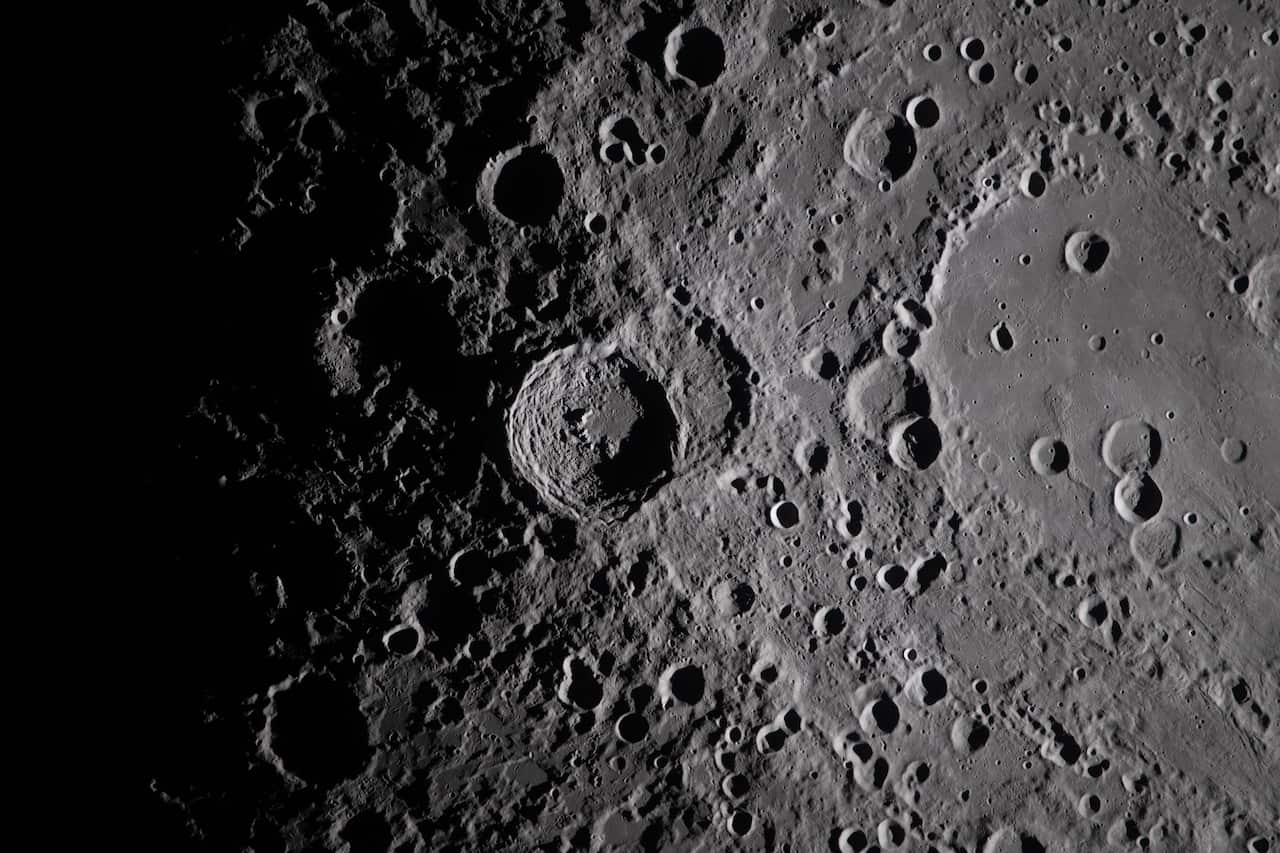
NASA Artemis Moonshot
The Vavilov Crater on the Moon during a lunar fly-by. Source: NASA / Supplied

At the end of its seven-hour lunar flyby, the Orion capsule started its four-day trip back to Earth.

It's scheduled to splash down in the Pacific Ocean off the coast of California on Friday night local time (Saturday morning AEST).
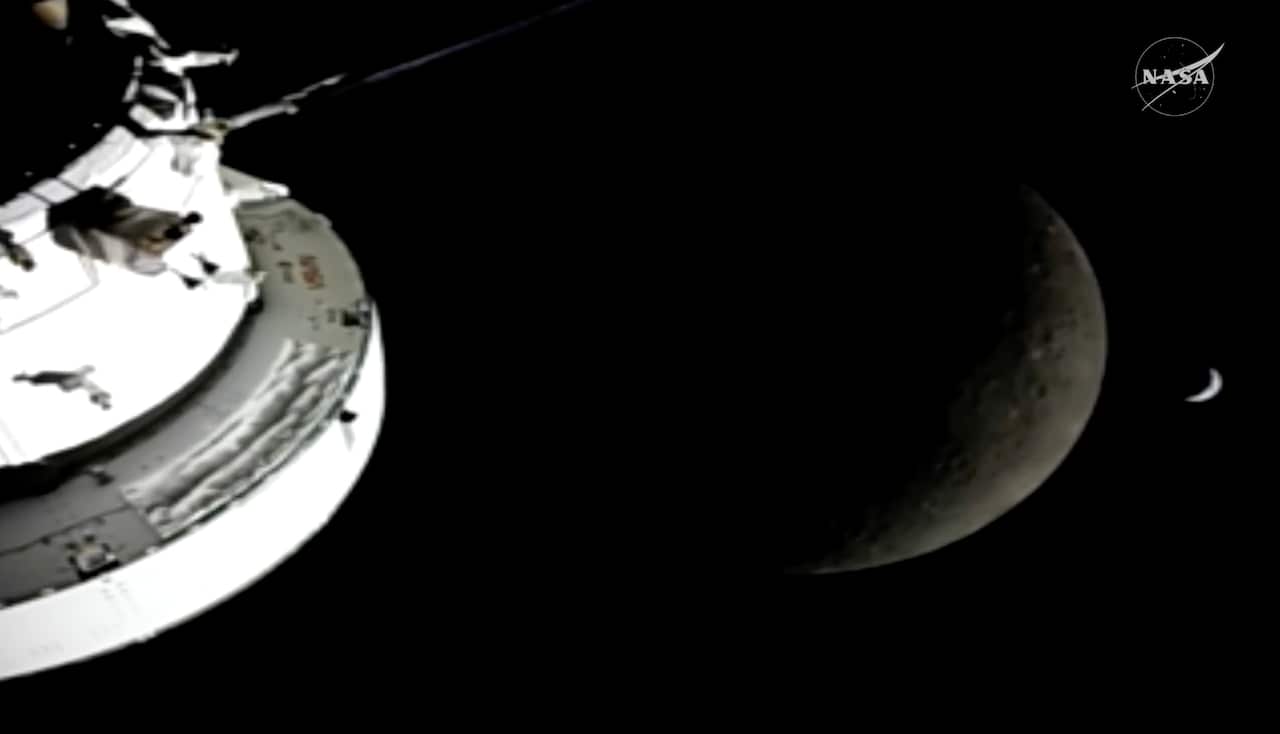
The Earth and the moon seen from a spacecraft's window
The Orion Spacecraft, the Earth and the moon. Source: NASA / Supplied

For the latest from SBS News, download our app and subscribe to our newsletter.


3 min read

Published

Source: SBS, AFP


Share this with family and friends


Get SBS News daily and direct to your Inbox

Sign up now for the latest news from Australia and around the world direct to your inbox.

By subscribing, you agree to SBS’s terms of service and privacy policy including receiving email updates from SBS.

Follow SBS News

Download our apps

Listen to our podcasts

Get the latest with our News podcasts on your favourite podcast apps.

Watch on SBS

SBS World News

Take a global view with Australia's most comprehensive world news service

Watch now

Watch the latest news videos from Australia and across the world






