In brief
- US President Donald Trump has departed China following a lavish two-day trip.
- He leaves with few wins, as China capitalised on a changing power dynamic.
United States President Donald Trump hailed it as “the biggest summit ever.” In reality, his less than 48 lavish hours in China yielded few results.
Expectations for any real breakthroughs were always low. But what we saw at the high-stakes summit could still shape the US-China relationship for months and years to come.
Here’s what we learned.
China's position on Taiwan hardens
News that makes sense
Your trusted source for staying up-to-date with the world around you. Get free daily news updates and analysis, straight to your inbox.
China had been signalling for weeks that Taiwan would be its top priority at this summit.
The island’s status has always been a point of conflict between the US and Chinese governments; China claims it as a self-governing province that will eventually be brought under its control, while the US has long been its single largest supplier of the weapons needed to prevent that from happening.
But this week, Chinese President Xi Jinping took it one step further; saying explicitly that from now on, the most important factor in the US-China relationship would be how the US deals with Taiwan.
“The Taiwan question is the most important issue in China-US relations,” Xi told Trump, according to the Chinese Foreign Ministry handout. “If it is handled properly, the bilateral relationship will enjoy overall stability. If handled poorly, the two countries will collide or even clash, putting the entire US-China relationship in an extremely dangerous situation.”
When asked for his version of events later in the day, Trump opted to say nothing. His silence was seen as a win in Taiwan, where fears he might go off script and say something to inadvertently shift the US’ position on the island were high going into the summit.
His team was also sent out to downplay Xi’s remarks.
“US policy on the issue of Taiwan is unchanged as of today and as of the meeting that we had here today,” US Secretary of State Marco Rubio said. “It was raised. They always raised it on their side. We always make clear our position and we move on to other topics.”
But China has made its position clear; the US’ ongoing support for Taiwan could jeopardise one of its most important trade relationships.
The US approved a US$15b ($2.09b) arms package for Taiwan in December last year; its largest ever. But with Trump still yet to give his final approval, its delivery had been stalled.
Whether or not those weapons finally reach Taiwan may be the first real test of whether Xi’s threat made an impact.
Trump shows deference to an increasingly confident China
While the summit was largely cordial, there were moments that signalled the balance of power between the two leaders might be shifting.
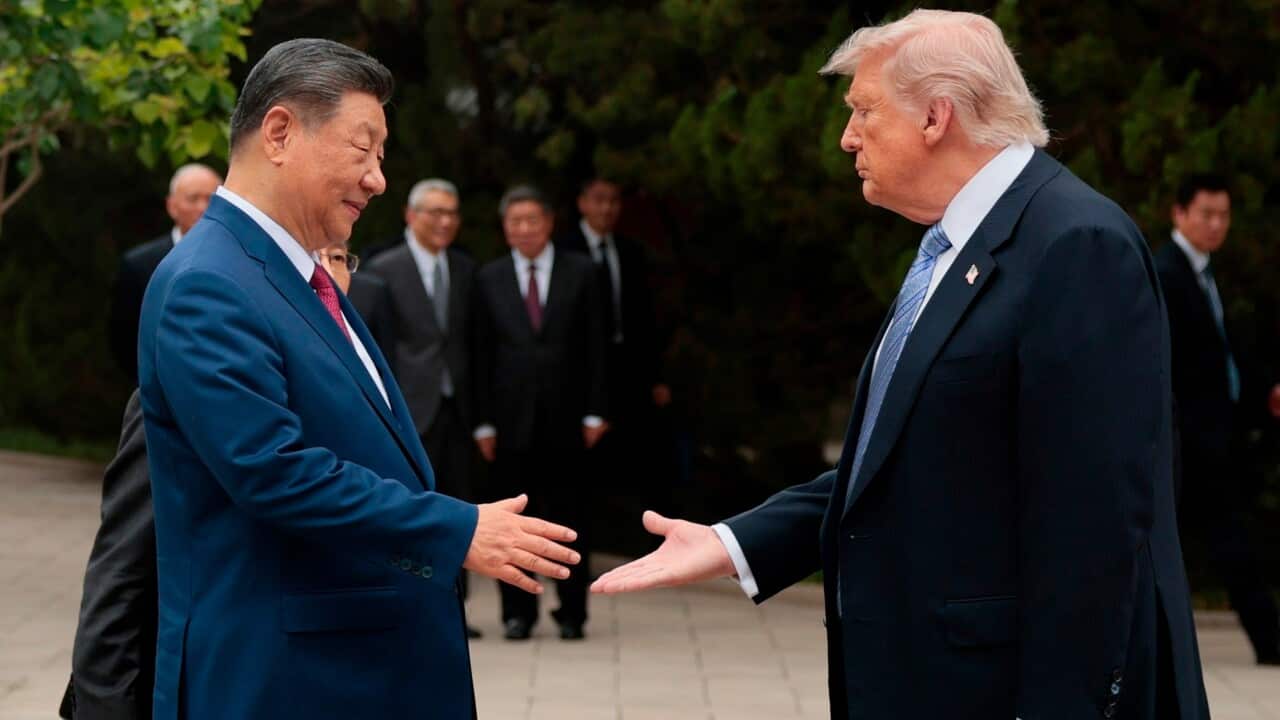
Xi rolled out the red carpet and did a lot to make Trump feel respected; sending his Vice President to greet him at the airport, personally accompanying him on a tour of the Temple of Heaven, and allowing him to visit the highly secretive Zhongnanhai compound, where he and other senior Chinese Communist Party officials reside.
But Xi was also unafraid to issue warnings to Trump; not only on Taiwan, but on the consequences of failing to cooperate.
"We agreed that China-US relations are the most important bilateral relationship in the world today,” Xi said at a state banquet in Trump’s honour. “They can only be handled well and must not be messed up. When the two countries cooperate, both benefit; when they fight, both suffer.”
By contrast, Trump was unusually restrained, and seemed to be at pains to keep his tone positive throughout the summit. He repeatedly raved about the warm welcome he received, refused to be drawn on possible points of contention, and even seemed to gush over Xi’s appearance.
“If you went to Hollywood and you look for a leader of China to play a role in a movie, he’s central casting,” Trump said, referencing an old Hollywood casting agency. “Even his physical features, you know, he’s tall, very tall.”
It was a stark departure from Trump's previous rhetoric on China; once saying it was “raping” the US, calling it “neither an ally nor a friend”, and long-labelling COVID-19 the “China virus”.
Towards the summit’s close, Xi said their talks had set the framework for a new US-China relationship. If that’s true, it may be one with a very different power dynamic to the last.
Trump heads home with few wins in hand
Hopes for a major trade deal being struck at this summit were always low, but Trump seems to have left with even less than expected.
The US claimed some wins, saying China agreed to buy 200 Boeing jets; what would be its first purchase of US commercial aircraft in almost a decade, but far fewer than the 500 jets markets had predicted. The announcement caused stocks in the company to drop four per cent.
China renewed export licences for hundreds of American beef processing plants during the summit. But instead of securing a commitment on soybeans —the US’s number one export to China — the US simply said it was expecting a deal for “double-digit billions” worth of US agricultural products in the coming days without providing any further details.
The results will likely be a blow to Trump, who was hoping to take home a deal considerable enough to boost his sagging approval ratings ahead of the critical midterm elections in November.
A breakthrough on the war in the Middle East was even more elusive. Despite saying he “didn’t need” China’s help securing a ceasefire, in the lead-up to this week’s summit, Trump’s senior officials had been openly asking China to use its sway with Iran to convince it to take a deal.
While Trump said Xi offered to help broker a peace deal and committed to not sending Iran any military equipment, China itself made no firm promises on the matter. Instead, the Chinese Foreign Ministry issued a statement saying: “This conflict, which should never have happened, has no reason to continue.”
The limited results of this summit are widely seen as another sign of the US' weakening leverage over China.
Both sides do want closer engagement
Despite some very public power plays and disagreements over what was actually agreed, both the US and China signalled they do want closer ties.
Xi said the two countries “should be partners, not adversaries,” while Trump spoke of them working together to create “a future of greater prosperity, cooperation, and happiness”.
In reality, both know it needs the other to succeed. China controls 90% of the world’s rare earth processing capacity, and showed last year it is all too willing to hold the critical minerals hostage in a trade war with the US. They will be particularly important for the US as it looks to replenish the missile stockpiles it’s burned through in the Middle East.
At the same time, the US holds the keys to the advanced semiconductors China needs to power its AI industry, which it sees as the cornerstone of its future economic growth.
For now, both issues remain unresolved; as does the status of their wider trade war, with no firm commitments to keep tariffs down either.
But this was meant to be only the first of four meetings between the leaders this year. Before leaving, Trump invited Xi to visit Washington D.C. in late September, which he has since accepted.
In the meantime, their best hope may be for this new fragile stability to hold.
For the latest from SBS News, download our app and subscribe to our newsletter.







