A Melbourne man says he has just returned from a war zone in Iraq.
His case highlights the challenges of investigating and prosecuting under Australian laws those suspected of participating in an overseas conflict.
Diyar Uthman was born in the Kurdish region of northern Iraq, in a town called Halabja.
"Family friends approached me, 'There is something like that available if you want to do it. It's going to be scary. It's going to be dangerous for your life.'
In the 1980s, the city was seen as a key stronghold in the Kurds' struggle for autonomy before it fell to Iranian forces during the Iraq-Iran war.
And to avenge the fall of the city, the government of then-leader Saddam Hussein launched a poison-gas attack on Halabja in 1988.
Thousands of people were killed, and many were left injured.
Others fled, including seven-year-old Diyar Uthman and his family. They eventually settled in Australia.
Now 34 years old, Mr Uthman said his homeland has never been far from his mind, and, last year, an opportunity came up to, as he sees it, contribute.
Related reading
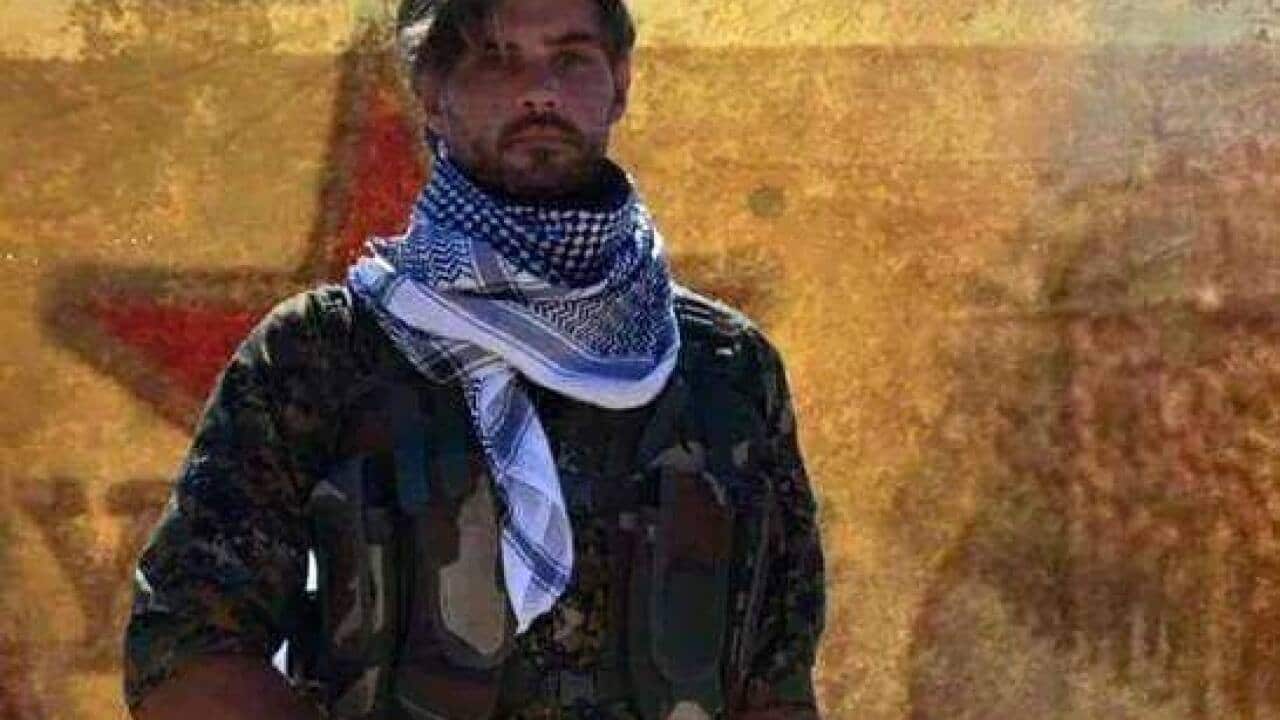
Victorian Kurds to farewell anti-IS fighter
"Family friends approached me, 'There is something like that available if you want to do it. It's going to be scary. It's going to be dangerous for your life.' I said, 'I don't mind.' I said, 'I don't mind, I'd love to do that. It's something (where) I have to serve my country. It would be a pleasure for me,'" he said
Diyar Uthman said he travelled to northern Iraq to join the Kurdish militia known as the Peshmerga.
The Peshmerga have been fighting for Kurdish autonomy since the Ottoman Empire fell during the First World War.
When IS militants advanced into Iraq last year, the Peshmerga were dragged into the conflict.
Since then, they have fought IS with the support of coalition forces - including Australia.
Mr Uthman, though, claims he was not involved in armed combat.
"Mostly, I was a contact between the Peshmerga and the coalition forces at the frontline, on the ground, and passing information from Peshmerga to coalition, from coalition to the Peshmerga, about any operations, about intelligence, just to help them out in any way. I was doing everything except firing at the frontline, and sometimes you put your life more dangerous not having any weapons to protect you," he added.
Despite the risks of being in a war zone, Mr Uthman said he believed it was the right place for him to be.
"The first week, I was very scared. Very, very scared. Loud noises, machine-guns and IEDs* went off in the area. But after a while, you get used to it, because you've got everyone next to you, all the Peshmerga, brave with the help of all of our troops," he said.
Diyar Uthman maintains he was mainly based in Kirkuk, in northern Iraq.
Although it is legal under Australian law to travel there, it is a criminal offence for any Australian to travel to nearby Mosul, currently under IS control.
Mr Uthman said Australian Federal Police asked him about that when he returned to Melbourne in March.
"Actually, they did ask if I'd been to Mosul, even for a visit, even for anything, and I was, like, 'Nah, I haven't been to Mosul.'" (Reporter: "Were they relying on your word?") "I think they relied on my word, and they went through my mobile, and, nowadays, all the mobiles have GPS tracking," he added.
After six hours of questioning, he says, he was free to go home without charge.

And since that time, he has been able to return to northern Iraq, including just recently.
Australian National University international-law professor Don Rothwell said Mr Uthman has not necessarily violated any Australian laws.
"Even the mere fact that someone has travelled to a foreign country is not, on itself, enough, under the current legislation. And so, for Australian intelligence authorities and agencies and others to once again gather the relevant information together to prepare a prosecution brief for a body like the Australian Federal Police, there needs to be precise information obtained, in terms of the movement of the Australian citizen in and out not only of a country, but of conflict zones within a country. And that would often require cooperation from local authorities, and, in some cases, that would be exceptionally difficult," he said.
The federal government says 120 Australians are known to have travelled to the Middle East to fight with IS or other groups.
But of that number, it is unclear how many have joined Kurdish forces.
Under current laws, Australian citizens and residents can be investigated or prosecuted if:
A, they engage in armed hostilities in a foreign country, unless it is in or for the armed forces of the government of a foreign country -- but note, in Syria, it is illegal to fight for any side.
B, if they travel to designated terror zones, such as Mosul, in Iraq.
Or C, if they provide funding or training or supply weapons to any side in a conflict in a country on the Autonomous Sanctions list, such as Syria.
Professor Rothwell said even under those provisions, implementing the law would be difficult.
"One of the drivers for the introduction of the citizenship legislation by the Abbott Government this year has been a realisation that aspects of the foreign-fighters legislation is actually hard to implement, and so the debate about the citizenship legislation, of course, means it meets a much lower threshold, in terms of not having to prove clear, conclusive guilt by an Australian dual citizen by moving in and out of countries. So different evidentiary standards has really opened the door for the Abbott Government -- and now, presumably, the Turnbull Government -- to continue with the citizenship legislation, and it really comes down to the difficulties that have been identified, in terms of being able to prosecute foreign fighters," he added.
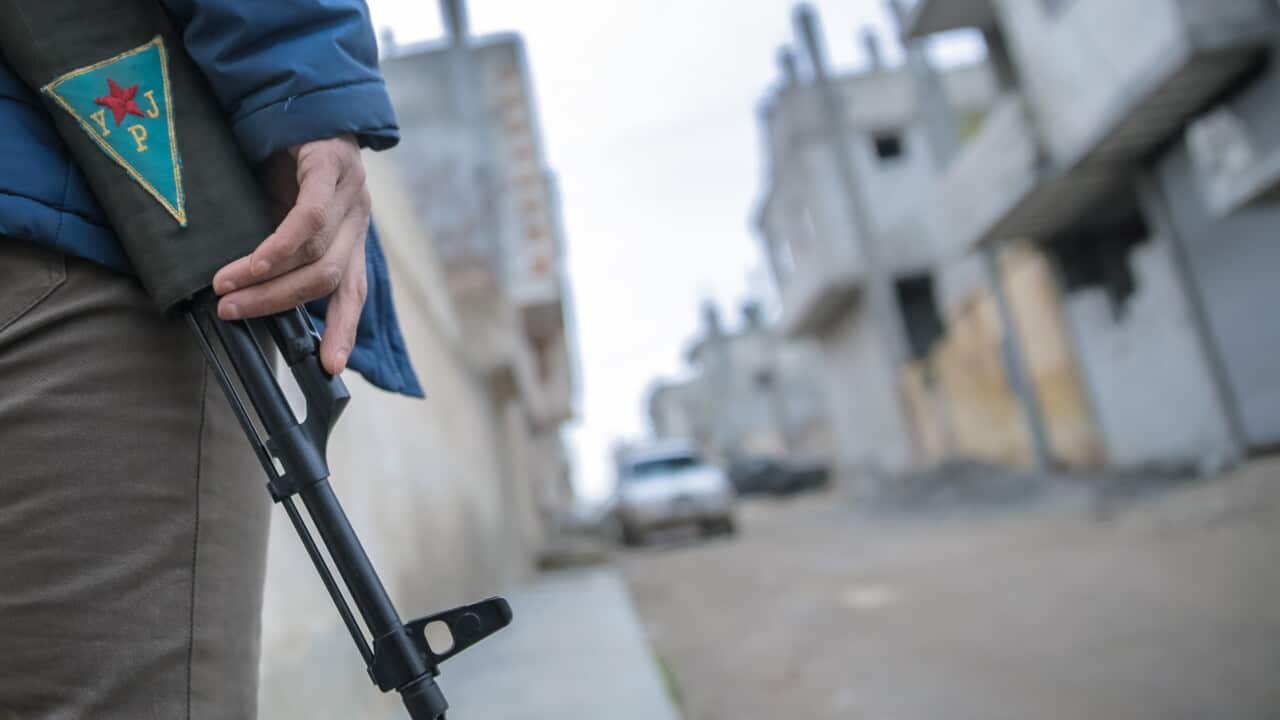
Another challenge is some divisions within the Peshmerga, like the YPG, are suspected of having links with the banned Kurdistan Workers Party, or PKK.
The PKK is listed as a terrorist organisation in Australia.
Mr Uthman does not specify the entity within the Peshmerga he was part of, but he says the group shares a common cause with coalition forces in fighting IS, also known as ISIS.
"I don't have much knowledge about the PKK. While I know they are described as a terrorist group, I think that's political-based, which happened in the past. And what they're doing at the moment, PKK, I wouldn't describe them as a terrorist group, because we can say they're fighting alongside coalition forces, and coalition forces are fighting against ISIS. And PKK is fighting against ISIS, too," he added.
Under Iraqi law, it is an offence to fight with any Kurdish forces in Iraq, because they are not recognised as the country's military.
Professor Rothwell said that, too, poses a challenge for the Australian courts.
"Well, the mere fact that something is illegal under the law of another country doesn't automatically make it illegal under Australian law. But once again, if Iraqi authorities had been able to gather relevant information that could form a prosecution brief under Iraqi law, there's no reason why, in cooperation with the Australian Federal Police and other Australian government agencies, that material cannot be transferred across to Australian officials to assist with the prosecution within Australia. But once again, it all comes back to the evidentiary material existing and that meeting an evidentiary standard for Australian legal purposes," he said.
Share


