In Brief:
- There are concerns over an Australian-funded program to help counter extremism in the Philippines.
- The Australian government has said the program is subject to strong risk management, safeguarding and financial oversight measures.
Australian funding to the Philippines to counter terrorism and violent extremism is facing scrutiny amid concerns that it could be used for a controversial practice that targets journalists, activists and human rights defenders, known as "red-tagging".
Greens defence spokesperson David Shoebridge says there are "very real" concerns among the Filipino Australian community that federal government funding for the program, 'Strengthening Philippine Justice Responses to Violent Extremism' (PJRVEP) could be used to support the controversial practice.
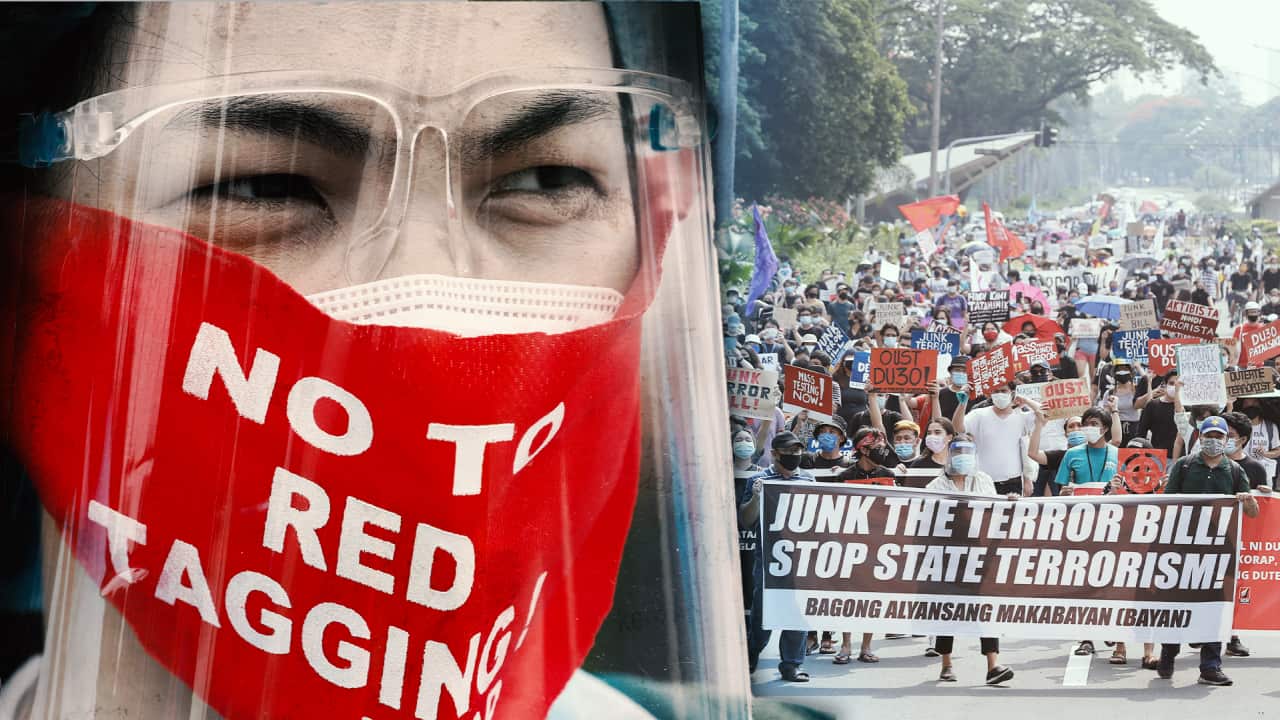
Red-tagging has been used by Filipino authorities to crack down on dissent, publicly accusing perceived agitators of being affiliated with the country's communist insurgency, the New People's Army (NPA), as a precursor to harassment, abductions, torture, and extrajudicial killings.
The NPA is among the main terrorism threats in the country, along with affiliates of the so-called Islamic State group. The group aims to overthrow the Philippine government to create a communist state, and expel United States influence from the Philippines.

News that makes sense
Your trusted source for staying up-to-date with the world around you. Get free daily news updates and analysis, straight to your inbox.
Australia's Department of Foreign Affairs and Trade (DFAT) says it "maintains strong risk management, safeguarding and financial oversight arrangement for the PJRVEP in the Philippines".
Shoebridge raised the $10.5 million program, established in 2021 under the Morrison government, at a Senate estimates hearing in February.
It came amid heightened concerns over counter-terrorism measures being used to "red tag" people, with Shoebridge referencing the cases of Filipino journalist Frenchie Mae Cumpio and human rights activist Marielle Domequil, who were both given lengthy sentences in January for allegedly financing terrorism. Both have vehemently denied the allegations.
Press freedom and human rights groups say the case is part of a broader pattern of red-tagging and the use of anti-terror laws against critics.
In 2024, the Philippines Supreme Court found that red-tagging, vilification, labelling, and guilt by association threaten a person's right to life, liberty, or security.
Shoebridge asked DFAT officials at Senate estimates whether any of Australia's funding had gone towards red tagging or in the case of Cumpio and Domequil, "the false tagging of journalists as terrorists".
Officials took the question on notice and recently responded, saying Australia's embassy in the Philippines' capital, Manila, had raised the case of the convicted pair with "relevant" authorities there.
DFAT said the PJRVEP is subject to strong risk management, safeguarding and financial oversight measures, though did not explicitly rule out whether the funding could be used for red tagging.
"The PJRVEP supports interagency coordination, institutional relationships, jail management mechanisms for violent extremist offenders, and technical assistance and capacity building activities on anti-money laundering and counter-terrorism financing," the department said in its reply.
SBS News received the same response to further queries about the use of funding and accountability measures in place to ensure it targeted extremism and countered terrorism.
Shoebridge told SBS News there is an expectation funding to the PJRVEP is "laser focused" on countering terrorism and identifying potential terrorism financing.
He said "every dollar" diverted from the program's core purpose to a campaign targeting unionists or religious leaders was money taken away from efforts to keep people safe.
The Philippine embassy in Canberra said the government "continues to protect the rights and welfare of its citizens and uphold due process and the rule of law".
Red tagging is used against people or organisations perceived to be critical of the government, said Kebart Licayan, a PhD student at the Australian National University with expertise in violent extremism in the Philippines.
He said that under former president Rodrigo Duterte, who left office in 2022, this was an explicit and open practice, often declared at press conferences or through ads.
Jayson Lamchek, lecturer at Western Sydney University with a PhD in counter-terrorism and human rights in the Philippines, said the label of terrorist differs in the Philippines.
"It involves individuals or organisations linked to the New People's Army ... having them tagged as communist and therefore a terrorist," he said.
It made those red-tagged the targets of harassment, threats or in some cases, extrajudicial killings, leading human rights organisations to call on the Philippine government to end the practice.
In 2020, the Philippine government passed controversial anti-terror laws, later revealing that Australian security agencies gave "technical assistance" over three years in their drafting.
Critics argue that the legislation gives security agencies too much power to detain people without an arrest warrant.
Human Rights Watch (HRW) deputy Asia director Bryony Lau said under the new laws, individuals or organisations previously subject to red tagging are now subject to a judicial process, seeing their assets frozen or facing terrorism financing charges.
She said HRW has observed an increase in the use of these powers and the terrorism financing act since the Philippines was placed on the grey list by the Financial Action Task Force in 2021, which found it was not taking adequate measures to address terrorism financing and money laundering.
"So to be removed from that list, the Philippines had to undertake a series of reforms, and one of those included actually prosecuting cases of terrorism financing. Because up until that point, the government was not actually prosecuting terrorism financing," Lau said, noting it was taken off the list in 2025.
Alongside funding towards counter terrorism, Australia is assisting in judicial training around handling terrorism charges and the rollout of relevant training, according to the DFAT website.
Lau said the government has provided extensive assistance to the Philippines due to concerns about serious terrorism challenges, listing linkages between the island of Mindanao and the self-proclaimed Islamic State group as an example.
The Philippine government has rejected characterisations of Mindanao as being a "training hotspot" for the group.
She urged the Albanese government to continue to apply pressure to ensure the Philippines is compliant with FATF, including recommendation 8, which specifically requires participants to ensure terrorism financing measures don't target legitimate non-profit organisations.
"The question really is, how are the (laws) actually being applied and are there adequate safeguards in place?" she said.
Shoebridge said his office has received repeated concerns that the "Philippines is using this program, in the guise of anti-terrorism work to target their political opponents," including journalists and religious workers.
The senator said his office would continue to press DFAT to ensure that Australian funding wasn't being used for such purposes.
For the latest from SBS News, download our app and subscribe to our newsletter.







