
Renowned for its deep powder, distinctive culture and affordable prices, Japan has become a magnet for Australian snow-lovers.
More than a million Australians travelled to Japan in 2025, including 140,000 in January alone — the highest number for any month last year and the peak of the northern hemisphere winter — according to the Japan National Tourism Organization.
With the Australian dollar even stronger against a historically low yen, Japan's mountains have been a popular destination again this season, despite snow storms and avalanche warnings.
But the deaths of three young Australians in recent weeks have raised concerns about snow safety in the popular holiday destination, prompting warnings from authorities.
For Nick Simpkin, 32, the deaths have revived memories of his own near-death experience during a 2016 family ski holiday in Niseko, on Japan's northern island of Hokkaido.
News that makes sense
Your trusted source for staying up-to-date with the world around you. Get free daily news updates and analysis, straight to your inbox.
Then in his early 20s and a confident skier, Simpkin was alone on his final run of the day when he decided to venture outside the resort boundaries, known as going off-piste.
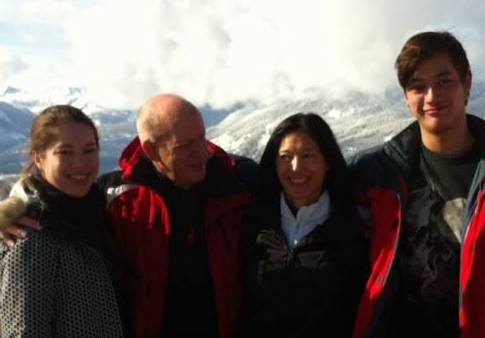
He was skiing through trees when he hit something and fell into deep powder.
"I fell into the snow with one ski off, and I fell sort of sideways, and instantly my body just went straight down," he told SBS News.
"I was stuck, I tried to push down into the snow to get myself back up, my hands just sunk straight in again."
Simpkin said he called out for help, but the snow muffled his voice.
"I remember looking up at the sky, there was this beautiful, pink and purple sunset as the sun was setting, and it got colder, and I remember thinking, 'this might be how I die'.
"It was incredibly scary."
Using the single ski he was still wearing and a pole, Simpkin was eventually able to lever himself out by grabbing hold of a tree.
"The whole process took 45 minutes, centimetre by centimetre, of trying to get myself out of this hole," he said.
While Japan is a great place to ski, Simpkin said he hoped the incident served as a cautionary tale for Australians to be aware of the risks of skiing outside resort boundaries.
"The experience stayed with me for a very, very long time," he said.
"Japan is such a clean and beautiful place that you almost think nothing bad could happen, but people need to be aware of not being lulled by a false sense of confidence."
Ski tour leader Matt Guy told the ABC that while skiing in Japan had unpredictable risks, there were ways to be prepared.
"Just see where you are and gather the information to know that this place is pretty powerful," he said.
"There's signage there to talk about how much snow there is.
"And then on top of that, I think it makes a lot of sense to go out with guides, to go with people who know the way around."
'Foreigners make up a significant proportion'
Three Australians have died in the past month, the latest being Michael "Micky" Hurst, a 27-year-old from Melbourne, who collapsed after suffering a medical episode while skiing in Niseko earlier this week.
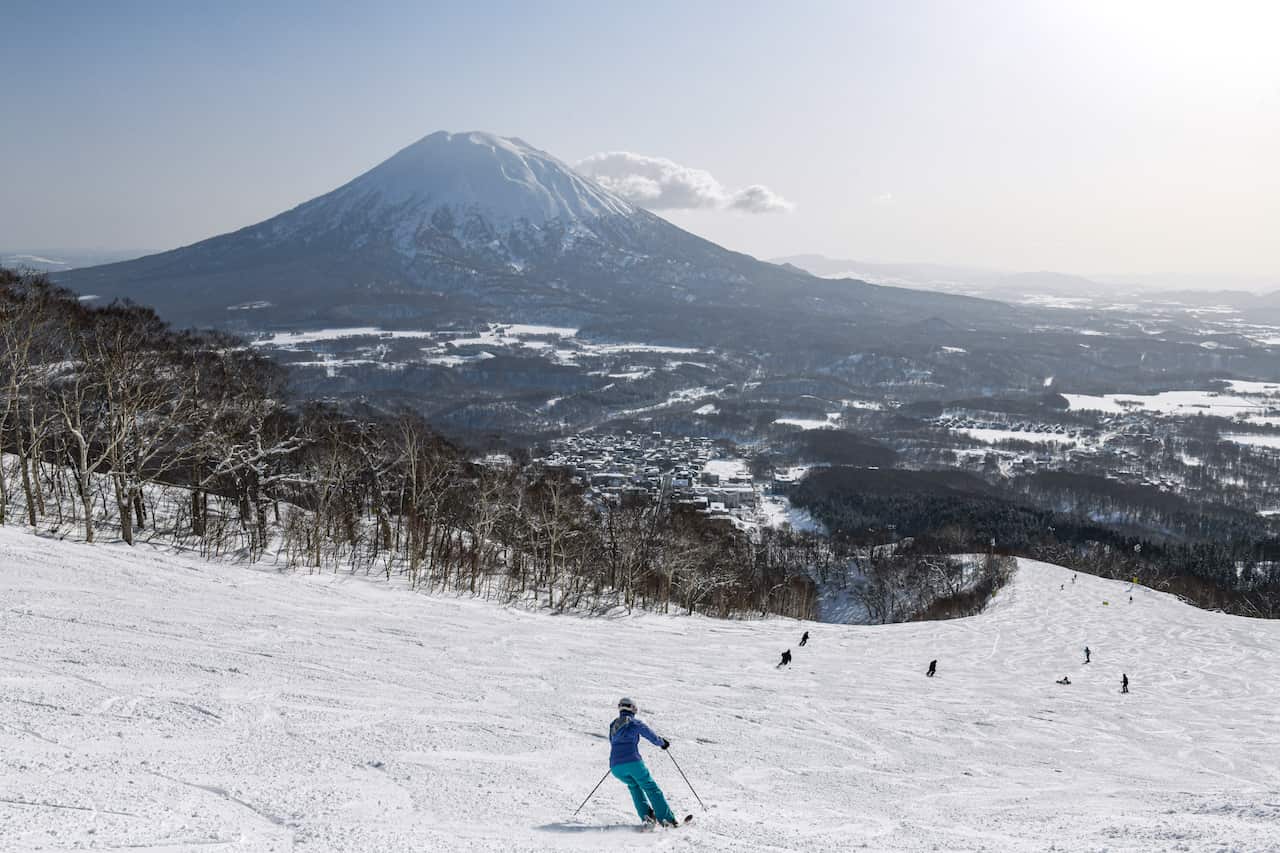
He was found unconscious by fellow skiers who performed CPR before he was taken to hospital, where he was pronounced dead.
Brooke Day, 22, from Queensland's Sunshine Coast, died in hospital on Sunday after a ski lift accident in the Hakuba Valley on the main island of Honshu.
Resort officials said her backpack became caught in a lift carriage as she attempted to disembark, dragging her along the lift.
In early January, 17-year-old Rylan Henry Pribadi died while skiing in Niseko. He had become entangled in a rope marking the resort boundary and was asphyxiated.
The head of Japan's National Ski Safety Measures Council, Makoto Takayanagi, said accidents involving foreigners were increasing, noting 48 of the 58 ski-related incidents in the back country this season involved foreign nationals.
"The current situation is that foreigners make up a significant proportion," he told ABC radio.
"When foreign visitors come to Japan to ski, we ask that they consult the ski resort brochures and aerial maps, and carefully confirm that they remain within the designated managed areas of the resort."
Heavy snowfall in recent weeks, killing 35 people, has also made conditions more treacherous, with avalanche warnings being issued for the rest of this week as temperatures rise.
Andrew Lea, who has lived in Japan for 36 years and runs SnowJapan.com, an English-language website providing information about skiing in the country, told SBS News there had been a boom in international tourism in recent years.
He encouraged visitors to follow resort rules, such as remaining within resort boundaries, and local customs.
"Just come and treat the places with respect ... the rules are there for good reasons," he said.
In a statement, the Department of Foreign Affairs and Trade said it was providing consular assistance to two of the families of the deceased Australians, and was ready to assist the third if it was requested.
How risky are snow sports in Japan?
While snow sports are inherently risky, related deaths in Japan are rare.
According to The Japan News, there were 4.6 million skiers or snowboarders in 2023, citing data from the Japan Productivity Center.
A 2024 retrospective study published in Wilderness & Environmental Medicine found 130 deaths at Japanese ski resorts between 2011 and 2023 — an average of 10 a year — citing data from the Japan Association for Skiing Safety.
Another study published in the Journal of Physical Education and Sport in 2021 found there were 68 skiing and snowboarding fatalities between the 2012-13 and 2017-18 snow seasons — an average of 13.6 a year.
The 2024 study found that 84 of the deaths were in ski resort boundaries — 48 skiers and 36 snowboarders.
Around 92 per cent of skier fatalities were male, with two-thirds aged over 50. Tree collisions were the leading cause of death (35 per cent), followed by collisions with others (15 per cent), plunges into deep snow (13 per cent) and falls (13 per cent).
Among snowboarders, 81 per cent of fatalities were male, and half were aged between 20 and 35. Plunging into deep snow accounted for a third of deaths, followed by collisions with objects (22 per cent) and falls (19 per cent).
In nearly a third of cases, the cause of death was unknown.
How can I reduce my risk?
While there is no fail-safe way to prevent injury on the slopes, there are measures you can take to lessen your risk of injury.
A major cause of injury is skiing beyond your ability, especially for first-time skiers or boarders.
Ski slopes are marked by coloured-coded trail markers; green circles denote beginner runs, blue squares are intermediate and black diamonds are advanced. Double black diamond-marked runs are for expert skiers and snowboarders, offering steep slopes and extremely challenging terrain.
Skiers are advised to stay within resort boundaries, denoted by warning signs and ropes, which are patrolled. There is also a greater avalanche risk in unpatrolled areas.
Visitors should also be aware of skiing etiquette, such as giving way to skiers below you and taking responsibility for a collision if you are uphill.
Skiers and boarders are also encouraged to wear a helmet, eye protection and ski gear to prevent injury.
For the latest from SBS News, download our app and subscribe to our newsletter.







