
In brief
- Passengers have started disembarking from a luxury cruise ship where a hantavirus outbreak killed three people.
- A group of Australians will be among the last to leave, as they wait for a government-supported charter flight to arrive.
Health Minister Mark Butler says Australia's plan to isolate passengers from a hantavirus-hit cruise ship in a containment facility outside Perth for three weeks is among the strictest global responses to the rare virus.
Four Australian citizens, one permanent resident and a New Zealand national are expected to depart Tenerife in the Canary Islands on an Australian government-supported charter flight at around 3am Tuesday AEST.
Medical personnel will be on board the WA-bound flight, which will land at an RAF base near Perth, and passengers will then be taken to the Bullsbrook Centre for National Resilience.
The biosecurity facility was built by the federal government in 2022 — one of three pandemic prevention facilities, which each have over 500 beds.
None of the repatriated passengers is displaying hantavirus symptoms. Three passengers on the MV Hondius have died, while five others evacuated earlier have fallen ill.
News that makes sense
Your trusted source for staying up-to-date with the world around you. Get free daily news updates and analysis, straight to your inbox.
Butler was questioned on why the passengers will quarantine for three weeks, when the incubation period for the illness is up to 42 days.
"Obviously, we will be monitoring advice about what should happen beyond those three weeks. There is an incubation period of 42 days potentially for this virus, but that incubation or the risk of transmission obviously drops off after the first few weeks.
Butler said Australia was taking a "precautionary approach" and acknowledged the Australia-bound passengers may be at more risk of contamination than others, because of the long flight to Australia from Tenerife on a small plane.
"I do make no apology for the fact that this is one of the stronger responses you'll see around the world.
"Many other countries are putting in place quarantine orders at a centre like this or at a hospital, only for two or three days rather than three weeks."
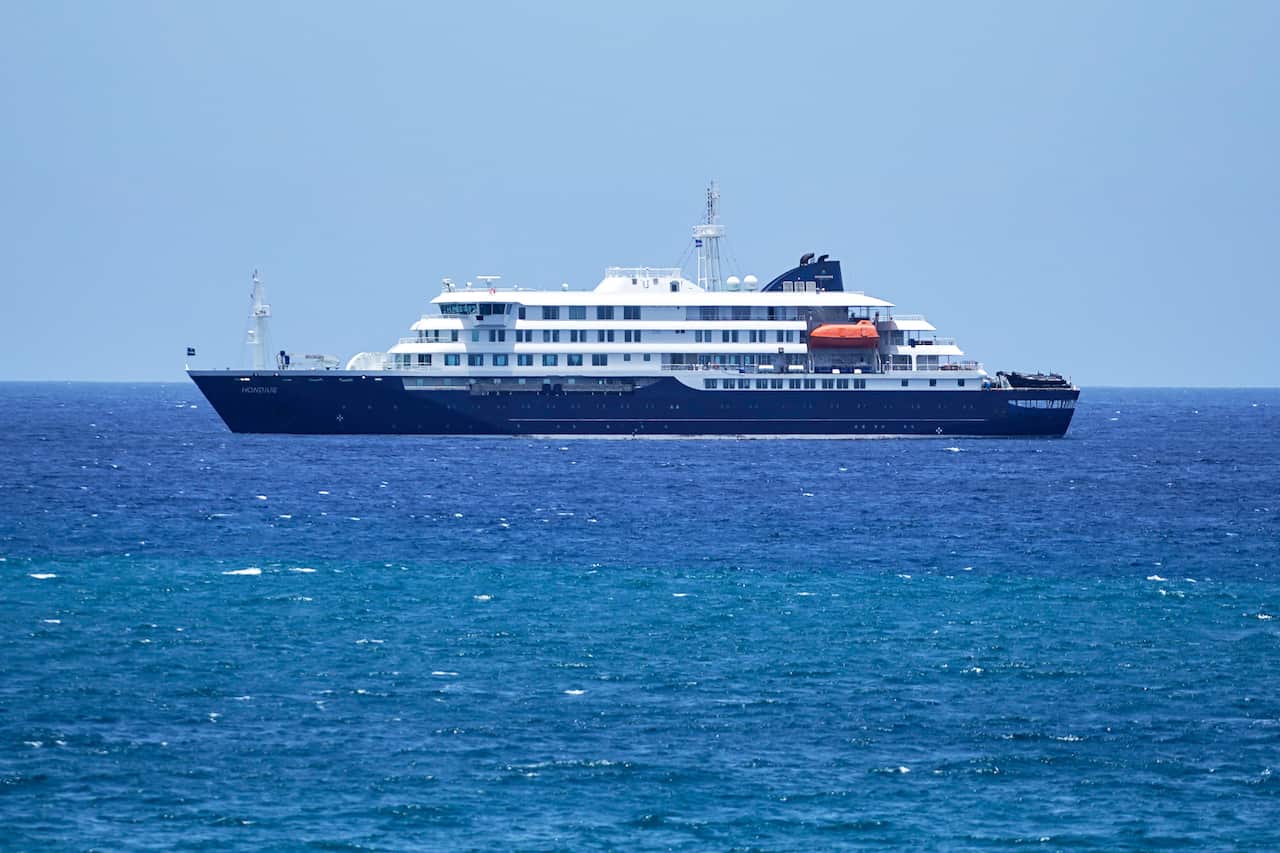
The Australians will be the final group of passengers to leave the ship. Passengers cannot disembark until their plane arrives, and Australia’s flight is scheduled to land last.
Other passengers began disembarking on Sunday morning local time, with several countries having sent planes to repatriate their citizens.
Passengers and port workers at Granadilla in Tenerife wore protective gear during the evacuation, including hazmat suits, face masks and respirators.
Spanish citizens were the first to leave the ship before being flown to Madrid and transferred to a military hospital.
Nearly 150 people were on board when the ship — which was on an Antarctic voyage from South America — arrived in the Spanish territory off the coast of north-west Africa, with all passengers and some crew set to be evacuated.
But 30 crew members, along with luggage and the body of a deceased passenger, will remain onboard before the ship travels to the Netherlands for disinfection.
Hantavirus usually spreads when people inhale contaminated residue of rodent droppings, and the disease is not easily transmitted between people.
But the Andes virus detected in the cruise ship outbreak may be able to spread between people in rare cases. Symptoms usually show between one and eight weeks after exposure.
There is no specific treatment or cure for hantavirus infections, but early medical attention can increase the chance of survival.
Quarantine measures managed by countries
The World Health Organization (WHO) recommended that passengers' home countries conduct "active monitoring and follow-up", including daily health checks either at home or in specialised facilities.
"We are leaving this up to the countries themselves to actually develop their own policies," WHO director of epidemic and pandemic preparedness Maria Van Kerkhove said.
"But our recommendations are very clear, and this is really a cautionary approach to make sure that we don’t have any opportunities for this virus to pass from others."
Several countries have said their citizen would be quarantined or hospitalised for observation.
The French foreign ministry said its passengers would be hospitalised for 72 hours of monitoring, then would quarantine at home for 45 days.
Earlier, WHO chief Tedros Adhanom Ghebreyesus reassured Canary Islands residents that they should not be alarmed by the outbreak.
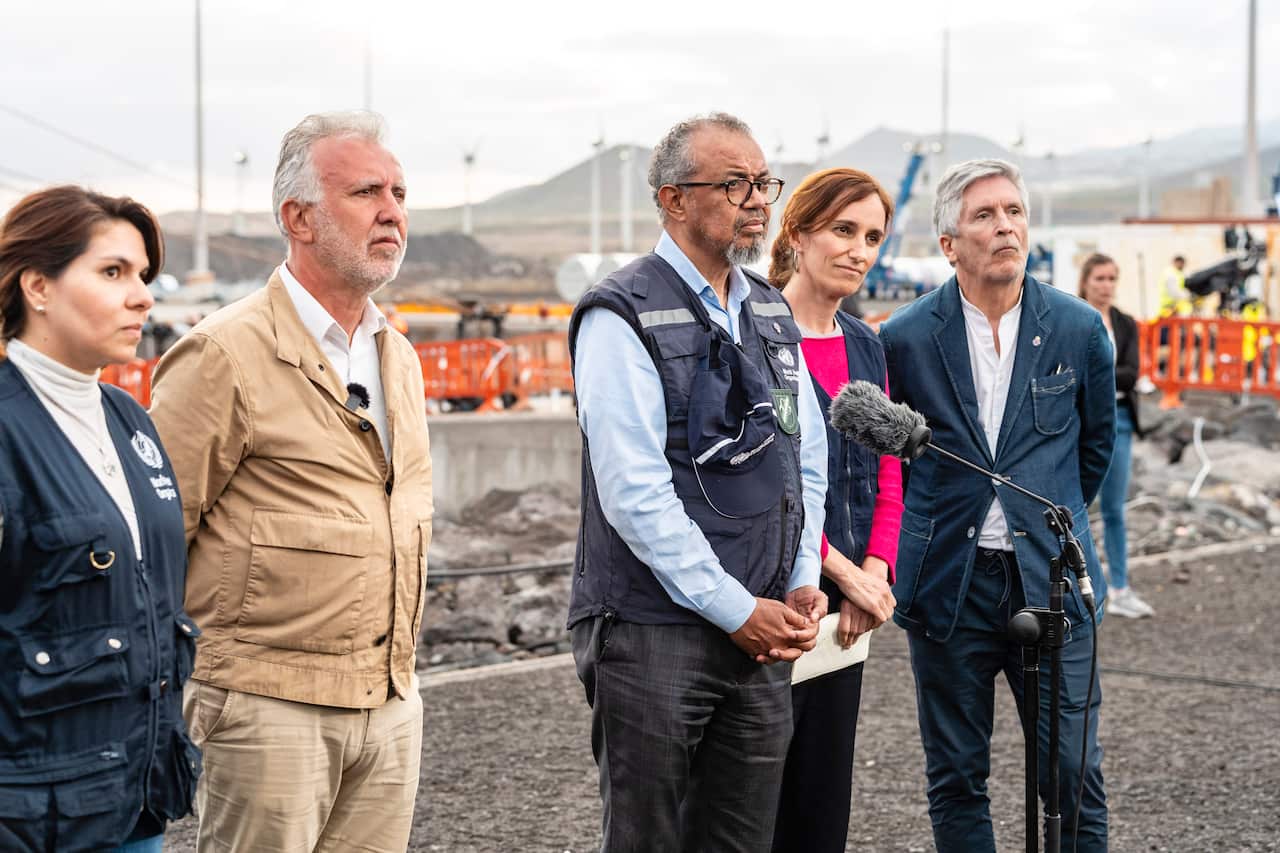
"We have been repeating the same answer many times," he said.
"This is not another COVID. And the risk to the public is low. So they shouldn’t be scared, and they shouldn’t panic."
"Nearly 150 people from 23 countries have been at sea for weeks, some of them grieving, all of them frightened, all of them longing for home.
"Tenerife has been chosen because it has the medical capacity, the infrastructure, and the humanity to help them reach safety."
British medics parachute into remote territory
On Saturday, British Army medics parachuted onto the remote South Atlantic territory of Tristan da Cunha, where one of the 221 residents has a suspected case of hantavirus.
The patient was a passenger on the MV Hondius and disembarked last month.
The UK defence ministry said a team of six paratroopers and two medical clinicians jumped from a Royal Air Force transport plane, which also dropped oxygen and medical equipment.
Tristan da Cunha is Britain's most remote inhabited overseas territory, about 2,400km from the nearest inhabited island, St Helena. The group of volcanic islands has no airstrip and is usually accessible only by a six-day boat voyage from Cape Town, South Africa.
— With additional reporting by the Associated Press.
For the latest from SBS News, download our app and subscribe to our newsletter.







