In brief
- Thousands of Australian construction companies collapsed in the last financial year.
- They made up a quarter of all insolvencies nationally, despite ongoing demand for new homes.
Across Australia, thousands of people are waiting to find out if their homes will be built, after several separate construction company collapses.
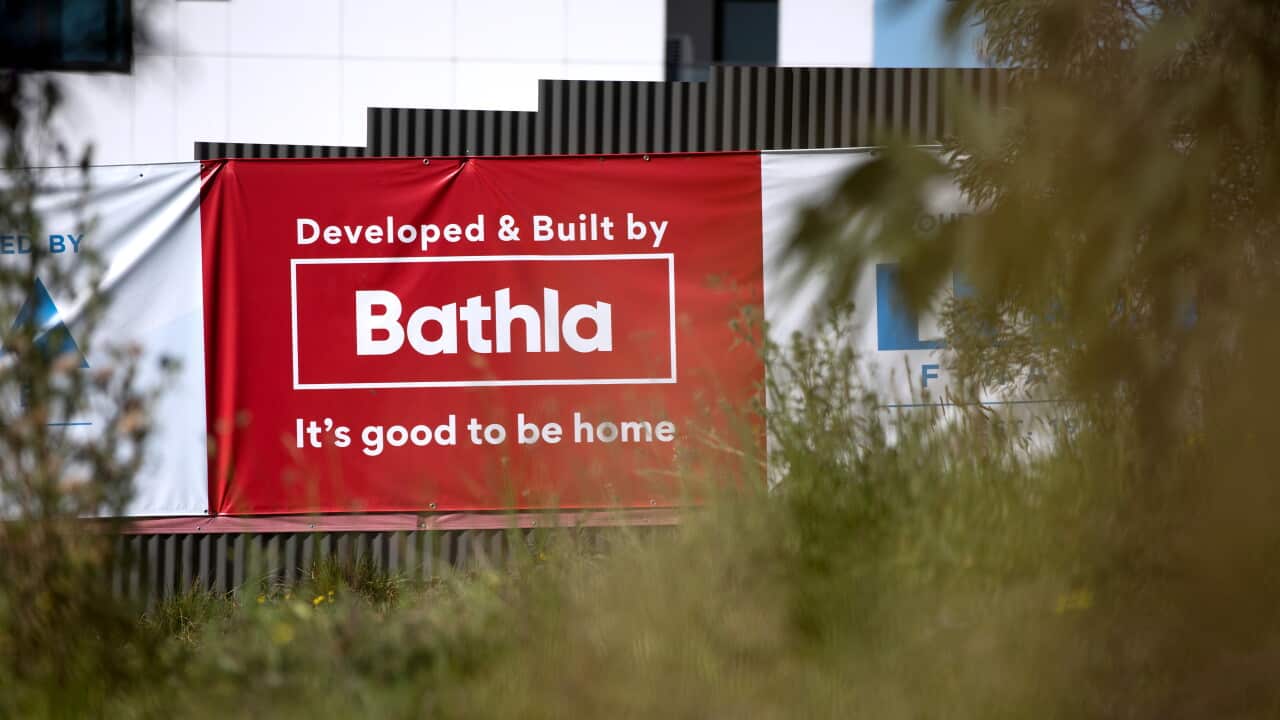
By far the biggest of those recent collapses has been the Bathla Group, a Sydney developer that’s been one of Australia’s largest affordable home builders.
Owing about $3.4 billion to private lenders, Bathla's voluntary administration has thrown the construction of more than 2,000 apartments into limbo, while jeopardising a further pipeline of 14,000 homes.
More builders going bust since COVID
Figures released last week show 3,472 Australian construction companies went bust in the financial year to 30 June 2026: one in four (24.5 per cent) of all company insolvencies nationally.
News that makes sense
Your trusted source for staying up-to-date with the world around you. Get free daily news updates and analysis, straight to your inbox.
The only good news? The number of builder insolvencies was slightly down for the first time since a steep rise began during COVID.
However, our research has found insolvencies in the construction sector remain consistently higher than in other industries. That makes it harder to build the housing we need.
Australia is falling further behind in meeting the federal government’s 1.2 million new homes goal by 2029.Official forecasts released last month indicate the target won’t be met until December 2030. NSW — Australia’s largest housing market — may not meet its targets until March 2032, three years late on a five-year target.
There's no shortage of demand for new homes. What we lack is a construction system capable of delivering them reliably, sustainably and at scale.
Bathla's financial ripple effects
On Monday, more than 200 of Bathla’s 350 staff were stood down as the administrator continues to work on a rescue deal.
While most of its building projects are in western Sydney, Bathla's collapse is being watched around Australia because of its wider financial impacts.
Like any company collapse, there are specific circumstances involved in Bathla's current woes. Its business model relied on high volumes of low-cost building.
The NSW building regulator has also conducted more than 40 inspections of Bathla sites in recent months, and ordered the builder to fix serious defects in one major development.
Bathla may have taken as many as 1,000 deposits from buyers for homes now stalled. But home buyers aren't the only people affected.
'Troubling developments' in private credit
As well as owing money to subcontractors, Bathla owes money to a long list of non‑bank lenders — also known as private credit firms.
This reflects the construction industry's heavy reliance on alternative finance, because banks have reduced their exposure to riskier lending.
On Friday, Australian Securities and Investments Commission chair Sarah Court said the corporate watchdog was closely following "several troubling developments in the private credit sector, most notably with the recent collapse of Bathla".
Court pointed out that many Australians are exposed to private credit through their superannuation funds — meaning "this is not some peripheral issue".
The perfect storm hitting builders
Bathla is not an isolated case. The wider construction industry is under strain, with higher costs, thinner profit margins and rising risks.
Figures released last month show house construction costs are now 51 per cent higher than before COVID.
For builders with slim profit margins, the rise in costs can make some projects uneconomic.
With costs rising unpredictably, builders locked into fixed-price contracts are absorbing losses they cannot sustain. This was a major driver of the spike in builder insolvencies during COVID.
Falling house prices and poor market sentiment mean some projects no longer stack up financially.
Many investors and buyers are spooked by three interest rate rises this year, higher costs, and recent federal budget changes to housing tax concessions that have made housing less attractive to investors. The prospect of further interest rate increases is also likely to see projects stalled, as the market waits for conditions to improve.
Then there are ongoing shortages of tradespeople. On top of those, home builders are now competing with data centre builders for tradies, which has driven up salaries.
Little wonder construction insolvencies have risen back to pre-COVID levels, despite strong demand for housing.
Structural change is needed
Governments can’t fix all the problems we face, such as price hikes driven by the Middle East war.
But federal, state and local governments are increasingly recognising their role in creating structural barriers to building more homes.
A Productivity Commission draft report released in July identified many of the problems we need to address, including restrictive land-use regulation, slow and inconsistent approvals, poor coordination on key infrastructure, and complex regulation. These all increase costs and delays.
Our 2025 report showed over-regulation is particularly hard on small builders, who struggle to comply with overlapping national, state and local requirements. That matters because our research also showed almost two-thirds (63 per cent) of building company collapses were concentrated among small builders.
The National Construction Code is another challenge. Even with some states deferring 2025 code changes, the national rules remain complex and frequently updated – again, making compliance difficult for small builders.
What’s safer than houses?
Some builders are responding by pivoting to infrastructure and commercial projects, such as Victoria’s Big Housing Build or Queensland’s Olympics construction projects. These can offer more manageable terms and less exposure to market volatility.
Good builders can pick and choose their work. Right now, housing is the riskiest option on the table.
Until that changes, we’re likely to see more Australian builders moving away from creating the homes we urgently need — along with more headlines about another builder going bust.
Lyndall Bryant is a senior lecturer at Queensland University of Technology's Centre for Justice in the School of Econmics and Finance. She is doing funded research on financial risks in housing supply for the Australian Housing and Urban Research Institute. She has also received past funding from the Building 4.0 Cooperative Research Council grant — an industry-led research initiative co-funded by the Australian government. That grant was funded in collaboration with the Building and Plumbing Commission (Victoria), Master Builders Victoria and Holmesglen Institute.
Amanda Bull is a lecturer in the Faculty of Business and Law at the Queensland University of Technology. She has previously received funding from Master Builders Victoria, the Building and Plumbing Commission (Victoria), and Homeslglen as part of the Building 4.0 Cooperative Research Council grant.
For the latest from SBS News, download our app and subscribe to our newsletter.








