
IN BRIEF
- Cotality's latest Regional Market Update has found that regional Australia's housing market has started to decline.
- The value of regional dwellings fell by 0.1 per cent over the past quarter, compared to 2.5 per cent in capital cities.
The Southern Highlands property market has long attracted Australians seeking a tree-change — but Duncan Hill believes the NSW region has now become a prime buyer's market.
"We're definitely seeing a buying opportunity ... it's probably the best time that I've seen in the last five years," Hill told SBS News.
He founded Duncan Hill Property, based in the Southern Highlands town of Bowral, in 2013. Since then, Hill has witnessed changes to the regional housing market.
"We did see [housing price] growth of about 30 per cent over the last five years, but then it's declined now by about two to three per cent over the last 12 months."
That shift is consistent with Cotality's latest quarterly regional market update, which found Australia's housing market downturn is no longer confined to capital cities.
News that makes sense
Your trusted source for staying up-to-date with the world around you. Get free daily news updates and analysis, straight to your inbox.
The property analytics firm examined Australia's 50 largest non-capital regional markets in the three months to July 2026. It found that regional dwelling values declined modestly by 0.1 per cent, compared with a 2.5 per cent fall across the combined capital cities over the same period.
Of the 50 markets analysed, Cotality found that 47 significant urban areas had slower growth, while 22 recorded a decline in home values.
The update did note that regional markets remained more resilient to change and typically outperformed capital cities.
What's behind the downturn?
Gerard Burg, head of research at Cotality Australia, said the results speak to recent pressures that have built up in the national housing market.
"A lot of buyers have been pushed out by the affordability pressures and by the increases in interest rates that we've seen so far," Burg told SBS News.
The Reserve Bank of Australia (RBA) has raised interest rates three times this year as it attempts to bring inflation back towards the midpoint of its 2-3 per cent target range. At its most recent meeting, the RBA board unanimously decided to keep interest rates on hold at 4.35 per cent.
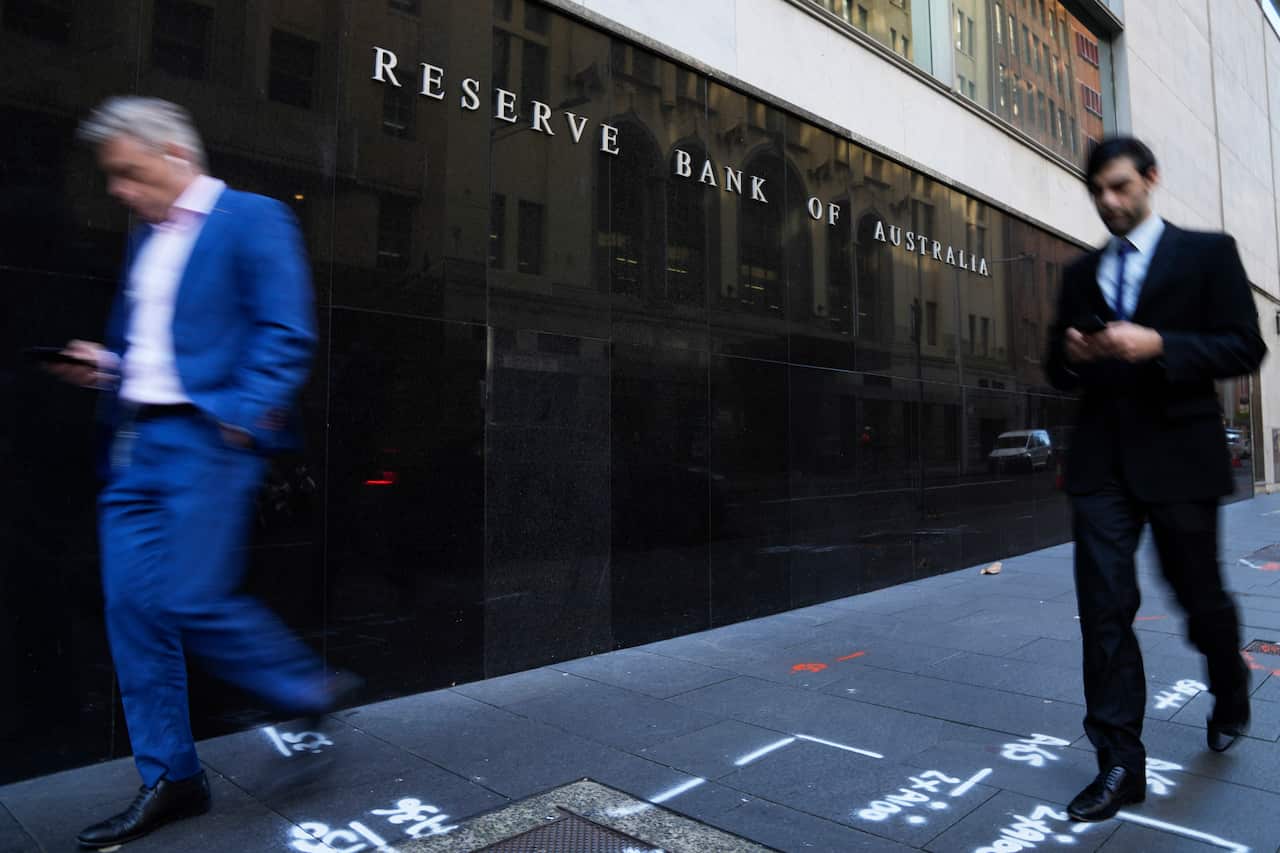
But Burg believes recent rate hikes, compounded by a cost of living crisis, mean "fewer buyers nationally [are] ready to make a purchase".
"We're seeing this reduced level of competition. We've seen houses on the market for longer, and buyers who remain in the market now have more ability to negotiate, and that's leading to this situation where values are starting to push lower."
Anne Flaherty, senior economist at REA Group, also cited changes in the housing market to federal housing tax reforms announced in the May budget — including an overhaul to negative gearing and capital gains tax (CGT) rules — set to come into effect next year.
"We have seen a real shake-up to housing taxation as part of the budget and the immediate effect of that seems to have been to reduce overall demand," Flaherty told SBS News.
"In particular, we have seen some pretty strong signals that there's reduced numbers of investors in the market. So, I think those broader trends seem to be having an impact across the board."
PropTrack, which is owned and operated by REA Group, recently released its July Home Price Index, which measures monthly changes in home values across Australia.
It found monthly house prices in regional areas declined by 0.1 per cent, compared to 0.5 per cent in capital cities. However, the price of units in regional Australia increased by 0.2 per cent, while capital cities recorded a 0.3 per cent decline in median value.
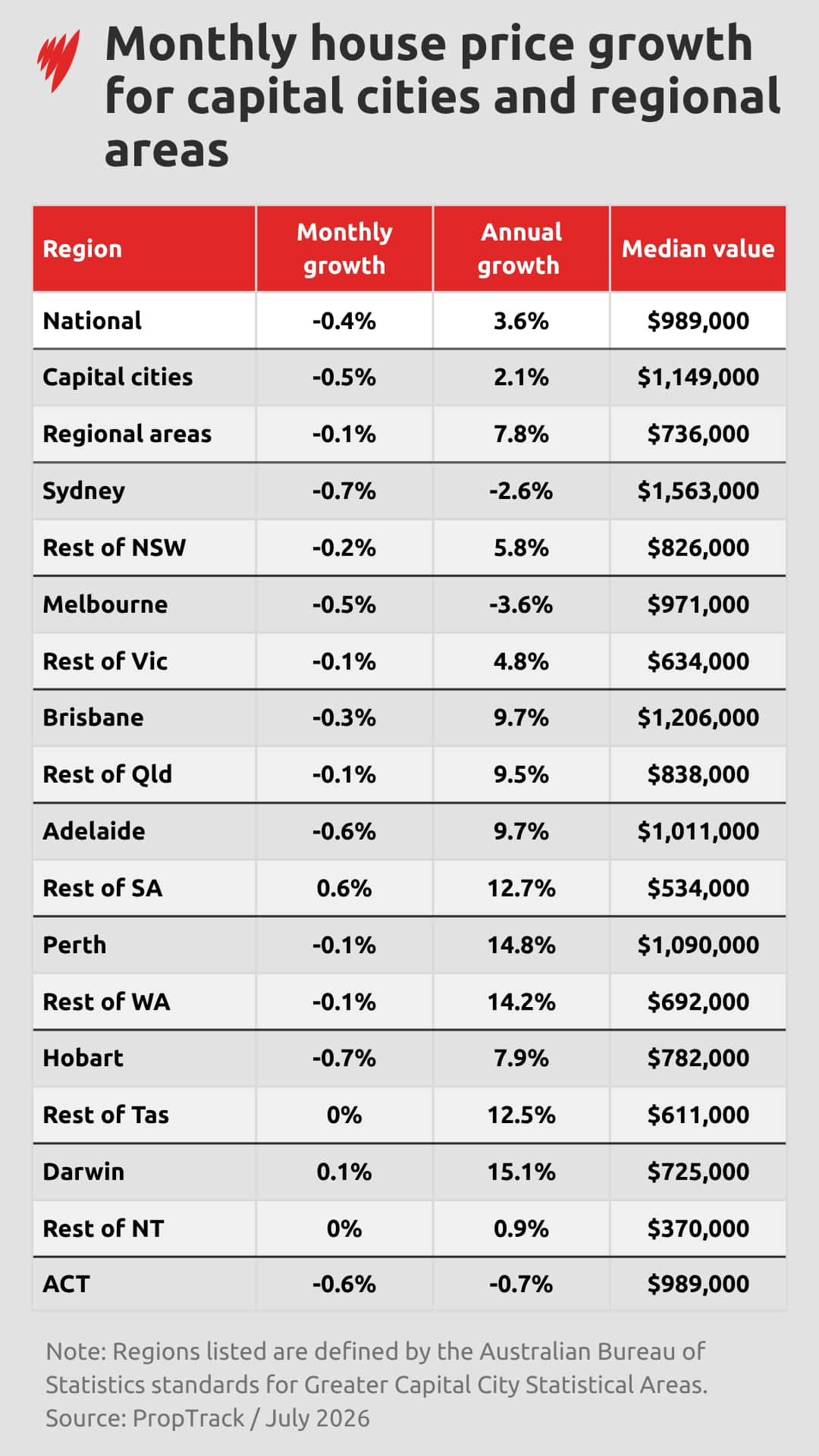
Flaherty said the data also shows that Australians are moving to regional areas for different reasons. Some relocate to luxury regional markets for lifestyle reasons, while others are driven by the appeal of more affordable homes.
"One example (of a slowdown) would be the Mornington Peninsula in Melbourne, also the Central Coast of NSW. So, we have been seeing bigger falls in those areas where [home] prices are higher. But then on the flip side, some of those more affordable regional areas have actually continued to see some pretty robust growth," she said.
According to PropTrack data, the price of dwellings in capital cities has increased by 26.6 per cent over the five years to July 2026.
Comparatively, prices in Perth have risen by 92.9 per cent over the same period. In Brisbane, dwellings are 78.6 per cent higher, and Adelaide has recorded a 76.9 per cent increase.
'Negative consumer confidence'
Nicola Powell, chief residential economist for Domain, told SBS News that higher interest rates have reduced Australians' borrowing capacity, which she believes has impacted consumer confidence.
"I think we underestimate the power of confidence on delaying people's property decisions," she said.
"We still have a very negative consumer confidence and that changes people's decisions or it forces their decisions. I think that would be a large driver in the regional market."
Powell said many people are hitting pause on purchasing a home because of market declines: "This concept that, 'I don't want to buy today because that home may be worth less in two days' time.'"
She did admit that lower house prices can present buying opportunities for some demographics.
However, Burg from Cotality believes that the price of dwellings in regional Australia will continue declining over the coming months.
"There's been this clear loss of momentum since the peak of the market late last year, and we are continuing to see things track lower.
"When you see things like interest rate rises, they don't impact the market at a single point of time, it tends to build over several months ... [which] means that there is still further to go in terms of this weakness and demand."
For the latest from SBS News, download our app and subscribe to our newsletter.







