
This audio is voiced by AI and may occasionally mispronounce words.
Share your feedback and help us improve this feature. Read more about how we use AI at SBS here.
This article contains references to family and domestic violence.
When Emma's relationship ended, the financial uncertainty didn't.
She says her former partner's child support payments became inconsistent, leaving her struggling to rely on the money she was entitled to. It forced her to rethink how she could protect herself and her child.
"I couldn't rely on the payments coming through," Emma tells SBS News.
There were elements of domestic violence, emotional abuse and coercive control behaviours.
News that makes sense
Your trusted source for staying up-to-date with the world around you. Get free daily news updates and analysis, straight to your inbox.
SBS News has withheld her surname for privacy reasons.
In a bid to protect herself and her child, Emma switched to Agency Collect, the government's Child Support Scheme (CSS), where Services Australia collects payments on behalf of separated parents.
For 18 months, Emma was receiving the child support she was entitled to — until the payments stopped.
She says her former partner took advantage of a "loophole" in the system and registered themselves as "self-employed" to avoid paying the amount she says was owed.
As of March 2026, almost $2 billion in child support debt was owed by parents using Agency Collect.
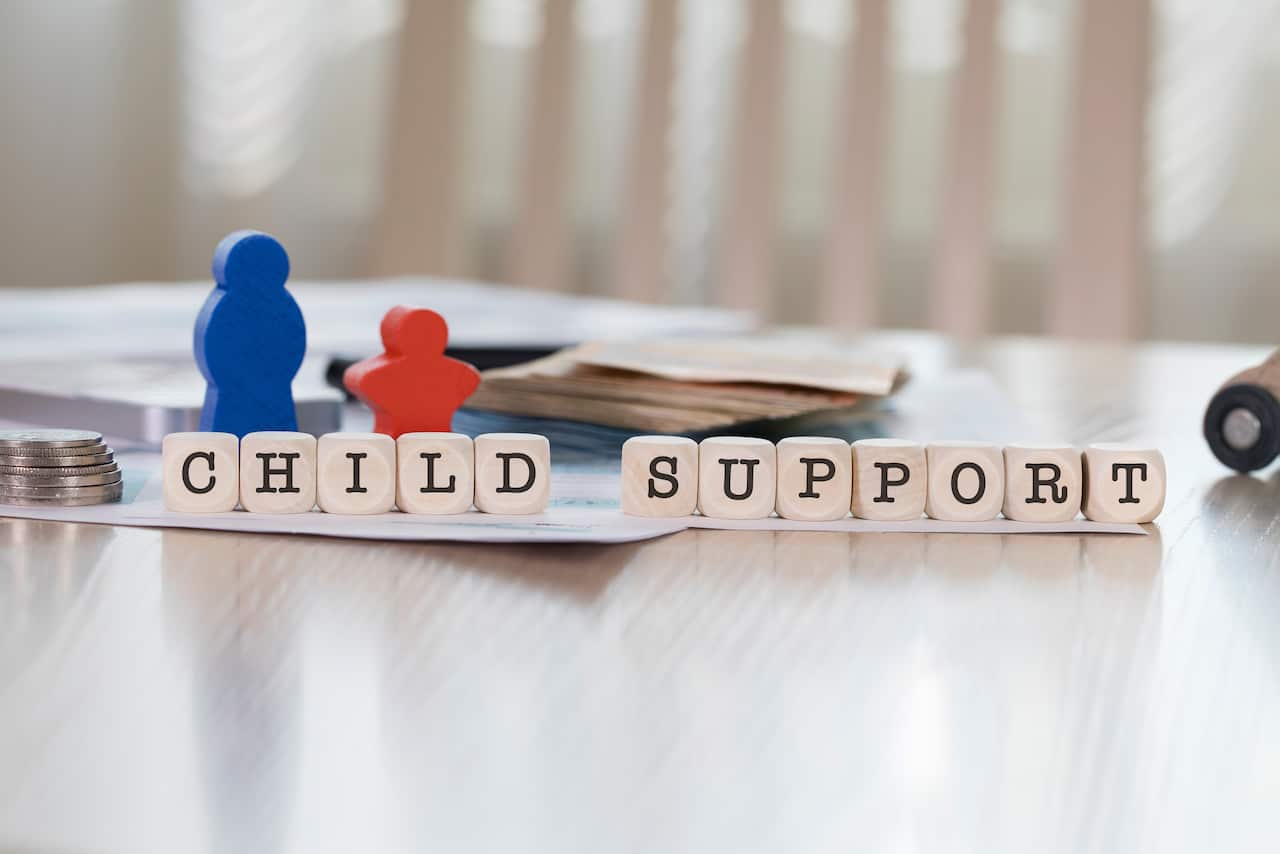
A Department of Social Services (DSS) spokesperson told SBS News: "The amount of unpaid child support in this country is utterly unacceptable ... This is parents robbing their children of the support they need and in many cases leaving them to live in poverty."
But that figure only captures debt recorded through Agency Collect. It does not include unpaid child support under private arrangements between parents, meaning the full scale of the problem is unknown.
Emma's experience raises questions about how Australia's child support system responds when payments stop and what happens when financial control continues after a relationship ends.
How Australia's Child Support Scheme works
The CSS was introduced in 1988. It was designed to create a national system for assessing and collecting child support, with the aim of ensuring separated parents contributed financially to the cost of raising their children.
The scheme initially relied heavily on compulsory collection, including through wage withholding, where child support could be deducted from a person's salary.
However, by the mid-1990s, the scheme was reformed, giving parents greater choice over how their child support was collected.
Professor Kay Cook is an associate dean of research at Swinburne University of Technology, who specialises in child support policy. She says the reforms reflected a view within the government at the time that the system was "too onerous" on fathers.
They gave parents more choice, and it was all done under the rhetoric of making it easier and fairer ... but it returned all the power to the fathers.
Cook argues the changes shifted greater responsibility for managing child support onto parents, while government policy at the time emphasised giving separated parents more choice and flexibility in how payments were arranged.
For separated parents, there are two main routes for child support payment.
The first is Private Collect, a personal agreement in which payments are handled by the two parents without Services Australia collecting or monitoring.

The second is Agency Collect, which is organised and overseen by the government through Services Australia.
There are 1.2 million Australians who have a child support arrangement — with 590,300 actively using Agency Collect.
The $1.99 billion owed by parents using Agency Collect does not capture those with Private Collect arrangements.
SBS News understands there are currently 229,355 non-paying parents — and only 59.4 per cent of them have an active repayment arrangement.
"We have no idea what is happening in the other half," Cook says, referring to Private Collect arrangements.
She believes the amount would be much higher.
Does the debt signal a bigger issue?
The debt is a result of an "underpayment of the amount that is meant to be paid in child support", according to Cook.
She says it most commonly occurs when the paying parent declares they are self-employed or "choose to pay or not pay when they want".
"People manipulate how much they pay, through working cash-in-hand jobs, or keeping their own business," she says.
They make their taxable income look really small.
Cook says there are little to no repercussions, describing Services Australia as a "toothless tiger".
In 2025, the Commonwealth Ombudsman investigated complaints about Services Australia's response to withheld payments and what it described as the "weaponisation" of child support.
The investigation found that Services Australia was "not doing enough to identify and respond to financial abuse through the Child Support program" and lacked "policies, strategies and training to be able to proactively identify, monitor and respond to cases of financial abuse".
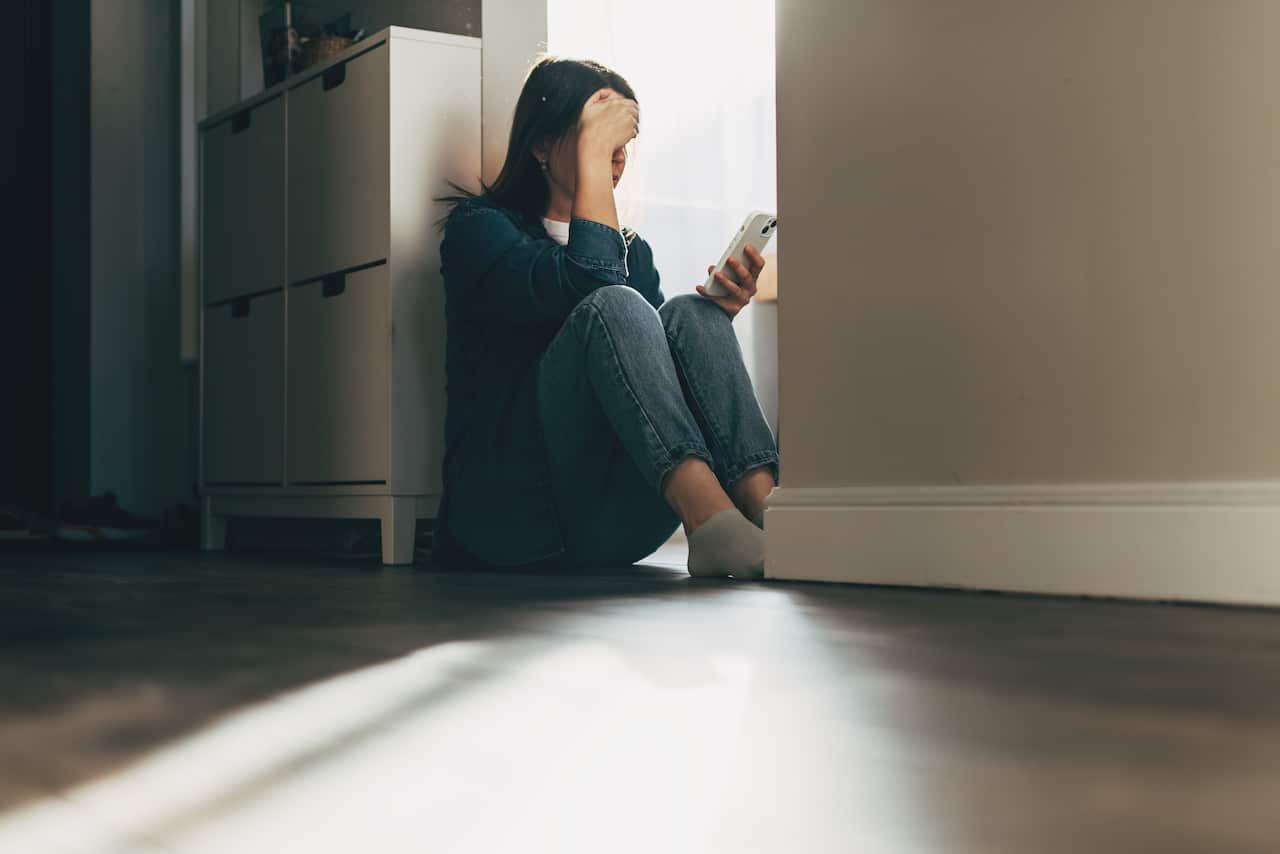
These findings prompted an Australian National Audit Office audit of Services Australia's child support debt-recovery enforcement powers. The findings are scheduled to be tabled in November 2026.
It's estimated that almost 100,000 parents using Agency Collect have experienced or are at risk of experiencing family or domestic violence.
Cook says the CSS operates under "the assumption that parents are equally bargaining and making decisions".
"But, in family violence ... when a perpetrator can't physically control you anymore, the number one tool they have left is to financially control you."
Adrianne Walters, executive director of Women's Legal Services Australia, says the "deliberate nonpayment of child support is economic abuse".
"It takes food off the table, destabilises households, and it punishes children in order to control their mothers," she tells SBS News.
The body recently surveyed 540 separated mothers, finding that 80 per cent reported experiencing financial abuse via the CSS.
Walters says the body regularly witnesses "women exhausted by the process".
"Years of underpayment and mounting debts, and the stress of other legal processes while the child support system asks them to keep pursuing a person they might be frightened of. Many simply give up," she says.
While the child support system has provisions intended to protect people experiencing family and domestic violence, Cook says they fail to account for the nuances of financial abuse.
"You have to prove it, and the system knows what to do with physical abuse, but it's not very good at recognising coercive control and financial abuse," she says.
[The CSS] is compelling women to be tied administratively to their abuser for decades.
"Instead, lots of women are just going to Private Collect and aren't collecting anything."
Do the new reforms actually fix the problems?
In the 2026-27 federal budget, the government announced a landmark $182.6 million investment over four years to reform the CSS.
The reforms include removing the requirement for certain personal financial information to be automatically shared with the other parent, increasing discretionary powers to limit harassment and harm between parents, expanding wage withholding and introducing a new Collection Arrangement Guidance Tool for new parents entering the CSS.
The government will also "strengthen data sharing" between Services Australia and the Australian Taxation Office and "prosecute people who don't lodge their tax returns to avoid their child support responsibilities".
From 1 July 2027, the government plans to automate the issuing of Departure Prohibition Orders (DPOs), a legal tool used by authorities to prevent people with significant unpaid debts from leaving the country.
That will include automatically issuing DPOs to some parents with child support debt of at least $10,000 who have travelled overseas more than once in the previous two years.
"We believe that if you can afford an overseas trip, then you can afford your child support," a DSS spokesperson told SBS News in a statement.
In the 2025-26 financial year, 672 DPOs were issued, according to the government. It expects the reforms to result in an extra 3,000 DPOs being issued in the first year.
Reforms will be legislated "progressively, with the first tranche to be introduced in parliament in the coming weeks", the spokesperson said.
Cook says the changes are "underwhelming" but are the "beginning of system change".
Walters noted that while they're the "most significant action taken against systems abuse in recent history", they fall short and do not fully address the experiences of parents in Private Collect arrangements.
She hopes to see the changes implemented with the safety of victim-survivors as a priority, and stronger access to free, specialist legal support for women to navigate the system safely.
"We need action to stop perpetrators from forcing women into Private Collect arrangements — like making Agency Collect the default arrangement until certain safeguards are met," Walters says.
"These actions must be accompanied by stronger accountability for deliberate non-payment ... better options for reviewing and enforcing Private Collect arrangements, so non-payment doesn't disappear from view."

Like many parents using the CSS, Emma will remain connected to her ex-partner until their child is at least 18 years old.
Believing the insecurity of payments kept her in the "cycle of abuse", she's worked hard to no longer be reliant on child support.
It came with significant sacrifice.
Sometimes you might have to ask people, your family, for help. You have to cancel things for yourself that might help your mental health.
"You might have to find housing in a non-ideal area because it's all you can afford, and you might have to work and juggle more.
"It's just part of the sacrifices you make as a parent — you put your child first."
If you or someone you know is impacted by family and domestic violence, call 1800RESPECT on 1800 737 732, text 0458 737 732, or visit 1800RESPECT.org.au. In an emergency, call 000.
The Men's Referral Service, operated by No to Violence, can be contacted on 1300 766 491.
For the latest from SBS News, download our app and subscribe to our newsletter.







