
A landmark report has revealed Services Australia knowingly bypassed child support laws for six years, internally blocking payments to over 16,000 parents who provided less than 35 per cent of their children's care. While the agency argued the law created "unintended consequences" by requiring primary carers to pay those with minimal care responsibilities, the Ombudsman ruled that ignoring legislation is not an option for public servants.
Listen to Australian and world news, and follow trending topics with SBS News Podcasts.
TRANSCRIPT
A report from the Commonwealth Ombudsman has found that Services Australia knowingly broke child support laws for six years.
Back in 2019, the agency identified that its policy of denying payments to parents with less than 35 per cent of care was unlawful.
Under the law, these parents are entitled to support, but Services Australia refused to enforce it, citing a "longstanding principle" that applying the law could result in a parent with little or no care of children receiving payments from the main carer.
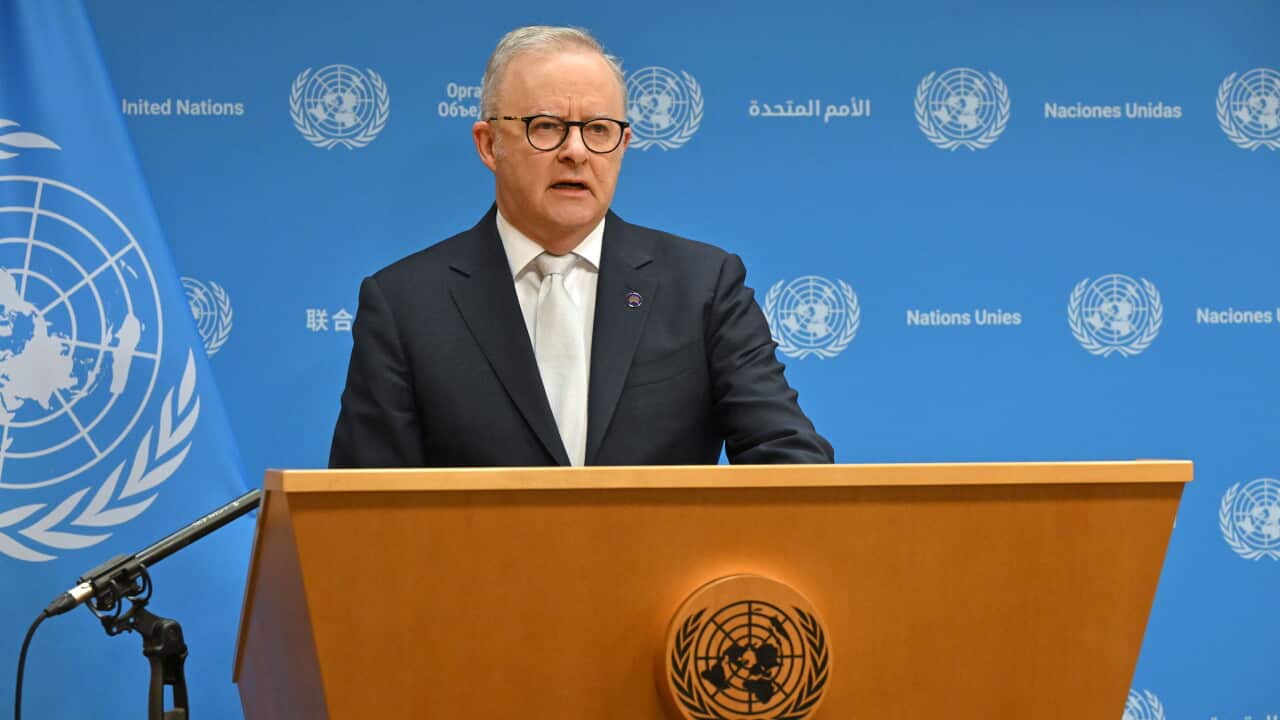
Ombudsman Iain Anderson told SBS that since the agency knew it was breaking the law for six years, it should have escalated the issue much sooner.
"So if a public servant thinks that the law is not working correctly. What they should do is tell people about it. Public servants can't change the law themselves. They need the agreement of ministers, cabinet and parliament, so they've got to escalate it. They've got to say, here's a problem that needs to be fixed, and they can't just pick or choose for themselves which parts of the legislation they're going to follow."
Mr Anderson says some of this legal non-compliance occurred prior to the Robodebt Royal Commission, and is acknowledging the department has since made efforts to improve its internal culture.
Mr Anderson is confirming that at least 16,600 people were affected, with some owed up to $10,000.
He says while these individuals have been informed that the law was applied incorrectly, the situation is complicated by the fact that those owed money were not the primary caregivers.
According to Mr Anderson, there is no doubt the legislation was producing unintended consequences.
In response, the Ombudsman has made six recommendations, including a proposal to retroactively change the law so parents with less than 35 per cent of care cannot claim support, while simultaneously offering compensation to those already disadvantaged by the agency's past actions.
"We're talking about child support legislation here. With child support, it's really important that child support money gets paid to the parents who are caring for children. Now the unintended consequences here are some legislative amendments were that the parent who was doing most of the caring actually is required to pay child support to the parent who's not doing much of the caring. So that's a problem, and because it's child support, it needed to be fixed quickly."
National Legal Aid spokesperson Feiyi Zhang is declining to comment on a potential class action lawsuit, but is emphasising that individuals face significant hurdles when seeking legal redress for issues like child support.
"Yeah, so one of the issues is that we as legal aid commissions can only provide a limited amount of legal advice and very limited legal representation for people who are seeking help with their child support, rights and claims. So at the moment, only 8% of Australian households can actually access legal aid, while the poverty line stands at 13% so we anticipate, in response to this, this finding by the Ombudsman that there will be a significant increase in the number of people who will be seeking advice from us, and that will depend on the resources that we have available, but it's very limited."
According to Ms Zhang, these administrative failures do more than just strain bank accounts; they trigger a domino effect that can lead vulnerable families into the justice system.
"I think the priority for us is making sure that Department of Social Services is accountable for the decisions that it makes impacting the people that we work with. People who miss out on government entitlements, who miss out on child support payments, can re enter our services, and the lack of access to the appropriate legal or government rights earlier on in their life can have compounding impacts, and they end up within the legal system, within the justice system, with, you know, worsening impacts on their lives. So it's really important that the government, you know, intervenes."
This isn’t the first time the agency’s handling of child support has come under fire.
In a separate investigation handed down last year, the Ombudsman found Services Australia was amplifying financial abuse by failing to enforce payments.
At the time, $1.9 billion was owed, with the debt affecting mostly mothers, who were disproportionately impacted.
The report, handed down last year, made eight key recommendations ranging from the urgent recovery of unpaid funds to better tracking of financial abuse within the system.
Terese Edward, a spokesperson from Single Mother Families Australia, says what she calls ' the weaponisation' of the child support system needs to be addressed.
"So what we've got is a system that allows child support to be weaponised. And it's really simple. An ex partner, a vexatious ex partner, doesn't lodge a tax return in one year, five years, 10 years, there's no ramifications. A provisional or estimated amount is accepted, and then the consequences of that is we have children with an underpayment. We have children who are not receiving that really important money funnel from one parent to another. We need it only to function, not only to provide those necessary funds but also it should be a safe system."
Services Australia spokesperson Hank Jongen says the department has already taken a range of steps to improve outcomes, including training for staff to ensure they’re equipped to recognise and support people experiencing financial abuse.
Mr Jongen says that the department will implement the recommendations from the Ombudsman report by the end of January.