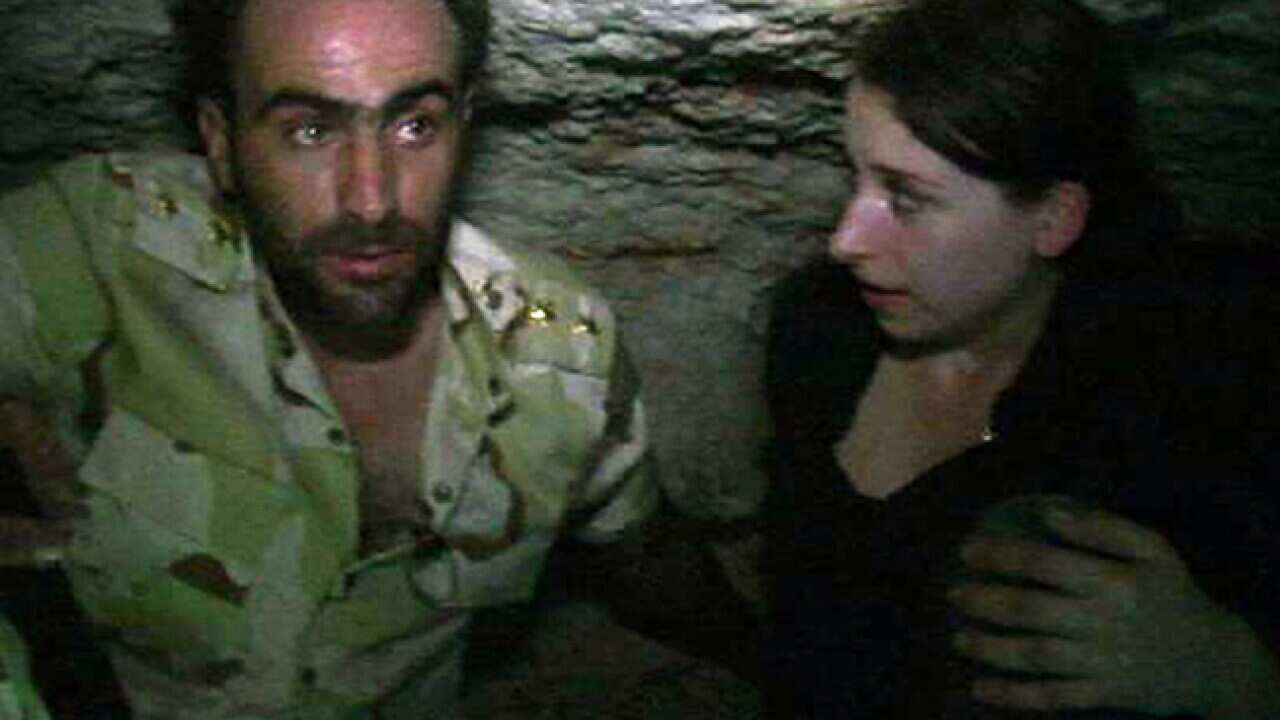
On last night's Dateline Yaara Bou Melhem had exclusive access to the Free Syrian Army, including a rare interview with its leader Colonel Riad al-Asaad and entry to the rebels' secret network of caves and tunnels.
But how did she win over the rebels' trust to get access? And how did she stay out of danger?
By Yaara Bou Melhem
“Two people posing as journalists tried to kill him, you won't get access to him.”
News that makes sense
Your trusted source for staying up-to-date with the world around you. Get free daily news updates and analysis, straight to your inbox.
I'm sitting in a Sydney coffee shop with a Syrian contact.
“Nobody knows anything about him.” I retort.
He slowly sips on his coffee, one of the many he's had since I first proposed getting access to the leader of the Free Syrian Army.
“OK, let me see what I can do.”
A few months later I am in Antakya, Turkey, interviewing the almost anonymous Colonel Riad al-Asaad for Dateline. I have been granted rare access to him at a military camp where he is protected by Turkish security forces after several attempts on his life. The camp is meant to be strictly off limits to journalists.
After making their checks, the Syrian opposition decided I was a known entity... not an assassin in journalist's clothing.
When the stakes are high, paranoia runs rampant. It's becoming increasingly difficult for journalists reporting on the battle against the regime to operate freely in the region without being accused of being a spy, but as war intensifies in Syria I wanted to get an insight into the rebels' battle to take control of their country.
From the outset of the conflict, there have been many reports of journalists who've had to leave Syrian opposition strongholds because of mistrust that snowballed into direct threats against their lives. Simply doing your job and playing devil's advocate can get you on their wrong side.
Surely, in their minds, if you ask questions about failings or weaknesses of the rebel army and the opposition then you must be working for the 'other side'? Many don't understand that's part of the job.
While in Syria, I couldn't film freely without being accompanied by one of my rebel hosts. Townsfolk were suspicious, even then. Who is she? Why does she want to film this square? This butchers shop? These cars driving past?
I was taken through a secret network of caves and tunnels running underneath Syria's Idlib province, the first journalist to ever film inside the passages used by the rebels to escape attacks by the regime, and to secretly move men and supplies.
One would think it would be unlikely here to encounter suspicious locals, but they found us. It was only at the insistence of the rebel leader showing me around this labyrinth that they relented and I was able to continue filming.
This sort of paranoia is leading to more and more incidents that put the lives of journalists at risk.
As I crossed back to Turkey from Syria, a British and a Dutch journalist were kidnapped by a jihadist group in northern Syria near the border. Accused of being spies, they were held for several days before Free Syrian Army rebel fighters intervened and they were freed.
Even in recent days, rebel and activist networks in Syria's northern provinces have circulated a warning that a European journalist working for a well-established network is in fact a spy with regime links. The journalist is already inside Syria and unaware of the campaign against him. His editors have been notified.
After crossing back into Turkey, I meet with Colonel Riad once again for a final interview, filming what I can within his tent enclosure then bidding him farewell.
Unable to film freely in the Turkish military camp where he is based, I was anxious to get some footage to describe it in my story so I decide to film it from afar from a watch tower about a kilometre away. A safe enough distance, or so I thought.
After just five minutes, four or five Turkish soldiers begin to mill about the bottom of the watch tower.
They take me back to the camp for questioning. The usual… names, passports, which network do you work for? What are you doing here?
I apologise of course – I thought I was far enough away - but that's not enough to allay their suspicions.
Ten minutes into their questioning, the English-speaking intelligence agent comes back with a sudden decision.
“It's OK this time, next time you will be in trouble. You are free to go,” he tells me.
I don't wait for him to repeat it and I get in the car. The car door is still open and he leans in before I come to close it.
“By the way,” he says, pointing at me. “We know everything about you.”
There it was again. I had become known, perhaps due to my days of filming with Colonel Riad.
At least, that's what the paranoid part of me says.







