
In brief
- The Coalition plans to criminalise assisting IS-linked Australians to return, while the government says such a move would be unconstitutional.
- Legal experts say citizenship can’t be revoked if it would leave someone stateless, limiting the scope for permanent exclusion.
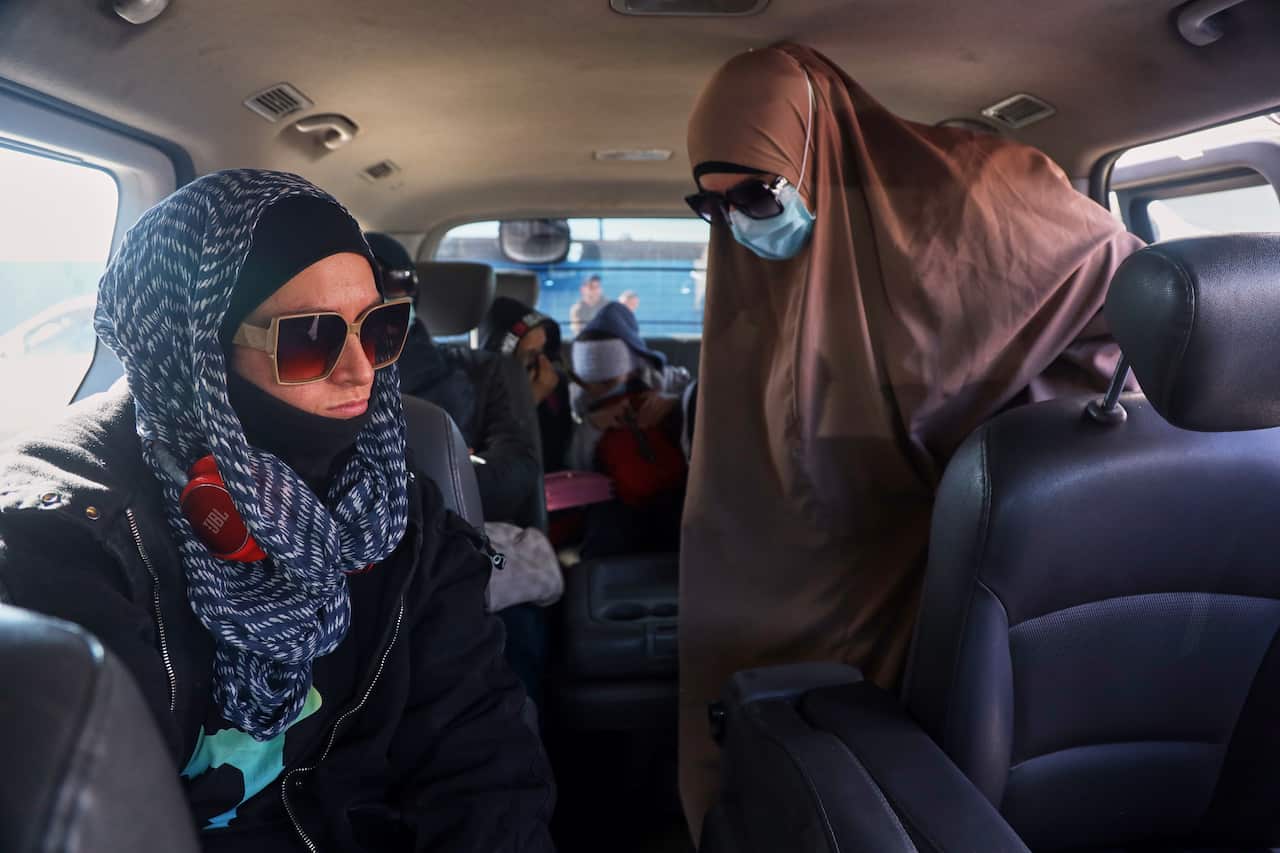
As debate intensifies over a group of Australian women and children in Syrian camps linked to the self-proclaimed Islamic State (IS) group, politicians are clashing over whether — and how — they can return.
The bid by the 34 women and children to return has caused a political storm in Australia, with Prime Minister Anthony Albanese insisting the government had no part in their repatriation, saying he had "nothing but contempt" for the women who travelled to IS-controlled Syria prior to the group's fall.
On Tuesday, Albanese said that should the cohort return, they "will face the consequences of the law". When asked on The Karl Stefanovic Show if they would be charged, he said: "Absolutely, if any laws have been broken. This is not an homogenous group, there are different consequences."
The federal Opposition announced plans to introduce legislation to parliament in March that would punish anyone who helps the so-called "ISIS brides" return to Australia with up to 10 years' jail.
But Albanese said the Coalition's plan is unconstitutional, describing it as "nonsense that was not thought through in order to get a headline".
News that makes sense
Your trusted source for staying up-to-date with the world around you. Get free daily news updates and analysis, straight to your inbox.
"They themselves couldn't explain how that was constitutional," Albanese told ABC radio on Tuesday.
The group of 23 children and 11 women, who are the family of IS group fighters, were taken to the camps after the fall of the IS group caliphate in 2019.
But what does the law actually say about their bid to return to Australia?
Do Australian citizens have a right to return?
At the highest level, international law is clear.
"Citizens have a right to return to the country of their citizenship," Donald Rothwell, professor of international law at the Australian National University, told SBS News.
That right is recognised under Article 12 of the International Covenant on Civil and Political Rights (ICCPR), which states that no one shall be arbitrarily deprived of the right to enter their own country.
Human Rights Watch Australia director Daniela Gavshon says temporary exclusion orders "have the practical effect of invalidating someone's passport and could effectively render a person stateless during that period".
"Article 12 of the ICCPR prohibits arbitrary bans on people from returning to their own country," she told SBS News.
"The Australian government has a duty to avoid statelessness under international law."
But international law operates alongside domestic legislation — and that's where things become more complex.
How can that right be limited?
Under Australia's Counter-Terrorism (Temporary Exclusion Orders) Act, the minister can issue a Temporary Exclusion Order (TEO) preventing an Australian citizen overseas from returning for a set period, unless certain conditions are met.
"There is this Commonwealth legislation called the Counter-Terrorism Temporary Exclusion Orders Act, under which the minister can issue a temporary exclusion order, which can prevent a citizen from returning and crossing the border if they're subject to a temporary exclusion order," Rothwell said.
One of the women has been barred from returning after being handed a temporary exclusion order under Australian counter-terrorism laws.
"The full force of the law has been implemented to the extent that we can," Albanese said.
A TEO doesn't cancel citizenship — it temporarily controls the conditions of return.
The government also has powers under the Australian Passports Act 2005 to refuse or cancel passports in certain circumstances, including on security grounds.
Rothwell noted that "not every Australian has the right to cross the border to leave the country".
"The minister does have an ability to refuse the issue of a passport if there are security concerns about the way in which that person might conduct themselves once they've left Australia," he said.
Can Australia strip someone of citizenship — or question — their status?
Revoking citizenship is legally possible — but only in limited circumstances.
Under the Australian Citizenship Act 2007, citizenship can be cancelled following conviction for certain serious offences, primarily terrorism-related crimes.
But Australia can't render someone stateless.
Revocation "can only occur if the individual has another citizenship that they can fall back on," Rothwell said.
"In other words, effectively they have to be a dual citizen."
International law strongly discourages statelessness, and governments must take that into account.
But in the current debate, neither the government nor the opposition has proposed stripping the Syrian cohort of citizenship. That debate centres on assistance and return — not formal revocation.
But questions have been raised about the children in the camps.
That's because Australia is not a birthright citizenship country in the same way the United States is. Being born on Australian soil is not, by itself, enough for automatic citizenship, and at least one parent must be an Australian citizen or permanent resident.
Children born overseas can acquire citizenship by descent if they have an Australian citizen parent.
Among the Syrian cohort are 23 children. The government has indicated it doesn't dispute their citizenship status, but said they had been "put in that position by their parents" and wouldn't repatriate them.
"They made that decision. There are consequences for it," Albanese said.
"Those consequences are that the Australian government's position is that we are not going to provide support for them to be repatriated, and that if they do return, then they will face the full consequences of their action to the full force of the law."
Does Australia have to help its citizens overseas?
Australia's Consular Services Charter outlines what assistance it may provide to citizens abroad — such as replacing lost passports or offering advice.
But Australian courts have been reluctant to recognise a legally enforceable right to diplomatic protection, Rothwell said.
"Australian law does not recognise that citizens have the right to be protected and represented by the government overseas."
Governments may choose to repatriate citizens from conflict zones or disasters. But that's a policy decision — not an automatic legal obligation.
So, can Australia stop them from coming home?
In practical terms, permanently barring a sole Australian citizen from returning would face serious constitutional and international law hurdles.
The government can delay, deter and complicate a return — through passport cancellation, temporary exclusion orders and national security measures. But stripping citizenship is tightly constrained and can't render someone stateless.
That means the legal fight is less about whether these individuals are Australians — and more about whether the government chooses to facilitate their return or leave them to make their own way back.
As Albanese said: "Australian citizens do have rights … But if any do return, it won't be with Australian government support."
— With additional reporting by Ewa Staszewska and Australian Associated Press.
For the latest from SBS News, download our app and subscribe to our newsletter.







