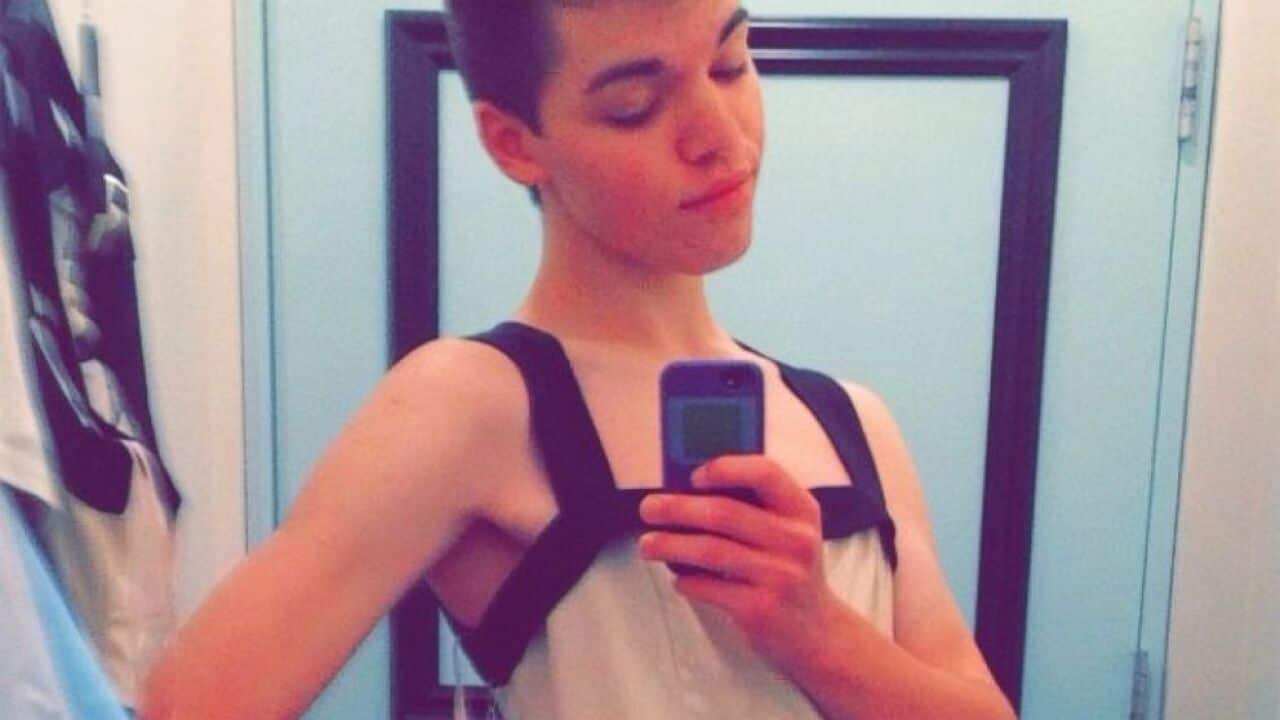
"The life I would've lived isn't worth living in … because I'm transgender."
These were the words of Leelah Alcorn, who after posting a suicide note on her Tumblr, walked in front of a speeding truck in late 2014.
Alcorn’s suicide has triggered immense grief and anger. People in particular have directed rage at her parents, who refused to acknowledge her gender identity, and forced her to go to a Christian conversion camp. Noted sex columnist Dan Savage came out hard, stating her parents “threw her in front of that truck” and that “charges should be brought” against them.
This rage however seems extremely shallow. While leading figures such as Savage, who has in the past been accused of transphobia himself, have spoken out about Alcorn’s death, transphobia is still largely ignored by the mainstream gay and lesbian movement. While trans* people are always placed within the LGBT rainbow, their issues are normally placed at the bottom of the pile.
Transphobia is still rife within our society. Trans* people face discrimination in their every day life — from legislative discrimination and the denial of medical treatment to discrimination in the workplace and violence on the streets. Trans* people have extremely high suicide rates and face murders on a regular basis. Discrimination leads to high unemployment rates and in turn high levels of poverty. Trans* people are at the forefront of discrimination within our society.
News that makes sense
Your trusted source for staying up-to-date with the world around you. Get free daily news updates and analysis, straight to your inbox.
Despite this, since the early days of the queer movement, where trans* people led the charge at the Stonewall Riots, they have in many ways been pushed aside. Holding much of the wealth and influence, gay and lesbian campaigners have been able to focus attention on issues that are paramount to them. In particular, recent decades have seen a focus on same-sex marriage — a campaign that has taken huge amounts of resources and attention, but does little to solve transphobic violence and discrimination.
Even worse, trans* people are often shafted when it suits gay and lesbian campaigners. In the United States for example, mainstream organisations actively excluded trans* people from negotiations around the Employment Non-Discrimination Act in 2007. Groups advocated the removal of a reference to trans* people in the bill, believing it would make it more likely to pass. Closer to home, moves to legislate same-sex marriage at a state level led to trans* people being actively excluded from the legislation. Again this was an opportunistic move to get legislation passed. When it comes to the crunch, trans* people are always the first to be discarded by the mainstream gay and lesbian movement.
Of course there are a plethora of organisations who are working on trans* issues. Groups around the world are tackling discrimination, campaigning for trans* rights, and are providing support for trans* people who are having mental health issues or are in need of accommodation, work or healthcare. Each year the International Transgender Day of Remembrance solidifies the call to fight against violence against trans* people.
But these groups largely sit at the margins, with trans* advocates told by mainstream organisations they need to wait their turn for progress. Gay and lesbian campaigners argue trans* people need to wait so we can fight the winnable battles first. It is only after we achieve steps such as same-sex marriage that we will be able to move on to the harder issue of transphobic discrimination and violence.
I wonder whether anyone had the courtesy of explaining that to Leelah Alcorn?
The reality is that while gay and lesbian activists focus on issues such as marriage, trans* people continue to die in our streets. This is the real story of Leelah Alcorn. She was not just denied her rights by her family and society, she was ignored by a movement that purports to stand up for her. She was the victim of being part of a community that pushed her aside. A victim of having no one to stand up for her.
In her suicide note, Alcorn stated:
"The only way I will rest in peace is if one day transgender people aren't treated the way I was, they're treated like humans, with valid feelings and human rights. Gender needs to be taught about in schools, the earlier the better. My death needs to mean something. My death needs to be counted in the number of transgender people who commit suicide this year. I want someone to look at that number and say 'that's f***ed up' and fix it. Fix society. Please."
It is good that many in the gay and lesbian community have heard Leelah’s call. It is good that this tragedy has made us look deeper into the issues facing trans* people. But unless this is followed with a major shift in focus from the gay and lesbian movement this attention will just look like opportunism. It will look like a way to make noise about trans* rights while not actually doing any of the hard work to tackle the causes of transphobia.
Leelah Alcorn was a victim of our transphobic society. But she was also a victim of a movement who has ignored her for too long.
This is no longer acceptable.
Simon Copland is a freelance writer and climate campaigner. He is a regular columnist for the Sydney Star Observer and blogs at The Moonbat.
Anyone seeking support and information about suicide prevention is encouraged to contact Lifeline on 13 11 14, Suicide Call Back Service on 1300 659 467 or Kids Helpline on 1800 55 1800.







