In Brief
- More Australians are taking 'desperate' measures as they battle food insecurity.
- Advocates are calling for preventative measures to address the issue.
Food emergency charity providers are calling the ongoing cost of living crisis the "cost of surviving crisis", as more and more Australians are not only skipping meals, but eating from bins to cope with severe financial distress.
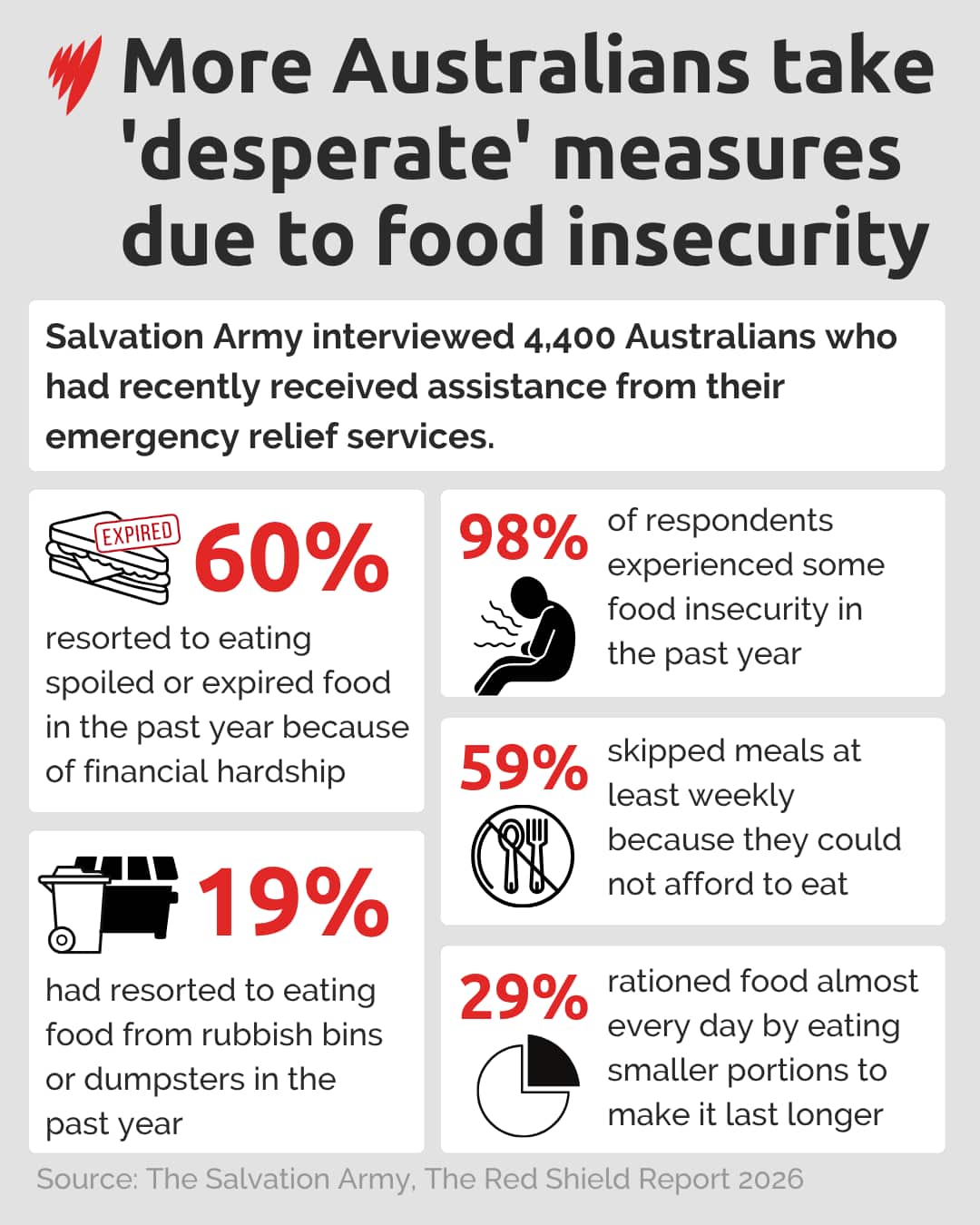
A report by the Salvation Army released on Wednesday interviewed 4,400 Australians who turned to the charity for emergency relief support, finding that 91 per cent of them had skipped meals in the past 12 months, with one third of them doing so daily.
It also found 67 per cent of respondents watered down food or drinks to make them last longer, and nearly one in five respondents said they had eaten from bins. Around 60 per cent of respondents said they had eaten expired food.
Major Warren Elliot from the Salvation Army told SBS News that food insecurity was an issue across Australia.
"And it's not just families that are on pensions or benefits, it's working families as well, they are experiencing new levels of stress and difficulties," he said.
News that makes sense
Your trusted source for staying up-to-date with the world around you. Get free daily news updates and analysis, straight to your inbox.
Elliot said the war in the Middle East had worsened the years-long cost of living crisis, as 90 per cent of respondents said they had once been unable to refuel their cars or pay for public transport.
The report also touched on the impacts of severe financial distress on mental health. One 49-year-old respondent from Victoria noted that she felt like "a failure" to her children.
"Instead of enjoying special times like Christmas, my children's birthdays, or even the tooth fairy, they are just major sources of stress that I start worrying about weeks before they arrive. I've lost all confidence and feel ashamed and embarrassed," she said.
While some respondents who were parents told the Salvation Army that they would go without food in order to feed their children, 35 per cent of them said their children still had gone to school without a meal in the past 12 months.
Rose Darling, chair of the Adelaide-based Community Help and Togetherness, has been providing emergency food support for the past seven years. She's noticed a growing number of people turning to help.
"It's not just the numbers, it's where we used to get smaller amount where we would just start out with a big breakfast, then we had to do groceries, and now we have to have gluten-free items plus fruit and vegetable plus bread for around 80 to 90 people to take home every Friday," she said.
Darling said many people who suffer from food insecurity were senior citizens, elderly women and single parents. However, she's also noticed an emerging group of people in need of help: renters.
She explained that many renters had suffered from an increase to rent rates, "and if they are trying to pay that rent, then they are struggling with every other bills as well".
Her organisation also runs a weekly food distribution program at two primary schools, where her team collects unsold bread from supermarkets and offered them to students.
"One particular young boy, when I went to deliver bread one day … said ‘I'm so glad that you are here, because often when I stay with dad, the bread is bad, and I didn't have anything to eat this week'," she recalled.
The big demand for food relief has dramatically increased the workloads of charities, and sometimes they have to turn people away.
A recent report by OzHavest, which interviewed over 870 charities, found that over 74,000 people had to be turned away from food support every month, as charities fail to cope with the mass demand.
OzHarvest founder Ronni Kahn told SBS News that the findings were "shocking and outrageous".
"The cost of living crisis has actually become a cost of surviving crisis," she said. "I think many of our systems are broken."
Calls for more preventative measures
Elliot from the Salvation Army called for governments to invest in programs that prevent people from becoming homelessness and suffering from severe financial distress.
"Once people are experiencing homelessness, it's much harder to get them back into a house, and it's a much harder process to support them through those [situations]," he said.
"We can support them early and get them over the top, and keep them in their homes. It's better for everybody."
Last July, the federal government announced the start of a national food security strategy.
Kahn said the government should be considering the families struggling to meet food needs.
"We need more resources, so that we can meet this unmet need," she said.
The federal government funds four charity services to provide food emergency relief:
Foodbank, OzHarvest, SecondBite and Good360.
For the latest from SBS News, download our app and subscribe to our newsletter.







