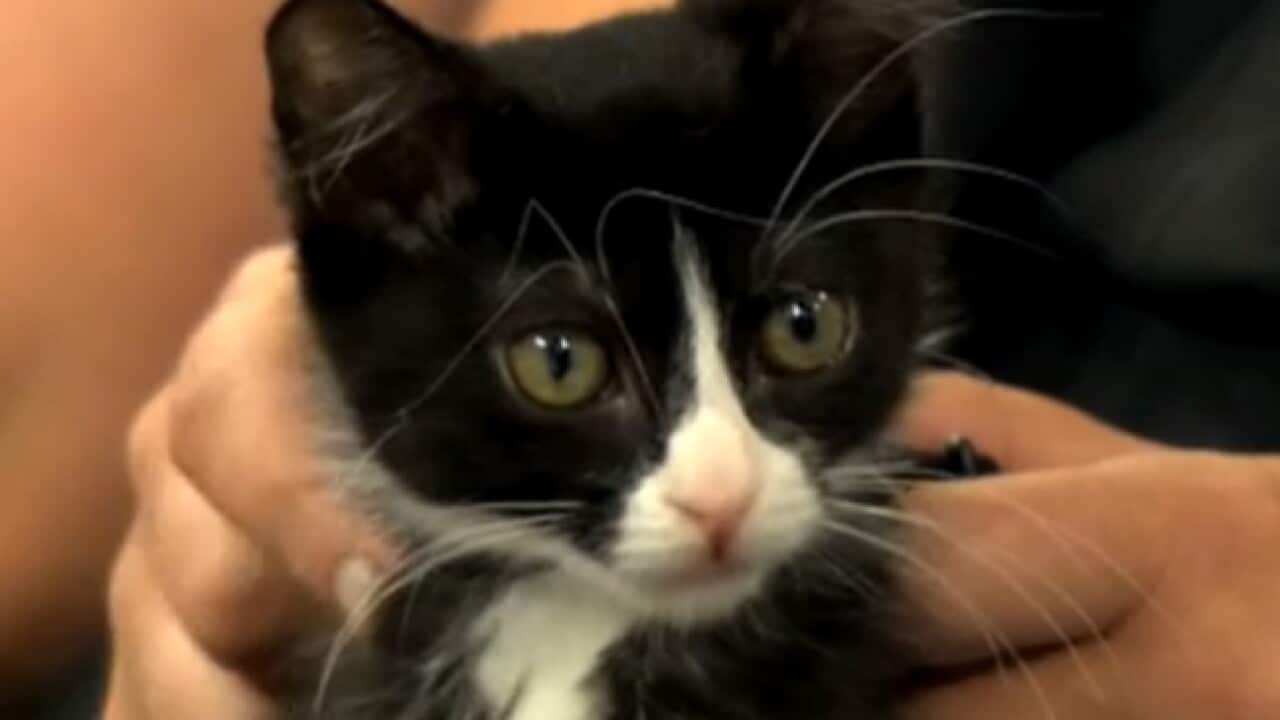
Tonight, Insight hears from cat lovers and conservationists who all want to do something about Australia's killer cat problem, but can't agree on what.
Alys Stevens is a scientist working in Arnhem Land in collaboration with Indigenous land owners. She says in just one small part of Arnhem Land there are around 4000 feral cats.
“Those 4000 cats eat probably a minimum of five native animals a day, so that's 20,000 native animals a day,” she says.
“If you take that out over a year that's over six million native animals a year that have been eaten in that one small part of Arnhem Land.”
Australia has one of the worst mammal extinction rates in the world. And cats are partially to blame.
News that makes sense
Your trusted source for staying up-to-date with the world around you. Get free daily news updates and analysis, straight to your inbox.
Of the 21 completely extinct marsupials and rodents in Australia, the cat and the red fox have likely contributed to the extinction of all but two. Feral cats are also a threat to 35 bird species, 36 mammal species, seven reptile species and three amphibian species. Four of those are critically endangered
There are around 18 million feral cats across Australia, but domestic cats are just as effective at killing wildlife -- and their owners don't even know it. A recent study which put cameras on pet cats to follow their movements found that cats only bring home about a quarter of their kills.
On Insight this week, conservationists and wildlife groups say something needs to be done to reduce the impact of cats on native wildlife, but they can't agree on what.
Natalie Stathis feeds a colony of stray cats in her neighbourhood. There are about 15 cats in the colony and most of them are desexed. She monitors them, and catches and finds homes for kittens.
“I don't see why the animals should be put down because humans didn't desex their pets and decided to dump them,” she says.
However ecologist and conservation biologist Chris Johnson says her efforts aren't helping -- only maintaining the population.
Because of that high reproductivity ability of cats, if you desex nine out of 10 cats, the tenth cat can still have enough kittens to maintain the population on the same level,” he argues.
“So while you're feeding that population you're allowing it to stay at a high level and it will then have an impact on whatever wildlife is trying to live in that place.”
Catch Insight tonight at 8.30PM on SBS One and streamed live here.
You can join the discussion by using the #insightsbs hashtag on Twitter or by commenting on Insight's Facebook page.







