
In Brief
- From Ghana to Brazil, team nicknames can stretch back decades.
- Many reflect pivotal moments in a nation's history, culture, and identity.
The Socceroos are football's only kangaroo-themed national team nickname, amid a pride of lion-based names — five teams at this World Cup feature lions in their name.
The Australian national team adopted the nickname during their 1974 World Cup qualifying campaign, which led to their first ever World Cup in West Germany that year.
Now more than 50 years later the team have made their mark on the 2026 FIFA World Cup with an emphatic 2-0 win against the higher-ranked Türkiye.
With the World Cup's expansion to 48 teams, more teams have been given the opportunity to star on a global stage and more fans have the chance to celebrate their team's victories, and histories.
Many World Cup teams carry names that tell stories from revolutionary soldiers and Indigenous peoples to medieval legends and post-apartheid renewal, wearing their history as proudly as their colours.
News that makes sense
Your trusted source for staying up-to-date with the world around you. Get free daily news updates and analysis, straight to your inbox.
Here are the stories behind the team nicknames for the 2026 FIFA World Cup.
Curaçao - The Blue Wave
The smallest nation to every qualify for the World Cup, Curaçao fans have been in raptures. The team fell 7-1 to Germany in their opening World Cup match, but many were proud to even be there and to score a goal against four-time winners, as one of four debutante nations in this tournament.
The football team has become a symbol of joy and strength for the island with a population of about 115,000 similar to that of Darwin.
The island has a turbulent history of colonisation and remains a part of the kingdom of the Netherlands.
Curaçao’s Prime Minister, Gilmar Pisas, sees this World Cup as an opportunity. The team known as the Blue Wave — a nod to the shimmering turquoise water that surrounds the island — and blue is a theme for everything in the country, right down to the Blue Curaçao liquor that is popular around the world (even though it has an orange flavor).
For the next few weeks, Pisas wants the nation to be Blue Nation as well.
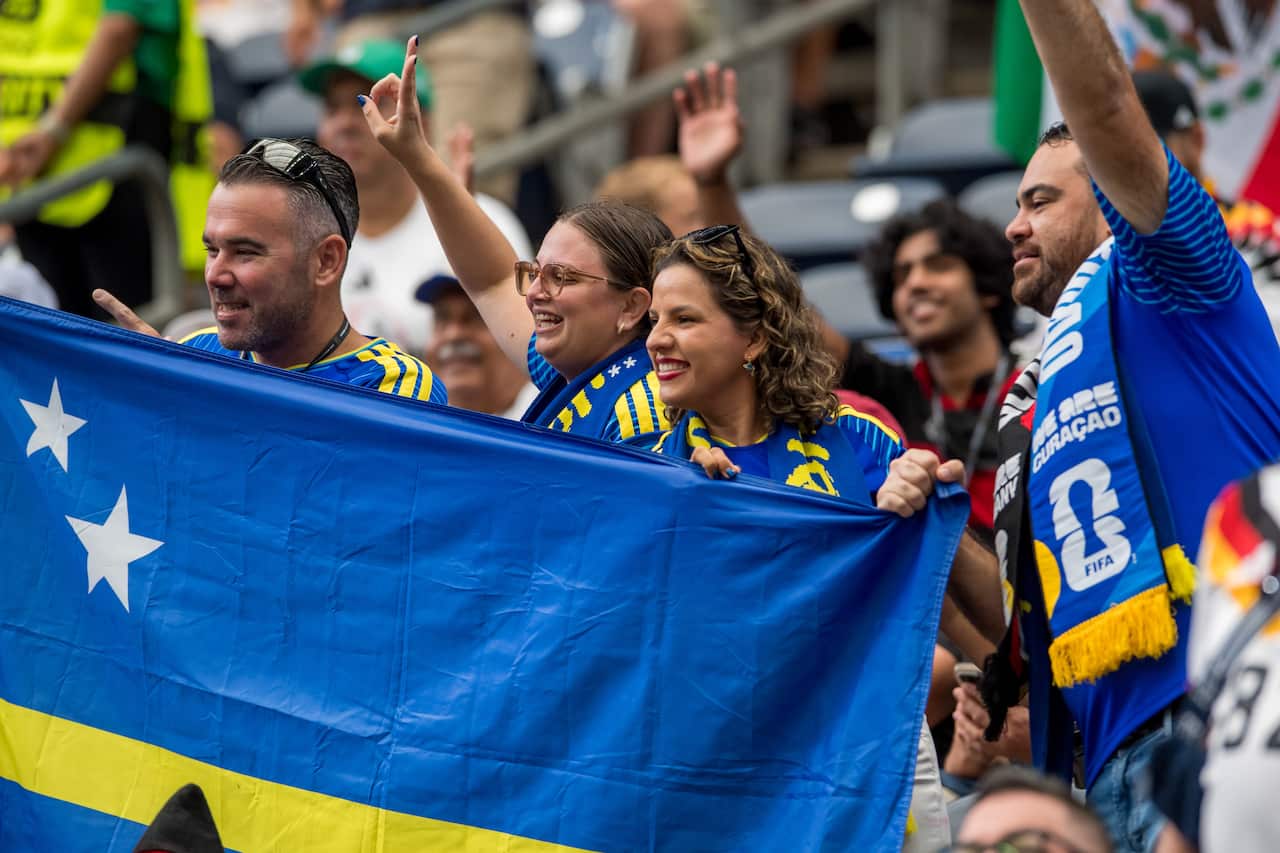
"We will become part of something larger than ourselves, something that, despite our differences, brings us together," Pisas said. "We share a single anthem and a single flag … rather than being divided into separate camps. We are, finally, truly united. It is a project dedicated to the construction of a nation. It acknowledges that your people, and you yourself, are an integral part of this collective mission — the ‘Blue Nation.'"
Ghana — The Black Stars
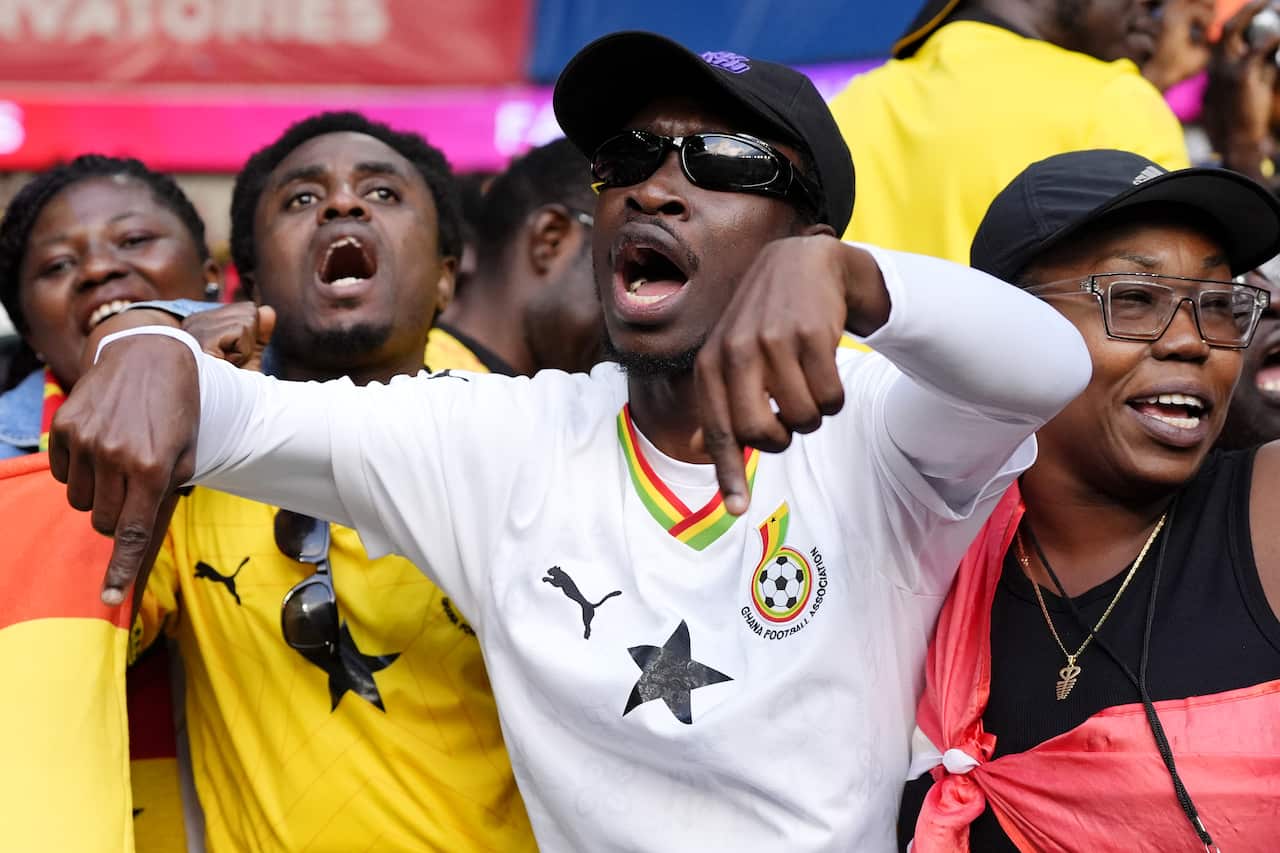
Coming from the black star centred in the national flag, Ghana’s nickname represents a symbol of African freedom and unity adopted when the country became the first sub-Saharan African nation to gain independence from colonial rule in 1957.
Haiti — Les Grenadiers (The Grenadiers)
Haiti’s national team takes its name from the soldiers who fought in the Haitian Revolution, the uprising that established the world’s first Black republic.
The nickname honours a defining chapter in Haitian history and remains a source of national pride more than two centuries later.
- All the FIFA World Cup 2026 coverage on our World Cup page
- How to watch the FIFA World Cup 2026 on SBS
- Watch all 104 matches of the FIFA World Cup 2026 at our On Demand hub
Jordan — The Chivalrous Ones
Jordan is known as Al-Nashama, often translated as The Chivalrous Ones.
The name comes from a term rooted in Jordanian and Bedouin culture, describing people who embody courage, honour, generosity and dignity.
Portugal - The Team of the Shields
Portugal’s Seleção das Quinas refers to the five blue shields featured on the country’s coat of arms.
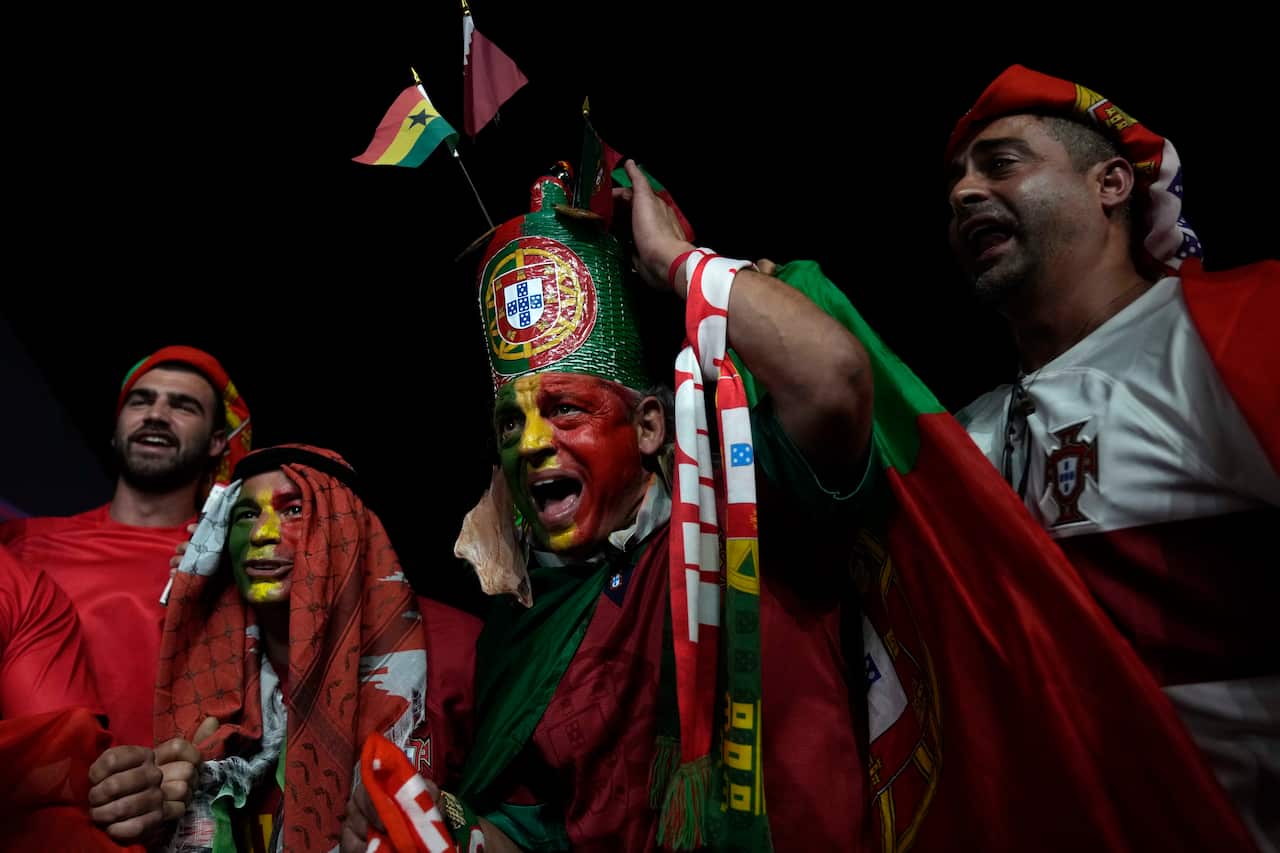
According to Portuguese tradition, the shields honour Portugal's first king, Alfonso Henriques, who defeated five rival kings in battle over 800 years ago and established the nation
Scotland — The Tartan Army
This nickname doesn't belong to the team, which doesn't have an official nickname, but the fans.
The Tartan Army became famous in the 1970s and entered football folklore after thousands of Scottish supporters celebrated a victory over England by flooding onto the Wembley pitch in London in 1977.
Tartan refers to the patterns traditionally worn on Scottish kilts and remains one of world football’s most recognisable travelling fan bases.
Uruguay — Los Charrúas
Uruguay’s nickname pays tribute to the Charrúa people, the Traditional Owners of the region long before European settlement.
Today, the nickname honours an important part of Uruguay’s Indigenous heritage and has come to symbolise the resilience, and fighting spirit for which Uruguayan football teams are known.
South Africa - Bofana Bofana
South Africa’s national team is known as Bofana Bofana, a Zulu phrase meaning The Boys, The Boys.
The nickname rose to prominence following the end of apartheid and South Africa’s return to international sport in the early 1990s after years of isolation, and quickly became a symbol of national pride during a period of profound social and political change.
Here's the full list of nicknames:
Group A
Mexico — El Tri (The Tricolour)
South Africa — Bofana Bofana (The Boys)
South Korea — Taegeuk Warriors (Warriors of Korea's national symbol)
Czech Republic — Nároďák (The National Team)
Group B
Canada — The Reds, The Canucks
Bosnia and Herzegovina — Zmajevi (The Dragons)
Qatar — The Maroons
Switzerland — Nati (National Team)
Group C
Brazil — Canarinho (The Little Canary) / Seleção
Morocco — Atlas Lions
Haiti — Les Grenadiers (The Grenadiers)
Scotland — The Tartan Army (the fans)
Group D
USA — The Yanks / Stars and Stripes
Paraguay — La Albirroja (The White and Red)
Australia — Socceroos
Türkiye — Crescent-Stars
Group E
Germany — Die Mannschaft (The Team)
Curaçao — The Blue Wave
Côte d'Ivoire — The Elephants
Ecuador — La Tricolor
Group F
Netherlands — Oranje
Japan — Samurai Blue
Sweden — Blågult (Blue and Yellow)
Tunisia — Eagles of Carthage
Group G
Belgium — Red Devils
Egypt — The Pharaohs
Iran — Team Melli (National Team)
New Zealand — All Whites
Group H
Spain — La Roja (The Red One)
Cabo Verde — Blue Sharks
Saudi Arabia — Green Falcons
Uruguay — Los Charrúas (The Charrúa People)
Group I
France — Les Bleus
Senegal — Lions of Teranga (Lions of Hospitality)
Iraq — Lions of Mesopotamia
Norway — The Lions
Group J
Argentina — La Albiceleste (The White and Sky Blues)
Algeria — Desert Warriors
Austria — Das Team (The Team)
Jordan — Al-Nashama (The Chivalrous Ones)
Group K
Portugal — Seleção das Quinas (The Team of the Shields)
DR Congo — The Leopards
Uzbekistan — White Wolves
Colombia — La Tricolor
Group L
England — The Three Lions
Croatia — Vatreni (The Fiery Ones)
Ghana — The Black Stars
Panama — Los Canaleros (The Canal Men)
You can watch all 104 matches of the FIFA World Cup 2026™ live, free and exclusive on SBS, SBS VICELAND and SBS On Demand.
FIFA World Cup 2026™ at SBS On Demand: get match ready.
For the latest from SBS News, download our app and subscribe to our newsletter.







