Watch Dateline's latest episode Tiny Island Miracle to learn more about Curaçao and its World Cup dream. Tune in on SBS On Demand.
Last November, at a football stadium in Kingston, Jamaica, a raucous and expectant crowd, mostly dressed in the national team's distinctive yellow, urged on their side to secure a spot in the FIFA World Cup.
In a corner of the stadium, a much smaller group of fans, dressed largely in blue, tried to make their presence felt. They had flown in from the tiny Caribbean island of Curaçao, just off the coast of Venezuela, harbouring the same dream for their team — known as the 'Blue Wave'.
News that makes sense
Your trusted source for staying up-to-date with the world around you. Get free daily news updates and analysis, straight to your inbox.
On paper, it was a mismatch. Jamaica, a country with a population of just under three million, versus Curaçao, one of roughly 150,000 (around the size of Darwin or Cairns).
But for the Curaçao fans, the trip was worth it. In a nail-biting match, Curaçao secured a 0-0 draw to top their qualifying group. In doing so, they became the smallest nation by size and population to ever qualify for the World Cup.
Back home on the island, the party got started, and it hasn't really stopped.
What it means to represent Curaçao on the world stage
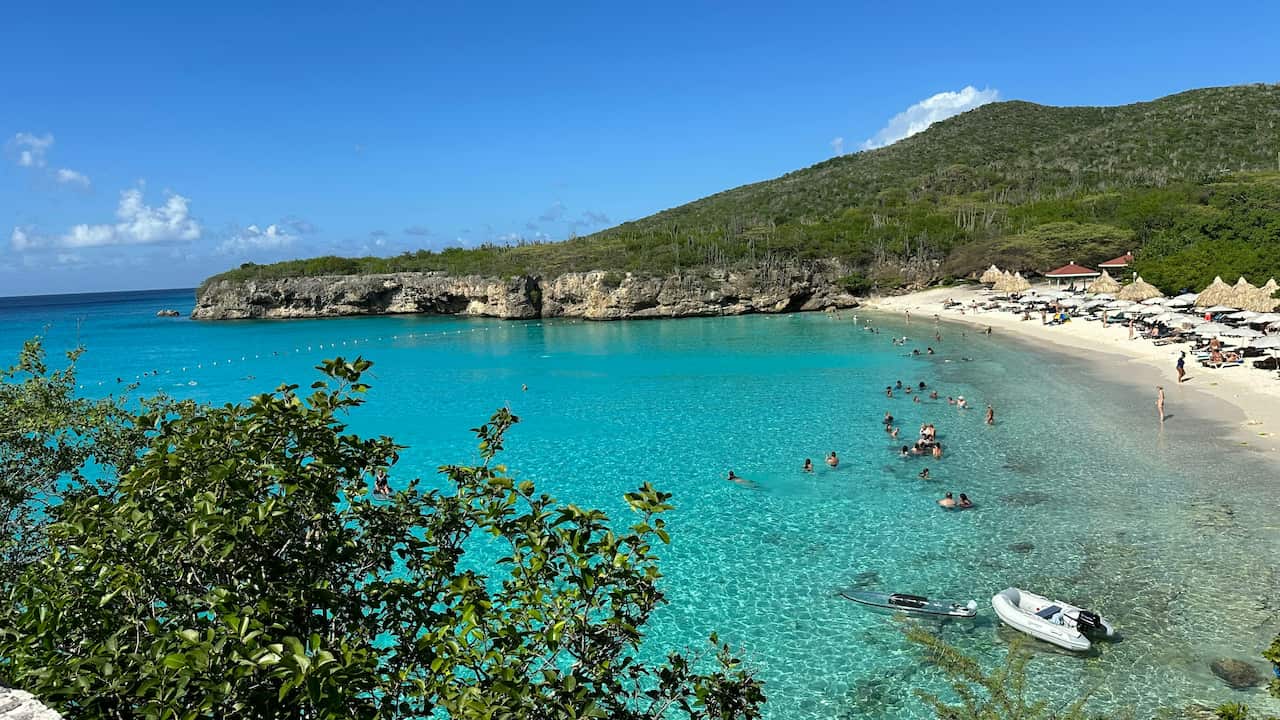
Until now, those who have heard of Curaçao might know it because of the drink Blue Curaçao or its beautiful beaches (one of which is famous for its small pigs).
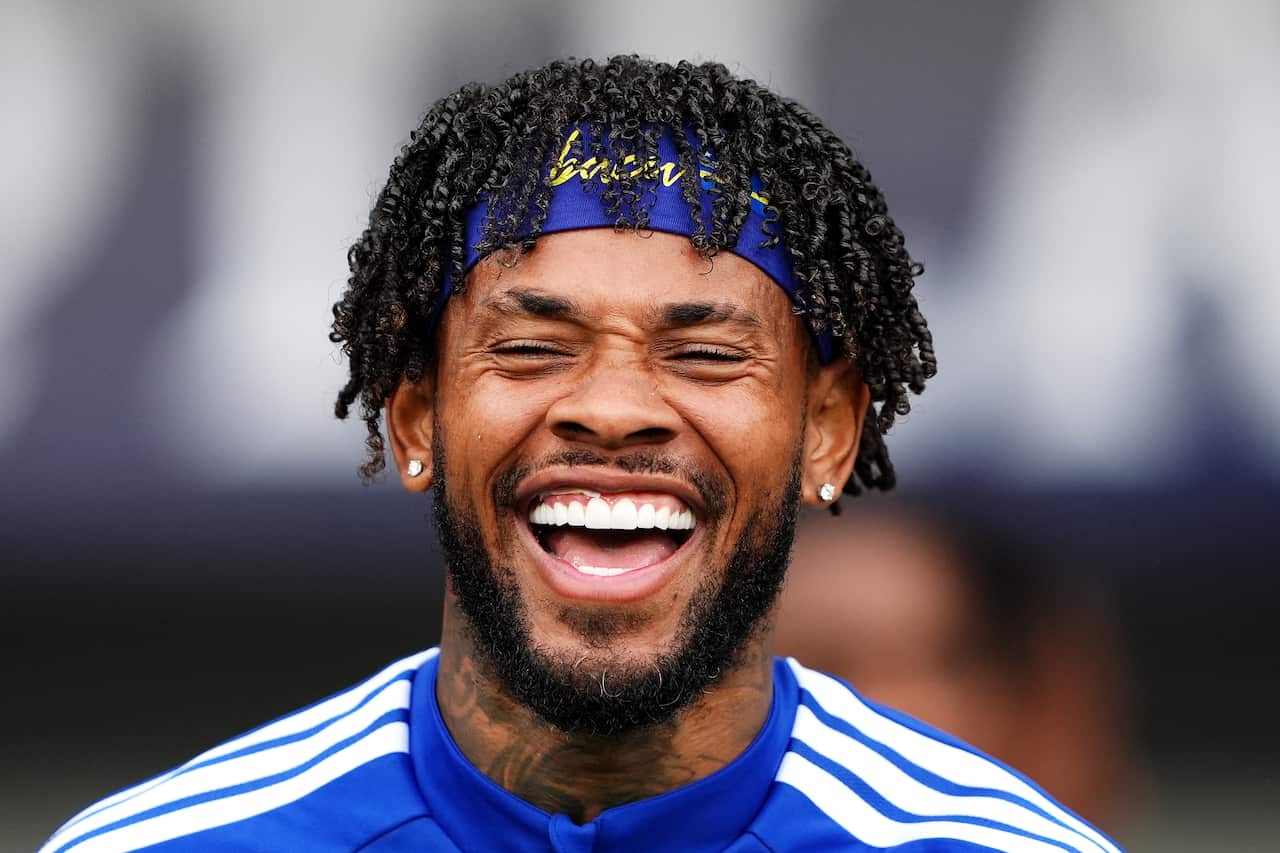
Now people have another reason to recognise the name, as 'Blue Wave' midfielder Juninho Bacuna told SBS Dateline.
"It's crazy," he said.
"Since we qualified for the World Cup, you see some people thinking, like, 'Who is Curaçao?', and then they're going to look it up and see, like, 'Oh, okay. Curaçao is quite nice'."
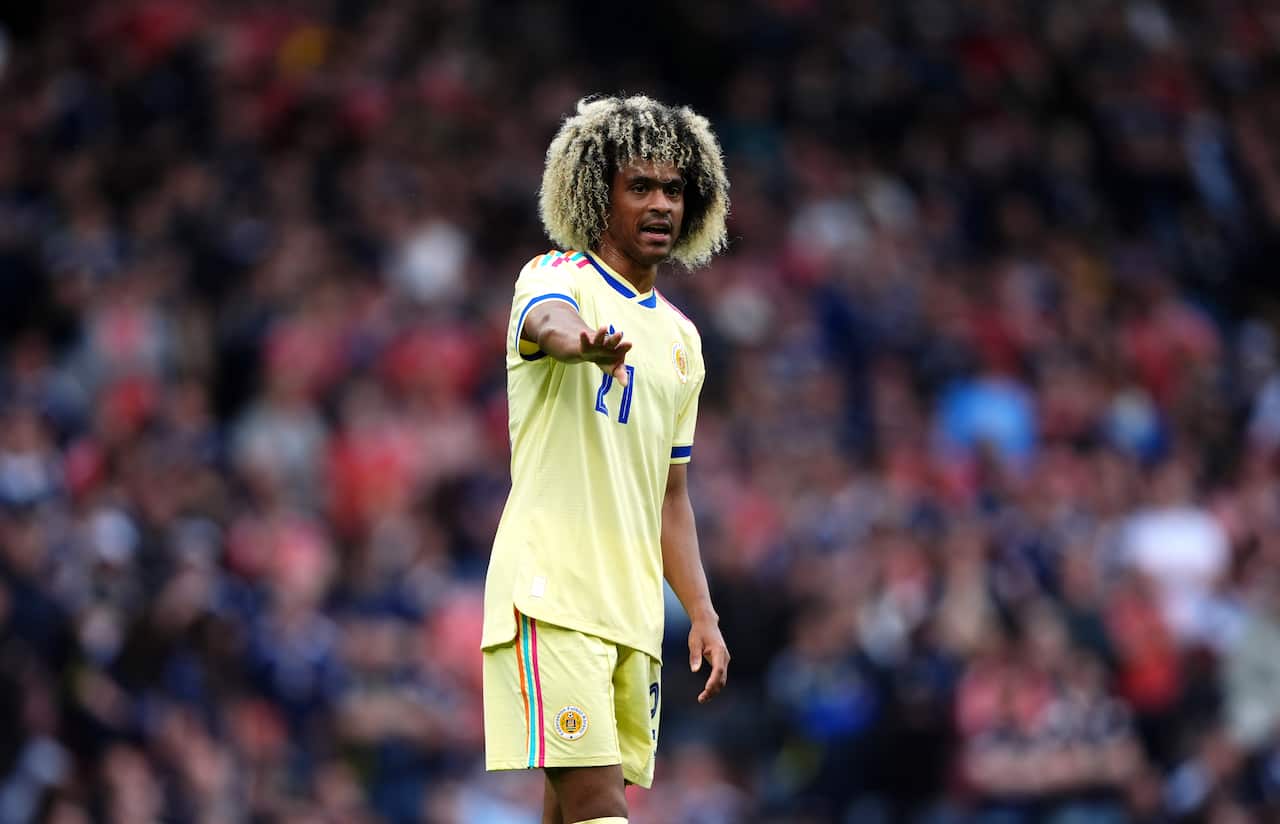
Fellow player Tahith Chong agrees.
"It's an amazing feeling. I think for all of us, everyone's been proud," he said.
"The World Cup, I don't think the island has stopped talking about the World Cup."
Chong has a unique perspective because he's the only member of the squad born on the island.
Curaçao is one of four countries that make up the Kingdom of the Netherlands. The other islands are Aruba and Sint Maarten, also in the Caribbean.
It's also the poorest island in the kingdom — around 30 per cent of its inhabitants live below the poverty line.
All of Chong's teammates were born and grew up in the Netherlands.
Their parents moved for better opportunities, reflecting a 'brain drain' that has been a constant theme in Curaçao's modern history, with most students completing their university education in the Netherlands or the US. It can raise questions about what it means to be Curaçaoan.
Bacuna's older brother Leandro is the team captain. He is from the Dutch city of Groningen but says his identity has never been in doubt.
"I grew up in the Netherlands. I was born in the Netherlands," he said.
"And my father, the first thing he said to me is that 'you're not from the Netherlands. You are pure Curaçao'."
The influence of Curaçao's history
National teams taking advantage of historic ties to call up players is fairly common — many of this year's Senegalese World Cup team were born in France, while the Indonesian team has players born in the Netherlands. Senegal and Indonesia were under colonial rule for 300 years by France and the Netherlands respectively.
The difference here is Curaçao remains a part of the Netherlands, meaning the European nation, and three-time World Cup runner-up, effectively has two teams at the World Cup.
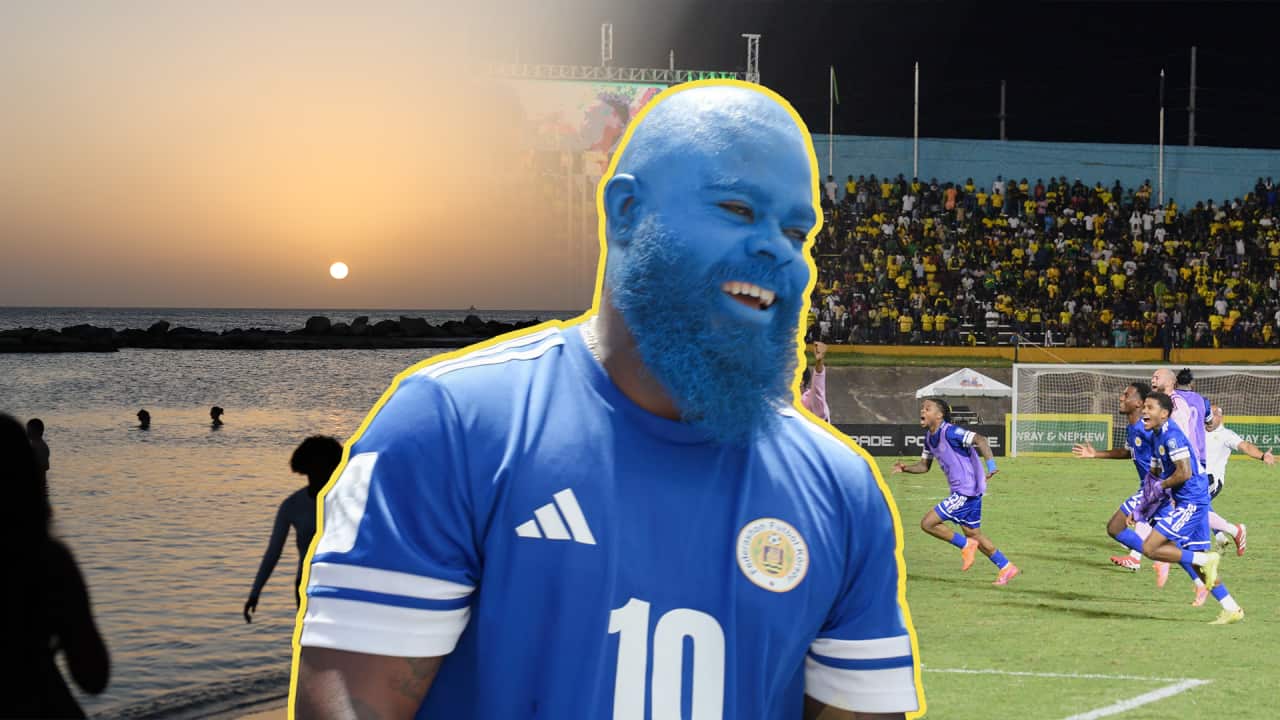
But for Curaçao 'super fan' Brenton 'Blueface' Balentian, there's only one team to support.
Balentian earned his nickname from painting his face blue in support of his team.
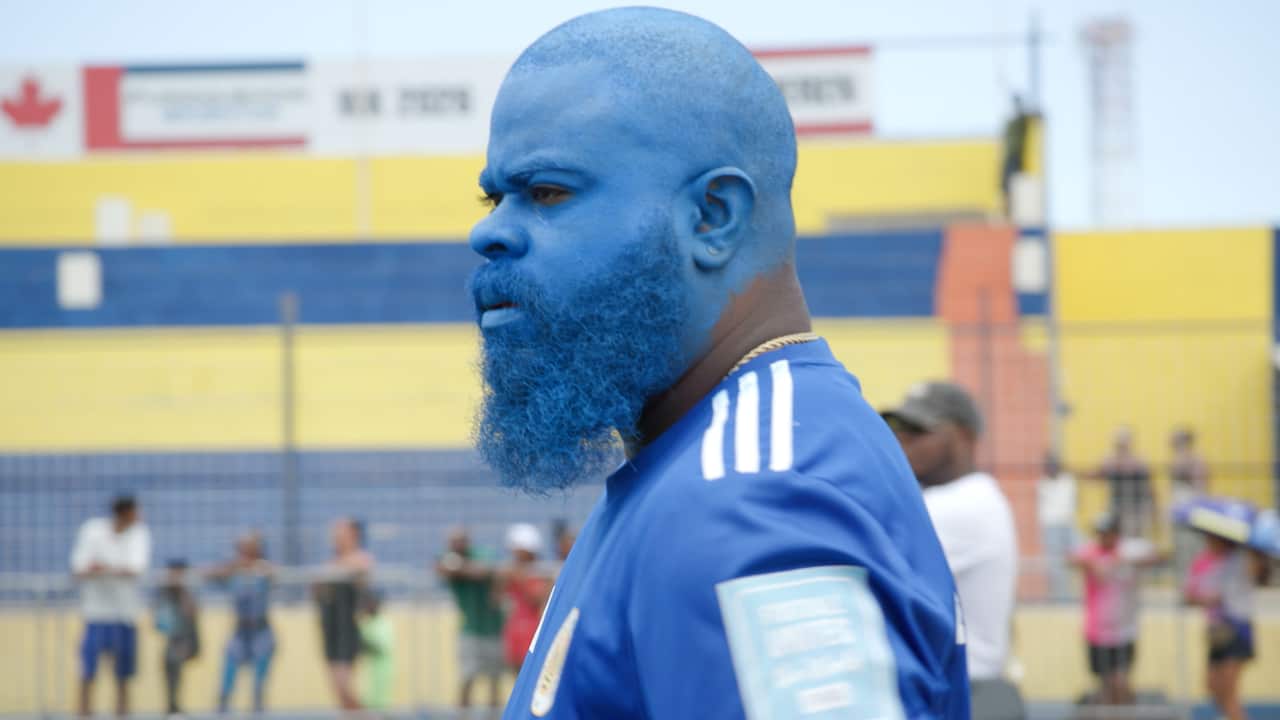
He was in the crowd in Kingston when Curaçao qualified and was overcome with emotion at the final whistle.
"It brought everybody together," he said.
"They were supporting Curaçao and that was for me the biggest and prettiest thing I've ever seen."
The colonial legacy of Curaçao
Curaçao is something of a cultural melting pot, born of a turbulent history.
Curaçao was first colonised by the Spanish in the late 1400s, who largely enslaved or expelled the Indigenous Arawak population. The Dutch then took control of the island in the 1630s and established it as a hub for the Atlantic slave trade.
Over more than 150 years, around 500,000 slaves passed through the island. An estimated 12,000 worked on the island's plantations and constructed many of its buildings.
In 1795, a slave called Tula led an island-wide revolt that was eventually brutally suppressed. Tula was tortured and beheaded, and that revolt is now commemorated each August on Tula Day.
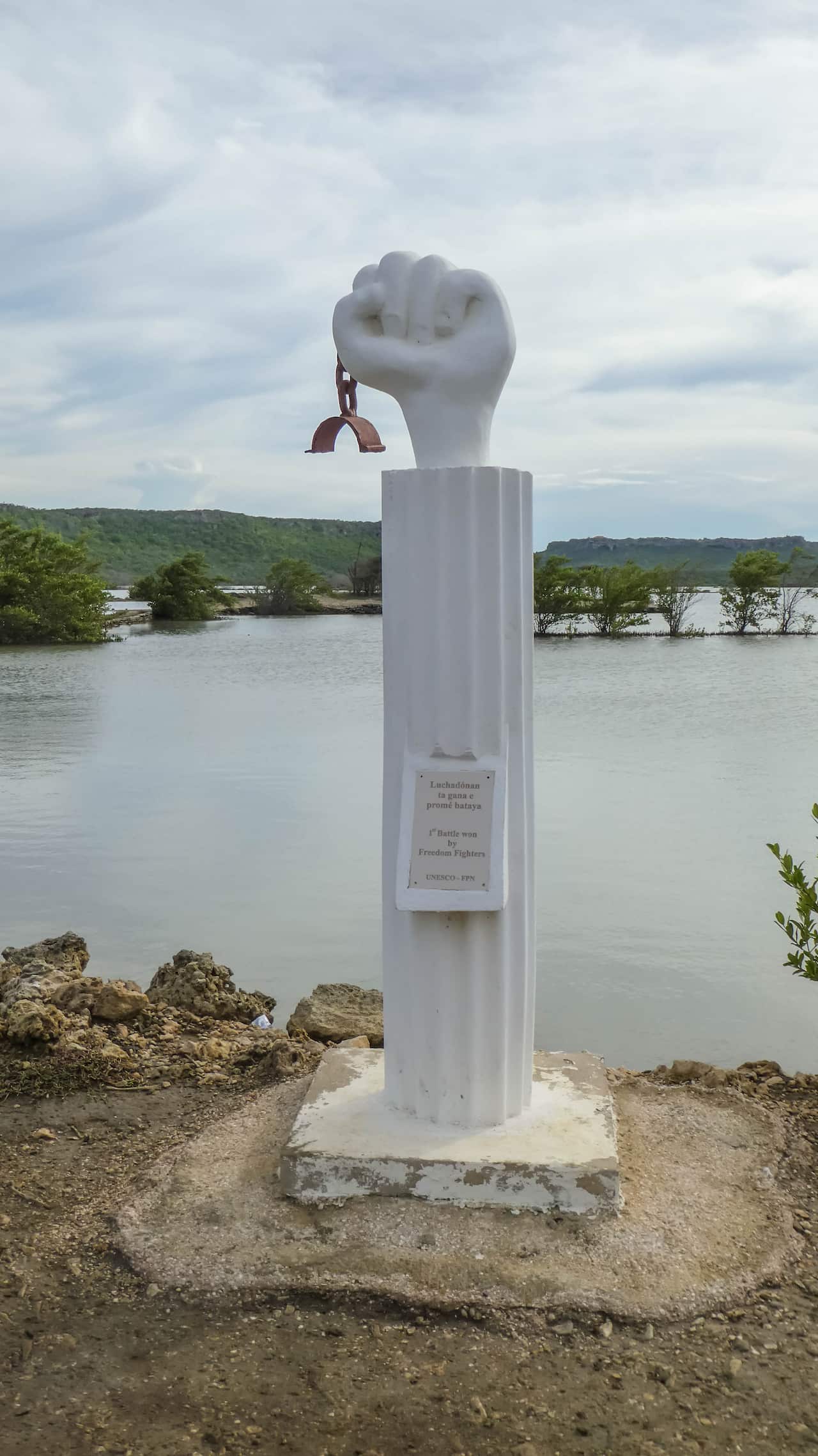
The Dutch established an oil refinery on Curaçao in 1918, attracting workers from countries including the Netherlands, Portugal, China, Lebanon and Syria. An estimated 40 per cent of people on the island are descended from those workers.
Over the years, the island's economic fortunes continued to fluctuate, and in the mid to late 1970s and early to mid 1980s, economic downturns led to large waves of migration away from the island, mostly to the Netherlands.
Tourism is now a key driver of the Curaçaoan economy and makes up an estimated 23 per cent of the island's GDP, according to Centrale Bank Curaçao and Sint Maarten.
Curaçao's tourism divide
According to the Curaçao tourist board, 1.7 million people, mostly from the Netherlands or the US, visited the island last year by plane or cruise ship.
That boom has boosted the local economy — but not everyone benefits.
Dateline spoke to young footballer Braven, a school student, whose parents work three jobs to make ends meet.
His father Fabian says he feels there is something of a divide on the island.
"The part the tourists see, like the hotels, they're separated from the rest of us," he said.
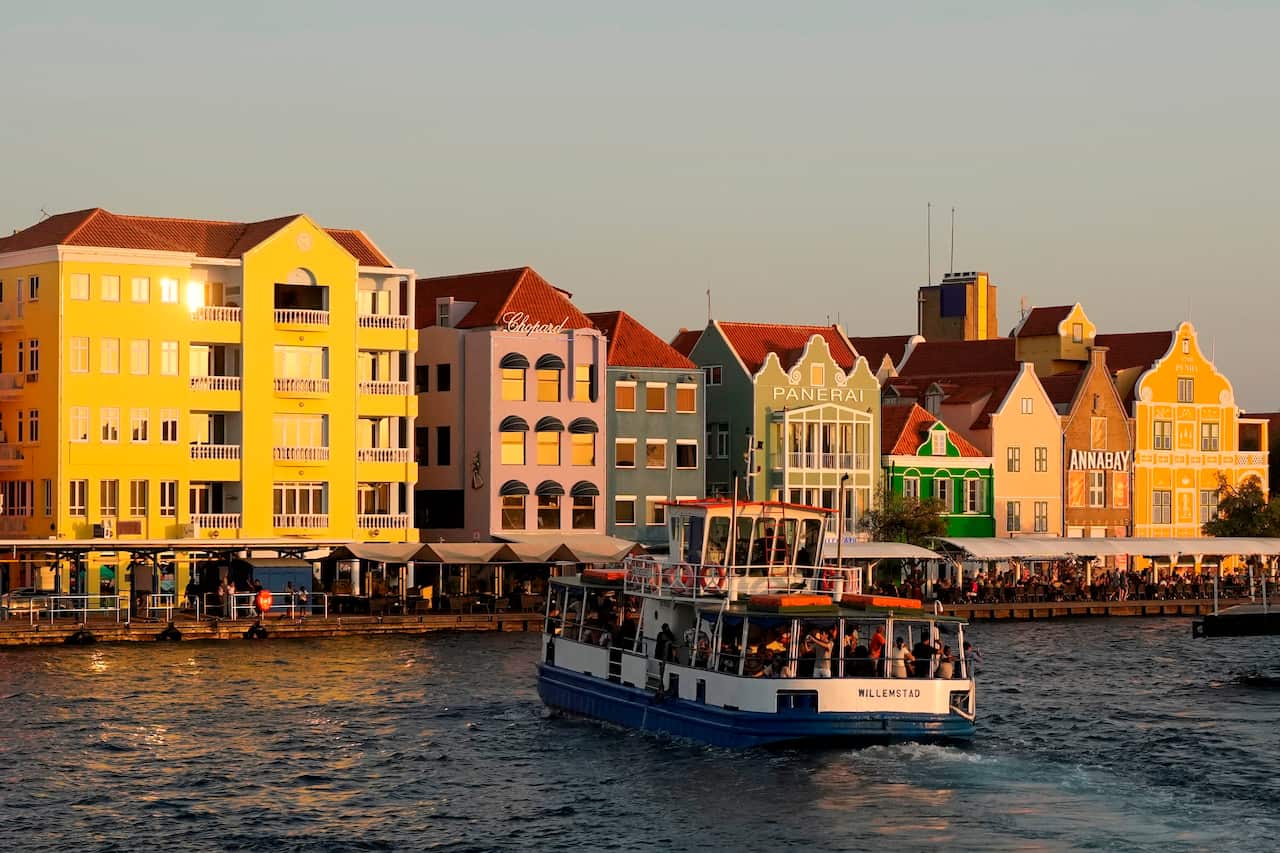
He said the fact that many locals don't get to experience the luxury that tourists do "leaves a bit of a bitter taste in your mouth, but this is the reality".
Both parents recognise their son may have to leave Curaçao to get ahead, either in his football career or his education.
Fabian would prefer that he stay.
"I don't want to leave. But if we have to, then we have to. But, if it were up to me, we would make it happen here on Curaçao," he says.
"Because we also want to see Curaçao prosper. We want to help achieve that."
But his mother Naomi believes a life in the Netherlands will mean Braven can " achieve things quicker than here on Curaçao."
The World Cup for children
Away from the tourist hot spots, youth gangs and gun violence are an issue on the island. For some young people, football could be a path out.
Former national team coach Remko Bicentini is trying to give children the confidence to chase their dreams, through his foundation Fundashon Bicentini, which is running a World Cup for Children on Curaçao.
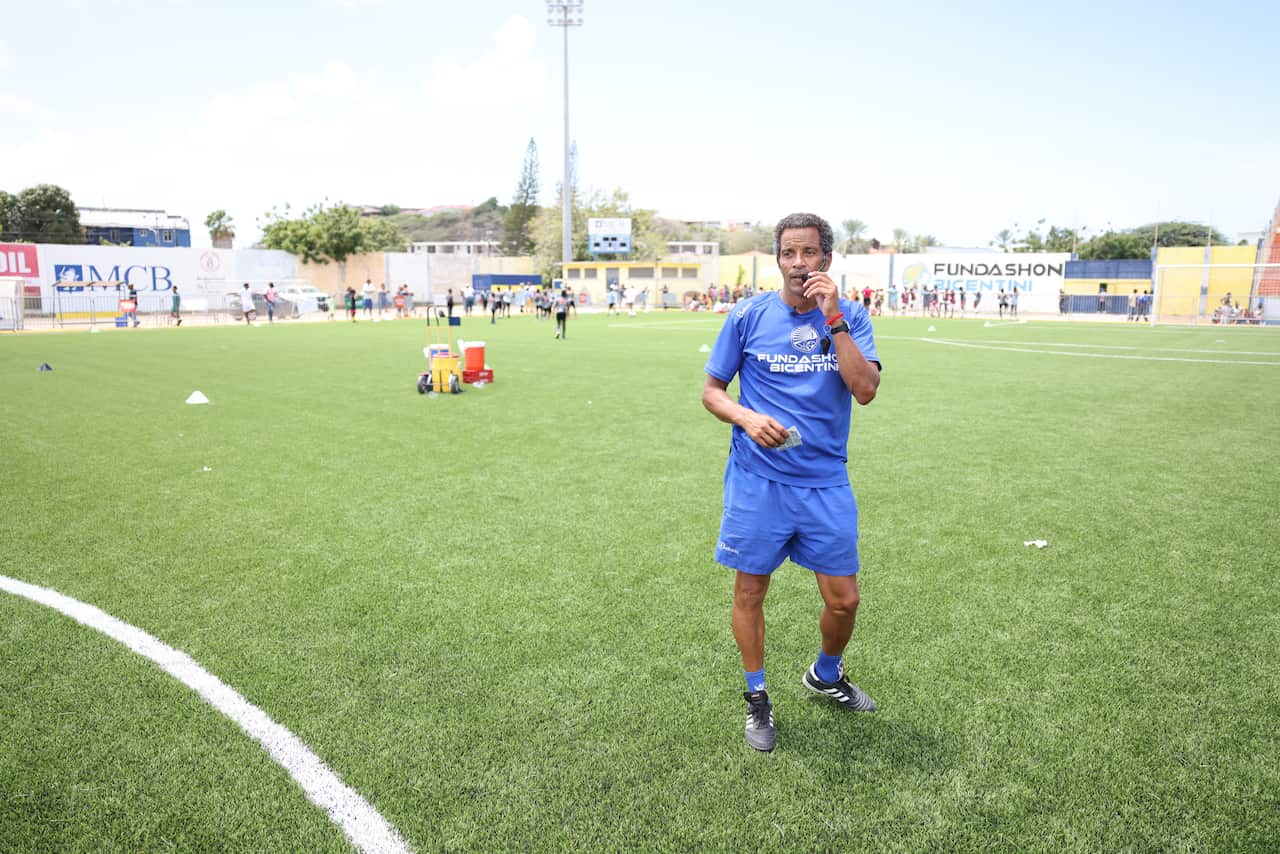
Youth teams from across the island are representing each of the teams in the real World Cup — Braven is playing for Mexico — in a tournament that will mirror the real one.
"The goal, that they learn to live the dream that they have in football. And at school or at home," Bicentini says.
As for the national team players, they are heading to the World Cup — where they face Germany, Ecuador and the Ivory Coast in the opening rounds — full of hope.
"Don't think that we are less than the team we are playing against," captain Leandro Bacuna said.
"We want to achieve something, we want to show the world we can do something."
You can watch all 104 matches of the FIFA World Cup 2026™ live, free and exclusive on SBS, SBS VICELAND and SBS On Demand.
FIFA World Cup 2026™ at SBS On Demand: get match ready.
Watch your favourite Dateline episodes around the clock on SBS On Demand's dedicated Dateline channel. For the latest from SBS News, download our app and subscribe to our newsletter.
For the latest from SBS News, download our app and subscribe to our newsletter.

Dateline is an award-winning Australian, international documentary series airing for over 40 years. Each week Dateline scours the globe to bring you a world of daring stories. Read more about Dateline

Have a story or comment? Contact Us







