
Across 31 lifesaving clubs in Western Australia, thousands of children learn beach safety and surf skills in their iconic singlets and caps. Since 2019, those uniforms have been emblazoned with the name of the country's largest independent oil and gas company: Woodside.
This sponsorship, worth approximately $5 million, is just one of around 260 programs designed for Australian children sponsored by fossil fuel companies, according to a new report.
SBS News has contacted Surf Life Saving Western Australia for comment.
The report, published on Monday by climate communication charity, Comms Declare, found fossil fuel money was behind a broad range of programs aimed at children in schools, museums, and sporting clubs across the country.
Six of the programs alone added up to $54 million in funding.
News that makes sense
Your trusted source for staying up-to-date with the world around you. Get free daily news updates and analysis, straight to your inbox.
"This report lays bare just how much effort is going into [fossil fuel companies'] buying a social licence," independent senator David Pocock told the media on Monday.
"[It lays bare] how much effort is going into shaping what young Australians think and understand about fossil fuel companies' contribution to a changing climate."
Woodside pointed SBS News to its 2025 Social Contribution Report, which said its social investments raised awareness and understanding of the environment; supported early childhood development and education; and created resilient and sustainable communities.
Pocock, along with senators Penny Allman-Payne and Steph Hodgins-May, have called on the government to launch a Senate inquiry into the influence of fossil fuel companies over children's public life.
Education materials on climate change scrutinised
The report named Santos as the biggest sponsor of children's programs with 71 programs, as well as BHP, Woodside, Glencore, Chevron, and Shell.
While Western Australia had the highest concentration of sponsorships, with 120 programs, researchers found the programs clustered in remote areas where the mining industry had a stronger presence.
In some instances, oil and gas companies were sponsoring the production of climate education materials in ways that minimised the role of burning fossil fuels as the main driver of global warming.
Last year, the Queensland Museum retired materials from Shell's sponsored "Future Makers" learning program, after Comms Declare found its explanation of carbon dioxide absorption in the oceans failed to mention where excess carbon dioxide comes from.
Another activity asked students to design technological responses to carbon reduction, such as carbon capture and storage, which critics argue shifts responsibility from reducing emissions.
The materials, designed for students in grades 7-10, had been downloaded 400,000 times, according to reporting by The Guardian.
"Oil and gas companies sponsoring climate education is like a tobacco company giving cancer advice," Comms Declare co-founder Belinda Noble said in a statement.
Queensland Museum CEO, Renai Grace, told SBS News their partnership with Shell complies with all relevant legislation and government policy and is subject to ongoing review.
"We maintain full curatorial and academic independence in the development of exhibitions, research and education programs."
A spokesperson for Shell told SBS News that their relationship with Queensland Museum is "long and valued" and that their Future Makers has helped 920 teachers access professional development and built confidence teaching STEMM subjects.
"We make no apology for helping to equip young people in local communities by supporting programs and organisations that provide opportunities for study and work and exposure to science, technology, engineering and maths."
"Our partnerships are community-led and run independently of Shell. No community partner is obligated to promote Shell or the energy industry, and we do not review or seek to approve their educational materials."
Calls for Senate inquiry
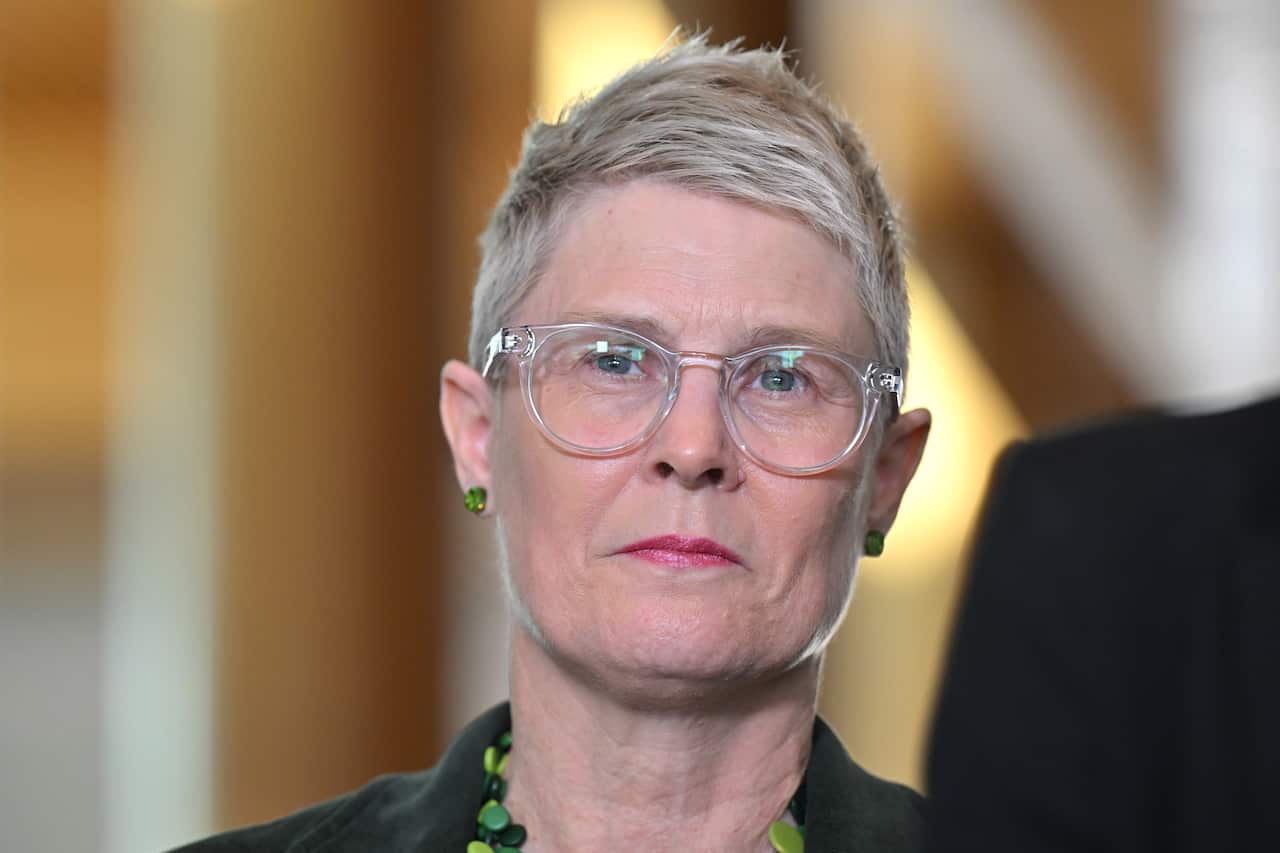
Speaking to the media in Parliament House on Monday, Greens senator Allman-Payne said that as a former teacher herself, it "wasn't surprising" that teachers were reaching for whatever resources that help make their work easier.
However, "this propaganda has no place in our schools".
Payne called on the government to act "because we need to understand the full extent to which these fossil fuel companies are getting into these schools".
"This propaganda has no place in our schools," Allman-Payne said.
As of 2026, public schools in the Australian Capital Territory banned the fossil fuel industry from providing sponsorships, alongside gambling and religious sponsorships.
Polling commissioned by Comms Declare in April found 87 per cent of parents or grandparents believe only the government should be responsible for funding schools.
"We have the vast majority of parents saying 'we do not want this in our schools'," Pocock said.
"This needs to be looked at, and this needs to end."
For the latest from SBS News, download our app and subscribe to our newsletter.







