
A new European Union initiative to store carbon dioxide beneath the North Sea is set to launch its operations next year. But environmental activists are concerned carbon capture technologies dissuade industries from acting to reduce fossil fuel emissions.
Listen to Australian and world news, and follow trending topics with SBS News Podcasts.
TRANSCRIPT
That's the sound of a helicopter taking off from Esbjerg Airport on Danish Jutland peninsula’s west coast.
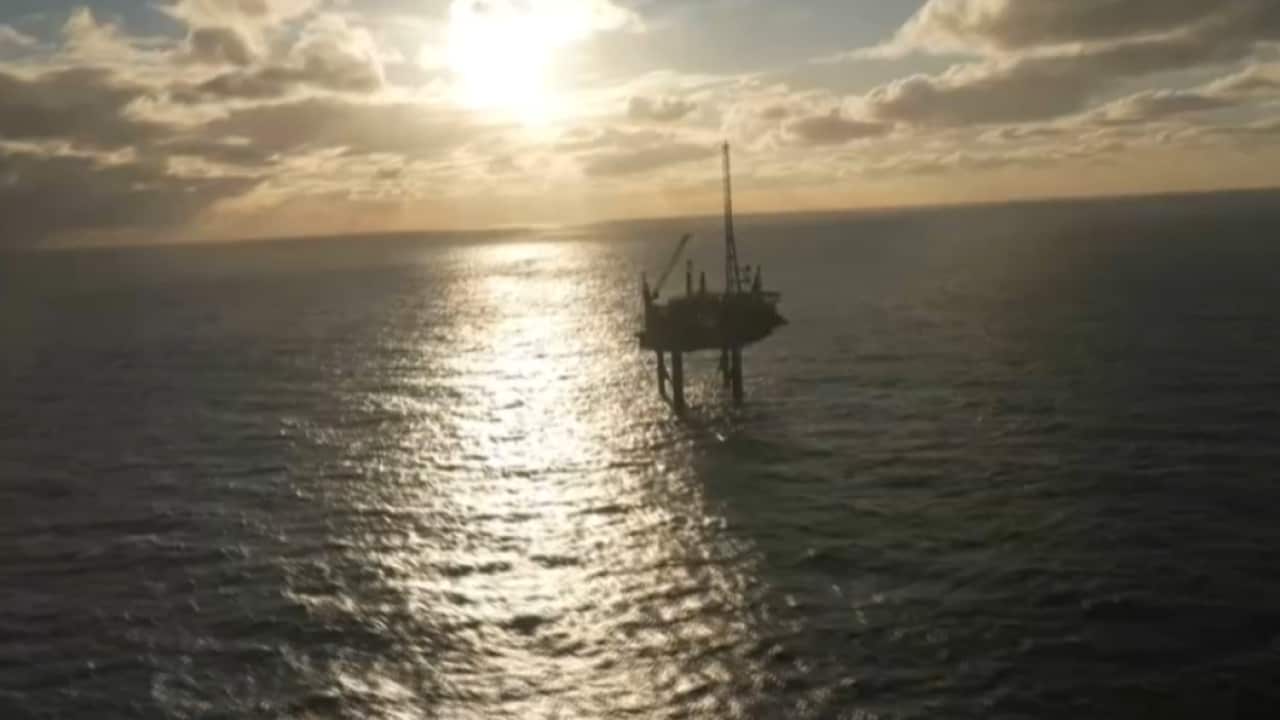
It was heading towards a remote platform in the North Sea where an oil facility lives.
The facility - Siri platform - is part of a European Union initiative to store carbon dioxide beneath the North Sea.
It's set to launch its operations next year.
The carbon capture process - currently in its final stage - is a way of permanently storing planet-warming carbon dioxide beneath the seabed.
The European Union is aiming to achieve a carbon dioxide injection capacity of at least 50 million tonnes per year by 2030.
Mads Gade is the CEO of INEOS Energy in Europe.
"The potential is actually quite big. So, if you look at some of the geological studies done, Denmark has the potential to actually store more than several hundred years of our own emissions. So, we are able to create an industry where we can support Europe in actually storing a lot of the CO2 here. So, plenty of potential to do that."
Siri is close to the remote Nini oil field.
This project - used to extract fossil fuels from beneath the seabed - will give the field a second lease of life.
In a process that almost reverses oil extraction, INEOS plans to inject liquefied carbon dioxide deep down into depleted oil reservoirs, 1,800 meters beneath the North Sea.
The carbon capture and storage efforts are named Greensand Future.
Peter Bjerre is the maintenance manager at INEOS Energy.
"With this new green transition, we're actually going to do the same thing, but instead of taking oil out of the reservoir, we're actually reversing the flow and adding the CO2 to the reservoir, instead giving us a future out here and also a big contribution to the green transition."
Greensand is expected to become the European Union’s first fully-operational offshore carbon dioxide storage site.
This is the aim when the project begins its commercial operations next year.
It will initially begin storing close to 400,000 tonnes [[363,000 metric tonnes]] of carbon dioxide each year, scaling up to as much as 8 million tonnes [[7.2 million metric tonnes]] annually by 2030.
Mr Gade says it's the best solution to reduce emissions.
"We think it's one of the best answers to cut emissions. And the reason is that we don't want to deindustrialise Europe. We want to have actually a few instruments to decarbonise instead. So we can maintain our industry, but meanwhile actually remove some of the CO2, so it's going to offset."
Greensand has struck deals with Danish biogas facilities to bury their captured carbon emissions into depleted reservoirs of the Nini oil field.
The EU has proposed developing around 280 million tonnes of carbon dioxide storage per year by 2040.
This is a part of their plans to reach "net zero" emissions by 2050.
Niels Schovsbo is a senior researcher at the Geological Survey of Denmark and Greenland.
He says experts at Denmark’s geological survey say Greensand reservoir sandstone rock is well-suited.
And that a third of the rock volume is made up of tiny cavities, perfect for storing the liquified carbon dioxide.
“We found that there is no reactions between the reservoir and the injected CO2. And we find that the seal rock on top of that has sufficient capacity to withhold the pressure that is induced when we are storing CO2 in the subsurface. So, these two methods make it a perfect site for storage right there.”
But while there are many carbon capture facilities around the world, the technology is far from scale.
It sometimes uses fossil fuel energy in its operations, and captures just a tiny fraction of worldwide emissions.
According to the International Energy Agency, the Greensand project’s aim is to bury up to eight million tons of carbon dioxide a year by 2030.
Just last year, nearly 38 billion tons of carbon dioxide was emitted globally.
The chemical giant is also hoping to begin development at another previously unopened North Sea oil field.
Helene Hagel is the head of climate and environment policy at Greenpeace Denmark.
"We could have CCS on those very few sectors where emissions are truly difficult or impossible to abate, but when you have all sectors in society almost saying, we need to just catch the emissions and store them instead of reducing emissions, and that is the problem in developed societies right now."
She says carbon capture storage has been used as an excuse by industries to delay cutting emissions.
"Instead of cutting emissions, instead of recognising we have a very shrinking carbon budget and we need do everything to reduce emissions, we are basically just putting filters on our chimneys, catching the carbon and hoping to store it underground."