in brief
- A survey of over 2,500 shoppers found more than one in five are eating less fresh produce to save money.
- Supply chain pressures have affected fuel and freight expenses, with farmers also spending more on fertiliser, driving up prices.
Australians are cutting their fresh produce spending by more than a quarter as the cost of living crunch changes how they shop — with some admitting to removing broccoli stalks and others selecting cheaper varieties at self-serve checkouts.
New research from price comparison site Canstar, released on Tuesday morning, found that the average amount Australians spend on fresh fruit and vegetables each week has fallen by 26 per cent, from $43 in 2025 to $32 this year.
The survey of over 2,500 shoppers also found more than one in five — 22 per cent — are eating less fresh produce to save money.
Previous Canstar research from July found that a grocery shop of staple items was around 8.5 per cent more expensive than in March 2025, with essentials like eggs and milk seeing some of the sharpest increases.
Supply chain pressures have affected fuel and freight expenses, with farmers also spending more on fertiliser, driving up prices at the checkout.
News that makes sense
Your trusted source for staying up-to-date with the world around you. Get free daily news updates and analysis, straight to your inbox.
For some households, cutting costs means changing what they buy rather than simply buying less – but some of the cost-cutting measures are more unusual.
How are Australians reducing fruit and veg costs?
The findings suggest rising grocery costs are affecting not only how much Australians spend, but also what they eat and how they shop.
Canstar consumer expert Eden Radford told SBS News the figures show households are actively looking for ways to manage rising grocery bills.
"Cost of living pressures are reshaping how Australians shop for fresh produce," Radford said.
"It's evident that shoppers are trying all approaches to stretch their dollar further."
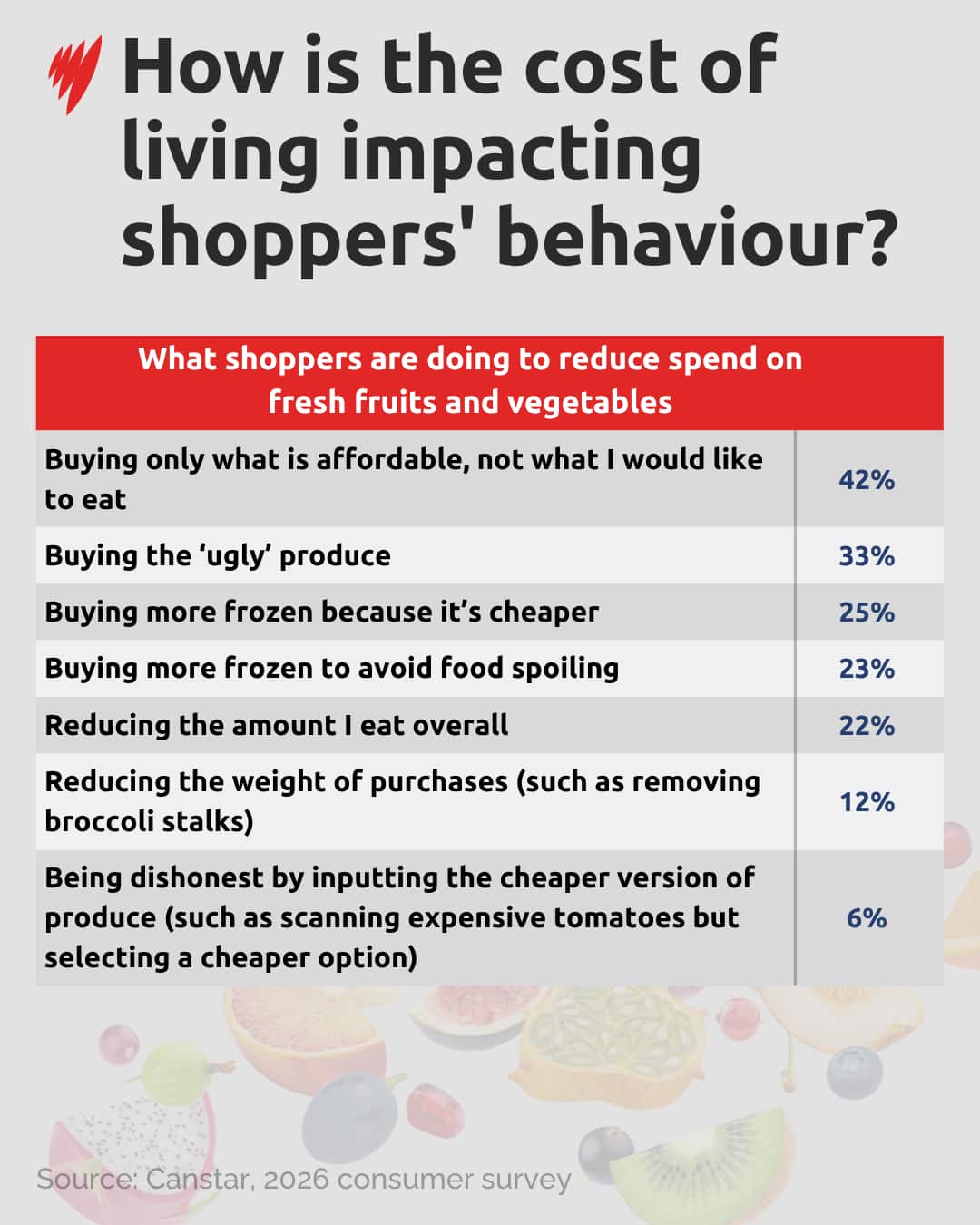
More than four in 10 shoppers, or 42 per cent, said they are buying only what they can afford rather than what they would ideally like to eat, according to Canstar.
A third are opting for so-called "ugly" fruit and vegetables, while a quarter are buying more frozen produce because it is cheaper.
Another 23 per cent said they are buying more frozen produce to avoid fresh food going to waste.
Others are resorting to unorthodox methods to save.
Twelve per cent of shoppers said they have reduced the weight of their purchases — including by removing parts of produce such as broccoli stalks.
And 6 per cent admitted to deliberately selecting a cheaper option at self-service checkouts, such as entering a lower-priced variety of produce rather than the item they had actually chosen. For example, brown mushrooms attract a higher price than the regular, white button variety.
Radford explained that shoppers are becoming more "savvy" out of necessity, and half are splitting their time between multiple stores.
Opting for cheaper, frozen vegetables, which have a longer shelf life, and buying produce when it's in season are both ways Australians are cutting back on spending.
"The price of a punnet of apples can go up and down by a few dollars based on which months you're buying it in, and shoppers are paying attention," she said.
Quality over price?
The Canstar survey also analysed the biggest driver of consumer satisfaction, with freshness of produce found to be the main factor, followed by value for money and variety and presentation last.
Supermarket chain IGA ranked highest in consumer satisfaction for fruit and veg, overtaking the comparatively cheaper Aldi chain, which has held top spot for the past five years. This could suggest that shoppers surveyed this year are prioritising quality over price.
"Different supermarkets deliver better than others in different ways, and depending on a shopper's priority, they're not afraid to move around," Radford said.
Canstar data suggests that 47 per cent of shoppers buy their groceries from two different supermarkets, while 18 per cent visit three or more.
Food prices 'at risk'
Betashares chief economist David Bassanese told SBS News that elevated prices show no sign of slowing down as the economy endures multiple "shocks".
Energy prices have increased costs for deliveries, and warmer, drier seasons are also disrupting food supply, he explained.
The cost of operations for supermarkets has also increased due to the increase in the minimum wage earlier this year.
"Food prices are at risk from these factors," he said.
"The only way we are going to be able to deal with these pressures is to unfortunately slow the economy and reduce people's spending power."
But he said there's "no easy answer" to bringing prices down.
For the latest from SBS News, download our app and subscribe to our newsletter.







